52 AI Ancestors in 52 Weeks: Week 19: At the Library

I’ve combined Amy Johnson Crow’s 52 ancestors in 52 weeks challenge, and Steve Little’s The 2025 AI Genealogy Do-Over, to create a unique 52 AI ancestors in 52 weeks party!

52 AI Ancestors in 52 Weeks: Week 19: At the Library

Check This Out: Libraries, Family, and a Little Help from AI

Introduction

I’ve felt at home in the library for as long as I can remember. It’s a comfortable, non-judgmental environment where I can get transported to a world not my own, or learn how to do something new.

Discussion

Several good memories of mine happened in libraries.

When my divorced dad finally got weekend visitation, one of the activities he took us on was trips to the library. A newspaper photographer caught me searching in the card catalog (oh, boy, I wish I could find that photo!).

My first volunteer job was at my middle school library, putting books away. To this day, if I see a book misfiled in the library, I’ll furtively put it back in the proper spot according to the Dewey Decimal code on its spine.

We had a snail who left the tank’s water to lay eggs, which had us worried. I checked a book about pet care out of the library, and wrote the author with a question about my weird snail. How thrilling it was to hear back! (She didn’t know, but the thrill was hearing back! – and it turned out Mama Snail knew what she was doing.)

When I had children, I hyped them up to get their own library cards. As soon as they could print their names, they were eligible—and you better believe we got them cards when they were each four years old!

I care for my young granddaughter some days, and enjoy bringing her to the library so she can choose a board book which I’ll read to her.

Without really thinking about it, I helped to carry on the tradition of family bonding at the library to at least the fourth generation.

How AI can help

I track my reading on Goodreads, and have done so since I inadvertently started a book I’d already completed. This turned out to be very helpful for recommendations. Here’s what I did:

  • I exported my 5-star reads from Goodreads.
  • I shared them with ChatGPT using this prompt…

Consider the attached list of books that I have read and highly rated. What books would you recommend I read?

  • ChatGPT replied with personalized recommendations…

Summary and challenge

Books are deeply personal. What matters most is that they speak to you. This week, I invite you to pass on a love of the library—or rediscover it yourself—and let AI help you uncover your next great read.

Your Turn:

Determine who you’d like to get to the library – yourself? A family member? Get a library card and use AI’s help for book recommendations.
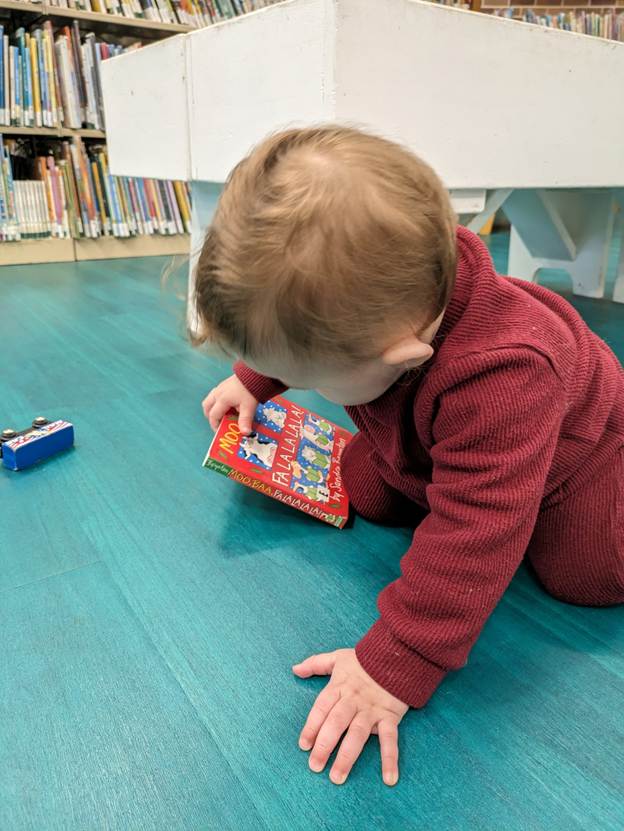
Little one’s first visit to a library

Next week’s topic: “Wheels.“

Disclosure

This post was created by me and refined with AI assistance. While AI helps organize research, the storytelling and discoveries are my own.
52 AI Ancestors in 52 Weeks: Week 14: Language

52 AI Ancestors in 52 Weeks: Week 14: Language

Was that an Irish brogue, or just childhood imagination? This week’s post unpacks family memories, a transcribed poem from the past, and how AI helps preserve our ancestors’ voices—literally. Learn how to turn audio into stories with a little tech and a lot of heart.

Introduction

I truly admire my bilingual ancestors for their talents. I took many years of French in school and only barely made myself understandable on a Paris vacation!

I was in awe in Luxembourg, where locals often speak five or six languages. The country officially uses Luxembourgish, German, and French in administration, while many also speak English—and even Portuguese, Latin, Spanish, or Italian. It’s a fascinating example of how multilingualism thrives in daily life—see more on the languages of Luxembourg.

Did you or your ancestors have to learn a new language and new culture?

Discussion

I remember as perhaps a young teenager, interviewing my grandmother about her mother, who was 100% Irish. I knew Nanny when I was a girl, and I mentioned to Grandma that I remembered Nanny’s brogue. Grandma scoffed, saying, “If she had an accent, it was a Jersey accent.”

Cue quick recheck of my research: Nanny was born in Morris County, New Jersey to a line of Irish miners. Her parents were both born there as well. Nanny had no more brogue than I do. My mind was playing tricks on me.

How AI is Helping

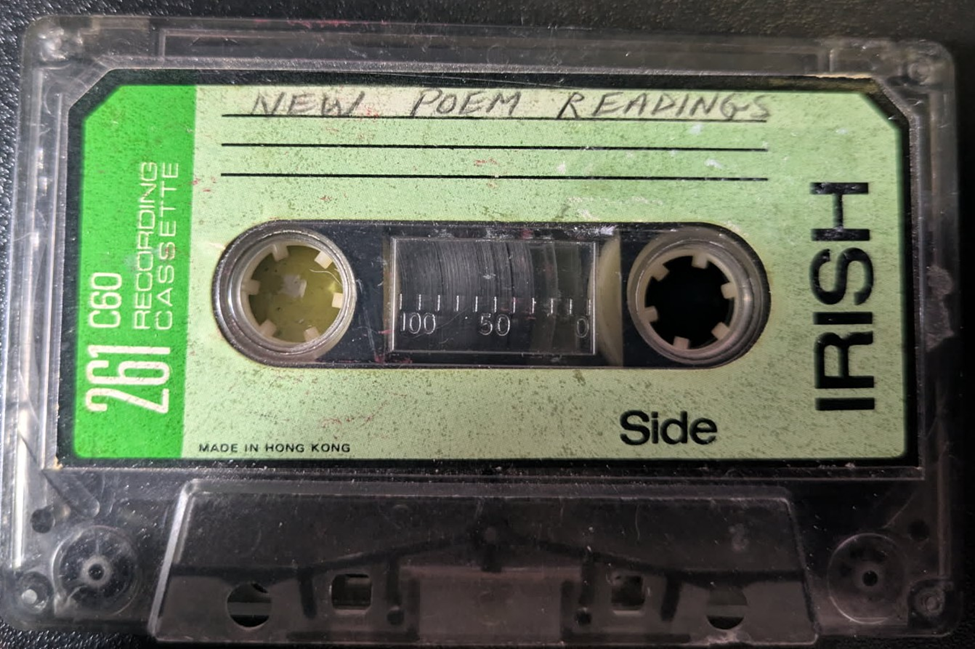
I had found a cassette tape of my father reading poetry and had it converted to a .wav file. Doing research for this post, I hit play and got very nostalgic hearing that voice that I hadn’t heard in many, many years. But even better, I can use it to get his work to a wider audience by easily transcribing and sharing it.

Here’s what I did with the audio file:

  • Converted the cassette to a .wav
  • Used Microsoft Clipchamp to cut it into shorter clips
  • Converted to .mp3 with VLC
  • Transcribed with Descript (free version)
  • Prompted ChatGPT to format it like a poem

A Poem, and a Voice Returned

One of the most moving moments came when I pressed play on that old cassette. I hadn’t heard my dad’s voice in so long—it was like he stepped back into the room for a moment.

After transcribing and formatting it with a little AI help, I didn’t just hear his words—I felt them. This poem in particular gave me a glimpse of a man I didn’t fully know, beyond just “Dad.” He lived in New York City all his life, came of age in the 1960s, and would’ve known people like the young woman in his verse.

Here’s the poem. See what you find in it.


Important Things

by Robert E. “Bob” Anderson (1942–2009)

The lake in Central Park,
some twenty-odd stories below,
reflects the rising moon.
Warm summer breezes
blow in from the terrace
as the gathering crowd
clinks crystal stemware,
laughs,
and talks aloud.

I chat with a girl—
long, straight hair,
round tinted glasses—
about interests we share.
She wore a silken blouse,
unbuttoned halfway.
I listened politely
to what she had to say:

“I enjoy good poetry—
but only if it deals
with important issues—
like the slaughter of the seals,
the banning of the bomb,
the saving of the trees,
the horrors of war—
important things like these.”

I nod
and sip my drink.

“These are important,” I agree,
“but I’m afraid
they’re beyond
a simple soul like me.

My favorite topics
tend usually to deal
with more simple things—
like the way folks feel.

The magic touch of love,
the warmth of a loving heart,
and the cold emptiness
when two lovers part.

The despair of loneliness,
trying not to let it show—
and when we find someone new,
the wary joy we know.

What makes a person rise each day
to live
and face
whatever this fickle life
will give to you.

These may seem nothing,
but they matter to my friends.
We’ll have to trust to you
to see how this world ends.”


A cassette tape labeled "NEW POEM READINGS"

Figure 1 The tape which let me hear my dad’s voice again

Summary and Next Steps

Sure, I could’ve transcribed it myself. But a few trial runs, some free tools, and now I can bring my father’s poetry to readers who never met him. AI didn’t replace the story—it helped me tell it better.

What voices from your past might be waiting?
Try a voicemail, interview clip, or old video! Ask AI what it can do with it. Try it out.


🎧 Bonus! Listen to the poem yourself:

The tape which let me hear my dad’s voice again – if the player doesn’t work, use this link


Disclosure

This post was created by me and refined with AI assistance. While AI helps organize research, the storytelling and discoveries are my own.