A Marriage Date Hidden Between the Children

I’m having some Saturday Night Genealogy Fun (#SNGF), with help from Randy Seaver and his prompts! Feel free to join in.

Saturday Night Genealogy Fun: April 11, 2026

Prompt: “Do you have an ancestor with no defined birth and death dates or places? This week, please tell us about that ancestor and what clues you used to estimate a birth and death dates and places.”

Introduction

I hope you don’t mind if I interpret this week’s prompt a little loosely and apply it to a marriage date rather than a birth or death date.

While tracking my ancestor Jason Smith, it became clear that he had two wives. I first suspected that because a relative posted a tree online saying she was descended from his first wife. That left me trying to figure out when Jason married my ancestor Mary Denny, who then became the elusive Mary Smith. Sigh.

My Response to the Prompt

Because the children were born in the 1830s and 1840s, there was not much documentation in their records to clearly identify their mothers.

So I started with the children and looked for patterns in the sequence, especially any gap that might suggest a death and remarriage. Here is the lineup I was working from:

Adelia Smith, b. ?
William Mulford Smith, b. 14 May 1835
Deborah Ann Smith, b. 31 Dec 1837
Jason A. Smith, b. 20 Mar 1839
Mary Catharine Smith, b. 30 Oct 1841
George Henry Smith, b. 1 Oct 1843
Charles Edward Smith, b. 12 Jul 1845
Oscar F. Smith, b. ca. 1846
Alice Matilda Smith, b. 16 Feb 1850
Sarah H. Smith, b. Jan 1852
Lewis N. Smith, b. Aug 1859

Looking at that list, I suspected the wife change happened somewhere in the middle, but I did not think it was as late as Alice’s birth in 1850.

Then, finally, a newspaper notice turned up online.

I found an item in the Baptist Advocate dated November 14, 1840, and that gave me a much firmer point on the timeline.

That newspaper notice, announcing the November 4, 1840 marriage of Mr. Jason M. Smith and Miss Mary Denny, helped clarify when Jason’s household changed. So, my working theory based on the children’s birth dates turned into something much stronger once I had contemporary evidence to support it.

This guy did not waste any time finding a mama for his littles.

It was a good reminder that when exact dates are missing, we often build a timeline first from the children, the census, and whatever indirect clues we can gather, and then wait for one good record to bring the picture into focus.

How do you estimate unknown dates?

AI Disclosure

This post was created by me with the help of AI tools. While AI helps organize research, the storytelling and discoveries are my own.

From Ohio to New York: A Family Turning Point

From Ohio to New York: A Family Turning Point

I’m having some Saturday Night Genealogy Fun (#SNGF), with help from Randy Seaver and his prompts! Feel free to join in.

Saturday Night Genealogy Fun: April 4, 2026

Prompt: “Family stories are often about “Turning Points” and “Major Decisions.” This week, please describe a “Turning Point” in the life of one of your parents (or for both of them, or for grandparents).  Describe the decision, and discuss the outcome of it.”

Introduction

My grandfather’s decision to move to New York City during the Great Depression is one of the most courageous choices I’ve seen in my family history. If he hadn’t made that leap, my grandparents might never have met.

Discussion

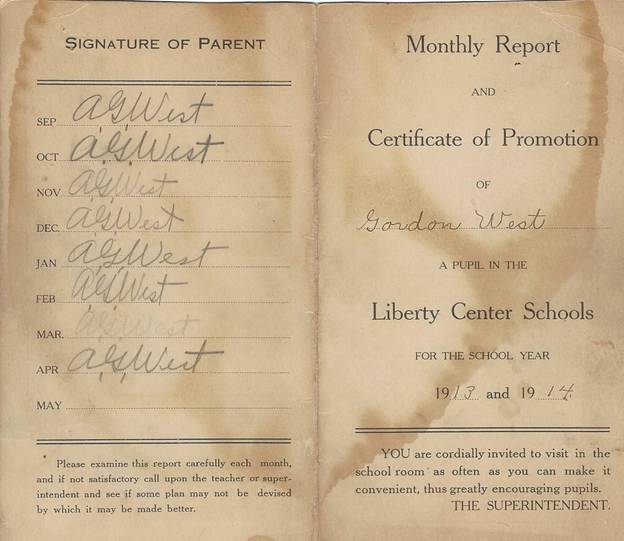
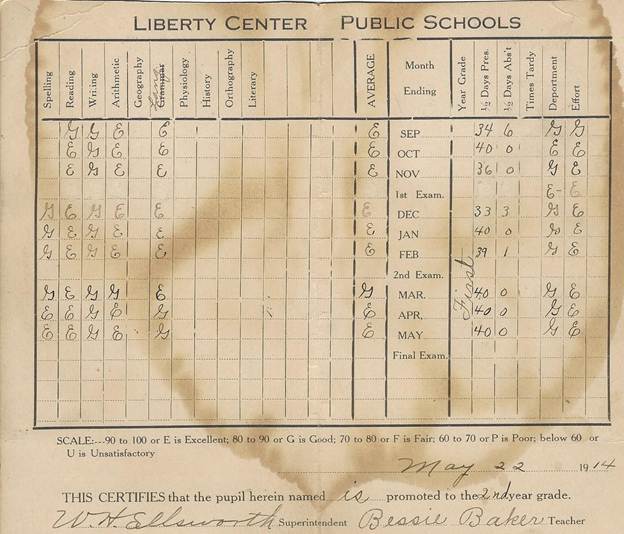
Gordon West was born and raised in Liberty Center, Henry County, Ohio, a very small town. He was a talented musician and played the organ in a movie theater until the arrival of “talkies” put him out of work.

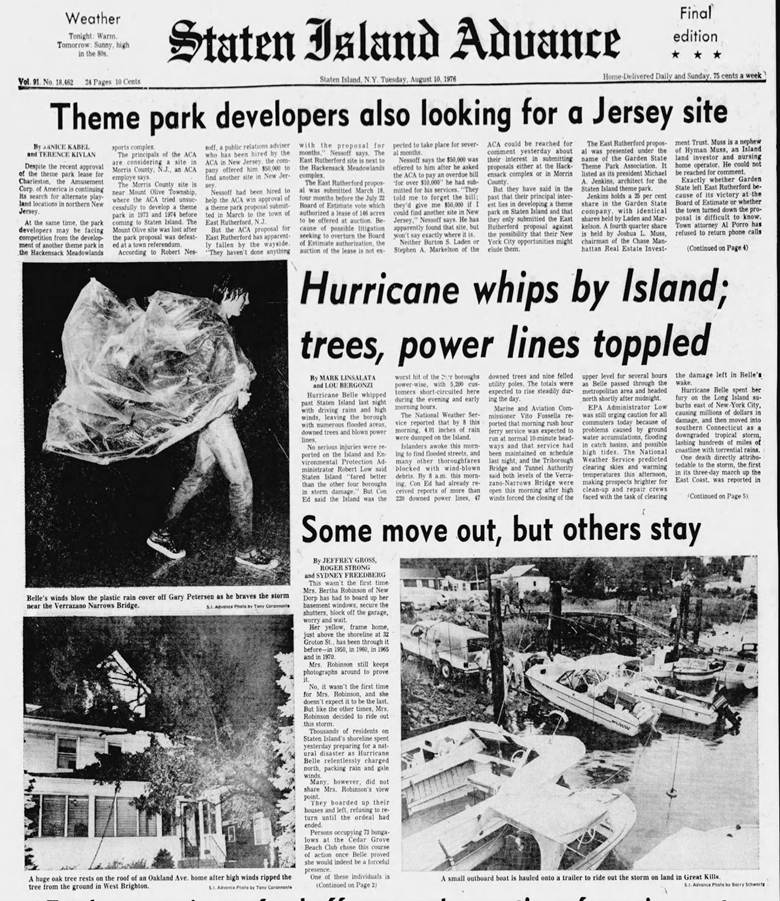
During the Depression, Grandpa went to work for a friend who ran a printing press – he worked without pay to learn the trade. After trying unsuccessfully to find work in Detroit, about 100 miles away, he made an even bolder choice: he went to New York City. As far as I know, he had no friends or contacts there, yet he found work as a linotype operator at the Staten Island Advance. For housing, he rented a room at a woman’s boarding house, and she thought he might be a nice young man for her niece’s stepdaughter – my Grandma.

They married in 1935 and he worked for the Staten Island Advance until he retired in 1972 after 41 years’ service.

The Great Depression was a terrible thing, but it did bring my grandparents together.

Staten Island (N. Y.) Advance, August 23, 1972, page 25

Challenge

Small changes can make a big difference. What butterfly effect have you seen or experienced?

AI Disclosure

This post was created by me with the help of AI tools. While AI helps organize research, the storytelling and discoveries are my own.

An Ancestor I Admire: Theresa Kilkenny Anderson

I’m having some Saturday Night Genealogy Fun (#SNGF), with help from Randy Seaver and his prompts! Feel free to join in.

Saturday Night Genealogy Fun: March 28, 2026

Prompt: “Write a story using the phrase “ancestor I really admire” in 200 words.”

Discussion

There are many ancestors I admire, but one stands out: Theresa Kilkenny Anderson (abt 1851–1911).

Theresa’s life reads like a series of losses. Born in Ireland during The Great Hunger, she disappears from her early family and reappears as a young newlywed in New York City. She and her husband, Michael, lost their first child, and though more children followed, hardship did not leave her. She was widowed while pregnant – and then lost that child as well.

And yet, she kept going.

Years later, I find her in the census, working as a laundress, supporting the three children still at home. What I love most is that she was living in the same house as her married daughter. Despite everything, she kept her family close. She was part of her grandchildren’s lives – children old enough to remember her.

When she died, two of her sons paid for her burial.

Theresa could have folded under the weight of her losses. Instead, she built a life defined not by what she lost, but by the family she held together.

She is an ancestor I really admire.

For more information, I wrote more about here in this blog post.

AI Disclosure

This post was created by me with the help of AI tools. While AI helps organize research, the storytelling and discoveries are my own.

Not Every Memory Fits in a Shadowbox

I’m having some Saturday Night Genealogy Fun (#SNGF), with help from Randy Seaver and his prompts! Feel free to join in.

Saturday Night Genealogy Fun: March 21, 2026

Prompt: “March 21 is National Memory Day.  How can we celebrate, and participate, in the day?  I asked AI tool ChatGPT how, and it suggested “Capture a Memory Before Its Gone;” “Rescue and Identify Old Photos;” “Record a Oral History;” “Organize One Small Thing;”  “Share a Story With Family;” “Visit or Virtually Honor Ancestors.””

Introduction

This week’s Saturday Night Genealogy Fun challenge, from Randy Seaver, marks March 21 as National Memory Day and invites us to consider how we might celebrate and participate. The suggestion was to come up with our own ideas, and as I thought about it, I realized I’ve already been doing this in different ways, even if I didn’t call it that at the time. You probably have as well.

Discussion

One of the most tangible examples sits right in my home: a shadowbox holding my great-grandmother, Alice Britton Makey’s, initialed fork. (Blog about it here.) It’s a small, everyday object, but preserving it, and the story behind it, felt important. It gave her a physical presence, something I could see and point to. But as meaningful as it is, I also know I can’t fill my house with shadowboxes. Not every memory can live that way.

Some memories are better experienced than displayed.

I was reminded of that by a relative (Helen Denny Woodman, author of The Descendants of Henry Denny, 1758-1839, also my ancestor) who, while caring for her husband as his memory declined, would sit with him and go through old family photo albums. Those albums weren’t just records – they were invitations. They allowed him to reconnect, to recognize, to feel something familiar even as other memories slipped away. That idea has stayed with me, and it’s inspired me to create albums of our own family trips – not just to document where we’ve been, but to make it easier to revisit those moments together.

And then there are the memories you can hear.

When I had an old cassette converted (blog here), I discovered a recording of my father reading a poem he had written. Hearing his voice again was something no object could replicate. It wasn’t just preservation; it was presence. For a few minutes, he wasn’t just someone I remembered. He was there.

Thinking about National Memory Day in this way, I’m struck by how many forms memory can take. Some are physical, like a fork in a shadowbox. Others are shared, like turning the pages of an album. Still others are almost intangible, like a voice carried forward through time.

Not every memory fits in a shadowbox – but that may be the point. Memory isn’t meant to live in just one form. It lives in the ways we choose to hold on, to revisit, and to share.

A cassette tape hand-labeled "New poem readings"

AI Disclosure

This post was developed with the assistance of AI tools to help organize ideas and refine wording, while preserving my original reflections and voice.

My Genealogy Day

I’m having some Saturday Night Genealogy Fun (#SNGF), with help from Randy Seaver and his prompts! Feel free to join in.

Saturday Night Genealogy Fun: March 14, 2026

Prompt: “How was your genealogy day?  Tell us about it – what genealogy-related activities did you do today, yesterday, or another day this past week? Researching, summarizing, transcribing, analyzing, writing, etc.”

Introduction

I’m going to be selective in choosing my “day.” I choose Saturday, March 14, 2026, the day this prompt was posted.

Discussion

It turned out to be a particularly full (and satisfying) day.

I started an IGHR course: Genetics for Genealogists: Fundamentals of DNA. I consider myself a lifelong learner and tend to take courses for the joy of learning, not always with a specific end goal in mind. That said, I do try to pursue at least one genealogy-focused educational experience each year. In the past, that’s included GRIP, NGS courses, the Boston University certificate program, and various study groups.

This year, I somehow ended up with two IGHR courses on my radar; both virtual and spread over several weeks. (Not my first IGHR courses… just my first this year!) The DNA course is clearly going to be challenging, which makes it all the more exciting. I developed a solid foundation in genetics through BU, but I know I still have gaps, especially when it comes to chromosome browsers and related tools.

In addition to coursework, I also worked on a blog post: Favorite RootsTech Session, after finally completing my RootsTech 2026 playlist.

And finally, I spent time working on the ancestors book I’m creating for my children. Saturday’s focus was disambiguating Matthew Kearney – a task that required careful sorting and attention to detail.

Summary

All in all, it was a very productive genealogy day. And honestly, those are some of the most fun days of all.

Challenge

Take a moment to tally up the different genealogy tasks you’ve worked on recently. You might be surprised (and impressed) by how much you’ve accomplished.

AI Disclosure

This post was created by me with the help of AI tools. While AI helps organize research, the storytelling and discoveries are my own.

Favorite RootsTech Session

I’m having some Saturday Night Genealogy Fun (#SNGF), with help from Randy Seaver and his prompts! Feel free to join in.

Favorite RootsTech Session

Saturday Night Genealogy Fun: March 7, 2026

Prompt: “RootsTech 2026 just finished today.  Did you watch any classes online?  Which online class was your favorite, perhaps the most informative, most helpful, or most entertaining, for you?”

Introduction

Have I watched any classes online? 18, so far.

Which was my favorite? Wow, that’s almost as bad as asking which child is my favorite.

Discussion

There are so many which I would heartily recommend!

  • I watched every Artificial Intelligence one which was put online (sadly, not all of them were). (These links are for your convenience, but please note that only one day comes up; you need to tab over to the other days of the conference.)
  • I leaned heavily on the Methodology sessions.
  • I was astounded, as always, by the Gardiner Brothers in the Day 3 Keynote.

But once I watch my entire list, the first one I plan to rewatch will be:

FamilySearch Full-Text Search – Your Golden Path to Ancestral Discovery with David Ouimette.

He’s an engaging, experienced speaker, and genuinely enthused about his subject.  He explains the advances FamilySearch has made to Full-Text Search, with real, relatable examples of how to use it. He explains navigation and when we would want to choose the different options. He gives search examples for different scenarios.

One of the most exciting parts of the session is learning that Full-Text Search doesn’t rely solely on traditional indexes. Instead, FamilySearch is using AI to read and transcribe historical handwriting, allowing us to search every word in millions of documents. That means names, places, and details that never made it into indexes can suddenly become discoverable.

This opens up records that were previously searchable only by browsing images—court records, land records, and other manuscript collections where names appear deep inside the text.

As the lead of FamilySearch Content Strategy for Asia-Pacific, he has unique insight into what’s coming.

Ouimette’s enthusiasm is truly contagious in this session – I highly recommend everyone drop this blog right now and go watch it!

Challenge

Go watch just one session* – navigate to https://www.familysearch.org/en/rootstech/schedule?tab=full_schedule&day=2026-03-07 and filter by a topic or speaker you’re interested in!

* OK that was a trick. You can’t stop at just one.

AI Disclosure

This post was created by me with the help of AI tools. While AI helps organize research, the storytelling and discoveries are my own.

Visualizing the Work of John T. West

I’m having some Saturday Night Genealogy Fun (#SNGF), with help from Randy Seaver and his prompts! Feel free to join in.

Visualizing the Work of John T. West

Saturday Night Genealogy Fun: February 28, 2026

Prompt: “Do you know what activities one of your ancestors/relatives engaged in?  How much detail do you know about those activities? Use the FREE artificial intelligence tool Google Gemini 3 to describe what your ancestor or relative experienced in his/her activities (e.g., military service, a ship they migrated on, an occupation, an office they held, etc.). Share your ancestor/relative’s activity of interest and description of their experiences”

Introduction

My ancestor John Thomas West (1830–1924) wore many hats during his long life, including service in the Civil War. But today I want to focus on something quieter and just as important: how he provided for his family when he was home, in Liberty Center, Henry County, Ohio.

Discussion

I went to Gemini.google.com and gave it the prompt, using the role-goal-text-task-flask setup that Steve Little taught me back in 2023:

ROLE: You are a genealogist writing a family history book.

GOAL: You are trying to bring my ancestor to life for the reader.

TEXT: My ancestor was usually described as a stair builder, although sometimes as a carpenter. I do see that he must have done some farming, I suppose carpentry in a small town does not feed the large family.

TASK: Tell the reader about his occupation(s) and how he provided for his family.

FLASK: Format as a couple of paragraphs of text at a high school reading level.

What it gave me was a general explanation of my ancestor’s work, so in the spirit of refining prompts, I added:

Please format it like a third-person addition to a biography.

It didn’t do well with the third-person, staying in the second person, so I tried again.

Please put this in the third person: “John” rather than “your ancestor”

And it did but was very sparse – until I realized my mistake!

Oh dear. I forgot to tell you who we are talking about. It’s John T. West (1830-1924), who lived in Maryland, Virginia, and Philadelphia, before settling in rural Ohio with his young family.

It did a very nice writeup, but in true LLM fashion, it offered more:

Since he lived through the Civil War era and moved West, would you like me to research the specific architectural styles popular in Ohio during that time to see what his stairs might have looked like?

I accepted.

The final result was very pleasing.

To truly understand John T. West (1830–1924), one must look at the physical world he built. Living nearly a century, John witnessed the evolution of America from a collection of rural homesteads to an industrial power. When he moved his young family from the established architectural hubs of Maryland, Virginia, and Philadelphia to the developing landscapes of rural Ohio, he brought with him a level of sophistication rarely seen in the countryside. While many men of the era were general carpenters, John’s specialized designation as a stair builder marked him as a master of “finish work.” In a time before power tools, constructing a staircase was the ultimate test of a woodworker’s skill, requiring a deep understanding of practical geometry to calculate the precise “rise and run” of every step.

In the expanding towns of Ohio, a grand staircase was a status symbol, and John was the architect of that elegance. He likely spent his winters in a wood-heated shop, meticulously hand-carving balusters or steaming wood to bend it into the graceful curves of a continuous handrail. However, the life of a craftsman in a small town was often “feast or famine.” To ensure his large family remained secure, John anchored his life to the seasons. When the spring thaw arrived, he traded his fine chisels for a plow. This blend of artistry and agriculture was a necessity; the Ohio soil provided the food for his table, while his specialized commissions in Maryland or Philadelphia-style joinery provided the “hard currency” for taxes and supplies. John West lived his life between two worlds—the precision of the craftsman’s square and the grit of the family farm.

I found this description fascinating. While it’s not a source in itself, it helped me visualize what John’s work may have looked like and how his carpentry and farming likely fit together in daily life.

Challenge

Do the same with an ancestor or relative of yours (review the prompt at the top), and refine the results at least once! That helps to “train” the AI to better serve you.

Want to Learn More?

Gemini, in the same conversation, recommended these:

For a beginner looking to master these techniques, the best resources are the official “Playbooks” and interactive guides created by the companies that build the AI models. They are designed to be clear, practical, and full of “before and after” examples.

Here are some sources I recommend:

1. The Prompt Engineering Guide This is widely considered the “encyclopedia” of prompting. It is open-source and incredibly beginner-friendly. https://www.promptingguide.ai/

2. Anthropic’s Interactive Tutorial (GitHub) Anthropic (the makers of Claude) has a highly praised, step-by-step tutorial that feels more like a mini-course than a dry document. https://github.com/anthropics/prompt-eng-interactive-tutorial

3. OpenAI’s Strategy Guide OpenAI provides a very concise “Best Practices” list that is perfect for a quick start. https://platform.openai.com/docs/guides/prompt-engineering

John T. West

AI Disclosure

This post was created by me with the help of AI tools. While AI helps organize research, the storytelling and discoveries are my own.

Five genealogy challenges

I’m having some Saturday Night Genealogy Fun (#SNGF), with help from Randy Seaver and his prompts! Feel free to join in.

Saturday Night Genealogy Fun: February 21, 2026

Prompt: “What are your major genealogy challenges – the family mysteries that you haven’t been able to crack to date? Tell us about five of your real genealogy challenges with a short paragraph, and link to blog posts if you have written about them.”

Introduction

Ah, those challenging ancestors – haven’t we all got them? To list five is a lot! But I’ll be brief.

Discussion

  1. Andrew DRISKOL is my A-number-one mystery, because I have never been able to locate him on any records, even while they were keeping records. German birth, (presumably) English marriage, US immigration, 1880 census. Several people, my great-grandmother included, name him as their father, so…  Blog: https://theancestorwhisperer.com/2025/09/27/52-ai-ancestors-in-52-weeks-week-39-disappeared/
  2. Mary Ann HOPKINS WEST (ca 1813-1850s). Women are tough. I have her on two records, her 1829 Maryland marriage and the 1850 New Jersey census. I’d love to find her death. Her husband John appears to be a widower in 1860, and the 1855 state census is a head-of-household one, so I can’t be confident if she was alive or dead for that one. They lived either in New Jersey or Pennsylvania at the time. I’ve taken some shots in the dark, but all have turned up empty.
  3. Michael ANDERSON (ca 1850-1883). Hewas born in Ireland – there are Irish Andersons, but I really haven’t got a grip on their origins.When he died in Staten Island New York, his father’s info was blank and his mother’s info only noted that she was from Carroll, Ireland. I’ve not found his birth, immigration, or marriage. Again, troubling considering how relatively recent this was.

My fourth and fifth challenges are John DuSHANNON and his wife Margaret ARNOLD DuSHANNON. He was from Canada; she from Connecticut, and they married in Bridgeport in 1851. They were in the 1870 census with several children, and in 1876 their daughter Charlotte May, my great grandmother, was being placed out of an orphanage. I’ve searched but still not found what happened to them. But I have made progress: Lottie did not even know her parents’ names or her date of birth; her death certificate had invented parents’ names, and she adopted Christmas Day as her birthday: her death certificate and tombstone say Dec. 25, 1867, when the birth record I found clearly identifies May 14, 1866. Did the orphanage assign a date to her? Did she get to choose the date, and chose a happy day? I will never know. Records can correct dates, but they can’t give her back what she never knew.

Charlotte Mae (Lottie) DuShannon West

Challenge

Who are your uncracked challenges? What do you think you might do about them? What does AI suggest you do about them? Ask it to find patterns you’re missing or suggest research paths to follow. Go on, check out the rabbit hole – you know you want to!

AI Disclosure

This post was created by me with the help of AI tools. While AI helps organize research, the storytelling and discoveries are my own.

A 66 Year Love Story?

I’m having some Saturday Night Genealogy Fun (#SNGF), with help from Randy Seaver and his prompts! Feel free to join in.

You are the result of the love of thousands”

– Attributed to Linda Hogan

Saturday Night Genealogy Fun: February 14, 2026

Prompt: “It’s Valentine’s Day – a day for lovers! We all have hundreds of love stories in our ancestry. What was the great love story of the ancestors in your family Tree?  What wedding had a great story in it?  Choose one ancestral couple. Share how they met (if known), when and where they married. Note how long they were married. Highlight something that suggests affection or partnership.”

Introduction

I have and adore a photo of my great-grandparents’ 60th anniversary party. It shows them surrounded by dozens of their great-grandchildren. Great Grandpa is holding me.

Discussion

They were married another six years after that party, so if you ask anyone in the family, they made it to 66 years.

Or did they?

For years, I had a big challenge locating their 1908 marriage record. This was in Manhattan, New York – a place whose records I knew well – and it simply wasn’t there.

Finally, after several years of searching, I located Great Grandpa’s WWI Draft registration card. It said he was married. That sent me looking again for their marriage record, and this time, I found it.

In 1918.

By that point, they’d already had four children.

My cousin holds their 1908 church marriage certificate. But for whatever reason, they never registered that wedding with the civil authorities. When he registered for the draft, they must have realized that, in the government’s eyes, they weren’t actually married — and had better make it official.

So my cousin has their 1908 marriage.

And I have their 1918 marriage.

Which makes me wonder… was that beautiful 1968 photograph really from their 50th anniversary?

If you count from the church wedding, they were married 66 years — the longest-married couple in my ancestry.

And whether they stood before an altar once or twice, one thing is clear: they built a life that endured. Four children before civil paperwork. Sixty years of partnership. Great-grandchildren at their feet.

That feels like a love story to me.

Your Turn

I would love to hear your ancestral love story. Drop it, or a link to it, in the comments.

Want to Learn More?

I also wrote a brief blog about the courtship of my grandparents, their daughter and her husband, here: https://theancestorwhisperer.com/2025/12/19/52-ai-ancestors-in-52-weeks-week-51-musical/

AI Disclosure

This post was created by me with the help of AI tools. While AI helps organize research, the storytelling and discoveries are my own.

SNGF: Your Spouse’s Ancestors

I’m having some Saturday Night Genealogy Fun (#SNGF), with help from Randy Seaver and his prompts! Feel free to join in.

Saturday Night Genealogy Fun: February 7, 2026

Prompt:

“Have you researched the ancestors of your spouse (or significant other)? Please list the names and vital records data for your spouse/SO’s grandparents and great-grandparents like in an Ahnentafel Report.

“Have you written genealogical sketches and/or biographies for each of them?

“Share your list of your spouse/SO’s ancestors in your own blog post or in a Facebook, SubStack, BlueSky or other social media post. Leave a link to your post on this blog post to help us find your post.”

Introduction

I’m having some Saturday Night Genealogy Fun (#SNGF), inspired by one of Randy Seaver’s prompts, and this one made me stop and think a bit longer than usual.

The prompt asks:
Have you researched your spouse’s ancestors? Can you list their grandparents and great-grandparents, maybe even write sketches or biographies for them?

And here’s where I’ll be honest.

Oh, heck no – you do not want a neat list of names from me.

What you probably want to know is something more interesting anyway:
Have I been neglecting my husband’s side of the family in favor of my own?

Short answer: no.
Longer answer: his ahnentafel is shorter than mine, but not because it matters less, only because it unfolds differently.


My Side vs. His Side

I’ve been researching my own family for much longer, and like many of us, I grew up hearing stories that naturally pulled me in that direction. Familiar names, familiar places: they create an emotional gravity that’s hard to resist.

But researching my husband’s family changed once we had children.

Suddenly, this wasn’t just his ancestry. It was theirs.

And unlike my own lines, his family history reaches across the ocean only a few generations back. That means records still exist in European archives – records that are surprisingly rich, precise, and sometimes humbling.


What His Ancestors Taught Me

Researching my husband’s family has taught me things I never would have learned otherwise.

I’ve gained a deep respect for careful Jewish recordkeeping.
I’ve watched surnames and spellings shift – and the language of the records – depending on who was occupying a region at the time.
I’ve seen how laws, traditions, and restrictions quietly shaped people’s life choices in ways that don’t always announce themselves on a pedigree chart.

This is why I don’t think genealogy should ever be a numbers game. We all know that moment – someone boasting about the size of their tree – and how empty that can feel.

What matters is what each line teaches you.


A Gentle Challenge

So here’s my question for this week’s SNGF:

What have you learned by researching someone – or somewhere – that was unfamiliar to you at first?

Not how many names you added.
Not how far back you went.

But what surprised you once you slowed down and paid attention.

Figure 1 My husband’s cousin’s birth, recorded in Russian because the Russians occupied Suwalki in 1909.

EDIT TO ADD: the ahnentafel – most recent two generations dropped.

Generation 3

4. Samuel BIRNBAUM: born 14 Apr 1885 in Eperjes, Saros, Hungary, now Presov, Presov, Slovakia; married 24 Apr 1906 in New York, New York, USA; died 25 Dec 1954 in Los Angeles, Los Angeles, California, USA.

5. Anna Brenda FRANK: born 6 Mar 1889 in Manhattan, Kings, New York, USA; died 28 Aug 1971 in Los Angeles, Los Angeles, California, USA.

6. Samuel GOODE (GUDELSKY): born 21 Apr 1878 in Augustow, Suwalki, Poland; married 4 Aug 1899 in Veisiejai, Seinai, Suwalki, Lithuania; died 18 Mar 1958 in Rochester, Monroe, New York, USA.

7. Ida Khaya Fruma RABINOWITZ: born bet 1872 and 1875 in Veisiejai, Seinai, Suwalki, Lithuania; died 21 Jul 1952 in Rochester, Monroe, New York, USA.

Generation 4

8. Bernard (Joe) BIRNBAUM: born say 1860 in Austria-Hungary; married bef 1885; died bef 1908.

9. Fanny STEINBERG: born say 1860.

10. Joseph (Pinkus) FRANK: born Apr 1852 in Russia; married 17 Jan 1888 in Manhattan, New York, New York, United States; died 14 Jun 1916 in Manhattan, New York, New York, United States.

11. Jennie FELDER (FELDELOSS): born 20 Dec 1859 in Austria; died 8 Mar 1922 in Manhattan, New York, New York, USA.

12. Szmujło Morthaj GUDELSKI: born 20 Jun 1837 in Suwałki, Suwałki, Suwałki; married 1855 in Suwalki, Lithuania; died 11 Sep 1914 in Suwałki, Suwałki, Suwałki.

13. Cywa “Sylvia” BACHRACH: born abt 1835–1836 in Suwalki, Suwalki, Suwalki; died 5 Nov 1900 in Suwalki.

14. Mordecai RABINOWITZ: born abt 1837; married bef 1864; died aft 1901.

15. Chaia RACZKOWSKA: born abt 1828 in Veisiejai, Seinai, Suwalki, Lithuania; died 17 Jan 1901 in Seirijai, Sejny, Suwalki, Lithuania.

Generation 5

20. Samuel FRANK: born in Russia.

21. Fanny SEGAL: born in Russia.

22. Joseph James FELDER: born in Austria.

23. Rosie : born in Austria.

24. Manel Nochim Lejbowicz GUDELSKI: born abt 1800–1810; married bef 1826; died bef 1885.

25. Rejza Hirszowna SEJNENSKI: born abt 1807–1811 in Wierzbołów now Virbilis Lithuania; died 1885 in Suwalki, Lithuania.

26. Mowsza BACHRACH: born abt 1792; died 18 Mar 1846 in Suwalki.

27. Rocha Rochla CHONOWNA: born abt 1805; died 8 Apr 1867 in Suwalki.

28. Rubin RABINOWITZ: born 1803; died 2 May 1877 in Dusnitse, Krasnovo, Sejny, Suwalki.

30. Gotlib RACHKOVSKI: born abt 1789; died 5 Jan 1859 in Seirijai, Sejny, Suwalki, Lithuania.

31. Genia Henia SMOLENSKI.

Generation 6

48. Lejb GUDELSKI: born abt 1775.

50. Hirsz Girsz SEJNENSKI: born 1798; died 8 Nov 1858 in Suwalki.

51. Bejla HIRSZOWNA: died bef 6 Nov 1858.

52. Jankiel BACHRACH.

54. Chonel .

60. Aron RACZKOWSKI.

61. Feiga .

Generation 7

100. Josiel SEJNENSKI.

102. Hirsz .

122. Wolf .

AI Disclosure

This post was created by me with the help of AI tools. While AI helps organize research, the storytelling and discoveries are my own.