SNGF: Oldest Record

SNGF: Oldest Record

I’m having some Saturday Night Genealogy Fun (#SNGF), with help from Randy Seaver and his prompts! Feel free to join in.

Saturday Night Genealogy Fun: September 26, 2026

Prompt: “What is “Your Oldest Confirmed Record?”  What is one of the oldest documents you’ve personally found for any ancestor?”

A Lucky Find

Not long after I discovered I was a Thibou (shout-out to Dorothy Koenig and Bill Vinehout, both RIP), I did a random Google search for the surname. Hey, don’t knock it till you’ve tried it!

That search turned up PURE GOLD in the form of a manuscript.

My oldest confirmed record is a letter written by my seventh great-grandfather, Louis Thibou, in 1683.

Louis Thibou’s Letter

This discovery came long before I had heard of the now-defunct NUCMC catalog for manuscripts. The Teaching American History in South Carolina website had posted documents online, including “Letter from Louis Thibou to friends and family in France, 1683” (archived here).

Louis was a French Huguenot who had fled to London and then, in 1680, was sent aboard the Richmond to settle Carolina.

The beginning of his letter reads a little like a sales pitch for Carolina, but then Louis moves on to more personal matters—and that’s where it becomes especially fascinating to me as a genealogist.

You can read the entire English transcription at the link above, but here are some of the gems that absolutely enthralled me:

“I shall give you details about this country and its mode of life, and first of all I shall describe to you that it is a wooded country with lovely savannas or plains crossed by fine rivers very full of fish in which anyone who likes can fish and with enough oysters to feed a kingdom.”

And this wonderfully practical assessment:

“Carolina is a good country for anyone who is not lazy; however poor he may be, he can live well provided he is willing to take a little trouble.”

But then the letter becomes personal:

“[W]hen I arrive[d] with my wife and 3 children I was not worth a farthing and my furniture did not consist of very much, whereas now I am beginning to live well.”

And more personal still:

“My wife and all my family are well, thank God. My poor little Loton [?] died out here but God has given us a son who is called Jacob after the one we lost in England; the captain of a warship was his godfather.”

Then there is this:

“I beg to you let me have some news and to convey the enclosed to M. Marriette of Place Maubert, Paris.”

Marriette was his wife’s maiden name—a tantalizing genealogical clue tucked inside an ordinary request.

Louis also wrote:

“Once again I beg you to write to me and to give us news of our relatives, how they are getting on in France under the persecution.”

And finally, one of the lines that leaves me with more questions than answers:

“I beg you to tell the mother of the little boy I brought along that he is well and that I have received the letter she wrote.”

Who was that little boy? I would love to know.

So Many Clues

That is what strikes me whenever I return to this letter. There are so many clues packed into it: children born and lost, relatives in France, his wife’s family, migration, religion, economic circumstances, social connections—and even an unidentified child who traveled with Louis.

Each time I read the letter, I notice something else.

I might have to run the letter through AI and see what additional clues I’ve overlooked. That sounds like a future project!

My Takeaway

Tom Jones teaches us about “the perils of source snobbery”—the danger of sticking only to well-regarded sources and not even checking supposedly unreliable ones, such as mug books, online family trees, and the like.

I am as guilty of source snobbery as anyone.

But I am very glad that, all those years ago, I simply typed a surname into Google and went looking.

That lucky internet search eventually taught me something I have tried to remember ever since: take in all the information first. Then evaluate it.

You never know where the clue that leads to PURE GOLD might be hiding.

My Personal Touch

And there is one more chapter to this story.

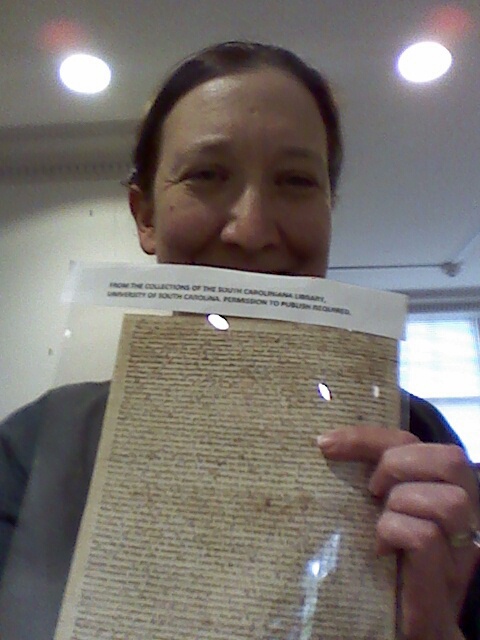
I am delighted to say that I eventually made a trip to the Columbiana Public Library and held Louis’ original 1683 letter in my own hands!

After first discovering his words as the result of a random internet search, actually holding the document he had written more than three centuries earlier was something very special.

More on that journey here.
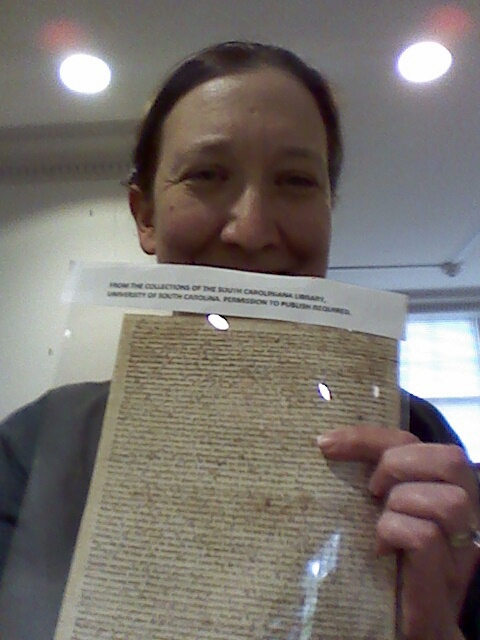
Me holding the 343 year old letter written by my seventh great grandfather, Louis Thibou

AI Disclosure

This post was created by me with the help of AI tools. While AI helps organize research, the storytelling and discoveries are my own.

https://theancestorwhisperer.com/wp-content/uploads/2025/03/image-1.jpeg
SNGF: Unfinished Projects

I’m having some Saturday Night Genealogy Fun (#SNGF), with help from Randy Seaver and his prompts! Feel free to join in.

Saturday Night Genealogy Fun: September 19, 2026

Prompt: “What started but unfinished projects do you have?  Define one or more of them, and how far along you are in the project.”

Raise Your Hand

Who among us doesn’t have at least a handful of unfinished genealogy projects? Bueller? Bueller?[1]

Some Projects

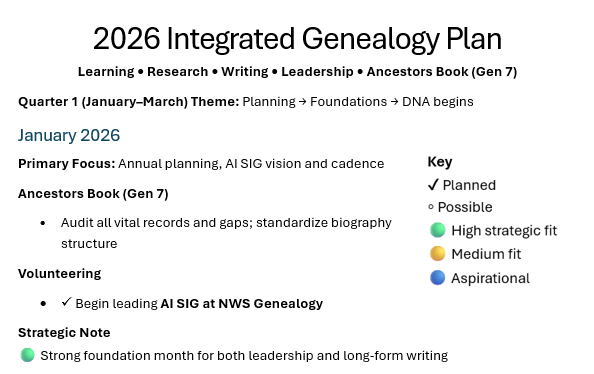
When planning for 2026, I categorized my genealogy projects to make them more manageable. It’s helping, so I’ll offer some of my projects in these categories:

  • Learning: I attended not one but two IGHR classes this year (Genetics for Genealogists: Fundamentals of DNA and Writing Genealogical Proofs Using Documentary and Genetic Evidence) as well as NYSFHC 2026, RootsTech 2026, and using my FamilyTreeWebinars subscription so much that ChatGPT says “You’ve basically built yourself a graduate-level genealogy + AI curriculum”!
  • Research: I do research as needed for my book (see below) and make a parking lot of Research Questions which come up, which I then hit as time allows (hah!). One of my more interesting RQs here is Patrick Dobbins, who migrated from Famine-era Ireland, across much of the United States, and then to Brazil, where he settled.
  • Writing: the primary outlet of this is my blog. I had a dream of publishing a genealogical article, which I achieved (in a local gen club’s newsletter), but haven’t yet set or started the next. Writing the blog, which I am doing weekly for both Saturday Night Genealogy Fun and 52 Ancestors in 52 Weeks, is satisfying enough for this year.
  • Leadership: this was a stretch goal for me. I agreed to lead an AI SIG for a genealogy group, which I’ve discussed before so won’t again. It was and is not easy for this introvert but it’s really rewarding!
  • Ancestors Book (Generation 7): Several years ago, I started a book about the ancestors of my children. I had my software create the first draft, then did a lot of cleanup. Now each year I organize and do further research on another generation; this year is Gen 7. I publish a new copy at a local print shop and give it to either of my children (this is also a form of backup for me). It’s not cheap, but the rewards are incomparable.

Of course, now that I look at this, I realize that I put them into different categories in my Todoist app:

  • Ancestors Book (Generation 7): detailed above
  • Blog posts: also above
  • Connection and community: this is attending conferences in person, and helping people one on one
  • Personal research questions: due to a busy schedule, I’m forced to parking lot most of my rabbit holes. Eventually I’ll get back to them, I swear!
  • Payback: volunteer work and helping others: I administer Richmond County NYGenWeb, index for the WNYGS, lead a Special Interest Group (SIG) for NWSGS, and help people individually occasionally – including one Netherlander who has adopted an American solider killed abroad in WWII – wish I could have more luck for him.
  • Education: see above
  • Research trips: this is another example where my eyes were bigger than my stomach. I planned so much that I haven’t done. I want to visit the Alexander Library and Trenton in New Jersey, Ohio, NYC, and Buffalo NY for research trips. Salt Lake City someday. I haven’t truly done any of them this year; haven’t even done my local FamilySearch Center but once this year.

I will definitely need to reconcile the two, but these things are some of what I’m working on this year!

Wrap-Up

Yes, I’m type A, why do you ask?

AI Disclosure

This post was created by me with the help of AI tools. While AI helps organize research, the storytelling and discoveries are my own.


[1] Pop culture reference, referring to there being no one answering the question. John Hughes et al.. Ferris Bueller’s Day Off. Paramount Home Entertainment, 2006.

SNGF: Serendipity

I’m having some Saturday Night Genealogy Fun (#SNGF), with help from Randy Seaver and his prompts! Feel free to join in.

Saturday Night Genealogy Fun: September 12, 2026

Prompt: “Serendipity! What happened when you went looking for an ancestor or a genealogical record and were pleasantly surprised to find someone else or something else you didn’t expect while you were doing that search?”

Surprise!

You know how so many webinar presenters tell you about records to look for? Once you’ve searched the vital and church records, then done land and probate, there are many other genealogical gems to be had.

I found one of them quite by accident.

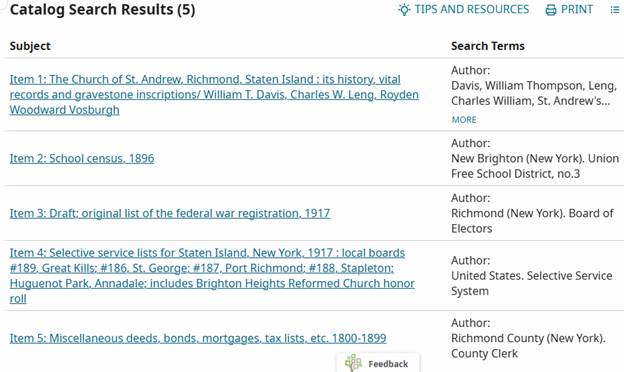
I have ancestors buried at St. Andrew’s in Staten Island, New York, and had requested a microfilm (yes, I’m that old) which had a book about its vital records and gravestone inscriptions.

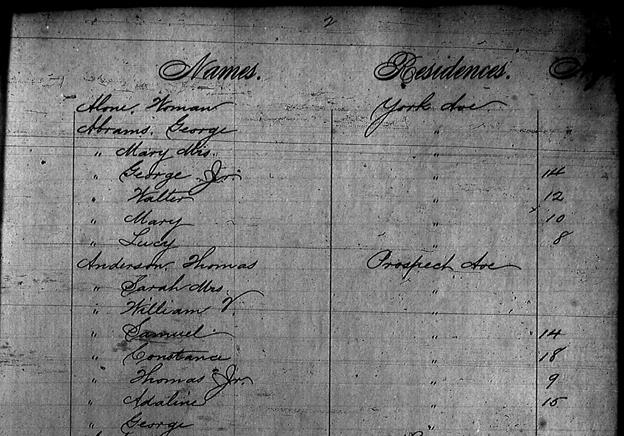
You know how the webinar presenters also tell you to keep scrolling? The immigration record might have a page 2 or the census might have additional schedules. I kept scrolling in this microfilm to the other items on it and found a school census!

Catalog entry: https://www.familysearch.org/en/search/catalog/results?count=100&q.filmNumber=514659

For this particular school district, the list contains: name, residence, age. It’s a goldmine if you’re lucky, especially in that awkward 1880-1900 time frame! So keep scrolling, you never know what you’ll find.

AI Disclosure

This post was created by me with the help of AI tools. While AI helps organize research, the storytelling and discoveries are my own.

SNGF: How Do You Use Artificial Intelligence Tools?

SNGF: How Do You Use Artificial Intelligence Tools?

I’m having some Saturday Night Genealogy Fun (#SNGF), with help from Randy Seaver and his prompts! Feel free to join in.

Saturday Night Genealogy Fun: September 5, 2026

Prompt: “How do you use Artificial Intelligence (AI) tools to help you understand the lives, history, and geography associated with your family and your ancestors, that aid your genealogy and family history research?”

My Background

I am in technology, and happily jumped onto the Artificial Intelligence (AI) bandwagon years ago. I then added my genealogy work into the mix with the help of Steve Little and NGS’s Empowering Genealogists with Artificial Intelligence in the fall of 2023. How do I use AI in genealogy?

Let me count the ways…

I lead an AI Special Interest Group (SIG) so it’s a question I’m thrilled to be asked. My emphasis is generally on low-lift, high-impact applications.

I have also written about AI in my blog, and evolved it into adapting 52 Ancestors into my own flavor: 52 AI Ancestors.

My Own Top List

Primarily, I use AI for getting  research ideas: I give it what I have and ask what to try next. It’s great when my brain is just stuck. I use it for organizing research (here are a bunch of notes I took, can you compile a timeline). Finally, I get help writing narratives (be sure to set up guardrails about sourced facts) – usually I write my draft and have AI critique it, including for this blog.

Many Other Ways We Explore AI

I asked Claude (of course I did) to create a list based on my meeting topics, past and future. I feel it’s important to delineate that we should do the research because that’s what we are good at. We should keep AI “in its lane” – that said, here are some great applications.

How AI Shows Up in Genealogy Research

  • Finding & Reading Records
    • Transcribing difficult or old handwriting (Transkribus)
    • Translating foreign-language records
    • Reading and interpreting records more broadly
    • Using AI-powered search and hints within FamilySearch Labs
  • Research Planning & Problem-Solving
    • Building a research plan from a research question (GPS-grounded)
    • Working brick walls — turning a stuck case into a next step
    • Analyzing and sorting conflicting evidence, including similarly-named people
    • Prompt design — using Context/Task/Format/Constraints to get better answers
  • Organizing & Managing Research
    • Organizing findings and querying your own research collection
    • Reusable prompt templates and project folders (a repeatable workflow)
    • Photo organization, colorization, and restoration (MyHeritage AI)
  • DNA
    • Making sense of match lists and clustering
  • Writing & Sharing
    • Writing up research findings and family narratives
    • Creating life-sketch content, including AI-generated imagery, done responsibly
    • Citing sources and research summaries
  • Evaluation & Judgment (the thread running through everything)
    • Verifying AI answers against primary sources before trusting them
    • Comparing tools (ChatGPT, Claude, Gemini, Perplexity, Copilot) for different tasks
    • Privacy practices — what’s safe to share about living relatives, DNA data, etc.
    • Treating AI output as a hypothesis to check, not a fact to file away

What Matters Most

You’re the genealogist, and AI is a people-pleaser. Here’s what I think matters most: verification and judgment.

Try It

The beauty of it is, it’s super easy to get started in AI, and perfection is not expected. Just get started! Try getting AI to help with one genealogy task you already do, and see what you think of the results.

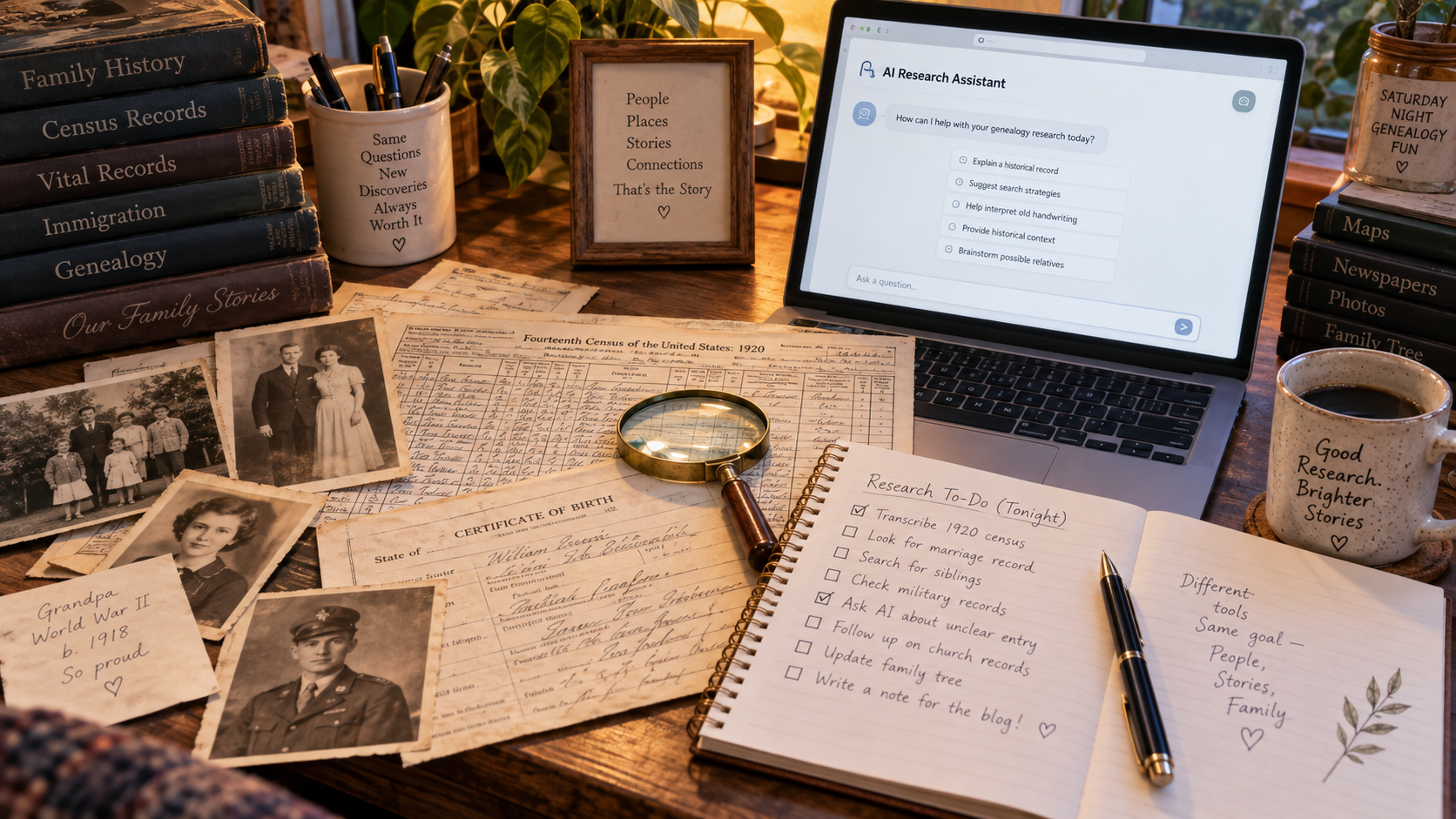
Created with ChatGPT

AI Disclosure

This post was created by me with the help of AI tools. While AI helps organize research, the storytelling and discoveries are my own.

SNGF: Turning Point

SNGF: Turning Point

I’m having some Saturday Night Genealogy Fun (#SNGF), with help from Randy Seaver and his prompts! Feel free to join in.

Saturday Night Genealogy Fun: August 29, 2026

Prompt: “Every historical person has major events, milestones and “turning points” in their life, from birth through death and even beyond.  These events, milestones and turning points can be the basis for family stories of the historical person. Please share one of those events in your own life, or the life of one of your ancestors.”

Who Will Tell Your Story?

One day, my two sons asked me why I “keep telling these genealogy stories when we’re not interested.”

I replied, “Well, one day you will be interested, and I may be gone by then.”

Without naming names, I’ll say it was the smartass who came back with “Well then we’ll have the fun of the hunt like you do!”

When It All Came Together

To no surprise to my readers, I did not find this comforting. True, my genealogy research is a legacy that gets more solid every year. But I also know that genealogy may never mean as much to my descendants as it means to me. So, I sought another way to create a legacy and thus came my turning point.

Not long after my father’s death, I learned that he had gone to college on a full scholarship. I guess I never thought about where this hand-to-mouth family got money for a university. Someone I will never know invested in my dad and his future. He was able to help me with college prep, and two of his three daughters have master’s degrees. That one gift 65 years ago is reverberating throughout the generations. That realization gave me an idea.

My employer has a very generous charitable donation match, and I eventually worked up the courage to start working with my father’s alma mater to set up an endowment. It will take me a few years to hit the minimum, but I hope to get there next year, in 2027. At that point we can start distributing small scholarships to people. I already know that I would like to keep donating to the endowment as long as I’m able.

To Make a Difference

Like my father, education helped me to get ahead in life and give my children a chance that I never had. This endowment is my way to pay this forward long after I’m gone. This realization became the “turning point” in how I think about purpose and legacy. While my children may or may not have the fun of hunting for ancestors, the scholarship is a legacy they won’t have to go looking for. It will already be out there making a difference.

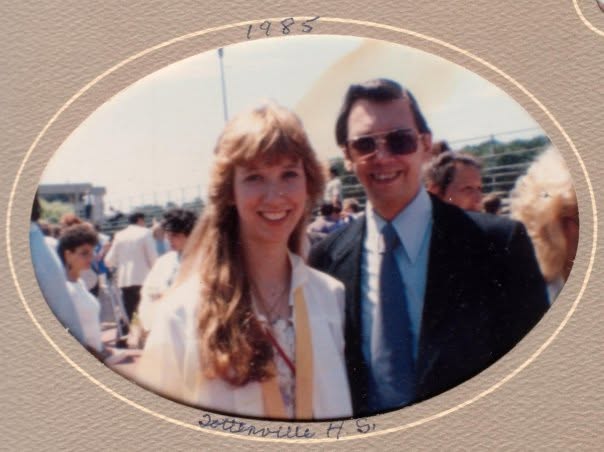
Dad and me

AI Disclosure

This post was created by me with the help of AI tools. While AI helps organize research, the storytelling and discoveries are my own.

SNGF: School Records

I’m having some Saturday Night Genealogy Fun (#SNGF), with help from Randy Seaver and his prompts! Feel free to join in.

Saturday Night Genealogy Fun: August 22, 2026

Prompt: “Do you have any records of your ancestors’ schooling, such as report cards, yearbooks, or photos? If so, please share one of them and what you learned about your ancestor(s) from the article.”

Introduction

Were you a good student? Would you want your report cards examined a hundred years later? I don’t know how my Grandpa felt, but he can be proud.

What I found

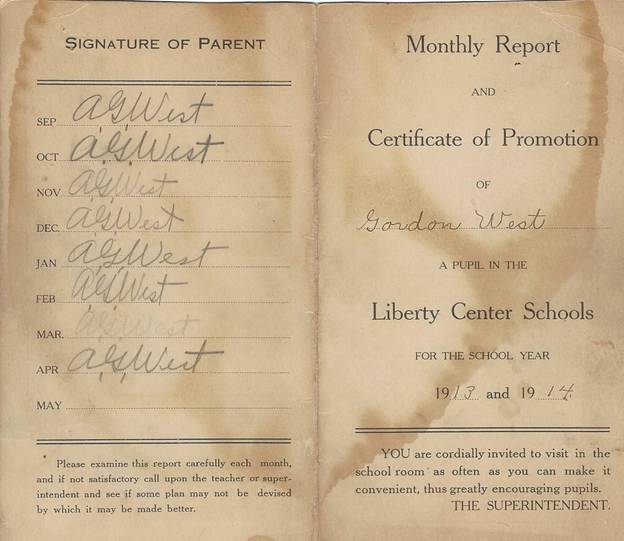
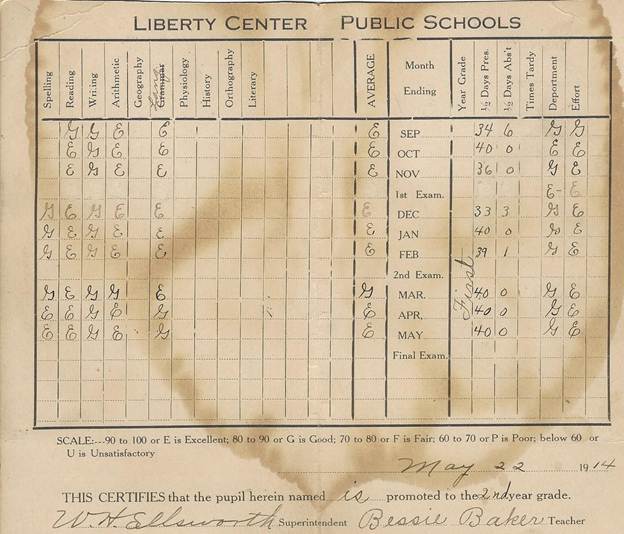
I am the proud caretaker of a nearly complete set of report cards from my grandfather, Gordon West.

Report cards, in Liberty Center, Ohio in the WWI era, were sent home monthly. Here is Grandpa’s first grade report card. Grandpa was an “Excellent” student in spelling, reading, and arithmetic, as well as effort, and a “Good” student in writing, language, and deportment.

I’m guessing that Grandpa’s excellent spelling skills came in handy later, working as a linotype operator at a newspaper for over 40 years!

Bonus

My great grandfather’s signature is on every month. For so many ancestors, I don’t have a single signature, but for Adam Grant West, I get a small glimpse of a father who regularly reviewed his son’s school reports.

Grab the Tidbits – They Matter!

I’m so glad Randy Seaver posted this prompt, and Lisa S. Gorrell suggested it! I’d nearly forgotten about these report cards and it was so fun and enlightening to look at them. A report card may seem like a small keepsake, but sometimes those little pieces of paper bring an ancestor’s everyday life closer than the “important” records do.

AI Disclosure

This post was created by me with the help of AI tools. While AI helps organize research, the storytelling and discoveries are my own.

SNGF: Interesting Newspaper Article

I’m having some Saturday Night Genealogy Fun (#SNGF), with help from Randy Seaver and his prompts! Feel free to join in.

Saturday Night Genealogy Fun: August 15, 2026

Prompt: “Have you found an unusual, chilling, amazing, or fascinating newspaper article about your ancestors? If so, please share the article and what you learned about your ancestor(s) from the article.  Provide a source citation too!”

The Draft Riots?

As a student of both history and New York, I was already familiar with the infamous New York City Draft Riots of 1863. Opposition to the Civil War draft, class resentment, economic anxiety, and racism combined explosively. What began as resistance to conscription became days of deadly violence, much of it directed against Black New Yorkers.

Because so much of my own New York ancestry is Irish, I’ve often wondered—and hoped—that none of my ancestors took part.

A Surprising Link

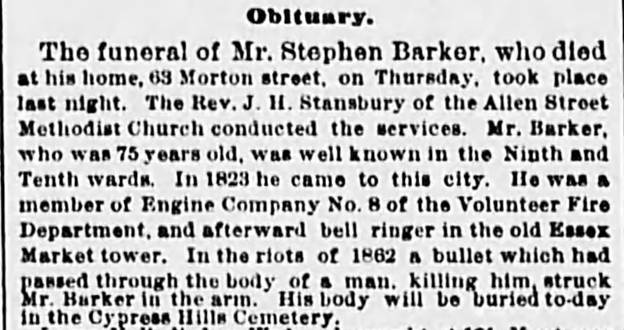
I have not found any evidence that my Irish ancestors were involved. But then I found a surprising obituary for another ancestor, Stephen Barker, whose presumably English family had been in the United States since at least the 1700s. According to the obituary, Stephen had been shot during “the riots of 1862.” My first thought was that the date must be a typo and that the obituary referred to the famous Draft Riots of July 1863. But I haven’t found a contemporary account that connects Stephen to those riots—or, so far, identified an 1862 incident that clearly matches what the obituary describes.

I don’t know if Barker was a participant or bystander, or whether he was there in his capacity as a firefighter. I haven’t been able to find any contemporary records of the particular incident. But I find it fascinating that my ancestor somehow found himself caught up in a volatile and controversial moment in New York City’s history.

What I Know—and What I Don’t

Historical context matters, but context isn’t the same thing as excuse. I know what happened during the Draft Riots, but I don’t know that Stephen Barker was there—or even that the obituary was referring to those riots. If he was caught in some sort of civil unrest, I don’t know whether he was participating, watching, responding as a firefighter, or simply in the wrong place at the wrong time.

For now, the newspaper has given me a fascinating clue rather than an answer.

Side Lesson: Cite Carefully

Interestingly, Newspapers.com identified the newspaper as the New York Herald, but the digitized page itself is unmistakably headed The Sun. Since those were separate newspapers in 1883, I have cited the newspaper shown on the original page rather than the database metadata.

The obituary [1]

AI Disclosure

This post was created by me with the help of AI tools. While AI helps organize research, the storytelling and discoveries are my own.


[1] “Obituary,” The Sun (New York, NY), Nov 10, 1883, page 1, column 6.

SNGF: My first New York Hurricane

I’m having some Saturday Night Genealogy Fun (#SNGF), with help from Randy Seaver and his prompts! Feel free to join in.

Saturday Night Genealogy Fun: August 8, 2026

Prompt: “Did extreme weather or a natural disaster ever affect you or your ancestor(s)? In what way(s)? How did you find this out? Describe one or more of the extreme weather experiences in your own life or in your ancestors lives.”

Introduction

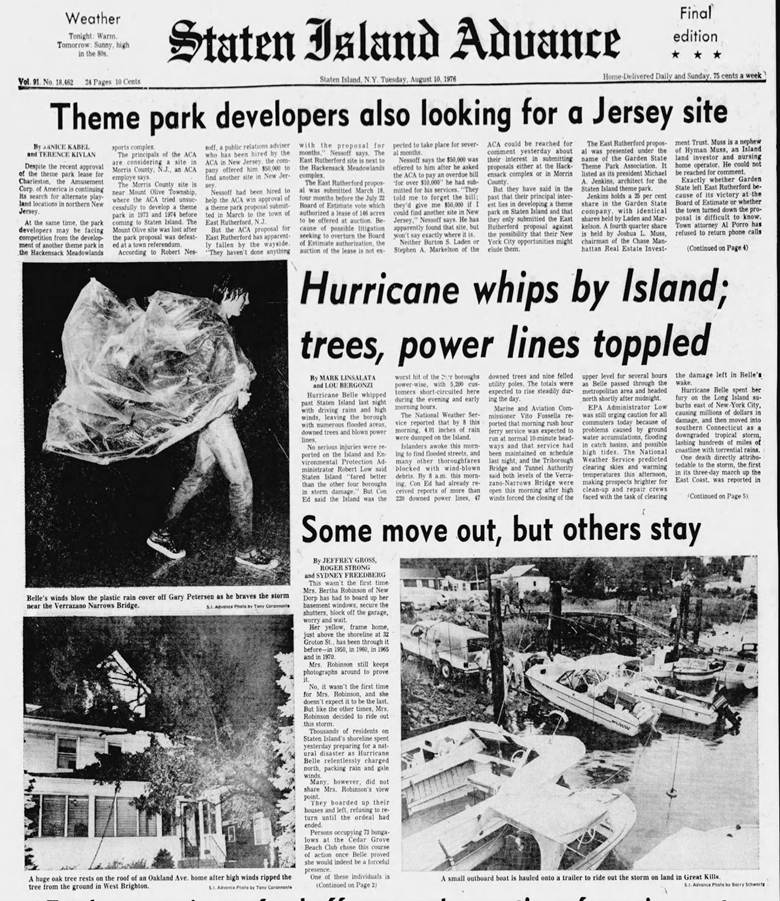
In New York City, it’s a rare hurricane that makes it into town, and usually downgraded to a tropical storm by then. So, when they hit, they are memorable, if not usually severe. Dad taught us about preparing for a storm when I was in elementary school.

A Family Prepares Together

During Dad’s custodial time, likely an every-other-weekend visit, a hurricane was scheduled to hit us. This would have been about the mid-1970s. Fortunately, Dad worked to make precautions fun, while teaching us how to handle emergency situations.

We set up “camp” in the basement – this is long before the camping fad I’ve spoken about in earlier blog posts, and long before Superstorm Sandy showed just how dangerous New York basements could become during flooding.

We had blankets, pillows, food and water in the basement far from windows, and waited out the storm. It was an adventure, yet Dad specified precautions, so that we’d be able to take them ourselves when needed.

The storm itself was not memorable to young me, only the preparations – which is as it should be.

A Lesson Brought Back

Many years later, I was a consultant traveling to various clients. I was once at a client in Texas near the Mexico border. Severe weather, with the possibility of a tornado, was expected during work hours. We were in warehouses, nothing particularly safe. So, during that specific time, I went into the ladies’ room. Some colleagues chuckled, but I brought forth the “better safe than sorry” lesson from my childhood and emerged unscathed not long after. Many fixtures in the town showed tornado damage, but fortunately no one was injured.

If parents wonder if their lessons stick – yes, they often do.

AI Disclosure

This post was created by me with the help of AI tools. While AI helps organize research, the storytelling and discoveries are my own.

SNGF: Family Vacation

I’m having some Saturday Night Genealogy Fun (#SNGF), with help from Randy Seaver and his prompts! Feel free to join in.

Saturday Night Genealogy Fun: August 1, 2026

Prompt: “Did your family go on vacation? Describe one or more of your vacations with your birth family or with your spouse and children.”

Vacations Transformed by a Camper

One of my most memorable family vacations – for both good and bad reasons – was the Southern road trip my father took us on.

Dad had gotten a girlfriend who enjoyed camping, so naturally we went on camping weekends. One rain too many, though, and Dad pivoted to buying a pop-up camper (along the lines of this but much, much older). This camper gave us the freedom to travel, which we’d never been able to afford before, and Dad took advantage.

Our Great Adventure

He had custodial time for a week or two in the summer, and he took us on our Southern Road Trip for one of them. We saw many places, most of which I’ve sadly forgotten and need to dig out a photo album. One of them was Cape Hatteras, North Carolina, where we encountered a hurricane and got, yes, drenched. I got a lighthouse knickknack and painted it to match the Cape Hatteras Lighthouse pattern as a gift for my dad. When he passed, I brought it home, where it sits in my home office.

Another stop we made was visiting his aunt – Aunt Tess, my grandfather’s only surviving sister. I believe that was the only time we girls ever met her.

Dad made sure to incorporate a lot into the short trip – camping, sightseeing, family. And all in all, we got a lot of together time in.

Last month, when my husband and I took our children on an adventure vacation of our own, I found myself thinking about Dad and that old pop-up camper. I hope my children remember our travels just as fondly—and continue the tradition someday.

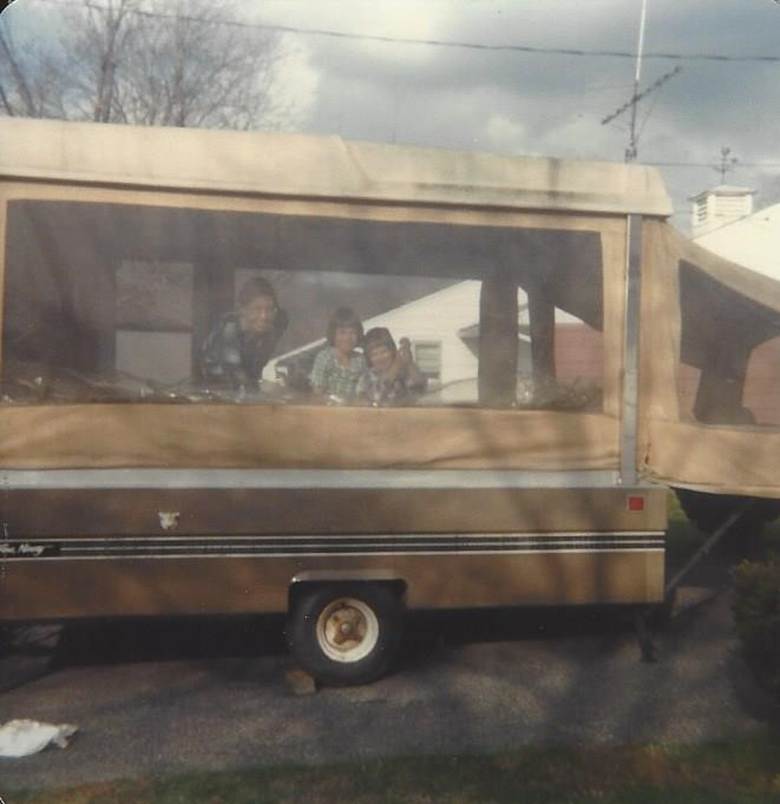
Dad and my sisters in the pop-up camper.

AI Disclosure

This post was created by me with the help of AI tools. While AI helps organize research, the storytelling and discoveries are my own.

SNGF: The Man Who Wasn’t

I’m having some Saturday Night Genealogy Fun (#SNGF), with help from Randy Seaver and his prompts! Feel free to join in.

SNGF: The Man Who Wasn’t

Saturday Night Genealogy Fun: July 25, 2026

Prompt: “Which of your ancestors or relatives have you NOT found in the Census records and what have you done or are doing to try to find that person? Can AI help? Identify one or more of your ancestors that are inexplicably missing from one or more census collections.  Why do you think they were not enumerated?”

Introduction

At the risk of being redundant, I again discuss my second great-grandfather Andrew Driskol! I have not yet found a record created during Andrew’s lifetime that clearly identifies him.

Discussion

According to records his children left, Andrew was born in Prussia, married a woman from England and had two children. His wife and children migrated from London to New York in 1875, and several more children were born in New York from 1876 until 1883, all of whom later identified the same mother, and Andrew as their father. Andrew’s widow was enumerated in the 1900 census.

Andrew should have been located in the 1875 New York State census, and in the 1880 United States Federal census, but I cannot. The wife’s migration is under a horribly mangled surname, but even creative searching does not locate the census or any birth records (sparse at that time). Perhaps he was in fear, or used to oppressive governments, or for some other reason avoided paperwork.

I am fortunate, though, that he did marry and have these children, including my great-grandmother.

AI Disclosure

This post was created by me with the help of AI tools. While AI helps organize research, the storytelling and discoveries are my own.