SNGF: School Records

I’m having some Saturday Night Genealogy Fun (#SNGF), with help from Randy Seaver and his prompts! Feel free to join in.

Saturday Night Genealogy Fun: August 22, 2026

Prompt: “Do you have any records of your ancestors’ schooling, such as report cards, yearbooks, or photos? If so, please share one of them and what you learned about your ancestor(s) from the article.”

Introduction

Were you a good student? Would you want your report cards examined a hundred years later? I don’t know how my Grandpa felt, but he can be proud.

What I found

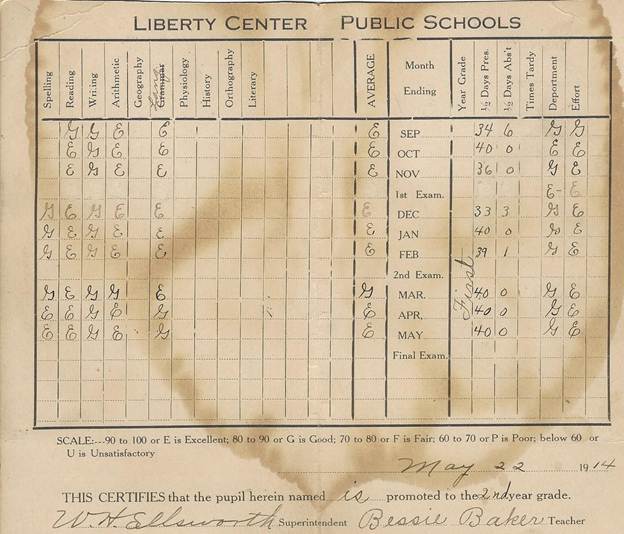
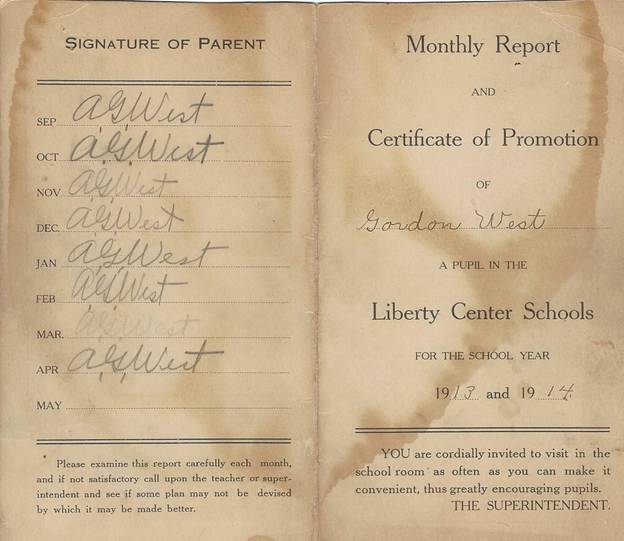
I am the proud caretaker of a nearly complete set of report cards from my grandfather, Gordon West.

Report cards, in Liberty Center, Ohio in the WWI era, were sent home monthly. Here is Grandpa’s first grade report card. Grandpa was an “Excellent” student in spelling, reading, and arithmetic, as well as effort, and a “Good” student in writing, language, and deportment.

I’m guessing that Grandpa’s excellent spelling skills came in handy later, working as a linotype operator at a newspaper for over 40 years!

Bonus

My great grandfather’s signature is on every month. For so many ancestors, I don’t have a single signature, but for Adam Grant West, I get a small glimpse of a father who regularly reviewed his son’s school reports.

Grab the Tidbits – They Matter!

I’m so glad Randy Seaver posted this prompt, and Lisa S. Gorrell suggested it! I’d nearly forgotten about these report cards and it was so fun and enlightening to look at them. A report card may seem like a small keepsake, but sometimes those little pieces of paper bring an ancestor’s everyday life closer than the “important” records do.

AI Disclosure

This post was created by me with the help of AI tools. While AI helps organize research, the storytelling and discoveries are my own.

52 Ancestors: A Day in the Life

A Day in the Life

I’ve adapted Amy Johnson Crow’s 52 Ancestors in 52 Weeks challenge.
Each week I follow my children’s ahnentafel numbering to select the featured ancestor, ensuring no one through the mid–sixth generation is left behind.

52 Ancestors in 52 Weeks: 2026 Week 31: A Day in the Life

What the Records Tell Me

My Week 31 ancestor is Alice Matilda Britton. Alice was born in Manhattan, New York, in 1882, and spent nearly all her life on Staten Island, New York. In the 1900 census, Alice is 17 and at home with her parents, occupation “Fireworks Factory Hand” (as is her younger sister), not employed for 2 months. She married in 1903 and had four children between 1904 and 1913. In 1910, as the mother to one living child, her occupation was “None.” In the 1915 New York State census, Alice’s occupation was “Housewife,” and on her 1917 death certificate, it was again “H[ouse]wife.” But what is the story behind the facts?

Imagining an Ordinary Monday

One might imagine the life of the mother in a working-class family around 1915. I asked Claude,

Tell me about what a typical day might look like for a 32-year-old housewife to an engineer in 1915 Staten Island, New York. She is the mom of 3 littles, ages 8, 4, and 1.

There were several iterations, but we ended up with an imagined diary entry for Alice.

[Note: The following is an imaginative reconstruction, not an actual diary. It draws on documented facts about Alice and her family, along with general knowledge of working-class household life in 1915. Her schedule, words, thoughts, and many domestic details are speculative.]

A Day in the Life: Alice, 956 Post Avenue, Port Richmond — Monday, September 13, 1915

A little imagined diary entry, written for fun — picturing what an ordinary Monday might have looked like for my great-great-grandmother Alice, wife of Henry, and mother to Harry (8), Walter (4), and baby Edith (2), on Staten Island’s North Shore in 1915.


5:40 in the morning.

Up before the bells of the Dutch Reformed Church even think of ringing. The stove wants coaxing this time of year — I laid the coal last night so it wouldn’t take so long, and still my hands are black by the time it catches. Henry likes his coffee hot and his eggs not runny, and he likes them both by twenty past six, so there is no dawdling in this house.

6:15.

Henry down and dressed for the office, collar starched within an inch of his life. He’ll take the Port Richmond car down to the St. George ferry same as always — I hear the trolley bell from the porch some mornings if the wind’s right. He kissed Edith on the head, told Harry to mind me, and was out the door with his coffee only half drunk, same as every day of our marriage. I do wonder what it is he does all day among those drafting tables in the city. He tries to explain it to me and I nod and understand perhaps half.

6:45.

Edith up and hollering for her breakfast, poor mite, as if I’d forget her. Walter trailing behind her in his nightshirt asking why he cannot go to school with Harry yet. Told him again — next year, next year — though at four I don’t think “next year” means very much to him.

7:30.

Harry off up Post Avenue to school with his lunch pail and a great deal of noise about it. I stood on the step and watched him to the corner, same as I do every morning, though he is quite put out that I still do this.

8:00.

Monday, which means washing, which means the whole morning given over to the tub and the board and my knuckles scraped raw by noon. Walter “helps” by handing me pins and getting underfoot in equal measure. Edith propped where I can see her, gumming on a crust. The water wants heating first, then the boiling of the whites, then the wringing, then the whole business hung on the line out back — and heaven help me if it rains before it’s dry, because then it all comes in and drapes over every chair in the kitchen.

11:30.

Down to Richmond Avenue for what we’re short of — a bit of meat from the butcher, a loaf, and thread, since I am nearly out and there is a tear in Harry’s school trousers that will not mend itself. Walter came along and had to be steered away from every shop window with anything shining in it. Edith slept the whole way in the carriage, bless her, which was the only peaceful quarter hour I had all morning.

12:30 in the afternoon.

Dinner for myself and the two little ones — bread, a bit of the cold meat from yesterday, and whatever Walter will consent to eat, which today was very little. Edith down for her nap after, and I sat a moment longer than I should have before the mending pile reminded me it was still there.

2:00.

Mending, and Walter’s trousers, and a hem let down on one of my own skirts. The house has that particular quiet of a nap-time afternoon — just the clock, and the wash still dripping out back, and Walter humming to himself over some game with his tin soldiers on the kitchen floor.

3:15.

Harry home from school, starving as always, full of some tale about a boy who got the strap for talking out of turn. Wanted to know would I write to his teacher about something or other — I told him to eat his bread and butter first and we’d see.

4:30.

Wash brought in, mostly dry, folded into the basket. Started the fire up again for supper. Edith woke cross and would not be put down, so I did the potatoes with her on my hip, which is a trick I have gotten rather good at this past year.

6:00.

Henry’s ferry gets in a little before six most evenings, and I listen for his step same as I listened for the trolley bell this morning. Supper on the table when he came through the door — I do try to have it so, tired as he must be from the city. He told us a little about his day, which is more than most evenings, and Harry hung on every word about the bridge works he’s drawing up.

7:00.

Baths for the three of them, which with only the one tub and water heated on the stove is its own hour of labor, but they come out pink and sweet-smelling and that is worth the trouble. Edith down first, fussing a little, then Walter, who wanted three stories and got one.

8:00.

Harry to bed with his lesson book, though I suspect more looking at the pictures than at his arithmetic. Henry in his chair with the evening paper, and myself finally sitting, with the mending basket that never truly empties, for perhaps three quarters of an hour before the fire needs banking for the night.

9:30.

To bed, though I don’t imagine I’ll stay there undisturbed — Edith has taken to waking once in the night this week, teething I think. Tomorrow is ironing day. I try not to think of it yet.


Goodnight from Post Avenue.

What “Housewife” Concealed

I cannot know whether Alice’s Mondays unfolded exactly this way. I do know that the records reduced her work first to “None” and later to “Housewife.” Behind those words were children to feed, clothing to wash and mend, water to heat, meals to prepare, and a household organized around school hours, ferry schedules, and Henry’s working day. The reconstruction is imagined, but the labor it represents was real.

Alice

AI Disclosure

I used Claude to help develop and refine the imagined diary entry in this post. The documented facts about Alice, her family, address, and occupations come from genealogical records. The schedule, dialogue, emotions, and many details of daily life are speculative. I reviewed and edited the final narrative.

Next Week’s Topic: Neighbors and Community
52 Ancestors: A Question the Records Can’t Answer

I’ve adapted Amy Johnson Crow’s 52 Ancestors in 52 Weeks challenge.
Each week I follow my children’s ahnentafel numbering to select the featured ancestor, ensuring no one through the mid–sixth generation is left behind.

52 Ancestors in 52 Weeks: 2026 Week 19: A Question the Records Can’t Answer

Introduction

My Week 19 ancestor is Jennie Felder Frank.

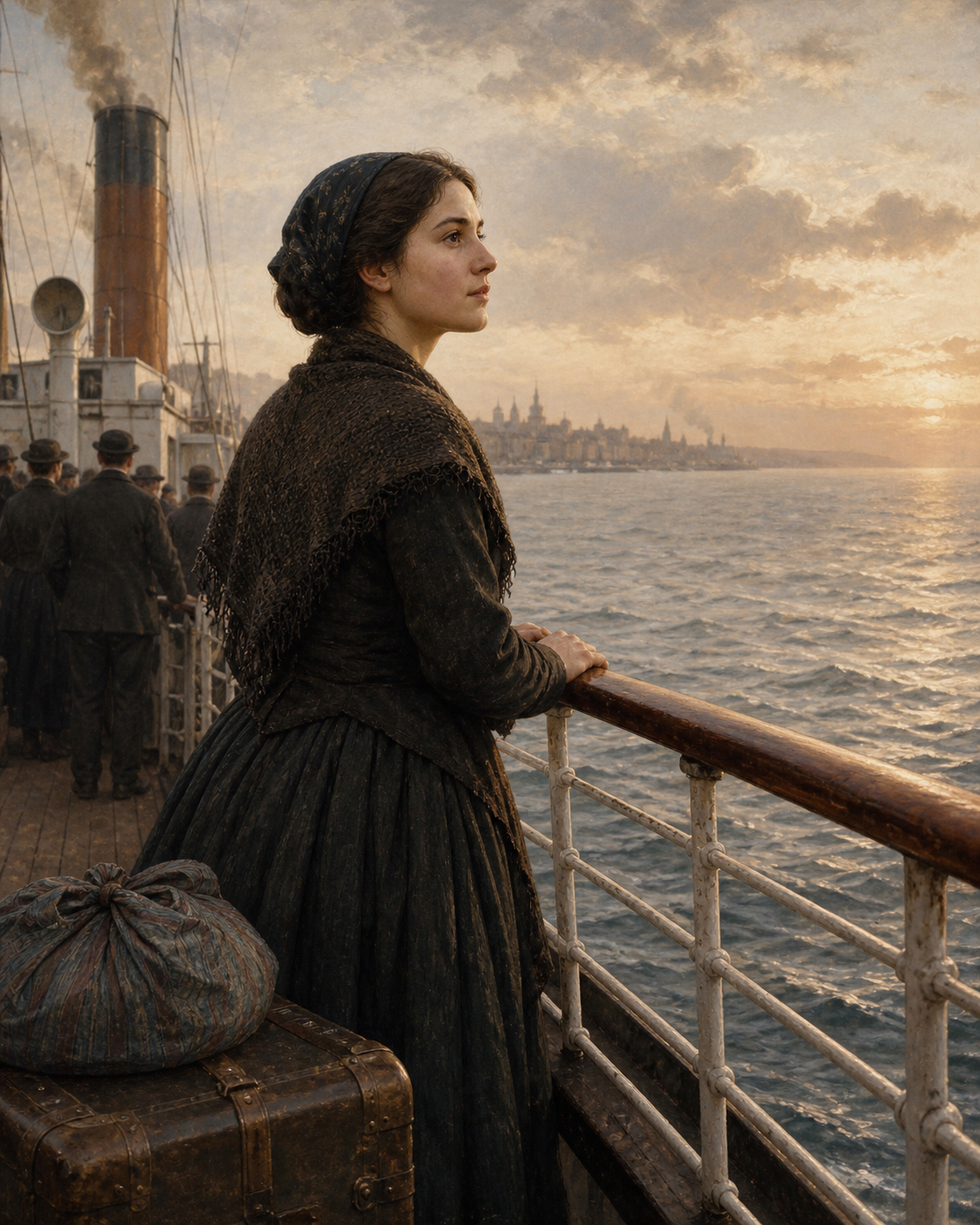
As far as I can ascertain, Jennie immigrated from Austria to New York in 1887, when she was probably in her late twenties. I have never located anyone from her natal family in the United States. That absence has become the question at the center of this week’s post:

What did Jennie leave behind when she emigrated?

Jennie married Joseph Frank in January 1888, only a year or so after her arrival. Her marriage record says her parents were Joseph and Rosie, that she was twenty-four, and that this was her first marriage. Later records suggest she may have been closer to twenty-nine. Whether the discrepancy was accidental, practical, or intentional, it reminds me how little the records can tell me about how Jennie understood herself at that moment.

Her brief time in New York as a single woman makes her harder to trace. I do not know where she lived before her marriage, who helped her settle, or whether she arrived with friends, relatives, neighbors, or no one at all. I have not found members of her Felder family nearby. That silence makes me wonder whether her immigration marked a true separation from the people who had known her first.

Even her father’s name shifts across the records. Her marriage record names him as Joseph. Her death certificate names him as James, and the informant did not know her mother’s name. Her tombstone, however, preserves her Hebrew identity: Sheindel, daughter of Avraham Yosef.

Those clues suggest a sharp break between the old country and the new. In America, she became Jennie Felder Frank: wife, mother, widow, and grandmother. But before that, she was Sheindel, daughter of Avraham Yosef, born into a family and a world I can only glimpse.

So my question for Jennie is not only what she brought with her, but what she had to leave behind: family, language, customs, memories, expectations, perhaps even a version of herself that never fully made it into American records.

Closing

The records can tell me that Jennie crossed an ocean, married Joseph Frank, raised three children, lived with her daughter Anna after Joseph’s death, and was buried in Washington Cemetery. They cannot tell me whether she missed the people she left behind, whether she expected to see them again, or whether she spoke of them to her children. That is the question I would ask her: when you began again in New York, what part of your old life stayed with you?

ChatGPT, 04May2026

AI Disclosure

This post was created by me with the help of AI tools. While AI helps organize research, the storytelling and discoveries are my own.

Next Week’s Topic: At the Cemetery

52 Ancestors: Conflicting Clues

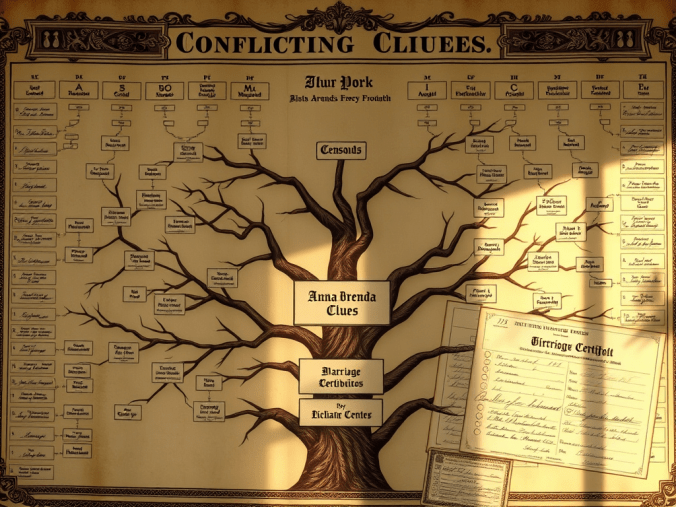
Conflicting Clues

I’ve adapted Amy Johnson Crow’s 52 ancestors in 52 weeks challenge.

Each week’s post follows my children’s ahnentafel numbering, which determines the featured ancestor.

This ensures no one until mid-sixth generation gets left behind.

52 Ancestors in 52 Weeks: 2026 Week 09: Conflicting Clues

Introduction

My assigned Week 9 ancestor is Anna Brenda FRANK BIRNBAUM.

And “Conflicting Clues” turned out to be a particularly instructive one.

Was Anna a U.S. citizen?

Discussion

Anna was born in New York City in 1889. While I haven’t found her birth record, I have found her siblings’, and I have her with her family in the 1900 and 1905 censuses. She married Samuel Birnbaum, an immigrant, in 1906.

The following year, the 1907 Expatriation Act automatically revoked the citizenship of women who married non-citizens. Suddenly many women who had grown up here and never seen a ship were aliens.

Because Anna married in 1906, just before the law took effect, she may have narrowly avoided this automatic expatriation.

Imagine what that was like for them. Did it affect them socially? Did they feel disenfranchised from a place that had been their home for perhaps decades? And what would the consequences be? The act remained in place until the early 1920s – right around the time women gained the right to vote. Imagine fighting for suffrage only to learn your marriage disqualified you?

Imagine if I had seen Anna in 1910 listed as an alien and thought, “Well, that’s not my Anna.”

So, the moral of the story is, as Judy Russell, The Legal Genealogist, keeps reminding us, to know the laws in effect in the time and place of the event.

The law was largely (but not completely) repealed by the Cable Act of 1922. (Asians were still discriminated against.)

The National Archives has a helpful PDF at When Saying “I Do” Meant Giving Up Your U.S. Citizenship.

Challenge

Reexamine your no-brainers and look for incongruities which may have escaped notice previously. Investigate why!

You can look for:

  • Citizenship shifts
  • Border changes
  • Age discrepancies
  • Marital status laws

What conflicting clues are you dealing with?

AI Disclosure

This post was created by me with the help of AI tools. While AI helps organize research, the storytelling and discoveries are my own.

Next Week’s Topic: Changed My Thinking

52 AI Ancestors in 52 Weeks: Week 19: At the Library

I’ve combined Amy Johnson Crow’s 52 ancestors in 52 weeks challenge, and Steve Little’s The 2025 AI Genealogy Do-Over, to create a unique 52 AI ancestors in 52 weeks party!

52 AI Ancestors in 52 Weeks: Week 19: At the Library

Check This Out: Libraries, Family, and a Little Help from AI

Introduction

I’ve felt at home in the library for as long as I can remember. It’s a comfortable, non-judgmental environment where I can get transported to a world not my own, or learn how to do something new.

Discussion

Several good memories of mine happened in libraries.

When my divorced dad finally got weekend visitation, one of the activities he took us on was trips to the library. A newspaper photographer caught me searching in the card catalog (oh, boy, I wish I could find that photo!).

My first volunteer job was at my middle school library, putting books away. To this day, if I see a book misfiled in the library, I’ll furtively put it back in the proper spot according to the Dewey Decimal code on its spine.

We had a snail who left the tank’s water to lay eggs, which had us worried. I checked a book about pet care out of the library, and wrote the author with a question about my weird snail. How thrilling it was to hear back! (She didn’t know, but the thrill was hearing back! – and it turned out Mama Snail knew what she was doing.)

When I had children, I hyped them up to get their own library cards. As soon as they could print their names, they were eligible—and you better believe we got them cards when they were each four years old!

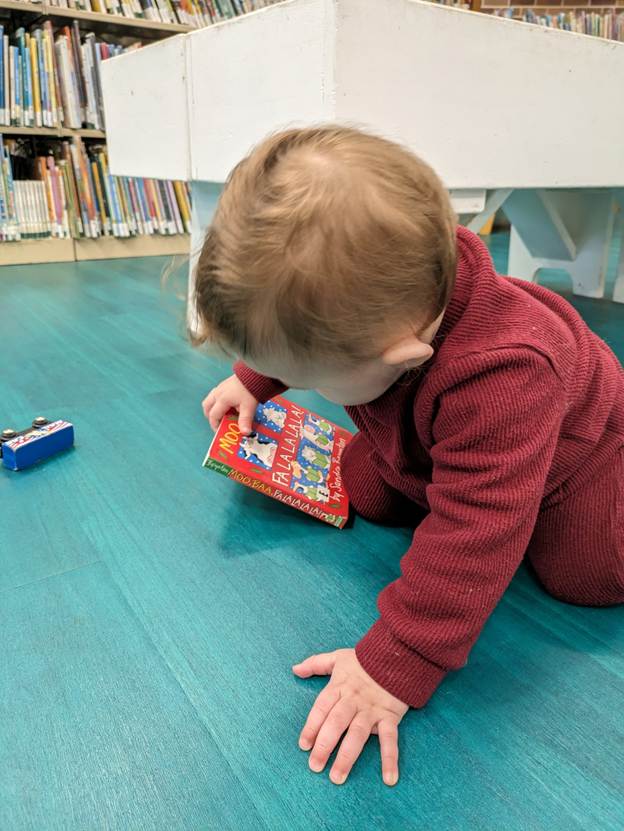
I care for my young granddaughter some days, and enjoy bringing her to the library so she can choose a board book which I’ll read to her.

Without really thinking about it, I helped to carry on the tradition of family bonding at the library to at least the fourth generation.

How AI can help

I track my reading on Goodreads, and have done so since I inadvertently started a book I’d already completed. This turned out to be very helpful for recommendations. Here’s what I did:

  • I exported my 5-star reads from Goodreads.
  • I shared them with ChatGPT using this prompt…

Consider the attached list of books that I have read and highly rated. What books would you recommend I read?

  • ChatGPT replied with personalized recommendations…

Summary and challenge

Books are deeply personal. What matters most is that they speak to you. This week, I invite you to pass on a love of the library—or rediscover it yourself—and let AI help you uncover your next great read.

Your Turn:

Determine who you’d like to get to the library – yourself? A family member? Get a library card and use AI’s help for book recommendations.

Little one’s first visit to a library

Next week’s topic: “Wheels.

Disclosure

This post was created by me and refined with AI assistance. While AI helps organize research, the storytelling and discoveries are my own.