SNGF: Artifacts

I’m having some Saturday Night Genealogy Fun (#SNGF), with help from Randy Seaver and his prompts! Feel free to join in.

Saturday Night Genealogy Fun: June 13, 2026

Prompt: “Were you lucky enough to receive or find artifacts from your ancestors (parents, grandparents, others) as you pursued your genealogy research? Describe one or more of the artifacts you found or received and where you obtained them?”

Introduction

One person’s “why are we keeping this?” may be a genealogist’s “thank goodness someone did.” The artifacts our ancestors left behind, whether treasured heirlooms or forgotten odds and ends, can open small windows into their daily lives, their values, their work, and sometimes even their secrets.

Would that we all had boxes full of family artifacts waiting to be discovered.

Although, to be fair, perhaps not too many boxes. I’ve heard that can become its own genealogical problem. It just isn’t one I’ve personally had.

My own collection of family artifacts is fairly small, which makes me treasure the few pieces I do have all the more. I have written before about the Britton forks, but because they are among the most meaningful artifacts in my possession, they deserve another moment in the spotlight.

The Britton Forks

My grandmother, Edith Makey West, lost her mother, Alice Britton Makey, when Grandma was only three years old. Alice’s parents were already gone by then as well, so Grandma grew up with very little direct connection to her maternal family. She had a beloved aunt, but not much else that tied her to the Britton side.

That is part of what makes the forks so special.

Somehow, Grandma came to have a set of forks marked with the initial B, presumably for Britton, Alice’s maiden name. I do not know exactly how they passed down to her, or who first owned them, but I can imagine what they must have meant. For a little girl who lost her mother so young, even an ordinary household object could become something precious.

A fork is not usually the kind of thing that makes history books. It does not announce itself as important. It does not come with a biography attached. But when it is one of the few tangible links a daughter has to her mother’s family, it becomes something more than silverware.

It becomes a connection.

Grandma’s Gift

Many years later, when I got bit by the genealogy bug, Grandma became my biggest supporter and champion. She was the one who challenged me to connect her line to “the” Staten Island Brittons: the Brittons who settled in that New York area in the 1660s.

Eventually, I did.

That discovery mattered to both of us. For Grandma, it helped restore a piece of family history that had been thinned by early loss. For me, it turned names and dates into something deeply personal. This was not just a lineage on paper. This was Grandma’s mother’s family. This was the family represented by that small initial B on the forks she had kept.

At some point, Grandma proudly gave the Britton forks to me. One of them now hangs on my wall.

It is a simple object, but I am honored to have it. I am honored to hold something that helped connect Grandma to the mother she barely knew, and I am honored that she trusted me to carry that connection forward.

Postscript

I married a man with a B last name, which makes the forks feel oddly at home in my family, too.

Maybe one day they should go to my daughter-in-law. After all, sometimes the best family artifacts are the ones that keep gathering meaning as they move from one generation to the next.

AI Disclosure

This post was created by me with the help of AI tools. While AI helps organize research, the storytelling and discoveries are my own.

52 Ancestors: A Hard Choice

I’ve adapted Amy Johnson Crow’s 52 Ancestors in 52 Weeks challenge.
Each week I follow my children’s ahnentafel numbering to select the featured ancestor, ensuring no one through the mid–sixth generation is left behind.

52 Ancestors in 52 Weeks: 2026 Week 26: A Hard Choice

Introduction

My Week 26 ancestor is Francis William Carey. Great Grandpa’s hard choice may not have been made once. It may have been made again and again over the course of a long marriage.

Leaving Home Young

Frank was the ninth of thirteen children in a large Irish immigrant family in rural New Jersey. He moved to Manhattan as a teenager to work. This shows early independence and suggests he was no stranger to difficult transitions.

Marriage Was Not Always Simple

He married a girl from near his hometown, so clearly he visited home, and they settled in Manhattan. The family story is that Nanny and Great Grandpa frequently split up and got back together. Nanny would send one of the boys to collect money from him as needed.  

In one census year, Nanny and the children appear in the household, but Francis does not. I do not yet know whether that absence reflects work, separation, circumstance, or something else — but it fits with the family memory that their marriage had difficult seasons.

The hard choice may have been one they both faced: whether to keep finding their way back to each other.

I am glad they did, as their later marriage seems to have been a good one.

It is easy, from a distance, to flatten a marriage into a single sentence: they stayed together, or they did not. But real marriages are lived day by day, through work, money, children, pride, disappointment, forgiveness, and ordinary exhaustion. A census can show us who was under one roof on one particular day. It cannot tell us everything that happened before or after that moment.

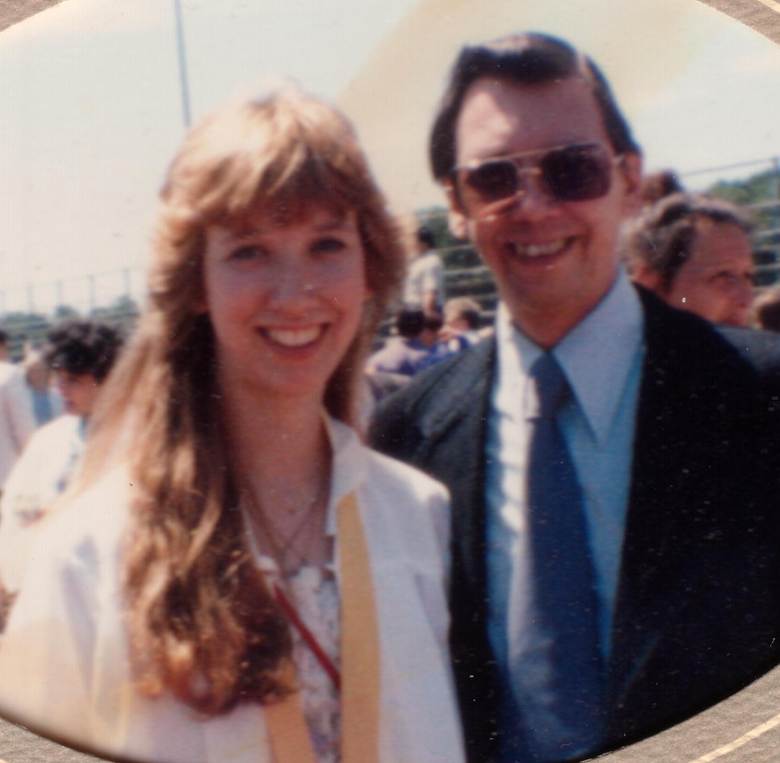
Figure 1 Nanny, Great Grandpa, and their great grandchildren at their 60th wedding anniversary

The photograph from their 60th wedding anniversary does not erase the difficult seasons, but it does remind me that their story was larger than those seasons. In the end, they reached 66 years of marriage.

It is tempting to treat a 66-year marriage as a simple success story. But family history rarely fits so neatly. Sometimes longevity does not mean a life was easy. Sometimes it means people made the hard choice, more than once, to keep going.

AI Disclosure

This post was created by me with the help of AI tools. While AI helps organize research, the storytelling and discoveries are my own.

Next Week’s Topic: A Record I Read Differently Now

52 Ancestors: The Ancestor Who Stays With Me

The Ancestor Who Stays With Me

I’ve adapted Amy Johnson Crow’s 52 Ancestors in 52 Weeks challenge.
Each week I follow my children’s ahnentafel numbering to select the featured ancestor, ensuring no one through the mid–sixth generation is left behind.

52 Ancestors in 52 Weeks: 2026 Week 25: The Ancestor Who Stays With Me

Introduction

The theme for Week 25 is “The Ancestor Who Stays With Me.” Sometimes an ancestor lingers in our minds not because we knew them, but because something about their story reaches across time and refuses to let go.

For me, that ancestor is Anna Driskol Anderson, my great-grandmother.

I never knew Anna. She died of kidney disease when my grandfather was still a boy. But her story stays with me because of the question I cannot quite put down:

What was it like to know you would not see your children grow up?

A Mother Facing Mortality

Anna’s death certificate says she died in 1922. The cause was chronic interstitial nephritis, a kidney disease she had apparently suffered from for “several years.” [1] That phrase stops me every time.

Several years.

Not a sudden accident. Not a brief illness. Something lingering. Something that likely shaped the rhythm of her household long before the final days came.

When my grandfather was a boy, he overheard his parents talking. They mentioned that Anna had only one kidney. I do not know exactly what Anna understood about her illness, or how much the doctors of the time could tell her with certainty. But I suspect she knew enough. She must have known her body was fragile. She may have known her future was uncertain.

And she had three children.

That is the part that stays with me.

What does a wife and mother think about when she is facing her own mortality? Does she worry about the practical things: meals, laundry, school, shoes, the household routines that keep children’s lives steady? Does she wonder who will comfort them when they cry? Does she try to memorize their faces as they are, knowing she may not be there to see who they become?

I do not know. But I cannot help wondering.

An Illness That Echoed Through the Family

Anna’s illness also seems to echo backward in the family. Her mother may have died from kidney disease as well. A potential mother died in Staten Island in 1901 of “uraemia due to cystic degeneration of kidneys.” [2] If this was Anna’s mother, then Anna had already lost her own mother before she married.

Her father was long gone by then, too.

So when Anna stood at the beginning of her married life, she did so without parents. Years later, her own children would know that same sorrow. They, too, would lose their mother too soon.

That repetition is painful to sit with. It reminds me that genealogy is not only a record of dates and names. Sometimes it reveals patterns of grief – losses that ripple through generations, shaping people whose memories we inherit only in fragments.

The Family She Left Behind

I hope Anna was not afraid that her husband would fail their children. From what I can see, he stepped up. He carried on after her death and cared for the family as best he could.

But tragedy was not finished with them. He became ill and died only two years after Anna.

That means Anna’s children lost both parents within a short span of time. I think about that, too. I think about my grandfather as a boy, first losing his mother, then his father. I think about what he must have carried quietly into adulthood.

And still, the story did not end there.

All three of Anna’s children grew up, married, and had children of their own. Her life was short, but it continued through them. It continued through my grandfather. It continued through my family.

It continues every time I say her name.

Why Anna Stays With Me

Anna Driskol Anderson stays with me because her story is unfinished in the way so many ancestral stories are unfinished. I have records. I have clues. I have a cause of death, a family pattern, and a childhood memory passed down from my grandfather.

But I do not have her voice.

I do not know what she feared, what she hoped, or what she wanted most for her children. I only know that she was a young mother who did not get enough time, and that more than a century later, her great-grandchild is still thinking about her.

Perhaps Anna stays with me because her story asks me to imagine not only how she died, but how deeply she must have loved.

Maybe that is one of the quiet gifts of family history. We cannot give our ancestors more years. We cannot undo their grief or answer every question.

But we can remember them.

And sometimes, remembering is how they stay.

Anna and a daughter

AI Disclosure

This post was created by me with the help of AI tools. While AI helps organize research, the storytelling and discoveries are my own.

Next Week’s Topic: A Hard Choice


[1] Death Certificate.  Staten Island deaths, 1922, Certificate number 884.

[2] There is a Malvina Driscoll who died in Staten Island in 1901. Staten Island Deaths, 1901, #280. Died at S. R. Smith infirmary, 3/10/1901. Uraemia due to cystic degeneration of kidneys. Buried St. Peter’s Cemetery 3/12/1901. Age 59, white, married, housewife, b. Poland. Parents b. Poland. resided 12 Seymour Avenue.

52 Ancestors: Possibilities

Possibilities

I’ve adapted Amy Johnson Crow’s 52 Ancestors in 52 Weeks challenge.
Each week I follow my children’s ahnentafel numbering to select the featured ancestor, ensuring no one through the mid–sixth generation is left behind.

52 Ancestors in 52 Weeks: 2026 Week 24: Possibilities

Introduction

My Week 24 ancestor is Michael Joseph Anderson.

My Irish-born, US-emigrated ancestors seem to have a common thread: the possibilities in front of them. There were no streets of gold for them, but each generation had a better time of it than the last.

Discussion

Michael Joseph Anderson was born in 1874 in Staten Island, New York, as the second child to Irish immigrants Michael Anderson and Theresa Kilkenny. The children came every two years or so, as was common in families of the time, and Mom was pregnant with her seventh when Dad, a laborer, died at 31 of “Congestion of the Brain.”  

The younger Michael’s mom worked hard to keep the family together, and she apparently succeeded. In the 1900 census she was a laundress, living with her younger children and with or next to a married daughter. When she died, the funeral home records note that her son paid her funeral expenses. Clearly the family remained tight-knit, and Theresa was successful in endowing her children with the gift of possibilities.

Michael married and had three children, working on the docks. His wife Anna Driskol died of kidney disease when the youngest child was 10, and with family help, Michael was able to keep the family together, until his own death two years later, just as his mother had done. He saw the possibility of stable family life despite challenges, and grabbed it.  

Two of the three children, and probably all three, lived what might be considered a lower middle class life. It may not sound dramatic on paper. But after early deaths, dock work, laundry work, and immigrant uncertainty, even a modestly stable life represented something real: a widening of the road for the next generation. So it took a few generations, but the possibilities envisioned by our first generation ancestors were realized.

Challenge

It is harder these days to “work your way up in the world.” What can we do to help others along their journey? My chosen assistance is in education.  But for you, the – excuse me – possibilities – are endless.

Michael Joseph Anderson and his three children: Frances, Edward, and Theresa, 1917.

AI Disclosure

This post was created by me with the help of AI tools. While AI helps organize research, the storytelling and discoveries are my own.

Next Week’s Topic: The Ancestor Who Stays With Me

SNGF: A Bold Move

SNGF: A Bold Move

I’m having some Saturday Night Genealogy Fun (#SNGF), with help from Randy Seaver and his prompts! Feel free to join in.

Saturday Night Genealogy Fun: June 6, 2026

Prompt: “The life of every person has events and decisions that have a risk factor that can significantly affect their life. Describe a risk that one of your ancestors made that affected their life. How did it all turn out?”

Introduction

Don’t we all have those pivotal moments in life — a fork in the road where the next step is anything but certain? Sometimes we recognize the risk at the time. Sometimes we only see it later, when we understand how much changed because someone was brave, desperate, hopeful, or simply willing to try.

My grandfather Gordon West faced that kind of moment during the Depression. He had been a theater organist during the silent-film era, but the rise of “talkies” changed the industry almost overnight. His risk was not dramatic in the movie sense, but it was life-changing: he had to leave familiar work, learn a new trade, and eventually go far from home to find employment.

Discussion

Gordon West was a successful organist at a movie theater when motion pictures were silent. But after the release of “The Jazz Singer” in 1927, “talkies” exploded in popularity and by 1930, “the number of talkies released matched the number of silent films.” [1]

Unfortunately, this coincided with the Depression, not a great time for Grandpa to be put out of work. He worked for free for a friend who ran a newspaper to learn the trade, and then moved on. He lived in Northwest Ohio and tried to find work in Detroit, but apparently couldn’t, so he ended up in New York City. I have no idea what gave him the courage to do this – there is no indication whatsoever that anyone he knew was there. He gained a position at the Staten Island Advance, where he worked as a linotype operator for 40 years until retirement.

In New York, he stayed at a boarding house whose proprietress had a niece she wanted him to meet. That niece was my grandmother.

Grandpa was born and lived in a town with a population under 1000. His father had lived in that town his entire life. How daring it must have been of Grandpa to go to New York City, of all places!

I hope that I take the necessary bold moves when needed as well.

p.s. Just asked my uncle – Grandpa’s son – about what might have brought Grandpa to New York specifically, and he added some interesting tidbits. Apparently Grandpa got the offer for the Staten Island Advance while he was in Ohio, so there must have been some sort of professional connection. “He was fishing when the offer came and a cousin had to run down to the river to get him. He was on the train that evening.”

AI Disclosure

This post was created by me with the help of AI tools. While AI helps organize research, the storytelling and discoveries are my own.


[1] https://stephenfollows.com/p/when-did-talkies-take-over-from-silent-movies

52 Ancestors: A Place That Matters

A Place That Matters

I’ve adapted Amy Johnson Crow’s 52 Ancestors in 52 Weeks challenge.
Each week I follow my children’s ahnentafel numbering to select the featured ancestor, ensuring no one through the mid–sixth generation is left behind.

52 Ancestors in 52 Weeks: 2026 Week 23: A Place That Matters

Introduction

My Week 23 ancestor is Khana Rachkovski.

Discussion

Khana Rachkovski was born about 1828–1833 in what appears in the records as Veisiejai, Seinai, Suwalki. By 1864 she had married Mortkhel Rabinowitz. Eleven children are linked to them in the documents, most of them born in Veisiejai, and Khana died in 1901 at age 67 in Seirijai, Sejny, Suwalki.

At first glance, those place names can feel like a tangle: Veisiejai, Seirijai, Seinai, Sejny, Suwalki. But they are not all equivalent places. Veisiejai and Seirijai were the towns. Seinai/Sejny was the district or county name. Suwałki was the larger province or gubernia. In other words, Khana was not moving from one distant world to another. Her life seems to have unfolded within a small regional network in what is now southern Lithuania, near the present-day Polish border.

That matters because place names in genealogy can sometimes flatten a life instead of revealing it. “Suwalki” can sound like a single location, but for Khana it was more like a landscape: villages and market towns, Jewish communities, changing record languages, and borders that shifted around families who may not have moved very far at all.

Veisiejai and Seirijai were close — roughly ten miles apart as the crow flies. Close enough that families may have known one another across town lines. Close enough for marriage networks, market days, visits, and movement between households. Close enough that Khana’s death in Seirijai does not necessarily suggest a dramatic migration, but perhaps the later chapter of a life still rooted in the same local world.

The names themselves tell part of the story. Veisiejai also appears as Wiejsieje in Polish and Vishai/Vishey in Yiddish. Seirijai appears as Sereje in Polish and Serei in Yiddish. The records changed language during Khana’s lifetime, and the same place could wear different names depending on who wrote it down. That is one of the quiet challenges of researching families from this region: the ancestor stayed in place, but the paperwork did not.

For me, this makes Veisiejai matter not just as a birthplace, but as an anchor. It is the place that holds Khana’s beginnings, her marriage, and the births of most of her children. Seirijai, nearby, holds the end of her documented life. Between those two towns is not a long journey on a map, but it may contain nearly all of what the records allow me to know about her world.

The factual place framework here is supported by JewishGen’s listings for Veisiejai and Seirijai, which place both towns in Sejny/Seinai and Suwałki in the 1900-era records; JewishGen gives Veisiejai as 14 miles east of Sejny and Seirijai as 21 miles east-northeast of Sejny. The broader JewishGen Communities Database also lists Veisiejai and Seirijai under Sejny district and Suwałki province in the Russian Empire.

ChatGPT, 02Jun2026

AI Disclosure

This post was created by me with the help of AI tools. While AI helps organize research, the storytelling and discoveries are my own.

Next Week’s Topic: Possibilities

52 Ancestors: A Name With Meaning

A Name With Meaning

I’ve adapted Amy Johnson Crow’s 52 Ancestors in 52 Weeks challenge.
Each week I follow my children’s ahnentafel numbering to select the featured ancestor, ensuring no one through the mid–sixth generation is left behind.

52 Ancestors in 52 Weeks: 2026 Week 22: A Name With Meaning

Introduction

My Week 22 ancestor is Mortkhel Rabinowitz.

Discussion

Both of my mother-in-law’s grandfathers were named Mordechai, or something very close to it. Had they both immigrated to the United States, that might have been confusing. But as far as I know, she never knew either of them.

I know almost nothing about Mortkhel as a person, but his name gives me one small way to think about the role he may have played in his family.

Mortkhel appears to be a Yiddish or regional form of Mordechai/Mordecai, the biblical name of Esther’s cousin and guardian in the Book of Esther. That biblical connection is the part of the name that caught my attention.

Mortkhel Rabinowitz was born about 1828. I know his father was Rubin, but no further information about his ancestry has been located. Birth records from this period are sparse, and his has not been located. He married Khana Rotovsky by 1864, when their first known child was born, and perhaps earlier. The records place the family in Veisiejai, then part of the Sejny district in Suwalki gubernia.

What I know of Mortkhel comes mostly through the records of his family. Eleven children have been tentatively identified. He was described as a lake owner and land tenant in his children’s birth records, suggesting he had property and agricultural interests in the area.

His wife Khana died on January 17, 1901, leaving Mortkhel a widower at 73. No records of him have been identified after that.

I have not found grandchildren named after him, perhaps because he lived long enough that the tradition of not naming children after living relatives would have delayed that possibility.

The name does not literally mean “guardian,” as far as I can tell. But the biblical Mordecai is remembered as Esther’s cousin and protector, the man who raised her after her parents died. That makes me look at “my” Mortkhel a little differently. The records do not give me his voice, his personality, or even the end of his story. They give me land, a lake, a wife, and eleven children linked to him through the records. Perhaps that is its own kind of meaning: a man glimpsed mostly through the family he helped anchor.

Did Mortkhel’s name die with him? Perhaps. I have not yet found grandchildren named after him, and if he lived longer than I can currently document, that may be one reason. But names have a way of lingering even when they disappear from the records. Mortkhel’s name leads me back to Mordecai, to guardianship, and to the quieter question of what it meant to hold a family together in nineteenth-century Suwalki. That makes his eleven children worth following—not only to see whether the name continued, but to understand what kind of family story grew from him.

ChatGPT, 02Jun2026

AI Disclosure

This post was created by me with the help of AI tools. While AI helps organize research, the storytelling and discoveries are my own.

Next Week’s Topic: A Place That Matters

SNGF: Bicentennial Memories: A Father’s Love Sent from New York City

I’m having some Saturday Night Genealogy Fun (#SNGF), with help from Randy Seaver and his prompts! Feel free to join in.

Saturday Night Genealogy Fun: May 30, 2026

Prompt: “How did you observe or celebrate the Bicentennial of America’s Founding on 4 July 1976? What were you doing on that day? Did you or your family attend any special events to mark America’s 200th birthday?”

Introduction

I was a slip of a girl in 1976! My parents were divorcing, and my father was working hard to maintain a relationship from the hundreds of miles away that our mother had moved us.

Discussion

In a difficult season for our family, the Bicentennial became one of the threads Dad used to keep us connected. New York City was at the center of some spectacular celebrations, and he seemed determined that we would feel included, even from hundreds of miles away.

Dad lived in New York City and was very excited to share its Bicentennial happenings with us.

On July 4, 1976, New York Harbor hosted the largest naval and sailing display in city history to celebrate the American Bicentennial. The event, known as Operation Sail (OpSail), featured a grand parade of more than 200 vessels, including 16 majestic tall ships from 14 nations. Source

Dad delighted in sending newspaper articles of the buildup and the event itself, and even at my young age, I was awed and amazed about how NYC seemed to be pulling out all stops to celebrate our 200th birthday.

Dad’s excitement was contagious. Although I have no clear memory of July 4, 1976 itself, I remember the clippings, the stamps, the coins, and the sense that New York City was pulling out all the stops. More than anything, I remember a man trying to stay connected with his long-distance daughters.

AI Disclosure

This post was created by me with the help of AI tools. While AI helps organize research, the storytelling and discoveries are my own.

SNGF: A Mad Hatter?

I’m having some Saturday Night Genealogy Fun (#SNGF), with help from Randy Seaver and his prompts! Feel free to join in.

Saturday Night Genealogy Fun: May 23, 2026

Prompt: “Are there ancestor’s occupations that you know nothing about? Pick a great-grandparent or earlier ancestor who held an unfamiliar job (cooper, cordwainer, hostler, etc.). Look it up and write a short description of what their daily work life might have been like.”

Introduction

Many of us are familiar with the phrase “mad as a hatter,” especially through the Mad Hatter of Lewis Carroll’s Alice’s Adventures in Wonderland. The phrase itself predates Carroll, but its association with hatmaking has a grim historical explanation: mercury used in producing felt hats could poison those who worked with it. So, it was a little disturbing to learn that my ancestor, Henry Denny (1758–1839), was identified as a “hatter” in a 1795 land indenture.

But why did hatmakers have this reputation? While there are many theories, I rather believe that the mercury used in producing felt for hats poisoned those who used it. So, it was a little disturbing to learn that my ancestor, Henry Denny (1758-1839) was a “hatter” in a 1795 land indenture.

Discussion

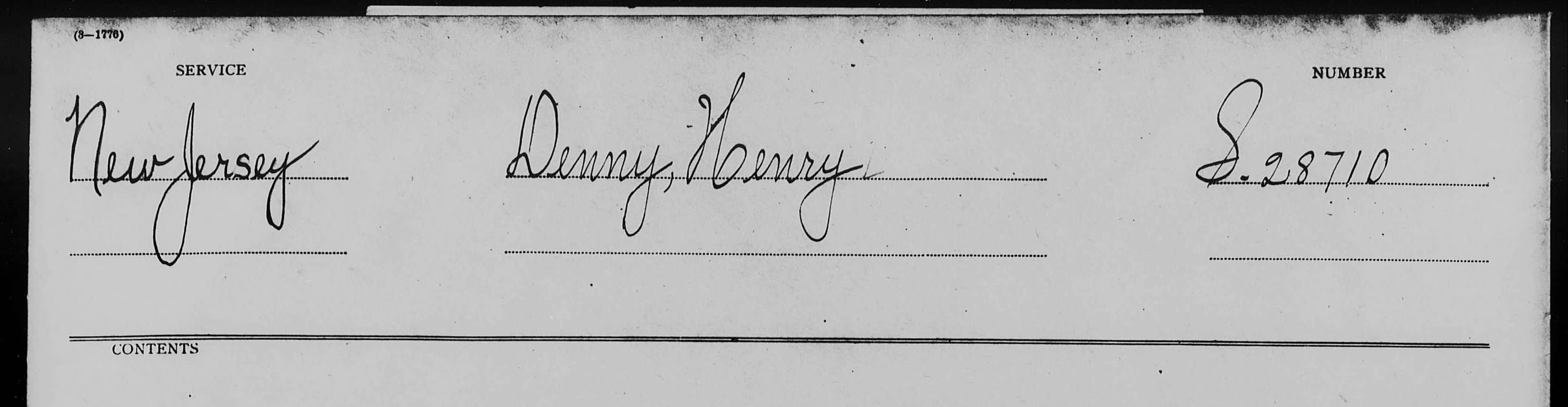
Henry Denny left a lot of documentation around his Revolutionary War service due to his attempts to obtain a pension. He also interacted in the Dutch Reformed Church, as evidenced by the baptisms of his children and by his second marriage. He bought and sold land in New York and New Jersey. Yet he left relatively little documentation for his occupation.

He lived in Bergen County, New Jersey, where he served in the militia in the Revolution and married during the war. He and his wife Mary Young had children there and moved to New York City around the time the last child Helen was born (1795), for reasons unknown. From city directories, I see that by 1795 he had become a tavern keeper who also ran a boarding house starting 1795.

For the record, I have no indication that Henry was affected by mercury poisoning in any way; to the contrary, his pension affidavits indicate a man who retained all his faculties into his ninth decade.

Since the records do not describe Henry’s actual shop or daily routine, I asked ChatGPT for a historically informed sketch of what a hatter’s working life in Hackensack around 1795 might have looked like:

What would working life have been for a hatter in Hackensack, New Jersey, around 1795?

The LLM responded that “Around 1795, a hatter in Hackensack worked at the edge of town and country. Hackensack was a small county-seat village, tied to surrounding farms, courthouse business, taverns, stage routes, and the Hackensack River trade with New York. In a modest shop, perhaps near his home, the hatter turned wool and animal fur into felt hats by dampening, pressing, heating, shaping, stiffening, dyeing, blocking, trimming, and finishing them for local customers. His work served farmers, tradesmen, travelers, and men doing business at the county seat. A fine hat could signal respectability, while a cheaper or repaired hat met everyday needs. The trade required skill and patience, but the shop was likely hot, wet, dusty, smelly, and potentially hazardous if mercury-treated fur was used. In Hackensack, he was probably not a factory worker but a village craftsman: part manufacturer, part repairman, part shopkeeper, and part participant in the town’s web of credit, trade, and community life.”

I may never know why Henry Denny left the occupation behind, but I am enriched by having learned about how he supported his family.

AI Disclosure

This post was written by me with the help of AI tools for organization and editing. The memories, family details, and reflections are my own.

52 Ancestors: An Unexpected Strength

An Unexpected Strength

I’ve adapted Amy Johnson Crow’s 52 Ancestors in 52 Weeks challenge.
Each week I follow my children’s ahnentafel numbering to select the featured ancestor, ensuring no one through the mid–sixth generation is left behind.

52 Ancestors in 52 Weeks: 2026 Week 21: An Unexpected Strength

Introduction

My Week 21 ancestor is Cywa “Sylvia” Bachrach.

As with her husband, Mordecai Gudelski, I never knew anyone who knew Sylvia, my husband’s great grandmother. But it’s clear to this generation that she left a lasting impression on her descendants.

When I first thought about “unexpected strength,” I imagined something visible: a crisis faced, a hardship overcome, a bold decision preserved in the records. But Cywa’s strength seems to have been quieter than that. It appears in what her children carried with them — not just across the ocean, but into the names they gave their own daughters.

Discussion

The records are sparse when it comes to Cywa. Although I have located birth records for some of her siblings, I have not yet found hers. What I do know is that she married Mordecai Gudelski in 1855 in Suwałki, Congress Poland, when they were both 19 years old.

She died in Suwałki in 1900.

Sylvia had nine children that I know of, and I’ve tracked six of them emigrating, likely pushed by the pressures many Jewish families faced in the Russian Empire: violence, instability, military conscription, and limited opportunity. What stands out to me is that of the six children I’ve been able to track, five named daughters Sylvia. (Yes, we always have to clarify when talking about “Cousin Sylvia.”)

Cywa must have had a tremendous impact on her children for them to honor her so, especially since I have not seen the same naming pattern for their father. I keep coming back to those daughters named Sylvia. In a family scattered by emigration, distance, and uncertainty, her name became a kind of thread — carried across oceans and into the next generation.

How hard it must have been to bid goodbye to child after child as they left for another continent, knowing she would likely never see them again. Cywa’s strength may not appear in the records as a bold public act. It may have looked quieter than that: raising children, surviving uncertainty, and letting them go when leaving may have been their best chance.

I cannot prove that every daughter named Sylvia was named directly for her, but the pattern is hard to ignore. Her name kept reappearing. That feels like its own kind of testimony.

We may not know much about Cywa “Sylvia” Bachrach’s voice, personality, or daily life. But her children remembered her. They carried her name forward. And sometimes, in genealogy, that is where strength reveals itself — not in what was written down, but in what a family refused to forget.

AI Disclosure

This post was created by me with the help of AI tools. While AI helps organize research, the storytelling and discoveries are my own.

Next Week’s Topic: A Name With Meaning