52 Ancestors: A Source I Want to Understand Better

A Source I Want to Understand Better

I’ve adapted Amy Johnson Crow’s 52 Ancestors in 52 Weeks challenge.
Each week I follow my children’s ahnentafel numbering to select the featured ancestor, ensuring no one through the mid–sixth generation is left behind.

52 Ancestors in 52 Weeks: 2026 Week 29: A Source I Want to Understand Better

Introduction

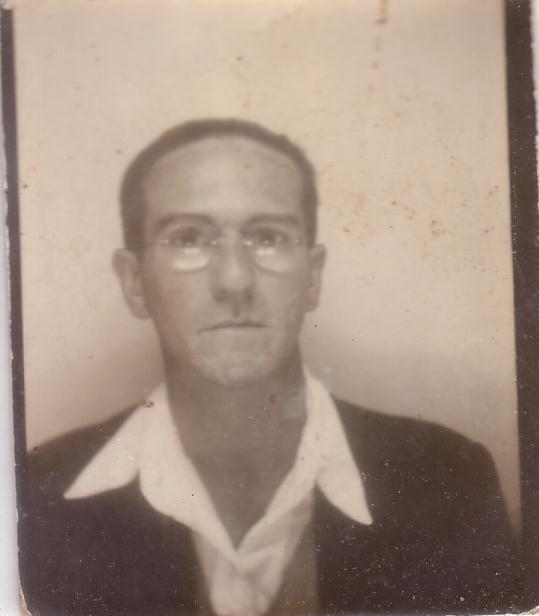
My Week 29 ancestor is Charlotte Mae DuShannon. Lottie, my great grandmother, was orphaned young. As a baby genealogist, I eventually found her guardianship records on microfilm at what was then called a Family History Center. Now? I can’t find them again.

Discussion

I have tried to locate those records in the FamilySearch catalog. It’s possible the FamilySearch Library no longer has access to the records, but it’s more likely I’m not searching correctly. I probably printed them – I printed nearly everything in those days – but so far they haven’t surfaced as I sort through my genealogy papers.

What might I hope to find?

  • What did “guardianship” actually mean in Lottie’s situation?
  • Were Chester and Mary Peters legally appointed guardians, foster parents, or both?
  • What was the role of the Protestant orphan asylum?
  • Who was Lydia, and why was she signing for the institution?
  • Might there be more documents which identify Lottie’s parents, explain why she entered the asylum, or point toward another set of records?
  • What information did I overlook when I first found the documents because I was a much newer genealogist?

I bet AI could help me come up with a plan for finding those records, based on what I remember: Bridgeport, Connecticut – Charlotte DuShannon – a Protestant orphan’s asylum – 1876 guardianship signed by her foster parents, Chester and Mary Peters – and signing for the orphanage was a woman named Lydia, which I remember because Lottie named a daughter Lydia.

With that plan, I’d love to locate the papers again and see what more information I could glean from them. There was a big information gap in our family around Lottie’s parents, and I am gradually chipping away at it.

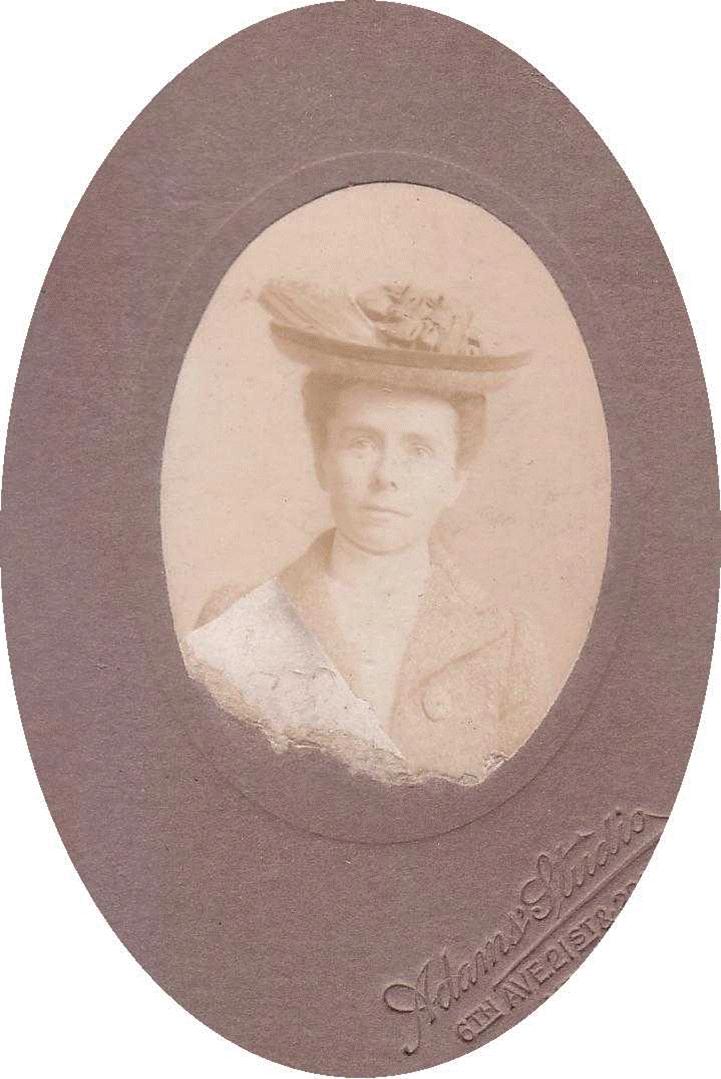
Photo of Charlotte DuShannon West

Charlotte May DuShannon West

Summary

When I first found the guardianship papers, I was thrilled simply to find Lottie. Now I know enough to ask questions I probably didn’t know to ask then.

What records do you have that could bear re-examining?

AI Disclosure

This post was created by me with the help of AI tools. While AI helps organize research, the storytelling and discoveries are my own.

Next Week’s Topic: Free Space

52 Ancestors: Leisure Time

Leisure Time

I’ve adapted Amy Johnson Crow’s 52 Ancestors in 52 Weeks challenge.
Each week I follow my children’s ahnentafel numbering to select the featured ancestor, ensuring no one through the mid–sixth generation is left behind.

52 Ancestors in 52 Weeks: 2026 Week 28: Leisure Time

Introduction

My Week 28 ancestor is Adam Grant West.

It is hard to tell how Adam Grant West spent his leisure time. Census records tell me where he lived and what he did for a living, but they don’t tell me what he enjoyed. A couple of small clues, however, make me wonder whether automobiles held a special interest for him.

Discussion

Early in his career, Adam West was a traveling salesman. He later settled down to operate a store. Perhaps the traveling stuck with him.

In late 1928, he was appointed to sell 1929 automobile tags in Liberty Center, Henry County, Ohio. That doesn’t make him an automobile enthusiast, of course, but it does put him in the middle of the rapidly changing world of car ownership.

On his son’s retirement, the son said that he learned to drive on his dad’s Model T Ford!

This was probably in the late 1910s or early 1920s, as Grandpa was born in 1907.

I still can’t say that automobiles were one of Adam’s hobbies. But I can picture him owning that Model T, letting—or perhaps teaching—his son to drive it, and participating in a world that was rapidly becoming more mobile.

Adam’s Model T introduced his son to driving, and decades later his son was still proud enough of his driving record to mention it upon retirement. Something was passed down, even if you can’t call it a shared hobby.

Summary

Unfortunately, our ancestors didn’t fill out census questions asking what they did on Saturday afternoons. Sometimes all we have are little clues. They may not prove that Adam loved automobiles, but his Model T gives me one small glimpse of a part of his life that doesn’t appear on a census record.

AI Disclosure

This post was created by me with the help of AI tools. While AI helps organize research, the storytelling and discoveries are my own.

Next Week’s Topic: A Source I Want to Understand Better

52 Ancestors: A Record I Read Differently Now

I’ve adapted Amy Johnson Crow’s 52 Ancestors in 52 Weeks challenge.
Each week I follow my children’s ahnentafel numbering to select the featured ancestor, ensuring no one through the mid–sixth generation is left behind.

52 Ancestors in 52 Weeks: 2026 Week 27: A Record I Read Differently Now

Introduction

My Week 27 ancestor is Mary Agnes Hart, and the record I read differently now is her 1918 marriage record.

Discussion

I have the New York City marriage record of Francis William “Frank” Carey and Mary Agnes “Agnes” Hart dated 1918.

The problem is, they started having children in 1909.

The family had always said they were married in 1908, and I have a photo of their 60th wedding anniversary party in 1968.

There’s a saying which goes, “The first baby can come anytime; the rest take nine months,” meaning a couple often marry after conception. But this was no “early baby” issue – it was a ten-year gap between marriage dates!

But further research helped explain this. There IS a Roman Catholic church record for a 1908 marriage. For whatever reason, I have not found a corresponding civil record.

And then I noticed the timing. Francis had to register for the World War I draft. Under the draft classification system, a wife and dependent children could matter. [1] Was that what finally gave Frank and Agnes a reason to put their marriage on the civil record? I can’t prove it—but suddenly that 1918 date looked much less mysterious.

That could explain why the civil marriage record appears only after their fourth child was born. 😊

Summary

I was so quick to judge that 1918 marriage record because I thought I knew what a marriage date meant. Now I know that one date may tell only one part of the story. I don’t promise I won’t jump to conclusions again—but perhaps I’ll be a little slower about it.

Marriage certificates for William James Robertson and Eleanor Vance from 1908, and Walter Higgins and Mabel Clark from 1918
Two historic marriage certificates from New York and Massachusetts dated 1908 and 1918

AI Disclosure

This post was created by me with the help of AI tools. While AI helps organize research, the storytelling and discoveries are my own.

Next Week’s Topic: Leisure Time


[1] Under the 1918 Selective Service regulations, a married registrant whose wife or children were mainly dependent on his labor for support could be placed in Class IV. https://commons.wikimedia.org/wiki/File:Selective_service_regulations_prescribed_by_the_President_under_the_authority_vested_in_him_by_the_terms_of_the_Selective_Service_Law_(act_of_Congress_approved_May_18,_1917)_(IA_cu31924006483261).pdf

SNGF: The Man Who Wasn’t

I’m having some Saturday Night Genealogy Fun (#SNGF), with help from Randy Seaver and his prompts! Feel free to join in.

SNGF: The Man Who Wasn’t

Saturday Night Genealogy Fun: July 25, 2026

Prompt: “Which of your ancestors or relatives have you NOT found in the Census records and what have you done or are doing to try to find that person? Can AI help? Identify one or more of your ancestors that are inexplicably missing from one or more census collections.  Why do you think they were not enumerated?”

Introduction

At the risk of being redundant, I again discuss my second great-grandfather Andrew Driskol! I have not yet found a record created during Andrew’s lifetime that clearly identifies him.

Discussion

According to records his children left, Andrew was born in Prussia, married a woman from England and had two children. His wife and children migrated from London to New York in 1875, and several more children were born in New York from 1876 until 1883, all of whom later identified the same mother, and Andrew as their father. Andrew’s widow was enumerated in the 1900 census.

Andrew should have been located in the 1875 New York State census, and in the 1880 United States Federal census, but I cannot. The wife’s migration is under a horribly mangled surname, but even creative searching does not locate the census or any birth records (sparse at that time). Perhaps he was in fear, or used to oppressive governments, or for some other reason avoided paperwork.

I am fortunate, though, that he did marry and have these children, including my great-grandmother.

AI Disclosure

This post was created by me with the help of AI tools. While AI helps organize research, the storytelling and discoveries are my own.

SNGF: Andrew Driskol: My Farthest-Flung Ancestor

I’m having some Saturday Night Genealogy Fun (#SNGF), with help from Randy Seaver and his prompts! Feel free to join in.

SNGF: Andrew Driskol: My Farthest-Flung Ancestor

Saturday Night Genealogy Fun: July 18, 2026

Prompt: “Our family trees contain historical persons who came from places all over the world.  Each of our ancestral lines came from somewhere. Can you identify your Farthest-Flung Ancestor (FFA)?  Who in your ancestral tree came from the most geographically distant place from where you live now? What brought them (or their descendants) to where your family ended up?”

Discussion

At the risk of sounding rather unadventurous, my farthest-flung known ancestor is Andrew Driskol, my second great-grandfather. He was apparently born in Prussia, in what is now Germany.

Andrew seems to have traveled first to England, where he married and had two children. He later went ahead of his family to New York, and his wife and children followed him in 1875.

Sadly, I have found no records that tell me why Andrew made either part of this journey. I can only speculate. Were the Revolutions of 1848 a factor? Was he avoiding compulsory military service? Did economic hardship encourage him to leave?

Whatever brought him across Europe and then the Atlantic, Andrew eventually settled on Staten Island, New York – the place where I was born. The roots he planted stuck.

AI Disclosure

This post was created by me with the help of AI tools. While AI helps organize research, the storytelling and discoveries are my own.

SNGF: Five Nathaniels: A Name That Ran Through My Britton Family

I’m having some Saturday Night Genealogy Fun (#SNGF), with help from Randy Seaver and his prompts! Feel free to join in.

Saturday Night Genealogy Fun: July 11, 2026

Five Nathaniels: A Name That Ran Through My Britton Family

Prompt: “We all have many names (given, middle, surname, nickname) in our ancestry, whether we know all of them or not. Do you have “A Name That Runs in Your Family”? Is there a first name — or nickname — that keeps repeating generation after generation in your tree? Share the name, the pattern, and your best guess as to why it stuck.”

Five Nathaniel Brittons

For me, there is no question which name to discuss this week. I am descended from five men named Nathaniel Britton.

  • Nathaniel Britton, my ninth great-grandfather, born 1625 in Batcombe, Somerset, England, died 1684 Staten Island, Richmond, New York
  • Nathaniel Britton, his son, born 1666 Staten Island, Richmond, New York, died 1729
  • Abraham Britton, his son, died by 1729
  • Nathaniel Britton, his son, born by 1729, died 1792
  • Nathaniel Britton, his son, born ca 1755 New York, died in 1843 on Staten Island, New York
  • Nathaniel Britton, his son, born 1793, died in 1841 on Staten Island, New York

Why Did the Name Persist?

The names appear many times in different branches of the family, but here I am discussing only my direct ancestors.

The five Nathaniels span six generations, with Abraham creating a one-generation break in the pattern. Abraham died before his father; his name does not appear to have been used again in my direct line, while Nathaniel resumed with his son and continued for another three generations.

My best guess is that later generations took pride in their connection to one of Staten Island’s early European settlers and preserved his name as a family tradition. Nathaniel is also a biblical name, which may have added to its appeal.

When the Pattern Ended

My most recent Nathaniel had a son named Cornelius Britton. Cornelius then named one of his own sons Cornelius rather than Nathaniel, bringing the Nathaniel pattern in my direct line to an end.

The younger Cornelius had sons named Willard, Frank, and Henry with his first wife. With his second wife, he had a son named Neil, who died in infancy. I do not know why the family stopped using Nathaniel. Perhaps Cornelius simply preferred other names, or perhaps carrying a name that had been repeated for so many generations had begun to feel like a burden.

Because Cornelius is also a biblical name, the change may have reflected a shift in family preference rather than an abandonment of biblical naming.

The Mixed Blessing of a Family Name

Following the Nathaniels through my family tree made me think about the mixed blessing of being named after an ancestor.

My grandmother, a granddaughter of the younger Cornelius, was named after her aunt. She hated the name Edith, which she considered old-fashioned even in 1913, when she was born. The aunt, however, was well loved, so the name had been chosen with affection.

When I named my own children, I chose subtler connections. Each child’s first initial and middle name honored someone in the family, while the first name belonged entirely to the child.

An old map of Staten Island, rendered by ChatGPT

AI Disclosure

I used AI tools to help organize and edit this post. The genealogical research, family stories, interpretations, and conclusions are my own.

SNGF: July 4, 2026

I’m having some Saturday Night Genealogy Fun (#SNGF), with help from Randy Seaver and his prompts! Feel free to join in.

Saturday Night Genealogy Fun: July 4, 2026

Prompt: “It is the 250th Anniversary of the Declaration of Independence today. How will you celebrate the day?  Or, how did you celebrate the day?”

Introduction

I had a shockingly quiet Independence Day. Well, not really. Bad storms rolled in and we were just hunkered down – thankfully everyone around here was fine.

Discussion

Heather Cox Richardson has an amazing “250 to 250” series which I have truly enjoyed. She is an historian and I like her take on things. She set up a series of very short videos about points in American History, narrated by well-known people. I urge everyone who might be interested to go check it out!


Heather’s playlist is at https://www.youtube.com/playlist?list=PL2dS6uX1RkUzLppeUrqtvApwnR6whO7I_

Enjoy this celebration of the American spirit.

AI Disclosure

This post was created by me with the help of AI tools. While AI helps organize research, the storytelling and discoveries are my own.

SNGF: What were you doing in 1776?

I’m having some Saturday Night Genealogy Fun (#SNGF), with help from Randy Seaver and his prompts! Feel free to join in.

Saturday Night Genealogy Fun: June 27, 2026

Prompt: “We all have ancestors who were alive in 1776, and some of them may have celebrated the signing of the Declaration of Independence or even served in the military during the War. Describe one or more of your ancestors who lived in that time or served in the military.”

Introduction

I am so lucky that my ancestor Henry Denny lived long enough to apply for a pension for his Revolutionary War service. Not long enough to collect it, but the paperwork exists.

Discussion

The pension files corroborate these stories through witness accounts, but they do not give exact dates for each event. So I am treating 1776 as a doorway into Henry Denny’s Revolutionary War experience rather than as a claim that these particular moments happened in that year.

Henry Denny served with the Bergen County, New Jersey militia under Captain Outwater.

Here’s a really interesting story from his pension files:

Henry Denny once had a direct encounter with a Hessian rifleman. In the fullest account, Henry was wounded by a Hessian rifleman and then captured a Hessian rifleman who had been accompanied by a drummer; unable to take both men, Henry kept the rifleman as prisoner while the drummer got away. A later witness remembered the story more simply as Henry having shot a Hessian.

A second story concerns the effort to save Hackensack from being burned.

The service narrative says Henry was part of a firing or scouting party when a large number of “refugees,” as the file describes them, were coming up to set fire to Hackensack. The party went about a mile below Hackensack, met them, and fired on them. The enemy then came far enough to see the town “well lighted up,” but did not fire a musket at the town; instead, they “blew their bugle and wheeled about,” leaving the town to be enjoyed by the inhabitants.

That story also connects with later affidavits saying Henry was in skirmishes around Hackensack, that the courthouse was burned, and that Henry was wounded in service.

Henry Denny was part of the militia, but that does not mean he saw no action. On the contrary, his family, his neighbors, and his home depended on the actions of Henry and his militia brothers. Whether or not these particular events happened in 1776, they belong firmly to the Revolutionary War world the prompt asks us to remember.

AI Disclosure

This post was created by me with the help of AI tools. While AI helps organize research, the storytelling and discoveries are my own.

SNGF: Three Things about Dad

I’m having some Saturday Night Genealogy Fun (#SNGF), with help from Randy Seaver and his prompts! Feel free to join in.

SNGF: Three Things about Dad

Saturday Night Genealogy Fun: June 20, 2026

Prompt: “Sunday is Father’s Day in the USA, and usually a time for memories and gratitude to our paternal birth person. For this week’s SNGF, tell us three things about your father that are special and memorable to you.”

Introduction

Dad could have become a distant memory.

In the days when divorce often meant that the mother had custody and the father had “visitation,” it would have been easy for him to fade into the background of our lives. But that was never Dad’s way.

He bucked the system and got every-other-weekend visitation, which he kept up for a decade until we were grown, along with two weeks each summer. Because of that persistence, I do not have to reach for faint impressions of him. I have memories. Real ones. Plenty of them.

Which is fortunate, because this week’s prompt asks for three things that made Dad special and memorable to me.

And yes, I know Dad is probably annoyed with me from beyond the grave for being late with this post.

But, Dad, the apple didn’t fall far from the tree.

1. Dad Had a Strong Sense of Justice

Dad had a very strong sense of right and wrong, and he did not particularly care who he had to challenge in order to do what he believed was fair.

He fought in court for his daughters when it would have been immensely easier to let it go. First, there was the fight for visitation. Later, there was a custody fight. Those were not small things. They took time, money, energy, and determination. But Dad believed he belonged in our lives, and he acted on that belief.

That sense of justice did not disappear when we grew up. In retirement, he became a frequent writer of letters to the editor of the local newspaper, doing his best to make sure people saw things “the right way.”

Or, at least, Dad’s way.

There was something very consistent about that. Whether in court, in the newspaper, or in ordinary conversation, Dad believed things mattered. Fairness mattered. Truth mattered. Showing up mattered.

2. Dad Kept Stretching His Boundaries

Dad was an accountant, which might suggest a man of numbers, order, and sensible routines.

And he was that.

But he was also the father who would wake me up to show me the beauty of the full moon.

When I was small and scared during a thunderstorm, he sat with me and helped me see the lightning differently. Instead of treating it only as something frightening, he showed me the pretty way it lit up the backyard.

That stayed with me.

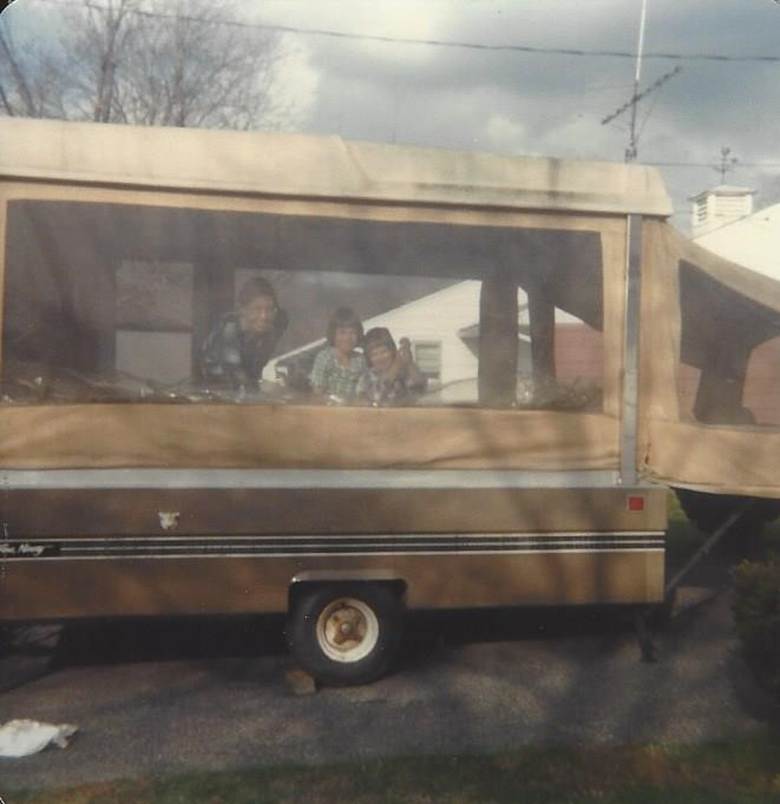
Dad was willing to stretch beyond what came naturally to him. This city boy became a tent camper when he had a girlfriend who liked to camp. He did not have to become outdoorsy, but he was willing to try something new. He was willing to step outside his usual boundaries.

I think that is one of the quieter lessons he gave me: you do not have to be only one thing. You can be practical and still notice beauty. You can be cautious and still try something unfamiliar. You can be an accountant and still wake your child up to see the moon.

3. Dad Believed in Education

The theme that keeps reverberating through my life is Dad’s emphasis on education.

Education helped him get ahead in life, and he did his best to make sure his children had that opportunity, too. Two of his three children hold master’s degrees. My charitable inclinations have always leaned toward educational causes. I am a lifelong learner, frequently finding some new formal education to try out. Even my career has developed around technical training.

That influence did not stop with a diploma or a single phase of life. It became part of how I understand the world.

Learn more. Try again. Take the class. Read the book. Figure it out.

That sounds like Dad.

Thank You, Dad

So those are three things that made Dad special and memorable to me: his sense of justice, his willingness to stretch, and his deep belief in education.

But really, they all come back to the same thing.

Dad showed up.

He showed up in court. He showed up every other weekend. He showed up for summer visits. He showed up during thunderstorms. He showed up with opinions, newspaper letters, moonlit moments, and high expectations.

Thank you, Dad – for those things, and so much more.

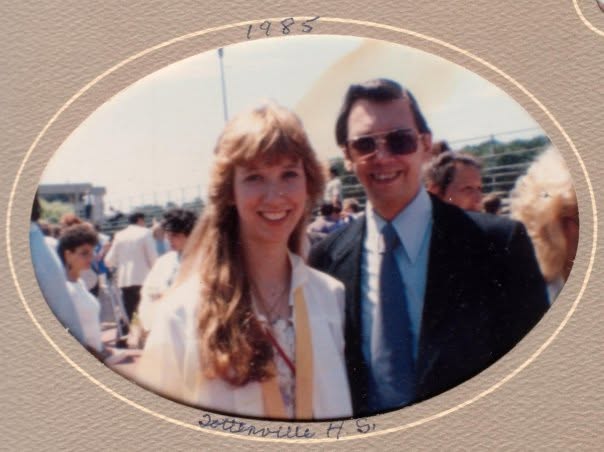
Figure 1 Dad and me at my high school graduation

AI Disclosure

This post was created by me with the help of AI tools. While AI helps organize research, the storytelling and discoveries are my own.

SNGF: Artifacts

I’m having some Saturday Night Genealogy Fun (#SNGF), with help from Randy Seaver and his prompts! Feel free to join in.

Saturday Night Genealogy Fun: June 13, 2026

Prompt: “Were you lucky enough to receive or find artifacts from your ancestors (parents, grandparents, others) as you pursued your genealogy research? Describe one or more of the artifacts you found or received and where you obtained them?”

Introduction

One person’s “why are we keeping this?” may be a genealogist’s “thank goodness someone did.” The artifacts our ancestors left behind, whether treasured heirlooms or forgotten odds and ends, can open small windows into their daily lives, their values, their work, and sometimes even their secrets.

Would that we all had boxes full of family artifacts waiting to be discovered.

Although, to be fair, perhaps not too many boxes. I’ve heard that can become its own genealogical problem. It just isn’t one I’ve personally had.

My own collection of family artifacts is fairly small, which makes me treasure the few pieces I do have all the more. I have written before about the Britton forks, but because they are among the most meaningful artifacts in my possession, they deserve another moment in the spotlight.

The Britton Forks

My grandmother, Edith Makey West, lost her mother, Alice Britton Makey, when Grandma was only three years old. Alice’s parents were already gone by then as well, so Grandma grew up with very little direct connection to her maternal family. She had a beloved aunt, but not much else that tied her to the Britton side.

That is part of what makes the forks so special.

Somehow, Grandma came to have a set of forks marked with the initial B, presumably for Britton, Alice’s maiden name. I do not know exactly how they passed down to her, or who first owned them, but I can imagine what they must have meant. For a little girl who lost her mother so young, even an ordinary household object could become something precious.

A fork is not usually the kind of thing that makes history books. It does not announce itself as important. It does not come with a biography attached. But when it is one of the few tangible links a daughter has to her mother’s family, it becomes something more than silverware.

It becomes a connection.

Grandma’s Gift

Many years later, when I got bit by the genealogy bug, Grandma became my biggest supporter and champion. She was the one who challenged me to connect her line to “the” Staten Island Brittons: the Brittons who settled in that New York area in the 1660s.

Eventually, I did.

That discovery mattered to both of us. For Grandma, it helped restore a piece of family history that had been thinned by early loss. For me, it turned names and dates into something deeply personal. This was not just a lineage on paper. This was Grandma’s mother’s family. This was the family represented by that small initial B on the forks she had kept.

At some point, Grandma proudly gave the Britton forks to me. One of them now hangs on my wall.

It is a simple object, but I am honored to have it. I am honored to hold something that helped connect Grandma to the mother she barely knew, and I am honored that she trusted me to carry that connection forward.

Postscript

I married a man with a B last name, which makes the forks feel oddly at home in my family, too.

Maybe one day they should go to my daughter-in-law. After all, sometimes the best family artifacts are the ones that keep gathering meaning as they move from one generation to the next.

AI Disclosure

This post was created by me with the help of AI tools. While AI helps organize research, the storytelling and discoveries are my own.