SNGF: My first New York Hurricane

I’m having some Saturday Night Genealogy Fun (#SNGF), with help from Randy Seaver and his prompts! Feel free to join in.

Saturday Night Genealogy Fun: August 8, 2026

Prompt: “Did extreme weather or a natural disaster ever affect you or your ancestor(s)? In what way(s)? How did you find this out? Describe one or more of the extreme weather experiences in your own life or in your ancestors lives.”

Introduction

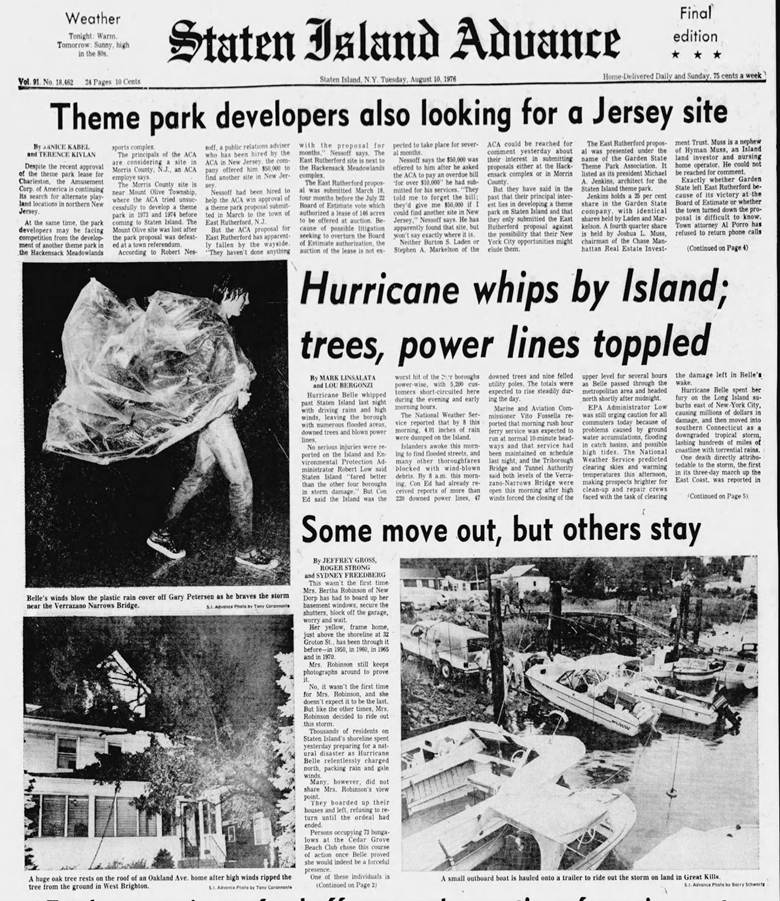
In New York City, it’s a rare hurricane that makes it into town, and usually downgraded to a tropical storm by then. So, when they hit, they are memorable, if not usually severe. Dad taught us about preparing for a storm when I was in elementary school.

A Family Prepares Together

During Dad’s custodial time, likely an every-other-weekend visit, a hurricane was scheduled to hit us. This would have been about the mid-1970s. Fortunately, Dad worked to make precautions fun, while teaching us how to handle emergency situations.

We set up “camp” in the basement – this is long before the camping fad I’ve spoken about in earlier blog posts, and long before Superstorm Sandy showed just how dangerous New York basements could become during flooding.

We had blankets, pillows, food and water in the basement far from windows, and waited out the storm. It was an adventure, yet Dad specified precautions, so that we’d be able to take them ourselves when needed.

The storm itself was not memorable to young me, only the preparations – which is as it should be.

A Lesson Brought Back

Many years later, I was a consultant traveling to various clients. I was once at a client in Texas near the Mexico border. Severe weather, with the possibility of a tornado, was expected during work hours. We were in warehouses, nothing particularly safe. So, during that specific time, I went into the ladies’ room. Some colleagues chuckled, but I brought forth the “better safe than sorry” lesson from my childhood and emerged unscathed not long after. Many fixtures in the town showed tornado damage, but fortunately no one was injured.

If parents wonder if their lessons stick – yes, they often do.

AI Disclosure

This post was created by me with the help of AI tools. While AI helps organize research, the storytelling and discoveries are my own.
SNGF: Family Vacation

I’m having some Saturday Night Genealogy Fun (#SNGF), with help from Randy Seaver and his prompts! Feel free to join in.

Saturday Night Genealogy Fun: August 1, 2026

Prompt: “Did your family go on vacation? Describe one or more of your vacations with your birth family or with your spouse and children.”

Vacations Transformed by a Camper

One of my most memorable family vacations – for both good and bad reasons – was the Southern road trip my father took us on.

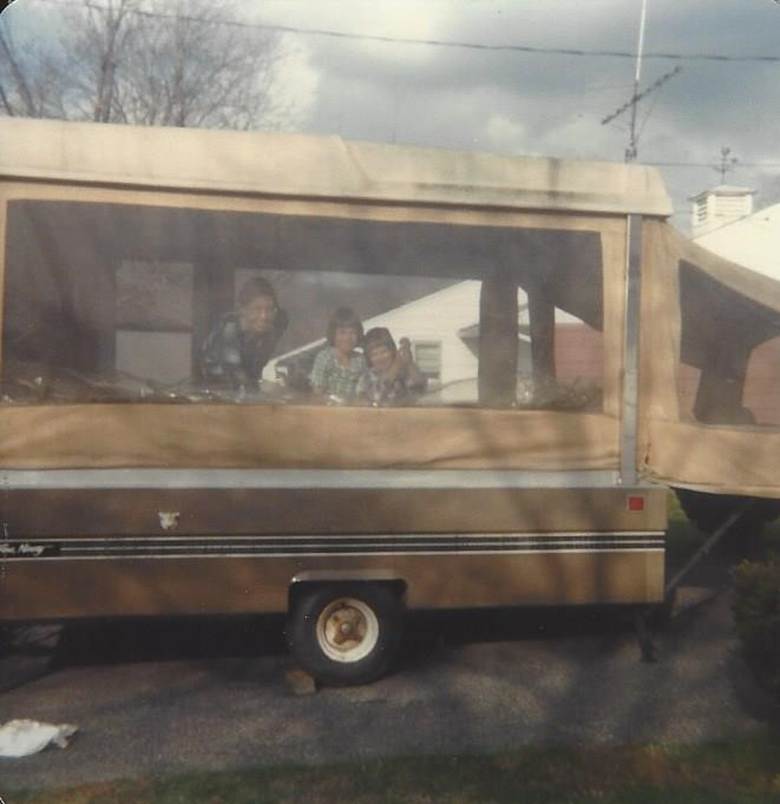
Dad had gotten a girlfriend who enjoyed camping, so naturally we went on camping weekends. One rain too many, though, and Dad pivoted to buying a pop-up camper (along the lines of this but much, much older). This camper gave us the freedom to travel, which we’d never been able to afford before, and Dad took advantage.

Our Great Adventure

He had custodial time for a week or two in the summer, and he took us on our Southern Road Trip for one of them. We saw many places, most of which I’ve sadly forgotten and need to dig out a photo album. One of them was Cape Hatteras, North Carolina, where we encountered a hurricane and got, yes, drenched. I got a lighthouse knickknack and painted it to match the Cape Hatteras Lighthouse pattern as a gift for my dad. When he passed, I brought it home, where it sits in my home office.

Another stop we made was visiting his aunt – Aunt Tess, my grandfather’s only surviving sister. I believe that was the only time we girls ever met her.

Dad made sure to incorporate a lot into the short trip – camping, sightseeing, family. And all in all, we got a lot of together time in.

Last month, when my husband and I took our children on an adventure vacation of our own, I found myself thinking about Dad and that old pop-up camper. I hope my children remember our travels just as fondly—and continue the tradition someday.

Dad and my sisters in the pop-up camper.

AI Disclosure

This post was created by me with the help of AI tools. While AI helps organize research, the storytelling and discoveries are my own.

SNGF: Bicentennial Memories: A Father’s Love Sent from New York City

I’m having some Saturday Night Genealogy Fun (#SNGF), with help from Randy Seaver and his prompts! Feel free to join in.

Saturday Night Genealogy Fun: May 30, 2026

Prompt: “How did you observe or celebrate the Bicentennial of America’s Founding on 4 July 1976? What were you doing on that day? Did you or your family attend any special events to mark America’s 200th birthday?”

Introduction

I was a slip of a girl in 1976! My parents were divorcing, and my father was working hard to maintain a relationship from the hundreds of miles away that our mother had moved us.

Discussion

In a difficult season for our family, the Bicentennial became one of the threads Dad used to keep us connected. New York City was at the center of some spectacular celebrations, and he seemed determined that we would feel included, even from hundreds of miles away.

Dad lived in New York City and was very excited to share its Bicentennial happenings with us.

On July 4, 1976, New York Harbor hosted the largest naval and sailing display in city history to celebrate the American Bicentennial. The event, known as Operation Sail (OpSail), featured a grand parade of more than 200 vessels, including 16 majestic tall ships from 14 nations. Source

Dad delighted in sending newspaper articles of the buildup and the event itself, and even at my young age, I was awed and amazed about how NYC seemed to be pulling out all stops to celebrate our 200th birthday.

Dad’s excitement was contagious. Although I have no clear memory of July 4, 1976 itself, I remember the clippings, the stamps, the coins, and the sense that New York City was pulling out all the stops. More than anything, I remember a man trying to stay connected with his long-distance daughters.

AI Disclosure

This post was created by me with the help of AI tools. While AI helps organize research, the storytelling and discoveries are my own.

52 AI Ancestors in 52 Weeks: Week 28: Travel

I’ve combined Amy Johnson Crow’s 52 ancestors in 52 weeks challenge, and Steve Little’s The 2025 AI Genealogy Do-Over, to create a unique 52 AI ancestors in 52 weeks party!

52 AI Ancestors in 52 Weeks: Week 28: Travel

Introduction

“Who is someone in your family tree who traveled?” asks Amy Johnson Crow in this week’s prompt.

Here are some people who came to mind:

  • My grandfather’s grandfather, John T. West, moved from Maryland to Virginia to New Jersey to Pennsylvania to Ohio, and according to a letter my grandfather’s grandmother wrote to her son, was thinking about moving out to Michigan.
  • My father, Robert E. Anderson, newly divorced, fought for longer visitation with his children than the typical Saturday visit given to divorced dads at the time. He used the two-week summer visits to take us on road trip adventures, which I fondly remember (and long to recreate) decades later.
  • Perhaps my best-traveled ancestor was Louis Thibou, who migrated from France to England to the Carolinas to Antigua, with apparently trips to New York and Philadelphia as well.

Discussion

But the well-traveled ancestor who is intriguing me this week is my grandmother, Edith MAKEY WEST (1913-1997). She and her husband A. Gordon WEST (1907-1981) truly enjoyed their road trips. When possible, they took their grandchildren with them. When I was 7, we went on a trip from New York to the fairly new Disney World in Florida, with a stop at Colonial Williamsburg. I remember being driven to many, many fairs (State fairs? County fairs? I’m not sure).

They proudly hung photos from an Alaska cruise in their den.

I remember well a photo of my grandfather on a trip they took to Hawai’i.

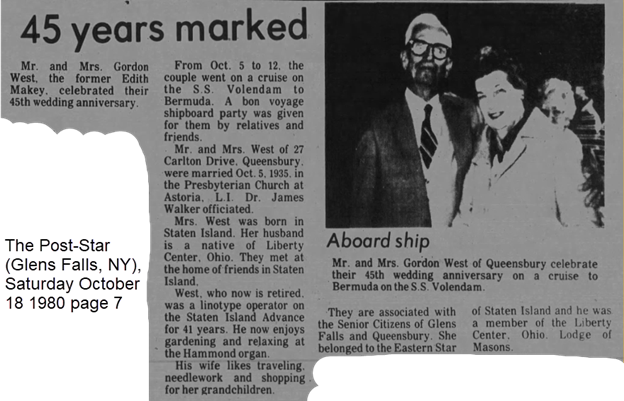
They celebrated their 45th wedding anniversary with a trip to Bermuda with friends, reported in their local newspaper for both their old and new residences.

After Grandpa died, Grandma went on trips with the town’s Senior Center, including one memorable paddleboat trip on the Mississippi River, which I’m determined to do as well. Grandma told me very proudly that she and Grandpa had visited 37 of the 50 United States.

I am determined to honor my ancestors’ adventurous spirits by doing traveling of my own! I have two maps hung in my kitchen: a map of the countries of the world, and another of the states in the country, with magnetic pins marking the places the family has traveled. Where do I travel? Should I travel to ancestral locations? Or perhaps Wonders of the World? Or maybe I should aim for all seven continents. I’ve seen a great list of the best botanical gardens in the world. Last summer we did a waterfall tour in our state.

How AI can help

AI can be a terrific partner in trip planning! It can help give you ideas, and it can help plan a trip you decide on.

I used ChatGPT and Claude.

  1. Where should I go? I used ChatGPT because it has successfully read GEDCOM files for me in the past.

I asked ChatGPT:

Using the attached gedcom file, please list all the places in Ireland which are mentioned.

It replied:

Specific Locations in Ireland Mentioned:

  • Delvin, Westmeath, Ireland
  • Killucan, Westmeath, Ireland
  • Kilkenny, Ireland
  • Trim, Meath, Ireland
  • Carroll, Ireland (possibly a reference to a townland or misrendered from “County Carlow”)

2. Help me plan a trip! I used Claude for this because it helped me to plan a hypothetical trip in the past.

I asked Claude:

You are an expert travel guide.

I plan to visit Ireland to visit my ancestral homelands. Please plan a realistic itinerary for me

* Timing: end of June

* Duration: 7 days

* Style: hotels

* Activities: historical sites, a Roman Catholic church at each location, moderate physical activity (no excessive stairs/climbing), hidden gems

* Special interests: genealogy and history

* Must-visit locations: Delvin, Westmeath, Ireland; Killucan, Westmeath, Ireland; Kilkenny, Ireland; Trim, Meath, Ireland; County Carlow

Claude’s itinerary truly surprised me—detailed, thoughtful, and full of hidden gems. See a sample here, and a link to the entire itinerary below.

I forgot to specify my travel in and out but it assumed travel via Dublin airport. Each day noted the location, the home base, the accommodation, events in the morning, afternoon, and evening, and a hidden gem. Overall it gave practical information such as car rental, GPS need, petrol stations. It provided genealogy research tips which included four resources, notes on Catholic churches, weather preparation, budget, and so much more. You can view the entire itinerary here.

But note that it gave me notes in the chat which are not reproduced in the itinerary:

I’ll create a wonderful 7-day Ireland itinerary focused on your ancestral homelands in the heart of the country. Late June is perfect timing – long daylight hours, mild weather, and everything in full bloom.

This itinerary is designed specifically around your ancestral locations in the Irish Midlands while incorporating the historical depth and genealogical opportunities you’re seeking. The route flows naturally from north to south, minimizing driving time while maximizing your connection to the landscape your ancestors knew.

A few special highlights for your genealogical interests:

Westmeath County Library in Mullingar has excellent local history and genealogy resources, and the staff are incredibly helpful with family research. The Delvin Heritage Centre may have specific records about families from that area.

Late June timing is ideal – you’ll have nearly 18 hours of daylight, the countryside will be lush and green, and you’ll avoid the peak summer crowds while still having everything open and accessible.

The hidden gems I’ve included – like Fore Abbey with its ancient legends and Kilfane Glen’s fairy-tale atmosphere – will give you a deeper sense of Ireland’s mystical character that your ancestors would have known.

I mean, really, are you not floored?

For full disclosure, I asked Claude for a map and am less than impressed. I need to refine my prompt or use a different model.

I then asked what reservations I needed to make and was again impressed. First, it listed them in time order (4-6 weeks out, 2-3 weeks ahead, on arrival). Second, it listed all sorts of reservations: sites to visit, car rental, special dining, genealogy research.

Challenge

Pick one AI model (Claude, ChatGPT, Perplexity, Gemini, or Copilot) and ask it to help you plan a genealogy research trip.

If you’re not sure where to start, try prompts like:

  • “Here is my ancestor’s hometown. What genealogy sites can I visit nearby?”
  • “Create a 5-day itinerary for a research trip to [location].”
  • “List Catholic churches and local libraries in [ancestral town].”

Even if you’re only dreaming today, seeing the plan might just get you packing.

Summary

Sometimes our ancestors traveled by necessity. Sometimes by choice. What if we made space for the kind of trip they wanted—but for ourselves? I tested AI to plan a genealogical research trip to Ireland, but you can use it for any adventure. Let the past inspire your next destination.

Whether it’s retracing an ancestor’s steps, seeing the Seven Wonders, or trying voluntourism, the possibilities are wide open. And if you’re stuck on where to start, AI can spark ideas too. Dream it, map it, maybe even book it.

Further Resources

Next Week’s Topic: “Cousins”

Disclosure

This post was created by me with the help of AI tools. While AI helps organize research, the storytelling and discoveries are my own.

52 AI Ancestors in 52 Weeks: Week 20: Wheels

I’ve combined Amy Johnson Crow’s 52 ancestors in 52 weeks challenge, and Steve Little’s The 2025 AI Genealogy Do-Over, to create a unique 52 AI ancestors in 52 weeks party!

52 AI Ancestors in 52 Weeks: Week 20: Wheels

“Wheels of Love: A Father’s Road Trips and an AI-Powered Bucket List”

Introduction

Wheels are at the very center of my relationship with my father, and wheels are how he got to act as a father for two decades.

Discussion

“Since my sisters and I were young, my father has made it clear that he was there for us, and he cared, no matter what. Can you imagine what that means to 2, 4 and 7-year-olds in the middle of a bitter divorce? …

“He still makes the every-other weekend trip to see my sisters, now 14 and 16, about a thousand miles each time. He threw his back out… but wouldn’t cancel the trip even then.” – me, in a letter written in 1986, nominating my father Bob Anderson for Single Parent of the Year[1]

Back in 1975, divorced fathers were Saturday fathers. My dad, though, fought the system. My mother had moved us more than 200 miles away and that was not a trip he could do every Saturday. It took him a year and a half, but he won the right to take us every other weekend. And he used it.

We typically went back to his place one weekend a month, and to his parents’ house the other.

From New York, we had road trip adventures during his two-week summer visitation. One year we drove up to Canada and camped throughout the eastern third of the country. Another year we had a camping trip down as far as North Carolina – coastal and the Blue Ridge mountains. We explored campgrounds closer to home like Massachusetts and New York. It’s funny; I don’t like camping, but those are the trips I remember best.

The literally hundreds of thousands of miles that Dad logged enabled us to know half our family. Not to mention the precious memories, sense of adventure, and the steady support we needed.

Much later on, Dad’s mom fell ill and Dad and I wanted to visit regularly. Dad said he was “burned out” from driving, so it was my privilege to bring him to her so they could spend her last months together.

How AI can help

Dad fueled my sense of adventure. “Inspired by those miles of memories, I recently asked myself: what kind of journeys do I want to take next — and who could help me plan them?

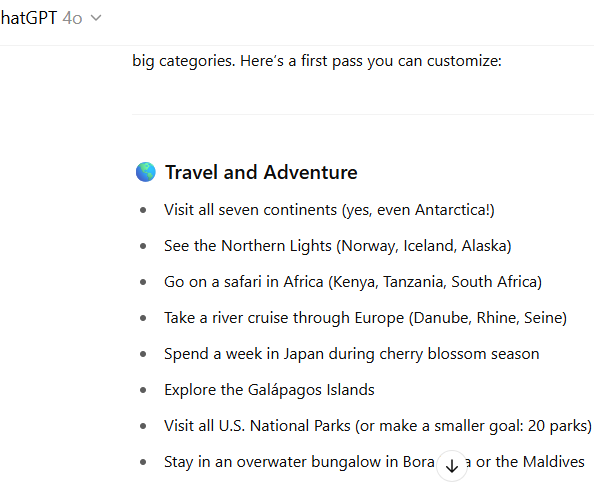
I wanted to create a bucket list — and turned to AI for help. I have in the past been impressed with Claude’s ability to plan a trip (see AI as a travel assistant) and I probably should have again, but I tried ChatGPT and am happy with it. I told it I anticipate having 20 years left, and would like to fulfill some dreams, in a three-part manner: I wanted adventures, I wanted to give back to the world, and I wanted to make genealogical contributions. The adventure part, where we’re focusing here, gave me an awesome first pass:

A first pass listing continents and adventures

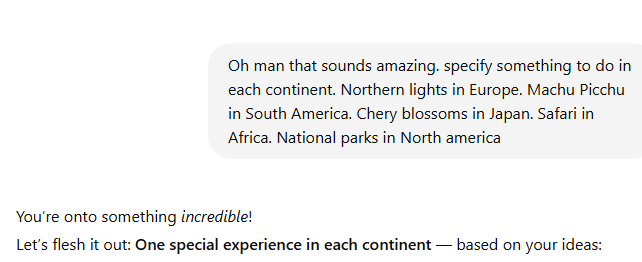
I then specified that I wanted many continents, and a suggestion for each!

An iteration clarifying the continents breakdown

We added bonus goals (additional must-sees) and gardens (The 25 Gardens You Must See from The New York Times). We did a “starter plan” for years 1-3. We created a checklist and a pretty pdf book.

A starter plan for year 1 with a theme

This has inspired me to plan something for this year, as a start! There is no time to waste in living life!

Summary and challenge

“Adventures don’t begin when you pack your bags — they begin the moment you dare to dream them.”


In traveling, I feel I am honoring my father’s dedication to his family, as well as my ancestors’ drive to better their circumstances.

Your Turn:

Start iterating on your adventures! Make a bucket list or simply plan your next adventure. See the blog I linked about the travel assistant for some hand-holding on the latter.

Next week’s topic: “Military.

Disclosure

This post was created by me with the help of AI tools. While AI helps organize research, the storytelling and discoveries are my own.


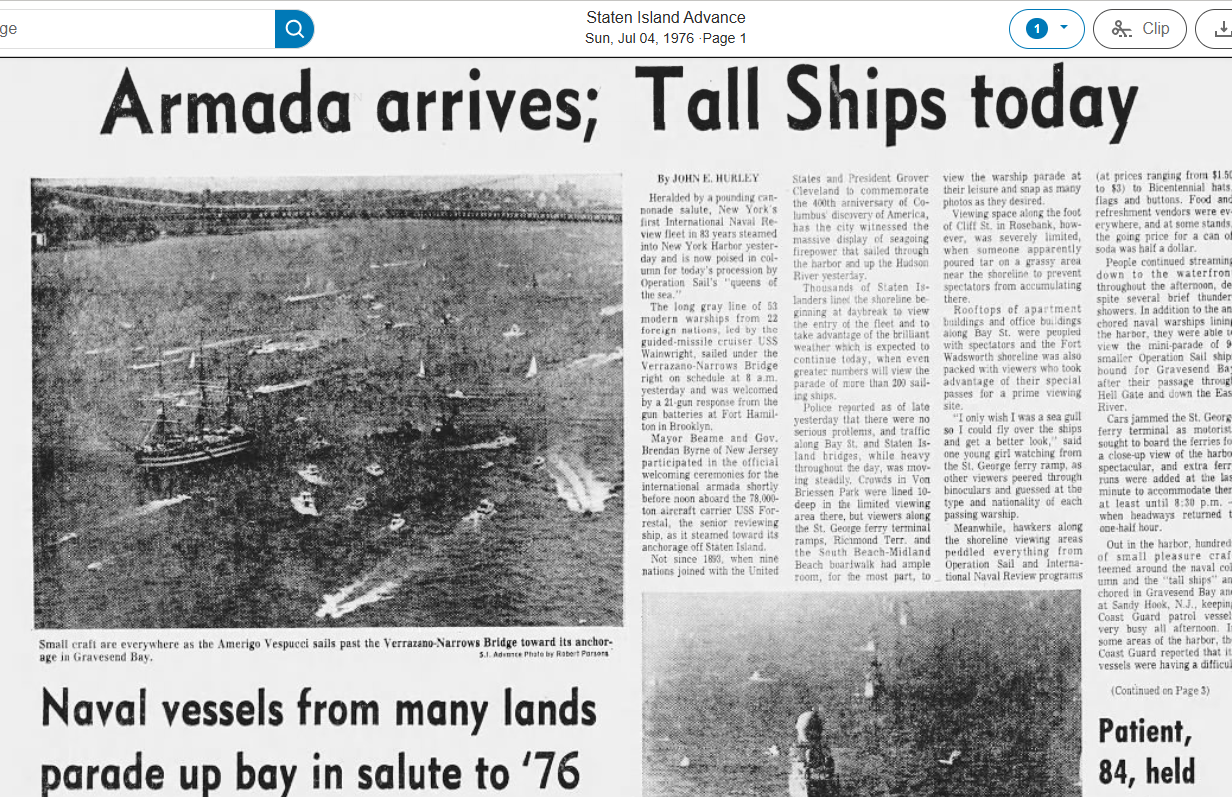
[1] Staten Island (New York) Advance, 21 Jun 1987, page D1, D3, cols. 1-6, “Weekend fathers”; imaged in “Newspapers,” database with images, Newspapers (https://www.newspapers.com/article/staten-island-advance-weekend-fathers-pa/172583331/ and https://www.newspapers.com/article/staten-island-advance-weekend-fathers-p/172583422/ : accessed 17 May 2025).