Unexpected

Unexpected

I’ve adapted Amy Johnson Crow’s 52 Ancestors in 52 Weeks challenge.
Each week I follow my children’s ahnentafel numbering to select the featured ancestor, ensuring no one through the mid–sixth generation is left behind.

52 Ancestors in 52 Weeks: 2026 Week 15: Unexpected

Introduction

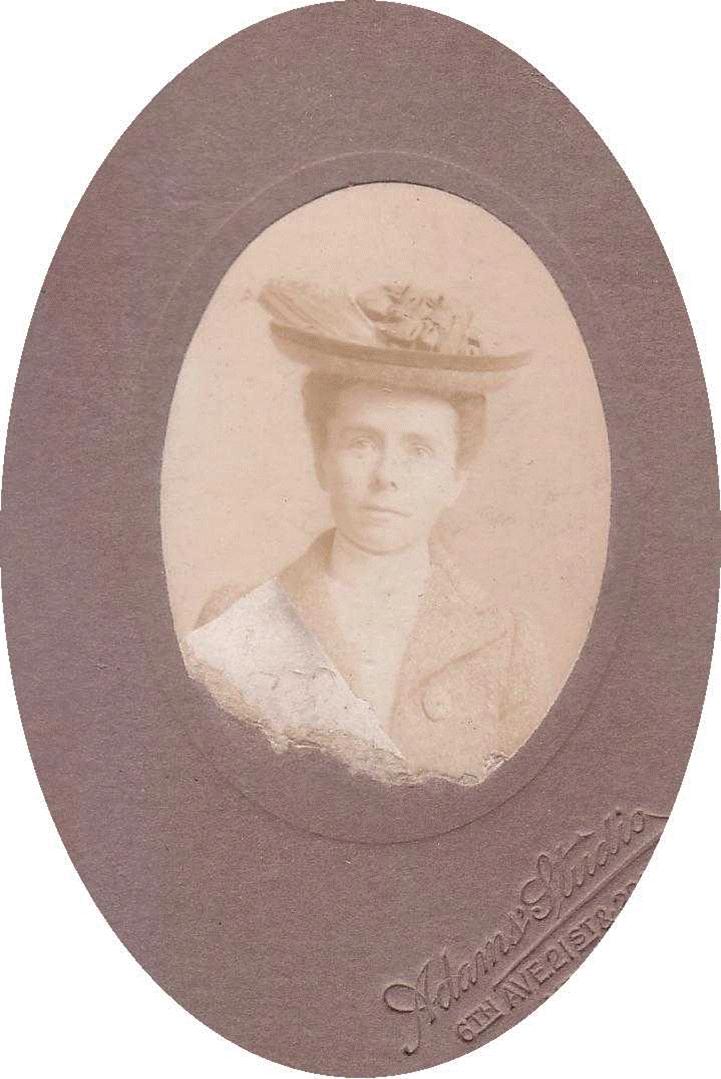
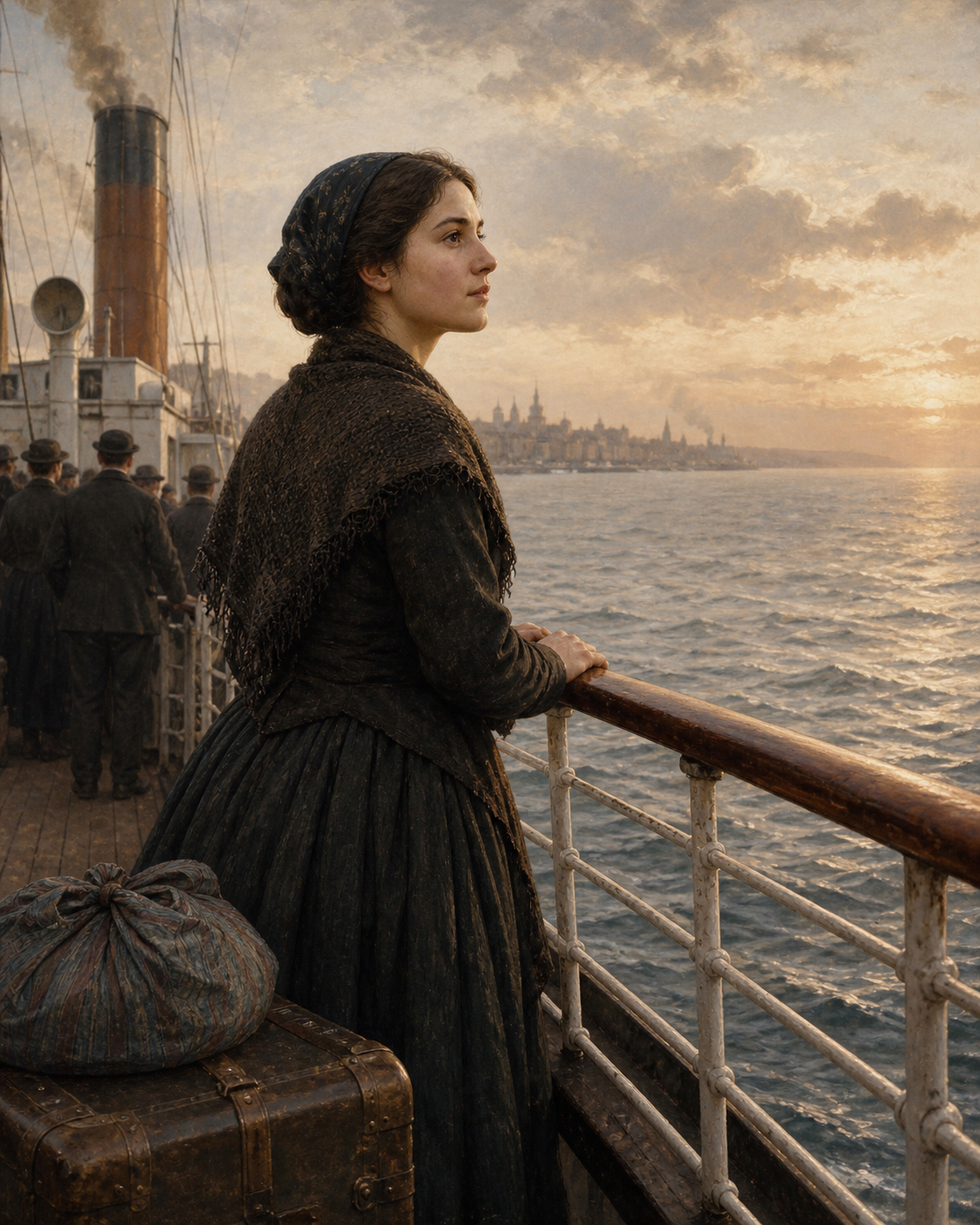
My Week 15 ancestor is Edith Makey West. When I thought about the theme “Unexpected,” I realized that her life was shaped by unexpected mothering in many forms: first when her aunt stepped in after her mother’s death, then when a stepmother took on that role, and later when Grandma herself helped raise my generation.

Discussion

We say, “It takes a village to raise a child,” but it really did in many ways. Grandma’s mother died when she and her siblings were young children, and her mother’s married, childless sister, Aunt Edith, stepped in to help raise the three of them. Grandma remained very fond of Aunt Edith and Uncle Peter for the rest of her life. Aunt Edith died relatively young, but my uncle remembered Uncle Peter, so clearly the families remained close.

Once Grandma’s father remarried, he and his new wife brought the children back and informed them, “This is your mother now.” Grandma did, in fact, treat the woman as a mother, including caring for her after Grandma’s dad passed away. When Grandma told me family stories, she would mention, “My mother” and I would clarify that she meant her stepmother. (Not to be mean, of course, but I wanted to attribute the family stories to the right person.)

Finally, after my mother left my father and took us with her, she went home to her parents. Grandma helped raise us while my mother secured her footing, returned to the workforce, gained financial stability, and generally settled into single parenting. I never, ever heard Grandma issue the slightest complaint about all this new responsibility for a retired couple.

Summary

Grandma once told me, while recounting the family history, that the men in her family had it tough. I told her I thought the women did too; they were simply expected to endure, adapt, and keep going.

What feels most unexpected to me is not a hidden record or a family story proven true, but the way mothering kept taking new forms in Grandma’s life. After losing her own mother, she was cared for by Aunt Edith. Later, a stepmother took on that role in the household. And when her own daughter needed help, Grandma stepped in to help raise the next generation. In the end, the unexpected discovery is that in our family, mothering was not always about who had the title, but about who showed up.

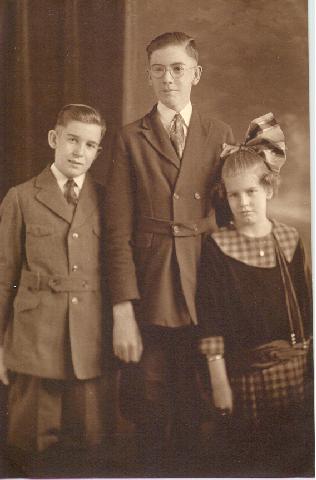
Walter, Harry, and Edith Makey

AI Disclosure

This post was created by me with the help of AI tools. While AI helps organize research, the storytelling and discoveries are my own.

Next Week’s Topic: A Quiet Life

From Ohio to New York: A Family Turning Point

From Ohio to New York: A Family Turning Point

I’m having some Saturday Night Genealogy Fun (#SNGF), with help from Randy Seaver and his prompts! Feel free to join in.

Saturday Night Genealogy Fun: April 4, 2026

Prompt: “Family stories are often about “Turning Points” and “Major Decisions.” This week, please describe a “Turning Point” in the life of one of your parents (or for both of them, or for grandparents).  Describe the decision, and discuss the outcome of it.”

Introduction

My grandfather’s decision to move to New York City during the Great Depression is one of the most courageous choices I’ve seen in my family history. If he hadn’t made that leap, my grandparents might never have met.

Discussion

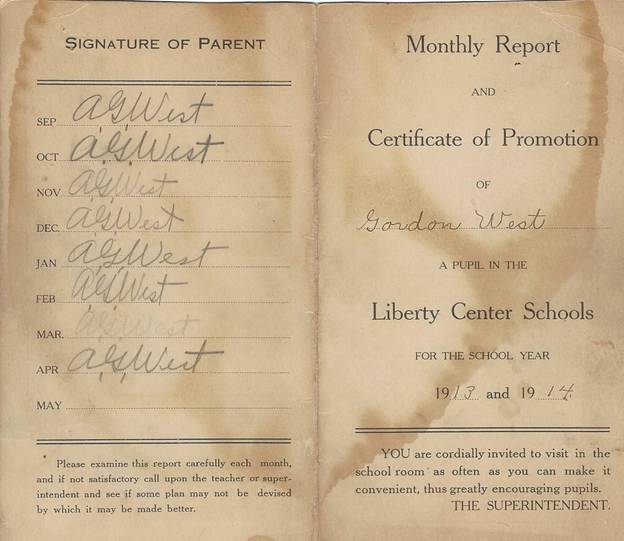
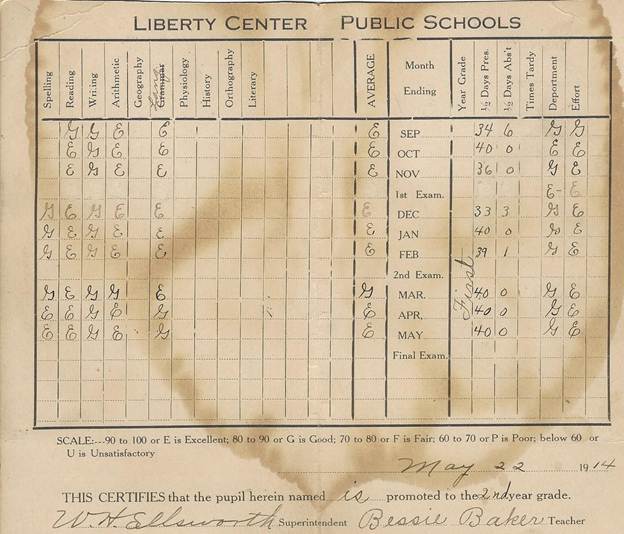
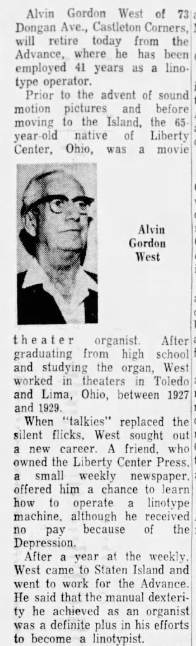
Gordon West was born and raised in Liberty Center, Henry County, Ohio, a very small town. He was a talented musician and played the organ in a movie theater until the arrival of “talkies” put him out of work.

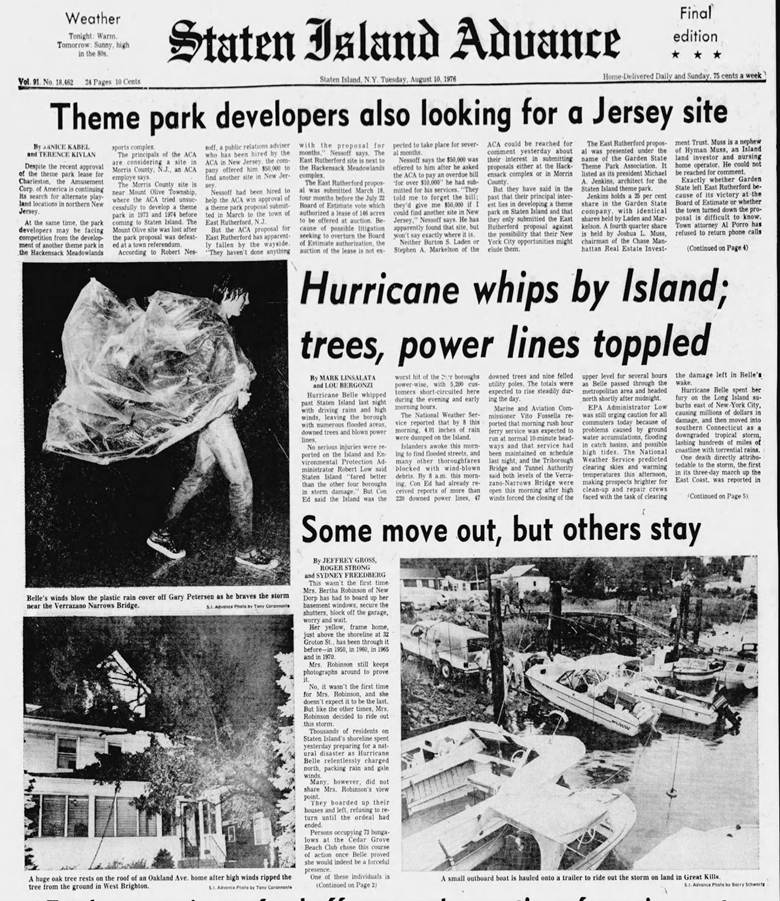
During the Depression, Grandpa went to work for a friend who ran a printing press – he worked without pay to learn the trade. After trying unsuccessfully to find work in Detroit, about 100 miles away, he made an even bolder choice: he went to New York City. As far as I know, he had no friends or contacts there, yet he found work as a linotype operator at the Staten Island Advance. For housing, he rented a room at a woman’s boarding house, and she thought he might be a nice young man for her niece’s stepdaughter – my Grandma.

They married in 1935 and he worked for the Staten Island Advance until he retired in 1972 after 41 years’ service.

The Great Depression was a terrible thing, but it did bring my grandparents together.

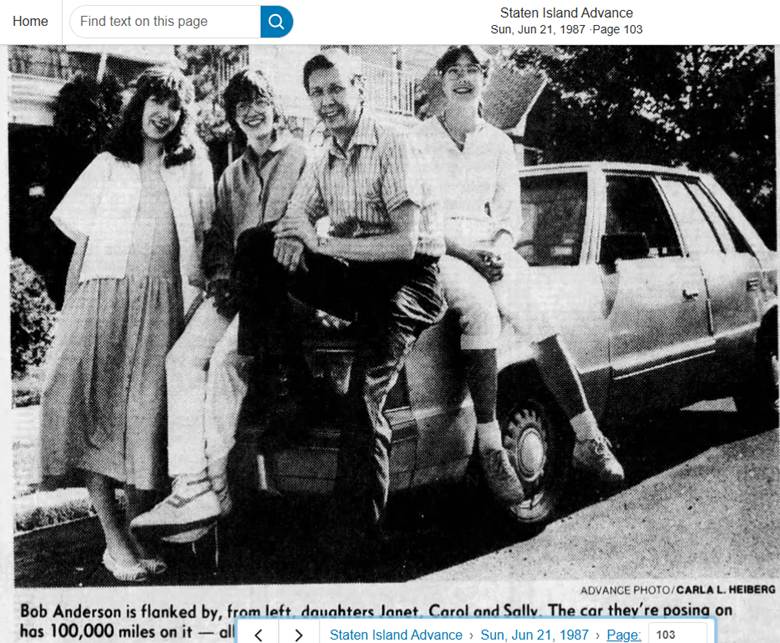
Staten Island (N. Y.) Advance, August 23, 1972, page 25

Challenge

Small changes can make a big difference. What butterfly effect have you seen or experienced?

AI Disclosure

This post was created by me with the help of AI tools. While AI helps organize research, the storytelling and discoveries are my own.

Not Every Memory Fits in a Shadowbox

I’m having some Saturday Night Genealogy Fun (#SNGF), with help from Randy Seaver and his prompts! Feel free to join in.

Saturday Night Genealogy Fun: March 21, 2026

Prompt: “March 21 is National Memory Day.  How can we celebrate, and participate, in the day?  I asked AI tool ChatGPT how, and it suggested “Capture a Memory Before Its Gone;” “Rescue and Identify Old Photos;” “Record a Oral History;” “Organize One Small Thing;”  “Share a Story With Family;” “Visit or Virtually Honor Ancestors.””

Introduction

This week’s Saturday Night Genealogy Fun challenge, from Randy Seaver, marks March 21 as National Memory Day and invites us to consider how we might celebrate and participate. The suggestion was to come up with our own ideas, and as I thought about it, I realized I’ve already been doing this in different ways, even if I didn’t call it that at the time. You probably have as well.

Discussion

One of the most tangible examples sits right in my home: a shadowbox holding my great-grandmother, Alice Britton Makey’s, initialed fork. (Blog about it here.) It’s a small, everyday object, but preserving it, and the story behind it, felt important. It gave her a physical presence, something I could see and point to. But as meaningful as it is, I also know I can’t fill my house with shadowboxes. Not every memory can live that way.

Some memories are better experienced than displayed.

I was reminded of that by a relative (Helen Denny Woodman, author of The Descendants of Henry Denny, 1758-1839, also my ancestor) who, while caring for her husband as his memory declined, would sit with him and go through old family photo albums. Those albums weren’t just records – they were invitations. They allowed him to reconnect, to recognize, to feel something familiar even as other memories slipped away. That idea has stayed with me, and it’s inspired me to create albums of our own family trips – not just to document where we’ve been, but to make it easier to revisit those moments together.

And then there are the memories you can hear.

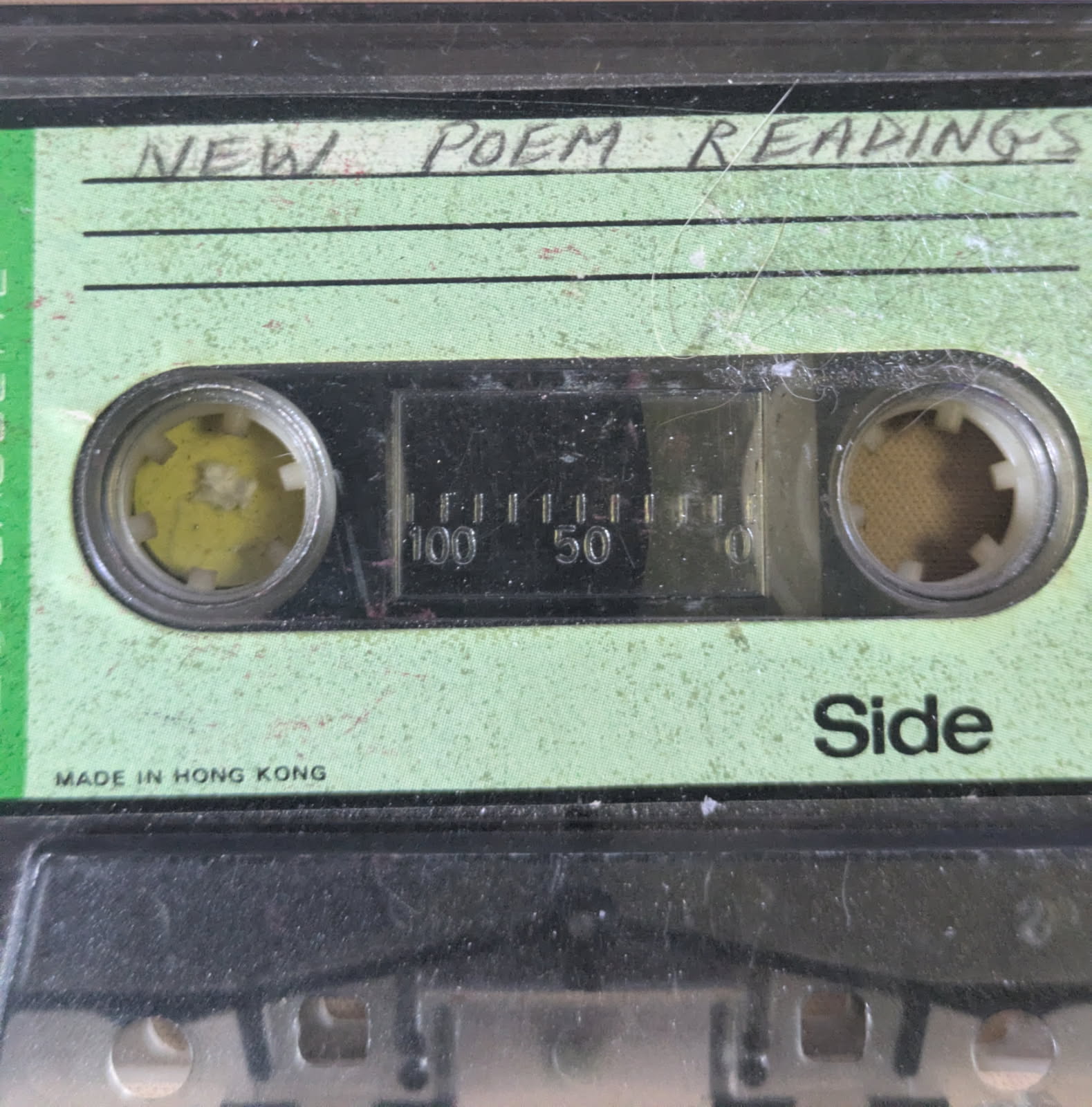
When I had an old cassette converted (blog here), I discovered a recording of my father reading a poem he had written. Hearing his voice again was something no object could replicate. It wasn’t just preservation; it was presence. For a few minutes, he wasn’t just someone I remembered. He was there.

Thinking about National Memory Day in this way, I’m struck by how many forms memory can take. Some are physical, like a fork in a shadowbox. Others are shared, like turning the pages of an album. Still others are almost intangible, like a voice carried forward through time.

Not every memory fits in a shadowbox – but that may be the point. Memory isn’t meant to live in just one form. It lives in the ways we choose to hold on, to revisit, and to share.

A cassette tape hand-labeled "New poem readings"

AI Disclosure

This post was developed with the assistance of AI tools to help organize ideas and refine wording, while preserving my original reflections and voice.

My Genealogy Day

I’m having some Saturday Night Genealogy Fun (#SNGF), with help from Randy Seaver and his prompts! Feel free to join in.

Saturday Night Genealogy Fun: March 14, 2026

Prompt: “How was your genealogy day?  Tell us about it – what genealogy-related activities did you do today, yesterday, or another day this past week? Researching, summarizing, transcribing, analyzing, writing, etc.”

Introduction

I’m going to be selective in choosing my “day.” I choose Saturday, March 14, 2026, the day this prompt was posted.

Discussion

It turned out to be a particularly full (and satisfying) day.

I started an IGHR course: Genetics for Genealogists: Fundamentals of DNA. I consider myself a lifelong learner and tend to take courses for the joy of learning, not always with a specific end goal in mind. That said, I do try to pursue at least one genealogy-focused educational experience each year. In the past, that’s included GRIP, NGS courses, the Boston University certificate program, and various study groups.

This year, I somehow ended up with two IGHR courses on my radar; both virtual and spread over several weeks. (Not my first IGHR courses… just my first this year!) The DNA course is clearly going to be challenging, which makes it all the more exciting. I developed a solid foundation in genetics through BU, but I know I still have gaps, especially when it comes to chromosome browsers and related tools.

In addition to coursework, I also worked on a blog post: Favorite RootsTech Session, after finally completing my RootsTech 2026 playlist.

And finally, I spent time working on the ancestors book I’m creating for my children. Saturday’s focus was disambiguating Matthew Kearney – a task that required careful sorting and attention to detail.

Summary

All in all, it was a very productive genealogy day. And honestly, those are some of the most fun days of all.

Challenge

Take a moment to tally up the different genealogy tasks you’ve worked on recently. You might be surprised (and impressed) by how much you’ve accomplished.

AI Disclosure

This post was created by me with the help of AI tools. While AI helps organize research, the storytelling and discoveries are my own.

An Address With a Story

An Address With a Story

I’ve adapted Amy Johnson Crow’s 52 Ancestors in 52 Weeks challenge.
Each week I follow my children’s ahnentafel numbering to select the featured ancestor, ensuring no one through the mid–sixth generation is left behind.

52 Ancestors in 52 Weeks: 2026 Week 12: An Address With a Story

Introduction

My assigned Week 12 ancestor is my paternal grandfather, Edward Anderson (1912–1985).

I’ve only ever known Grandpa to live at 60 Hillview Street, in Naugatuck, Connecticut. Of course, that wasn’t always the case – and it wasn’t even the plan.

Discussion

Grandpa was orphaned just days before his twelfth birthday. He and his two sisters were separated, each sent to different places. Grandma told me he lived with Uncle Jim and Aunt Lena for a time, but he seemed to spend much of his youth in “a home” – likely an orphanage, possibly St. Michael’s Home in Staten Island, New York.

By 1930, I found him as a young man rooming with two other young men, perhaps also without family support. He was working for a “rubber house,” where I believe he remained for the rest of his career.

By the next federal census, he had married, and he and his bride were living in Manhattan. They were still there in 1950.

Not long after, they moved to Staten Island, where I believe they purchased their first home.

At some point, Grandpa’s employer wanted to relocate him, but they chose not to go. The next time the company asked, Grandma told me, they felt they couldn’t refuse – they would be risking the household’s only income.

That decision brought them to Naugatuck, Connecticut, home of the United States Rubber Company. They bought what they considered a starter home: two bedrooms, one bath, and no expectation that it would be permanent.

Yet something about the house suited them. They made it their own. Grandpa lived the remaining 20 years of his life there, and Grandma stayed another 24 after that.

What they thought would be temporary became their forever home.

When my younger cousin once asked me for memories of Grandpa (she had been only a preschooler when he died) I told her about the walks he would take me on through that neighborhood. They knew their neighbors. Family settled nearby. It felt like a place where they had finally found peace.

I believe they were happy in that home.

Figure 1 Image from realtor.com

Challenge

What address has a special connection for you?

AI Disclosure

This post was created by me with the help of AI tools. While AI helps organize research, the storytelling and discoveries are my own.

Next Week’s Topic: A Family Pattern

Favorite RootsTech Session

I’m having some Saturday Night Genealogy Fun (#SNGF), with help from Randy Seaver and his prompts! Feel free to join in.

Favorite RootsTech Session

Saturday Night Genealogy Fun: March 7, 2026

Prompt: “RootsTech 2026 just finished today.  Did you watch any classes online?  Which online class was your favorite, perhaps the most informative, most helpful, or most entertaining, for you?”

Introduction

Have I watched any classes online? 18, so far.

Which was my favorite? Wow, that’s almost as bad as asking which child is my favorite.

Discussion

There are so many which I would heartily recommend!

  • I watched every Artificial Intelligence one which was put online (sadly, not all of them were). (These links are for your convenience, but please note that only one day comes up; you need to tab over to the other days of the conference.)
  • I leaned heavily on the Methodology sessions.
  • I was astounded, as always, by the Gardiner Brothers in the Day 3 Keynote.

But once I watch my entire list, the first one I plan to rewatch will be:

FamilySearch Full-Text Search – Your Golden Path to Ancestral Discovery with David Ouimette.

He’s an engaging, experienced speaker, and genuinely enthused about his subject.  He explains the advances FamilySearch has made to Full-Text Search, with real, relatable examples of how to use it. He explains navigation and when we would want to choose the different options. He gives search examples for different scenarios.

One of the most exciting parts of the session is learning that Full-Text Search doesn’t rely solely on traditional indexes. Instead, FamilySearch is using AI to read and transcribe historical handwriting, allowing us to search every word in millions of documents. That means names, places, and details that never made it into indexes can suddenly become discoverable.

This opens up records that were previously searchable only by browsing images—court records, land records, and other manuscript collections where names appear deep inside the text.

As the lead of FamilySearch Content Strategy for Asia-Pacific, he has unique insight into what’s coming.

Ouimette’s enthusiasm is truly contagious in this session – I highly recommend everyone drop this blog right now and go watch it!

Challenge

Go watch just one session* – navigate to https://www.familysearch.org/en/rootstech/schedule?tab=full_schedule&day=2026-03-07 and filter by a topic or speaker you’re interested in!

* OK that was a trick. You can’t stop at just one.

AI Disclosure

This post was created by me with the help of AI tools. While AI helps organize research, the storytelling and discoveries are my own.

A Turning Point

I’ve adapted Amy Johnson Crow’s 52 Ancestors in 52 Weeks challenge.
Each week I follow my children’s ahnentafel numbering to select the featured ancestor, ensuring no one through the mid–sixth generation is left behind.

52 Ancestors in 52 Weeks: 2026 Week 11: A Turning Point

Introduction

My assigned Week 11 ancestor is Ida Rabinowitz.

On July 31, 1912, Ida arrived at Ellis Island with her four daughters. They had crossed the Atlantic to reunite with her husband Sam, who had been living in New York for five years[1]. Based on the dates, it seems likely he had never even met their youngest child.

It should have been a joyful reunion.

Instead, everything fell apart.

Ida was deemed too ill to admit because of an eye infection. She would be deported.

The weather that day was beautiful — a low of 63°F and a high of 77°F.[2] But for Ida, it must have felt like the worst day of her life.

She now faced an impossible choice: Should she take her daughters back across the ocean with her… or leave them with a father they barely knew?

Discussion

You may recognize this story from last week’s post, which told it from Sam’s perspective. But how gut-wrenching it must have been for Ida!

If you remember his story from last week, you’ll know that Ida left the girls with their dad. With family assistance, he was able to care for them. Ida eventually “snuck back into” the United States.

She was traumatized enough that she never let Sam naturalize, out of fear that her undocumented status would be discovered.

That beautiful-turned-terrible July day was a turning point for that family, and its reverberations were felt for generations.

I like to think Ida held her head high, knowing she had made the sacrifice for her children.

Challenge

What turning points has your family experienced? Knowing what you know now, would you make the same choices?
Knowing what they knew then, would you?

Want to Learn More?

Ellis Island – Overview + History

AI Disclosure

This post was created by me with the help of AI tools. While AI helps organize research, the storytelling and discoveries are my own.

Next Week’s Topic: An Address With a Story


[1] S.S. Vaderland, arr. Jul 31 1912 from Antwerp left Jul 20 1912 “Page 657”, stamped p. 153

[2] https://www.extremeweatherwatch.com/cities/new-york/year-1912#july

Saturday Night Genealogy Fun: January 24, 2026: RootsTech 2026!

I’m having some Saturday Night Genealogy Fun (#SNGF), with help from Randy Seaver and his prompts! Feel free to join in.

Saturday Night Genealogy Fun: January 24, 2026: RootsTech 2026!

Prompt:

1) Are you registered for RootsTech 2026 yet?  It’s less than six weeks away – March 5-7, 2026. 

2) What are you looking forward to either attending in-person or online?  What keynote talks, classes, or other events are you planning to attend?  For each day, list at least one class that is a “can’t miss” for you. At present, there are 206 online classes listed, but some are foreign language Keynote talks and replays.

3) Share your RootsTech 2026 plans in your own blog post or in a Facebook, SubStack, BlueSky or other social media post.  Leave a link to your post on this blog post to help us find your post.

Introduction

I am such a nerd that I set a calendar reminder for the day registration opens for RootsTech 2026! So, asking me if I’m registered is kind of a silly question. 😊 I’m attending online. If you’ve ever been curious but unsure whether it’s “worth it,” the online option (FREE!) makes it easy to explore at your own pace. Someday I’ll go in person – but not this year – many other commitments this time around.

RootsTech logo

What I’m taking

One of the things I appreciate most about RootsTech is that you don’t have to do everything – just find a few voices or topics that really speak to you. I’ve been doing online webinars since long before the pandemic, and find that lately, I choose by speaker as much as by topic:

[I am so, so sorry for the list formatting. I still struggle with WordPress.]

Challenge

If you haven’t registered yet, consider doing so: it’s free, and even building a small schedule can help you see what’s possible. You can always treat it like a playlist and watch sessions later, whenever it suits you.

I always enjoy seeing how different people approach RootsTech; if you’re participating, I’d love to hear what you’re planning to attend.

AI Disclosure

This post was created by me with the help of AI tools. While AI helps organize research, the storytelling and discoveries are my own (and the prompt was Randy Seaver’s).

52 AI Ancestors in 52 Weeks: A 2025 index

Dedication

To those who carry the torch —

the ones who remember,

the ones who ask,

and the ones who keep the stories burning.

It has been so very fun meeting the challenge! I thank Amy Johnson Crow and Steve Little for the inspiration. I truly didn’t think I’d manage to do all 52 weeks, but it was addictive. Even when I felt uninspired and just did short posts, there’s always a learning.

News: I’ve decided to do another twist on the 52 ancestors challenge in 2026 – stay tuned! And I now have a named domain for this blog, The Ancestor Whisperer, with thanks to Megan Smolenyak, who generously redirected payment to Reclaim the Records.

Thank you for reading. ❤ Please find a quick index below.

Week 1 — In the Beginning, featuring Edith Lillian MAKEY WEST
https://janetbgenealogy.wordpress.com/2025/01/04/52-ai-ancestors-in-52-weeks-week-1-in-the-beginning/

Week 2 — Favorite Photo, featuring Oscar SMITH
https://janetbgenealogy.wordpress.com/2025/01/11/52-ai-ancestors-in-52-weeks-week-2-favorite-photo/

Week 3 — Nickname, featuring Mary Agnes HART CAREY
https://janetbgenealogy.wordpress.com/2025/01/18/52-ai-ancestors-in-52-weeks-week-3-nickname/

Week 4 — Overlooked, featuring Andrew DRISKOL
https://janetbgenealogy.wordpress.com/2025/01/25/52-ai-ancestors-in-52-weeks-week-4-overlooked/

Week 5 — Challenge, featuring Theresa KILKENNY ANDERSON
https://janetbgenealogy.wordpress.com/2025/02/01/52-ai-ancestors-in-52-weeks-week-5-challenge/

Week 6 — Surprise!, featuring Cornelius BRITTON
https://janetbgenealogy.wordpress.com/2025/02/08/52-ai-ancestors-in-52-weeks-week-6-surprise/

Week 7 — Letters and Diaries, featuring Patience P. SPIEGLE WEST
https://janetbgenealogy.wordpress.com/2025/02/15/52-ai-ancestors-in-52-weeks-week-7-letters-and-diaries/

Week 8 — Migration, featuring Janet ANDERSON BLAKE
https://janetbgenealogy.wordpress.com/2025/02/22/52-ai-ancestors-in-52-weeks-week-8-migration/

Week 9 — Family Secrets, featuring James HART
https://janetbgenealogy.wordpress.com/2025/02/25/52-ai-ancestors-in-52-weeks-week-9-family-secrets/

Week 10 — Siblings, featuring Lydia Coral WEST and Grace WEST CROZIER
https://janetbgenealogy.wordpress.com/2025/03/06/52-ai-ancestors-in-52-weeks-week-10-siblings/

Week 11 — Brick Wall, featuring Mary TIEBOUT YOUNG
https://janetbgenealogy.wordpress.com/2025/03/12/52-ai-ancestors-in-52-weeks-week-11-brick-wall/

Week 12 — Historic event, featuring Francis William CAREY
https://janetbgenealogy.wordpress.com/2025/03/20/52-ai-ancestors-in-52-weeks-week-12-historic-event/

Week 13 — Home sweet home, featuring 73 Dongan Avenue
https://janetbgenealogy.wordpress.com/2025/03/26/52-ai-ancestors-in-52-weeks-week-13-home-sweet-home/

Week 14 — Language, featuring Robert Edward ANDERSON
https://janetbgenealogy.wordpress.com/2025/04/02/52-ai-ancestors-in-52-weeks-week-14-language/

Week 15 — Big mistake, featuring Mary Agnes HART CAREY and Francis William CAREY
https://janetbgenealogy.wordpress.com/2025/04/11/52-ai-ancestors-in-52-weeks-week-15-big-mistake/

Week 16 — Oldest story, featuring Louis THIBOU
https://janetbgenealogy.wordpress.com/2025/04/16/52-ai-ancestors-in-52-weeks-week-16-oldest-story/

Week 17 — DNA, featuring A. Gordon WEST
https://janetbgenealogy.wordpress.com/2025/04/22/52-ai-ancestors-in-52-weeks-week-17-dna/

Week 18 — Institutions, featuring Robert E. Anderson
https://janetbgenealogy.wordpress.com/2025/04/28/52-ai-ancestors-in-52-weeks-week-18-institutions/

Memorable quote: “A scholarship endowment is more than a donation; it’s a promise to future dreamers that someone believes in their journey.”

Week 19 — At the Library, featuring Janet ANDERSON BLAKE
https://janetbgenealogy.wordpress.com/2025/05/08/52-ai-ancestors-in-52-weeks-week-19-at-the-library/

Week 20 — Wheels, featuring Robert E. ANDERSON
https://janetbgenealogy.wordpress.com/2025/05/17/52-ai-ancestors-in-52-weeks-week-20-wheels/

Week 21 — Military, featuring Henry Denny, John Thomas WEST, William P. SPEAGLES, and Robert J. ANDERSON
https://janetbgenealogy.wordpress.com/2025/05/25/52-ai-ancestors-in-52-weeks-week-21-military/

Week 22 — Reunion, featuring my son
https://janetbgenealogy.wordpress.com/2025/06/01/52-ai-ancestors-in-52-weeks-week-22-reunion/

Week 23 — Wedding bells, featuring Ida RABINOWITZ GOODE and Samuel GOODE
https://janetbgenealogy.wordpress.com/2025/06/02/52-ai-ancestors-in-52-weeks-week-23-wedding-bells/

Week 24 — Artistic, featuring Lydia Coral WEST
https://janetbgenealogy.wordpress.com/2025/06/13/52-ai-ancestors-in-52-weeks-week-24-artistic/

Week 25 — FAN Club, featuring Anna FRANK BIRNBAUM and Samuel BIRNBAUM
https://janetbgenealogy.wordpress.com/2025/06/18/52-ai-ancestors-in-52-weeks-week-25-fan-club/

Week 26 — Favorite name, featuring Edith Lillian MAKEY WEST
https://janetbgenealogy.wordpress.com/2025/06/25/52-ai-ancestors-in-52-weeks-week-26-favorite-name/

Week 27 — Family business, featuring John WEST
https://janetbgenealogy.wordpress.com/2025/07/05/52-ai-ancestors-in-52-weeks-week-27-family-business/

Week 28 — Travel, featuring Edith MAKEY WEST
https://janetbgenealogy.wordpress.com/2025/07/11/52-ai-ancestors-in-52-weeks-week-28-travel/

Week 29 — Cousins, featuring Grace Brewster MURRAY HOPPER
https://janetbgenealogy.wordpress.com/2025/07/16/52-ai-ancestors-in-52-weeks-week-29-cousins/

Week 30 — Religious traditions, featuring various
https://janetbgenealogy.wordpress.com/2025/07/24/52-ai-ancestors-in-52-weeks-week-30-religious-traditions/

Week 31 — Earliest Ancestor, featuring Philippe du TRIEUX and Jaquemyne NOIRET du TRIEUX
https://janetbgenealogy.wordpress.com/2025/08/06/52-ai-ancestors-in-52-weeks-week-31-earliest-ancestor/

Week 32 — Wide open spaces, featuring Michael DOBBINS
https://janetbgenealogy.wordpress.com/2025/08/06/52-ai-ancestors-in-52-weeks-week-32-wide-open-spaces/

Week 33 — Legal troubles, featuring John WEST
https://janetbgenealogy.wordpress.com/2025/08/12/52-ai-ancestors-in-52-weeks-week-33-legal-troubles/

Week 34 — Play time, featuring A. Gordon WEST
https://janetbgenealogy.wordpress.com/2025/08/19/52-ai-ancestors-in-52-weeks-week-34-play-time/

Week 35 — Off to Work, featuring A. Gordon WEST
https://janetbgenealogy.wordpress.com/2025/09/02/52-ai-ancestors-in-52-weeks-week-35-off-to-work/

Week 36 — Off to school, featuring my son
https://janetbgenealogy.wordpress.com/2025/09/04/52-ai-ancestors-in-52-weeks-week-36-off-to-school/

Week 37 — In the News, featuring various
https://janetbgenealogy.wordpress.com/2025/09/12/52-ai-ancestors-in-52-weeks-week-37-in-the-news/

Week 38 — Animals, featuring Henry MAKEY
https://janetbgenealogy.wordpress.com/2025/09/26/52-ai-ancestors-in-52-weeks-week-38-animals/

Week 39 — Disappeared, featuring Andrew DRISKOL
https://janetbgenealogy.wordpress.com/2025/09/27/52-ai-ancestors-in-52-weeks-week-39-disappeared/

Week 40 — Cemetery, featuring Jennie FELDER FRANK
https://janetbgenealogy.wordpress.com/2025/09/30/52-ai-ancestors-in-52-weeks-week-40-cemetery/

Week 41 — Water, featuring John T. WEST and Patience SPIEGLE WEST
https://janetbgenealogy.wordpress.com/2025/10/12/52-ai-ancestors-in-52-weeks-week-41-water/

Week 42 — Fire, featuring John T. WEST
https://janetbgenealogy.wordpress.com/2025/10/13/52-ai-ancestors-in-52-weeks-week-42-fire/

Week 43 — Urban, featuring Jason SMITH
https://janetbgenealogy.wordpress.com/2025/10/28/52-ai-ancestors-in-52-weeks-week-43-urban/

Week 44 — Rural, featuring A. Gordon WEST
https://janetbgenealogy.wordpress.com/2025/10/30/52-ai-ancestors-in-52-weeks-week-44-rural/

Week 45 — Multiple, featuring Charlotte DuSHANNON WEST
https://janetbgenealogy.wordpress.com/2025/11/07/52-ai-ancestors-in-52-weeks-week-45-multiple/

Week 46 — Wartime, featuring Stephen BARKER
https://janetbgenealogy.wordpress.com/2025/11/11/52-ai-ancestors-in-52-weeks-week-46-wartime/

Week 47 — The Name’s the Same, featuring Nathaniel BRITTON
https://janetbgenealogy.wordpress.com/2025/11/21/52-ai-ancestors-in-52-weeks-week-47-the-names-the-same/

Week 48 — Family recipe, featuring Edith Lillian MAKEY WEST
https://janetbgenealogy.wordpress.com/2025/11/25/52-ai-ancestors-in-52-weeks-week-48-family-recipe/

Week 49 — Written, featuring Robert E. ANDERSON
https://janetbgenealogy.wordpress.com/2025/12/03/52-ai-ancestors-in-52-weeks-week-49-written/

Week 50 — Family heirloom, featuring Alice BRITTON MAKEY
https://janetbgenealogy.wordpress.com/2025/12/11/52-ai-ancestors-in-52-weeks-week-50-family-heirloom/

Week 51 — Musical, featuring Rose CAREY ANDERSON and Edward Joseph ANDERSON
https://janetbgenealogy.wordpress.com/2025/12/19/52-ai-ancestors-in-52-weeks-week-51-musical/

Week 52 — Memorable, featuring all
https://janetbgenealogy.wordpress.com/2025/12/22/52-ai-ancestors-in-52-weeks-week-52-memorable/

52 AI Ancestors in 52 Weeks: Week 51: Musical

I’ve combined Amy Johnson Crow’s 52 ancestors in 52 weeks challenge, and Steve Little’s The 2025 AI Genealogy Do-Over, to create a unique 52 AI ancestors in 52 weeks party!

52 AI Ancestors in 52 Weeks: Week 51: Musical

Introduction

Some families have musicians. Others have musical moments. This week’s theme, Musical, invited us to recall the songs, sounds, and dance steps that echo through our family history.

Our family didn’t pass down a violin or leave behind a trail of concert programs – but they did pass down a story. Or at least, part of one.

Rose Elizabeth Carey met Edward Joseph Anderson at a dance hall. That much is certain. The rest? Well, that’s where the fun begins.

The Discussion

Here’s what we know for sure, according to family records:

  • Rose Carey was born in Harlem (in upper Manhattan) in 1916, worked at Western Union, and married Edward Anderson in 1939.
  • Edward “Ed” Anderson, a Staten Island-born accountant, was methodical, soft-spoken, and a baseball fanatic. After he grew up in a Staten Island orphanage, he moved to Manhattan, likely for work.
  • They met at a dance hall, likely in Manhattan, sometime in the late 1930s. Dance halls in NYC were especially vibrant spaces for working-class people to socialize, particularly young women like these two.

And that’s it. No song titles. No saved stubs. No love letters with lipstick kisses. Just a setting, and an invitation to imagine.

So let’s imagine:

It’s Saturday night. The dance floor is full. A swing band plays something peppy: maybe Benny Goodman, maybe Glenn Miller. A pretty young woman steps onto the floor. She’s got a confident smile and the kind of red lipstick that holds up through laughter. That’s Rose.

Across the room, a tall man with serious eyes and polished shoes watches. That’s Ed.

Maybe he doesn’t dance much. Maybe she dances with everyone. Maybe the music carries them both.

“Would you like to dance?”
“I thought you’d never ask.”

In our version of the story, they dance until the band plays a slow number: “Stardust”, let’s say, and they don’t even notice the room around them anymore. Just each other.

Did it really happen that way? Probably not. But the truth – they met at a dance – is an invitation to color in the rest.

Figure 1 An AI-generated image seeded with a wedding photo of my grandparents.

How AI Can Help

AI didn’t give me this memory, but it gave me the tools to shape it into a story.

Using AI tools like ChatGPT, you can:

  • Turn a one-sentence family fact into a vivid blog post.
  • Imagine period-appropriate music or fashion from a given date.
  • Research common songs at 1930s dance halls in Manhattan.
  • Even generate images or playlists to accompany the story.

It’s not about rewriting history, it’s about making it easier to picture, and more fun to tell.

Challenge for Readers

This week, try one of these:

  • Find a family couple whose meeting story you’ve never fully explored. What setting were they in? What music might’ve been playing?
  • Pick a decade and imagine the soundtrack your ancestor would’ve heard most often. Were they swing? Gospel? Polka? Protest folk?
  • Call an older relative and ask if they remember dancing—and to what. Sometimes the best stories aren’t about songs, but about who sang them.

For More Information

Next Week’s Topic (last one!): “Memorable”

AI Disclosure

This post was created by me with the help of AI tools. While AI helps organize research, the storytelling and discoveries are my own.