SNGF: Ancestor #50

I’m having some Saturday Night Genealogy Fun (#SNGF), with help from Randy Seaver and his prompts! Feel free to join in.

Saturday Night Genealogy Fun: April 25, 2026

Prompt: “Who Is Ancestor #50 in your Ahnentafel list?  What were his birth date and place, his parents, death date and place, spouse’s name, marriage date and place, and how many children they had, and which of his children do you descend from?”

Introduction

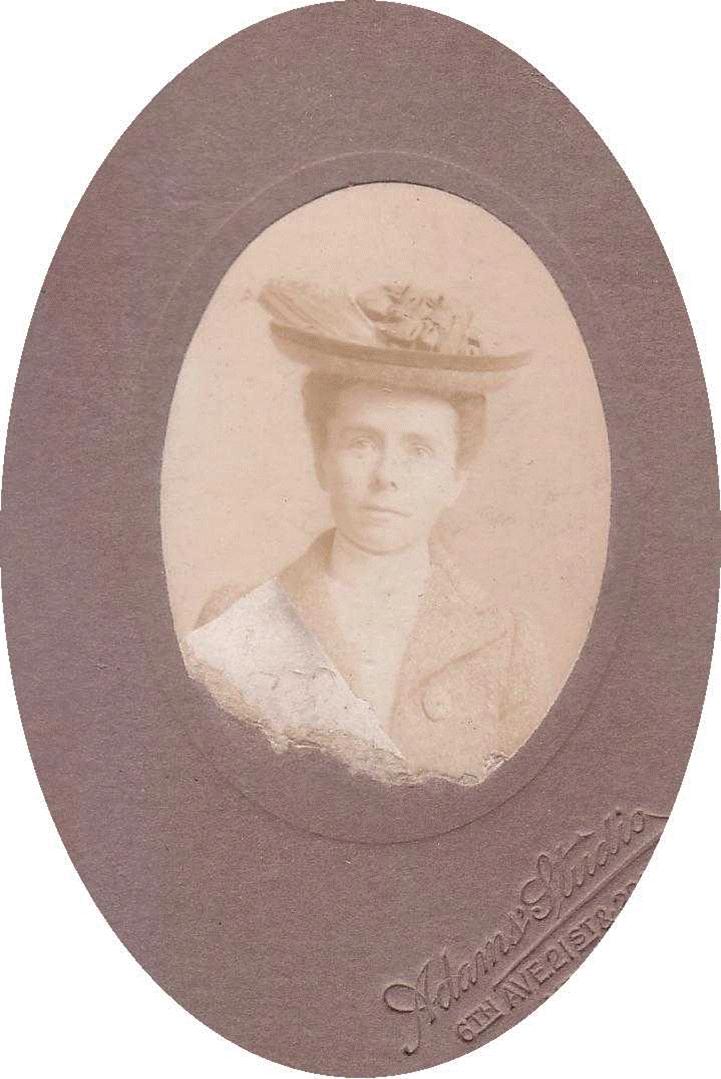
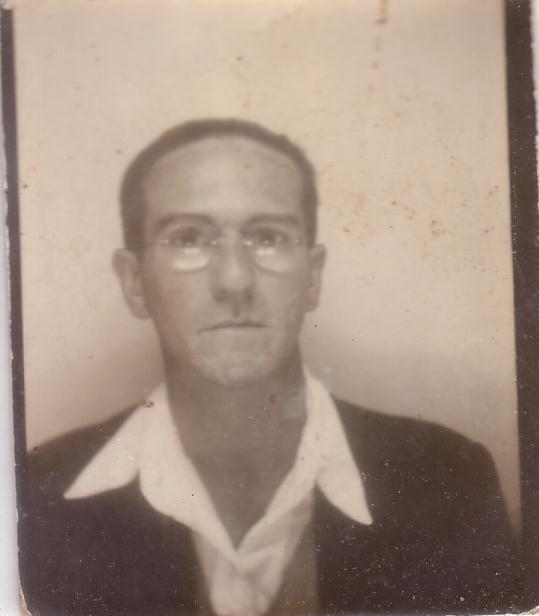
I’ve been working since 2021 on an ancestry book based on my children’s ahnentafel. So those are the only ancestor numbers I talk about! That particular number is assigned to Andrew Driskol, on my side. My children descend from Andrew through his daughter Anna Driskol, who married Michael Joseph Anderson in 1906.

Discussion

Andrew would be my children’s 3x great grandfather. What an interesting choice! Andrew is such a mystery to me. Despite the fact that he lived well into the late 19th century, I have not yet found direct evidence of his existence. Everything I have is something that was reported by/around his children regarding their father.

I believe Andrew was born ca. 1835-1840. He apparently moved to England and married Malvina Hendell probably between 1860 and 1864. Based on children, he probably emigrated to the US about 1868-1869, followed by his wife and eldest children (ages 11 and 9) in 1875. (Malvina’s immigration is the first paper trail I have on any of them.)

They had children in New York City, then Staten Island, Richmond County, New York, until 1883.

I believe he died about 1890, since his eldest son purchased property then, suggesting assumption of family financial responsibility. By the 1900 census, Malvina was a widow and eldest son Edward was the head of household. Malvina died soon after.

Genealogical Summary

Andrew Driskol was born ca. 1835-1840 in Prussia. He married Malvina Hendell probably between 1860 and 1865, possibly in England. Andrew immigrated to the United States about 1868-1869, followed by his wife and eldest children about 1875. He died between 1883 and probably 1890. Documentation for Andrew’s life derives primarily from his children’s vital records, as direct records for him have not been located in standard repositories.

Children of Andrew Driskol and Malvina Hendell:

                                   i. Edward A DRISKOL was born in Feb 1865 in Germany. He arrived on the Holland in 1875. He lived on Van Pelt Ave in Staten Island between 1890 and 1900. In 1900 Edward was an Electrician. He moved to Queens between 1928/9 and 1938. He died after 1938. Note: I don’t believe Edward ever married – in one rather late land record, he was referred to as “single man.”

                                   ii. (perhaps) Edith DRISKOL was born about 1866 probably in England. Note: I believe she died young.

                              2  iii. Mary Malvina DRISKOL, born Mar 1873, New York City ; married Eugene HEMSTREET, 14 May 1891, Northfield, Staten Island; married Francis J VAN DUSKY, 14 Apr 1926, Manhattan; died 9 Mar 1938, Staten Island. Note: Interestingly, after Josephine died, and her sister Mary was widowed, Mary married Josephine’s widower. They had no children, but Mary did by her first husband: Grace, Edward, and Lillian.

                              3  iv. Josephine R DRISKOL, born 1878, Staten Island; married Francis J VAN DUSKY, 27 Dec 1899, Staten Island; died 4 Apr 1925, Staten Island. They also had three children: Edward, Mildred, and Dorothy.

                              4  v. Anna DRISKOL (my ancestor), born 10 Jul 1880, Staten Island; married Michael Joseph ANDERSON, 16 Aug 1906, Staten Island; died 19 May 1922, Staten Island. They had four children: Theresa, Mary, Frances, and Edward, my grandfather.

                                   vi. Joseph DRISKOL was born on 5 Jan 1883 in New York City. Joseph died on 27 Nov 1925 at the age of 42 in Staten Island. He never married.

Challenge

Andrew has always been a challenge to me. Every so often, I resolve to try again on him, and one day I will break through!

I blogged about Andrew in Disappeared and again in Overlooked.

Who is YOUR #50?

AI Disclosure

This post was created by me with the help of AI tools. While AI helps organize research, the storytelling and discoveries are my own.

SNGF: The Letter That Made My Ancestor Real

I’m having some Saturday Night Genealogy Fun (#SNGF), with help from Randy Seaver and his prompts! Feel free to join in.

Saturday Night Genealogy Fun: April 18, 2026

Prompt: “Have you found an unexpected record recently (or at any time) in your genealogy and family history research?  A document, a book, an article, a letter, etc. This week, please tell us about that unexpected record find and how it helped your research.”

Introduction

My most unexpected record was a letter written by my ancestor 343 years ago!

Discussion

How often has “dumb luck” aided our research? Probably more often than we would like to admit. This was one of those moments.

I submitted a genealogical query and received a response that broke a brick wall wide open. Suddenly, three new generations appeared. When I searched for the oldest of them, I struck gold.

Louis Thibou and his family were French Huguenots who fled France as religious tensions escalated. They went first to London, then sailed to Carolina, where they settled near Charleston in 1680.

Three years later, Louis wrote a letter to his friend Gabriel Boutefoy in London, encouraging him and his friends to come as well. Somehow, that letter has survived. I was blessed to hold it in my own hands at the South Caroliniana Library.

The letter reads almost like a promotional piece for Carolina, but it also contains priceless family detail: “God has given us a son who is called Jacob after the one we lost in England; the captain of a warship was his godfather. Gabriel is well and kisses the hands of his godfather and godmother.” Young Gabriel was my ancestor. I can’t begin to express the awe I felt holding that letter in my hands. Louis thought he was reaching across an ocean but he was also reaching across centuries.

That is what astonishes me most: after all the careful, methodical work that went into finding this line, I was suddenly able to hear my ancestor’s voice across more than three centuries. Research takes discipline, yes, but sometimes it also feels like grace.

Figure 1: Me with the letter written (in French) by my 9th great grandfather.

References

AI Disclosure

This post was created by me with the help of AI tools. While AI helps organize research, the storytelling and discoveries are my own.

52 Ancestors: A Quiet Life

I’ve adapted Amy Johnson Crow’s 52 Ancestors in 52 Weeks challenge.
Each week I follow my children’s ahnentafel numbering to select the featured ancestor, ensuring no one through the mid–sixth generation is left behind.

52 Ancestors in 52 Weeks: 2026 Week 16: A Quiet Life

Introduction

My Week 16 ancestor is Bernard Birnbaum.

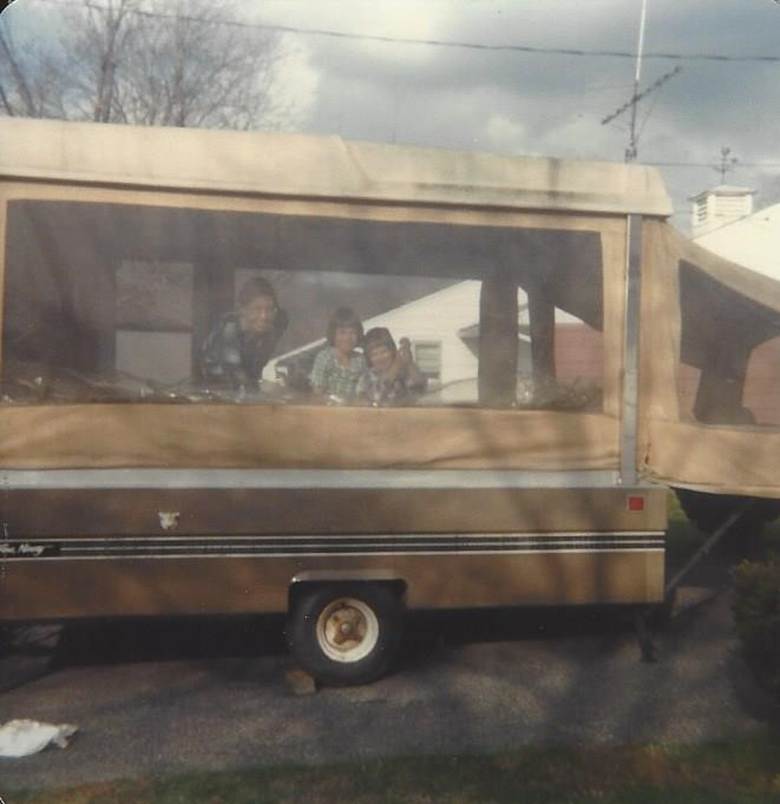
Bernie was born in Manhattan and spent the early part of his life in Manhattan and the Bronx. By the time his family was well underway, his oldest child was ten and he was establishing his law practice. I have photographs of the family at the large Bronx apartment complex where they lived, a place that must have felt very much a part of city life. Busy streets, close quarters, constant motion — that was the world Bernie knew.

Figure 1 My husband at their Bronx apartment complex

Discussion

And yet, at some point, Bernie and his family made a different kind of choice.

They moved to Rockville Centre on Long Island. At the time, that move would have represented a real shift in daily life. The Long Island Rail Road and the Sunrise Highway were making it increasingly possible to live outside the city while continuing to work in Manhattan. For an attorney with a city practice, suburbia had become a plausible option.

Their children went to school there and, from that home, began building lives of their own. Rockville Centre offered something Manhattan and the Bronx could not: a quieter rhythm. More space. Tree-lined streets. A sense of retreat at the end of the day.

I find myself wondering what that felt like for Bernie.

What was it like to leave behind the noise of Manhattan each evening and return to a calmer neighborhood where his wife and children were waiting? Did the train ride home become a kind of boundary between his professional life and his family life? Did that quieter setting feel like a reward for years of work, or simply like the right place to raise a family?

Not every ancestor leaves behind dramatic stories. Some leave evidence of steadiness instead — the kind of choices that suggest responsibility, care, and the desire to build a good life for the people around them. Moving his family to Rockville Centre feels like that kind of choice to me. It may not have been adventurous, but it was meaningful.

Sometimes a quiet life is not empty of story. Sometimes it is the story.

Figure 2 A modern day Google photograph of the home Bernie and his wife raised their family in.

Summary

After retirement, when the children had left the nest, Bernie and his wife moved back to Manhattan. That detail feels especially telling. Perhaps the city had always remained part of who they were, even after the quieter years on Long Island.

I suppose Bernie was always of two worlds: the energy of the city and the peace of the suburbs.

His life may not read like an adventure tale, but it offers something just as valuable — a glimpse of how ordinary decisions shape a family’s history. In that sense, Bernie’s quiet life was not small at all.

AI Disclosure

This post was created by me with the help of AI tools. While AI helps organize research, the storytelling and discoveries are my own.

Next Week’s Topic: Working for a Living

SNGF: A Marriage Date Hidden Between the Children

I’m having some Saturday Night Genealogy Fun (#SNGF), with help from Randy Seaver and his prompts! Feel free to join in.

Saturday Night Genealogy Fun: April 11, 2026

Prompt: “Do you have an ancestor with no defined birth and death dates or places? This week, please tell us about that ancestor and what clues you used to estimate a birth and death dates and places.”

Introduction

I hope you don’t mind if I interpret this week’s prompt a little loosely and apply it to a marriage date rather than a birth or death date.

While tracking my ancestor Jason Smith, it became clear that he had two wives. I first suspected that because a relative posted a tree online saying she was descended from his first wife. That left me trying to figure out when Jason married my ancestor Mary Denny, who then became the elusive Mary Smith. Sigh.

My Response to the Prompt

Because the children were born in the 1830s and 1840s, there was not much documentation in their records to clearly identify their mothers.

So I started with the children and looked for patterns in the sequence, especially any gap that might suggest a death and remarriage. Here is the lineup I was working from:

Adelia Smith, b. ?
William Mulford Smith, b. 14 May 1835
Deborah Ann Smith, b. 31 Dec 1837
Jason A. Smith, b. 20 Mar 1839
Mary Catharine Smith, b. 30 Oct 1841
George Henry Smith, b. 1 Oct 1843
Charles Edward Smith, b. 12 Jul 1845
Oscar F. Smith, b. ca. 1846
Alice Matilda Smith, b. 16 Feb 1850
Sarah H. Smith, b. Jan 1852
Lewis N. Smith, b. Aug 1859

Looking at that list, I suspected the wife change happened somewhere in the middle, but I did not think it was as late as Alice’s birth in 1850.

Then, finally, a newspaper notice turned up online.

I found an item in the Baptist Advocate dated November 14, 1840, and that gave me a much firmer point on the timeline.

That newspaper notice, announcing the November 4, 1840 marriage of Mr. Jason M. Smith and Miss Mary Denny, helped clarify when Jason’s household changed. So, my working theory based on the children’s birth dates turned into something much stronger once I had contemporary evidence to support it.

This guy did not waste any time finding a mama for his littles.

It was a good reminder that when exact dates are missing, we often build a timeline first from the children, the census, and whatever indirect clues we can gather, and then wait for one good record to bring the picture into focus.

How do you estimate unknown dates?

AI Disclosure

This post was created by me with the help of AI tools. While AI helps organize research, the storytelling and discoveries are my own.

52 Ancestors: Unexpected

Unexpected

I’ve adapted Amy Johnson Crow’s 52 Ancestors in 52 Weeks challenge.
Each week I follow my children’s ahnentafel numbering to select the featured ancestor, ensuring no one through the mid–sixth generation is left behind.

52 Ancestors in 52 Weeks: 2026 Week 15: Unexpected

Introduction

My Week 15 ancestor is Edith Makey West. When I thought about the theme “Unexpected,” I realized that her life was shaped by unexpected mothering in many forms: first when her aunt stepped in after her mother’s death, then when a stepmother took on that role, and later when Grandma herself helped raise my generation.

Discussion

We say, “It takes a village to raise a child,” but it really did in many ways. Grandma’s mother died when she and her siblings were young children, and her mother’s married, childless sister, Aunt Edith, stepped in to help raise the three of them. Grandma remained very fond of Aunt Edith and Uncle Peter for the rest of her life. Aunt Edith died relatively young, but my uncle remembered Uncle Peter, so clearly the families remained close.

Once Grandma’s father remarried, he and his new wife brought the children back and informed them, “This is your mother now.” Grandma did, in fact, treat the woman as a mother, including caring for her after Grandma’s dad passed away. When Grandma told me family stories, she would mention, “My mother” and I would clarify that she meant her stepmother. (Not to be mean, of course, but I wanted to attribute the family stories to the right person.)

Finally, after my mother left my father and took us with her, she went home to her parents. Grandma helped raise us while my mother secured her footing, returned to the workforce, gained financial stability, and generally settled into single parenting. I never, ever heard Grandma issue the slightest complaint about all this new responsibility for a retired couple.

Summary

Grandma once told me, while recounting the family history, that the men in her family had it tough. I told her I thought the women did too; they were simply expected to endure, adapt, and keep going.

What feels most unexpected to me is not a hidden record or a family story proven true, but the way mothering kept taking new forms in Grandma’s life. After losing her own mother, she was cared for by Aunt Edith. Later, a stepmother took on that role in the household. And when her own daughter needed help, Grandma stepped in to help raise the next generation. In the end, the unexpected discovery is that in our family, mothering was not always about who had the title, but about who showed up.

Walter, Harry, and Edith Makey

AI Disclosure

This post was created by me with the help of AI tools. While AI helps organize research, the storytelling and discoveries are my own.

Next Week’s Topic: A Quiet Life

SNGF: From Ohio to New York: A Family Turning Point

From Ohio to New York: A Family Turning Point

I’m having some Saturday Night Genealogy Fun (#SNGF), with help from Randy Seaver and his prompts! Feel free to join in.

Saturday Night Genealogy Fun: April 4, 2026

Prompt: “Family stories are often about “Turning Points” and “Major Decisions.” This week, please describe a “Turning Point” in the life of one of your parents (or for both of them, or for grandparents).  Describe the decision, and discuss the outcome of it.”

Introduction

My grandfather’s decision to move to New York City during the Great Depression is one of the most courageous choices I’ve seen in my family history. If he hadn’t made that leap, my grandparents might never have met.

Discussion

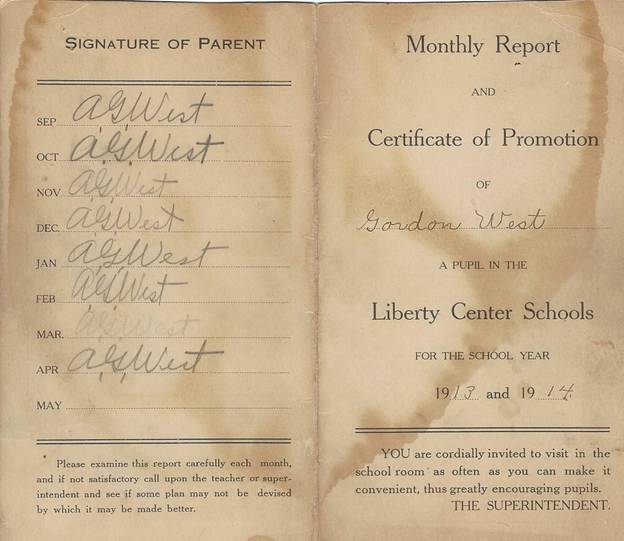
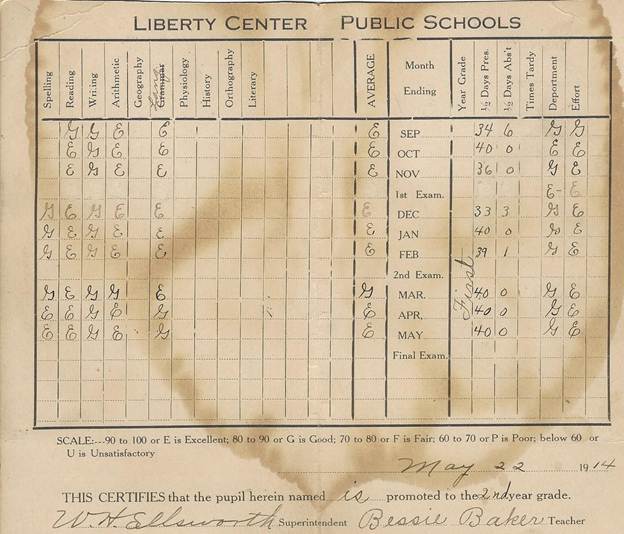
Gordon West was born and raised in Liberty Center, Henry County, Ohio, a very small town. He was a talented musician and played the organ in a movie theater until the arrival of “talkies” put him out of work.

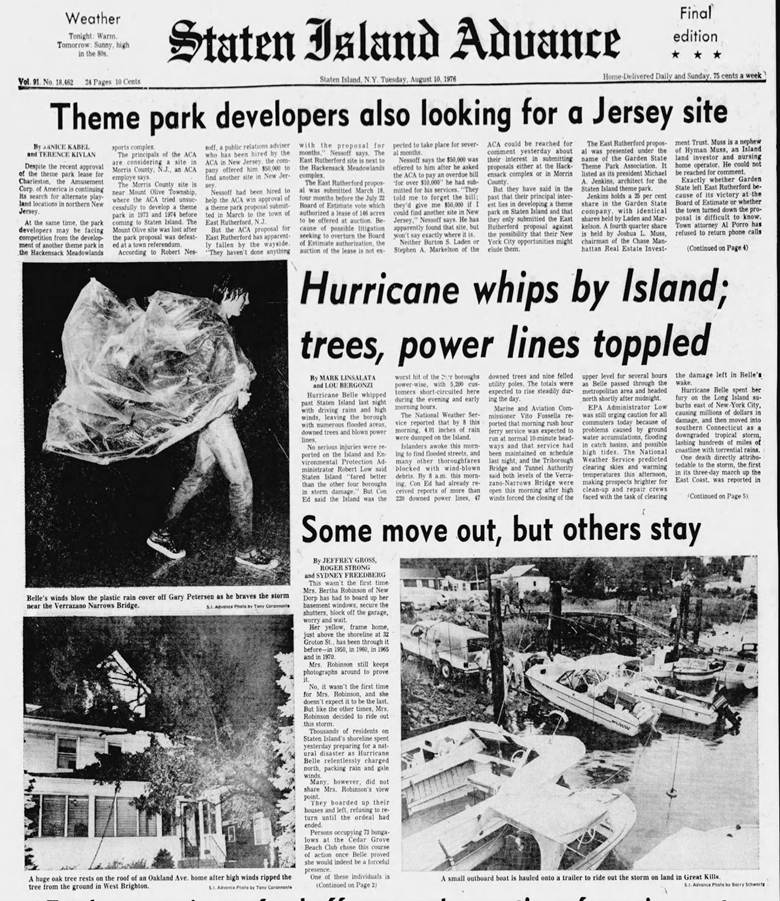
During the Depression, Grandpa went to work for a friend who ran a printing press – he worked without pay to learn the trade. After trying unsuccessfully to find work in Detroit, about 100 miles away, he made an even bolder choice: he went to New York City. As far as I know, he had no friends or contacts there, yet he found work as a linotype operator at the Staten Island Advance. For housing, he rented a room at a woman’s boarding house, and she thought he might be a nice young man for her niece’s stepdaughter – my Grandma.

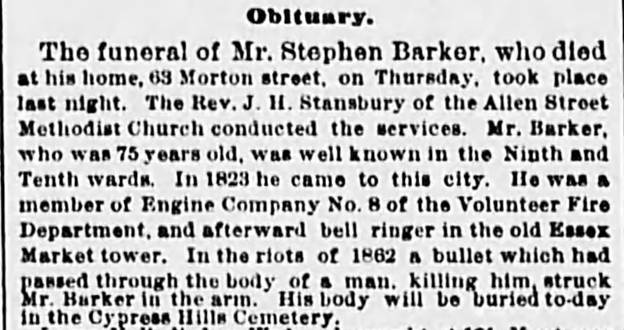
They married in 1935 and he worked for the Staten Island Advance until he retired in 1972 after 41 years’ service.

The Great Depression was a terrible thing, but it did bring my grandparents together.

Staten Island (N. Y.) Advance, August 23, 1972, page 25

Challenge

Small changes can make a big difference. What butterfly effect have you seen or experienced?

AI Disclosure

This post was created by me with the help of AI tools. While AI helps organize research, the storytelling and discoveries are my own.

52 Ancestors: A Brick Wall Shifted

I’ve adapted Amy Johnson Crow’s 52 Ancestors in 52 Weeks challenge.
Each week I follow my children’s ahnentafel numbering to select the featured ancestor, ensuring no one through the mid–sixth generation is left behind.

52 Ancestors in 52 Weeks: 2026 Week 14: A Brick Wall Revisited

Introduction

My assigned Week 14 ancestor is A. Gordon West.  About a year ago, I wrote a post about an unexpected DNA match.

This man was definitely related on my maternal grandfather’s (Ohio) line. Due to a rather unique surname and fairly recent immigration, his tree was easy enough to build out – and it didn’t intersect at all with mine, in terms of names. But it did in locations. I was left wondering if there was a MPE (misattributed parentage event) on either Grandpa’s line or this match’s line. Both men had somewhat suspiciously old mothers (age 40, with a gap to the next oldest children – certainly not impossible, but worth a second look) in their lineage.

Then vs. Now

Then: I didn’t chase that challenge down, having been disheartened by finding the death of the match. I suppose I didn’t want to find something offbeat in my own line. And I was uncertain how to be confident in any conclusion.

Now: I’m taking a DNA class in IGHR and this is the perfect time to look with a critical eye at these matches again. I’m learning and relearning the frameworks, and not just the basics but some good details on Y-DNA, mtDNA, atDNA, and X-DNA. Our exercises include analyzing our own matches and clustering shared matches to identify common ancestors.  We’ve also used The Shared cM Project 4.0 tool v4 to make sure centiMorgans were within the appropriate range. I noticed that I have a lot more matches than I did the last time I looked, so clearly more people have tests posted on the testing sites.

It’s definitely worth revisiting, with new knowledge and new data, to see what linkages I can now make.

The Plan

I’m going to revisit each shared match between him and me and build out trees to the best of my ability. I’ll draw pedigree charts, determine expected amounts of DNA shared, and compare those to the actual amounts. Somewhere there I hope to find a discrepancy, and that will be the key to this mystery.

Was I really stuck?

I wasn’t stuck because there’s no answer. I was stuck because I did not yet have the knowledge and data to solve the problem. Now, maybe, I do. And that changes how I see this brick wall: not as a barrier, but as something that can shift over time.

Sometimes a brick wall isn’t solved – it’s outgrown.

AI Disclosure

This post was created by me with the help of AI tools. While AI helps organize research, the storytelling and discoveries are my own.

Next Week’s Topic: Unexpected

52 Ancestors: A Family Pattern: Tall Tales

A Family Pattern: Tall Tales

I’ve adapted Amy Johnson Crow’s 52 Ancestors in 52 Weeks challenge.
Each week I follow my children’s ahnentafel numbering to select the featured ancestor, ensuring no one through the mid–sixth generation is left behind.

52 Ancestors in 52 Weeks: 2026 Week 13: A Family Pattern

Introduction

My assigned Week 13 ancestor is Rose Carey Anderson—my grandmother—and the family pattern I associate most strongly with her is a little light-hearted: tall tales.

Discussion

As soon as I developed a love for family history, my grandmother Rose was eager to regale me with family story after family story.

The problem is, they were all tall tales.

The baby brother who died in a fall down the stairs? Actually polio.

The uncle who disappeared one day, never to be seen again? He had drowned—and his body was brought back to his mother’s house.

The other uncle, the firefighter who died in a fire in the firehouse? (Wow.) Was what the newspapers called a “hobo” and died in a fire in a barn he was crashing in.

Her grandfather who had to leave Ireland or be hung as a horse thief? Almost certainly not.

Grandma’s pattern eventually became clear to me and it became a challenge to disprove each story about the family’s past, and really, I did.

For years, I treated these stories like puzzles, something to investigate and, more often than not, disprove.

But I wasn’t smart enough to put two and two and realize that the tales she told me about the current family might not stand up to examination either.

“F__’s last two children weren’t his.” Maybe. Maybe not.

“C__’s dad wasn’t her dad.” I was not given enough info and will never know.

“M__ was having an affair when he died.” Another thing I’ll never know.

So, I am pretty confident Grandma is looking down on me laughing at the wild goose chases I’ve been on!

And honestly, she’d probably still tell the stories the same way.

Summary

When I was a girl, “Trust but verify” was a popular saying, and it’s something any genealogist worth their research notes would do well to remember.

AI Disclosure

This post was created by me with the help of AI tools. While AI helps organize research, the storytelling and discoveries are my own.

Next Week’s Topic: A Brick Wall Revisited

SNGF: An Ancestor I Admire: Theresa Kilkenny Anderson

I’m having some Saturday Night Genealogy Fun (#SNGF), with help from Randy Seaver and his prompts! Feel free to join in.

Saturday Night Genealogy Fun: March 28, 2026

Prompt: “Write a story using the phrase “ancestor I really admire” in 200 words.”

Discussion

There are many ancestors I admire, but one stands out: Theresa Kilkenny Anderson (abt 1851–1911).

Theresa’s life reads like a series of losses. Born in Ireland during The Great Hunger, she disappears from her early family and reappears as a young newlywed in New York City. She and her husband, Michael, lost their first child, and though more children followed, hardship did not leave her. She was widowed while pregnant – and then lost that child as well.

And yet, she kept going.

Years later, I find her in the census, working as a laundress, supporting the three children still at home. What I love most is that she was living in the same house as her married daughter. Despite everything, she kept her family close. She was part of her grandchildren’s lives – children old enough to remember her.

When she died, two of her sons paid for her burial.

Theresa could have folded under the weight of her losses. Instead, she built a life defined not by what she lost, but by the family she held together.

She is an ancestor I really admire.

For more information, I wrote more about here in this blog post.

AI Disclosure

This post was created by me with the help of AI tools. While AI helps organize research, the storytelling and discoveries are my own.

SNGF: Not Every Memory Fits in a Shadowbox

I’m having some Saturday Night Genealogy Fun (#SNGF), with help from Randy Seaver and his prompts! Feel free to join in.

Saturday Night Genealogy Fun: March 21, 2026

Prompt: “March 21 is National Memory Day.  How can we celebrate, and participate, in the day?  I asked AI tool ChatGPT how, and it suggested “Capture a Memory Before Its Gone;” “Rescue and Identify Old Photos;” “Record a Oral History;” “Organize One Small Thing;”  “Share a Story With Family;” “Visit or Virtually Honor Ancestors.””

Introduction

This week’s Saturday Night Genealogy Fun challenge, from Randy Seaver, marks March 21 as National Memory Day and invites us to consider how we might celebrate and participate. The suggestion was to come up with our own ideas, and as I thought about it, I realized I’ve already been doing this in different ways, even if I didn’t call it that at the time. You probably have as well.

Discussion

One of the most tangible examples sits right in my home: a shadowbox holding my great-grandmother, Alice Britton Makey’s, initialed fork. (Blog about it here.) It’s a small, everyday object, but preserving it, and the story behind it, felt important. It gave her a physical presence, something I could see and point to. But as meaningful as it is, I also know I can’t fill my house with shadowboxes. Not every memory can live that way.

Some memories are better experienced than displayed.

I was reminded of that by a relative (Helen Denny Woodman, author of The Descendants of Henry Denny, 1758-1839, also my ancestor) who, while caring for her husband as his memory declined, would sit with him and go through old family photo albums. Those albums weren’t just records – they were invitations. They allowed him to reconnect, to recognize, to feel something familiar even as other memories slipped away. That idea has stayed with me, and it’s inspired me to create albums of our own family trips – not just to document where we’ve been, but to make it easier to revisit those moments together.

And then there are the memories you can hear.

When I had an old cassette converted (blog here), I discovered a recording of my father reading a poem he had written. Hearing his voice again was something no object could replicate. It wasn’t just preservation; it was presence. For a few minutes, he wasn’t just someone I remembered. He was there.

Thinking about National Memory Day in this way, I’m struck by how many forms memory can take. Some are physical, like a fork in a shadowbox. Others are shared, like turning the pages of an album. Still others are almost intangible, like a voice carried forward through time.

Not every memory fits in a shadowbox – but that may be the point. Memory isn’t meant to live in just one form. It lives in the ways we choose to hold on, to revisit, and to share.

A cassette tape hand-labeled "New poem readings"

AI Disclosure

This post was developed with the assistance of AI tools to help organize ideas and refine wording, while preserving my original reflections and voice.