I’ve combined Amy Johnson Crow’s 52 ancestors in 52 weeks challenge, and Steve Little’s The 2025 AI Genealogy Do-Over, to create a unique 52 AI ancestors in 52 weeks party!
52 AI Ancestors in 52 Weeks: Week 38: Animals
Introduction
If not for a horse, I might not be here.
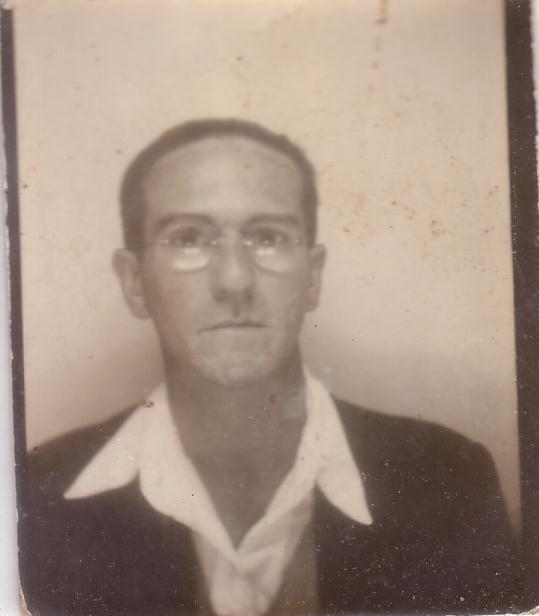
Figure 1 Henry
Discussion
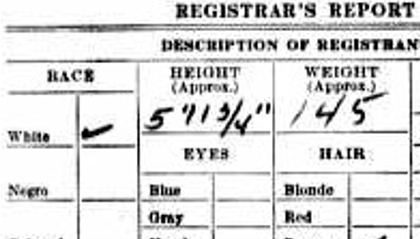
My grandmother said her father, Henry MACKEY / MAKEY (1881 Buffalo, New York –1958 NYC) was short of stature (“Medium” height in his WWI Draft card, but probably much less in his WWII Draft card – it’s somewhat illegible), worked as a “horse jockey until a fall.”
WWI:

WWII:
Sure enough, the 1900 census has him in Chicago as an “asst Horse trainer.”
1900:

However, by his 1903 marriage he had moved to Staten Island New York, likely following his brother William, who had married a Buffalo-born girl in Staten Island in 1902. He ended up working as an engineer, helping to pave the streets of Queens, New York with a steamroller.
If not for that fall from a horse, he might not have followed his brother to NY and might not have met my great grandmother and had my grandmother. So while my great grandfather might have disagreed at the time, I am grateful to that horse!
How AI can help
If you have an ancestor like Henry, whose occupation shifted because of an animal-related incident, here are some ways AI tools can help you explore more:
1. Simulate Historical Jobs
You can ask ChatGPT to recreate a “day in the life” of a horse trainer or steamroller operator in 1900s Chicago or New York. These simulations help you understand the physical demands and risks your ancestor might have faced.
Try this prompt:
“Describe a typical day for a horse trainer in Chicago in 1900.”
Or if you want more detail:
“What kind of injuries were common for jockeys or horse trainers around 1900?”
2. Contextualize Job Changes
Henry’s shift from “asst horse trainer” to steamroller engineer was big. [That change might sound dramatic, but it may have felt familiar—his father worked on ship steam engines.] AI can help make sense of that pivot by explaining industrial changes in transportation, paving, and labor trends in early 20th-century urban areas. That gives more context than census records alone.
3. Read Hard-to-Read Documents
Your WWII draft card might be as hard to decipher as mine. AI-powered OCR (Optical Character Recognition) tools can help extract and interpret text from poor-quality scans. Upload the image to a free OCR tool and then ask ChatGPT:
“Help me interpret this draft card. What does the height field say?”
ChatGPT told me 5′ 7 ¼”. But I know that’s wrong because it’s clearly ¾”. So the takeaway here is that if it’s tough for me, it’s tough for AI as well.

4. Visualize the Journey
Use AI to map Henry’s path—from Buffalo to Chicago to Staten Island—by creating a timeline or travel route. Ask:
“Create a travel timeline from Buffalo to Chicago to Staten Island around 1895–1905 for a working-class man.”
Challenge for Readers
- Do you have a relative whose life was changed by an animal—whether through farming, injury, or friendship?
- Can you identify a job title in the census that involved animals? Try asking AI to explain what that job involved, or generate a short description of a typical workday.
Next Week’s Topic: “Disappeared”
AI Disclosure
This post was created by me with the help of AI tools. While AI helps organize research, the storytelling and discoveries are my own.
 The Ancestor Whisperer