I’ve combined Amy Johnson Crow’s 52 ancestors in 52 weeks challenge, and Steve Little’s The 2025 AI Genealogy Do-Over, to create a unique 52 AI ancestors in 52 weeks party!
52 AI Ancestors in 52 Weeks: Week 25: FAN Club
Late breaking news!
I just learned that the Florida State Genealogical Society will be hosting a Poolside Chat with the esteemed LaBrenda Garrett-Nelson, JD, LLM, CG®, FASG, entitled “An Enslaved Person’s FAN Club.” The registration link is here. Don’t waste time, this is Thursday, June 19, at 8pm EDT!
Introduction
My favorite “FAN Club” story is also my “boy next door” story. My husband’s grandparents, Samuel Birnbaum and Anna Frank, were living at the same Manhattan address in the 1905 census – and married the following year.[1]

Discussion
The family lived at 348 E. 46th Street in Manhattan, and there were 16 heads of families at that address.
On their marriage certificate the following year, they reported residing at different addresses, he at where they had been, and she at a new one.
Anna’s future husband was a neighbor – literally the N in FAN club.
How AI can help
I discussed using AI to help identify the FAN Club back in week 5: 52 AI Ancestors in 52 Weeks: Week 5: Challenge. We can just drop pages of passenger lists into a LLM, and pages of censuses, and look for common names among them.
But can we now take it farther?
Of course we can!
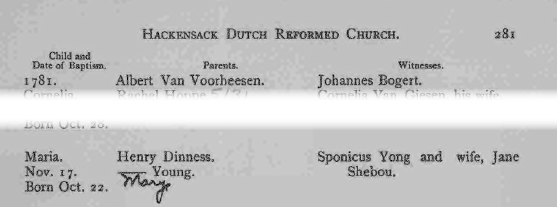
Here’s a thought: witnesses. As we’ve gotten more diligent about our research, we have certainly noted the witnesses in our records. Who has witnessed marriages, baptisms, land transactions, wills? If they are in your GEDcom, drop it into ChatGPT or another AI and ask it to find commonalities.
Of course, it’s possible that the minister’s wife witnessed all the marriages the clergyman performed. But it’s also possible the bride’s sister is listed instead.
Side rant: Oh my goodness, what I wouldn’t give to know the relationship of Sponicus Yong to his godchild Maria, daughter of Mary Young!
Here’s another thought: Newspaper gossip. Check out my grandmother’s 11th birthday party notice, and guess how many of these guests were family members:
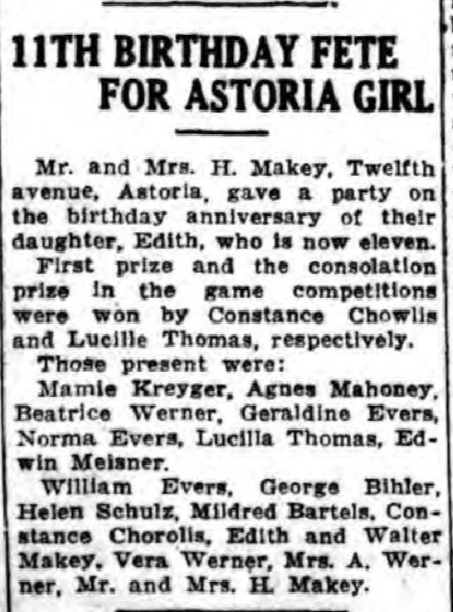
I can’t answer that yet, but I do think that I will ask AI to help me identify these people. I chose Gemini, though Microsoft Researcher would probably do well also, and asked:
Help me to identify these guests at the birthday fete in 1924 in Queens, New York
Spoiler:
“Performing detailed genealogical research on every individual mentioned in a 1924 newspaper clipping is a significant undertaking that requires access to specialized historical records (census records, city directories, birth/marriage/death certificates, etc.) that are not readily available through general web searches.”
It seems that Gemini is going to need a little convincing. Probably with a few separate steps. So instead, I asked for it to give me suggestions, hoping I’d get told about the 1925 New York State census. And I was not. However, it did make several good suggestions like federal censuses and city directories.
Challenge:
Let’s see what your genealogical backup singers—your FAN Club—can do for you this week. Try one (or more) of these ideas:
- Witness Watch
Dig into your records—marriage certificates, land deeds, baptisms, or wills. Who’s showing up over and over as a witness? Pop a few of those names into ChatGPT, Claude, or Gemini. Ask, “What’s their connection to my ancestor?” - Birthday Party Guests, Unmasked
Got an old newspaper clipping with names of party guests or social call shoutouts? Ask an AI tool to help identify them. Even if it only suggests where to look next (like the 1925 New York State Census or city directories), that’s a win. - FAN-tasy Football (Genealogy-style)
Create a mini-FAN roster for one ancestor. Use an Airtable or spreadsheet and include friends, associates, and neighbors. Try uploading it to an AI and ask, “Who are the common links?” You might find a cousin lurking in plain sight.
Your goal this week is not perfection—it’s perspective. Look to the sidelines and you may just find someone cheering for your ancestor.
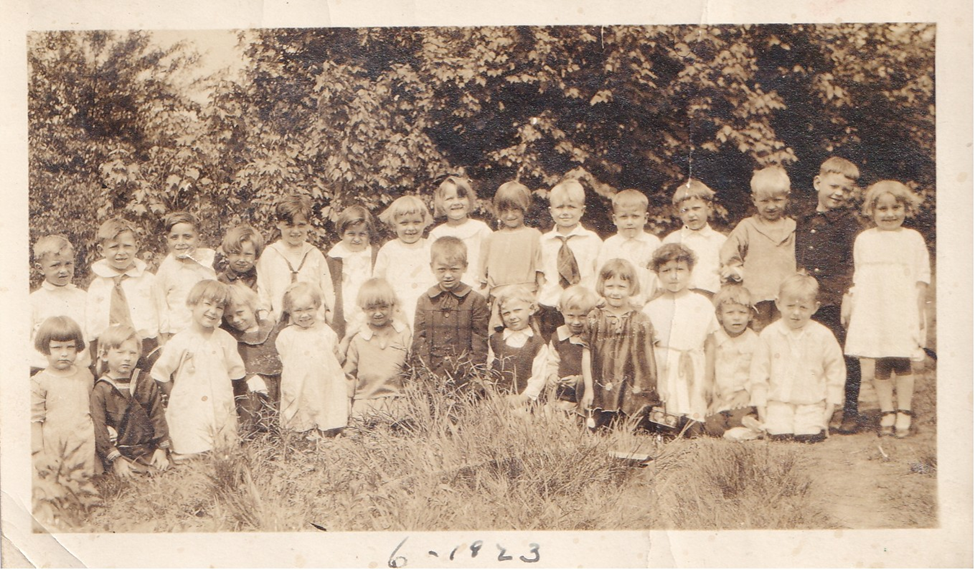
Figure 1 A party? Probably including my mother in law.
Summary
I want to close with advice that Gemini gave me:
Tips for Successful Research:
- Be Patient and Persistent: Genealogical research takes time and often involves hitting dead ends before finding breakthroughs.
- Keep Detailed Notes: Record every search you perform, what you found (or didn’t find), and where you looked. This prevents redoing work.
- Vary Spelling: Names were often misspelled or inconsistently recorded in historical documents (e.g., “Makey” could be “Mackey,” “Maikey,” etc.). Try variations.
- Utilize Public Libraries: Your local library likely offers free access to Ancestry.com Library Edition or other genealogical resources if you visit in person.
And a gift from Claude:
The FAN Club: A Genealogist’s Guide
When ancestors seem lost to time’s cruel hand,
Look beyond the bloodline’s narrow strand—
Friends and Associates, Neighbors too,
Form the FAN Club that will guide you through.
In wills they witness, deeds they sign,
Their lives entwined with your family line.
These supporting players hold the key
To unlock your ancestry’s mystery.
Further Resources
Core Educational Resources
Elizabeth Shown Mills – The originator of the FAN Club concept
Evidence Explained – QuickLesson 11: Identity Problems & the FAN Principle Cyndi’s List – Research Methodology – FAN Club or Cluster Research
QuickSheet: The Historical Biographer’s Guide to Cluster Research (the FAN Principle) Cyndi’s List – Research Methodology – FAN Club or Cluster Research from Genealogical Publishing Company
Comprehensive Articles & Guides
The Occasional Genealogist – Two detailed posts:
“What Is a Genealogy FAN Club?” What Is a Genealogy FAN Club? – Explains the basics and what FAN clubs are NOT
“FAN Club Genealogy Research: How-to and Tips” FAN Club Genealogy Research: How-to and Tips – Gets into the nitty-gritty details of implementation
Genealogy Gems – “The Genealogy FAN Club Principle Overcomes Genealogy Brick Walls” The Genealogy FAN Club Principle Overcomes Genealogy Brick Walls – Genealogy Gems by Amie Bowser Tennant
Legacy Tree Genealogists – “The Cousin Next Door: Using the FAN Club Principle” The Cousin Next Door: Using the FAN Club Principle | Legacy Tree
Family History Fanatics – “A Brief Review of Cluster Genealogy Research (FAN Club)” A Brief Review of Cluster Genealogy Research (FAN Club)
Genealogy In Action – Two helpful resources:
“How To Use the FAN Club to Solve Your Genealogy Brick Walls” How To Use the FAN Club to Solve Your Genealogy Brick Walls
“6 Places to Look for FAN Club Members” 6 Places to Look for FAN Club Members
Video Resources
YouTube Videos:
Ancestry.com – FAN Club Research to Build Your Family Tree by Crista Cowan Cyndi’s List – Research Methodology – FAN Club or Cluster Research
Genealogy TV – What is F.A.N. Club Research for Genealogy and Family History? Cyndi’s List – Research Methodology – FAN Club or Cluster Research
How to Use Cluster Genealogy a.k.a. FAN Club Research by Connie Knox Genealogy FAN Research or Cluster Research — Amelia Island Genealogical Society
Organization & Tools
Family Locket Genealogists – “RLP 96: How to Track and Organize the FAN Club” RLP 96: How to Track and Organize the FAN Club – Family Locket (podcast episode with Airtable template for organizing FAN research)
Central Resource Hub
Cyndi’s List – Research Methodology – FAN Club or Cluster Research Cyndi’s List – Research Methodology – FAN Club or Cluster Research provides a comprehensive collection of links to additional resources
Next Week’s Topic: “Favorite name”
Disclosure
This post was created by me with the help of AI tools. While AI helps organize research, the storytelling and discoveries are my own.
[1] New York State Archives; Albany, New York; State Population Census Schedules, 1905; Election District: A.D. 22 E.D. 12; City: Manhattan; County: New York; Page: 16
 The Ancestor Whisperer