Not Every Memory Fits in a Shadowbox

I’m having some Saturday Night Genealogy Fun (#SNGF), with help from Randy Seaver and his prompts! Feel free to join in.

Saturday Night Genealogy Fun: March 21, 2026

Prompt: “March 21 is National Memory Day.  How can we celebrate, and participate, in the day?  I asked AI tool ChatGPT how, and it suggested “Capture a Memory Before Its Gone;” “Rescue and Identify Old Photos;” “Record a Oral History;” “Organize One Small Thing;”  “Share a Story With Family;” “Visit or Virtually Honor Ancestors.””

Introduction

This week’s Saturday Night Genealogy Fun challenge, from Randy Seaver, marks March 21 as National Memory Day and invites us to consider how we might celebrate and participate. The suggestion was to come up with our own ideas, and as I thought about it, I realized I’ve already been doing this in different ways, even if I didn’t call it that at the time. You probably have as well.

Discussion

One of the most tangible examples sits right in my home: a shadowbox holding my great-grandmother, Alice Britton Makey’s, initialed fork. (Blog about it here.) It’s a small, everyday object, but preserving it, and the story behind it, felt important. It gave her a physical presence, something I could see and point to. But as meaningful as it is, I also know I can’t fill my house with shadowboxes. Not every memory can live that way.

Some memories are better experienced than displayed.

I was reminded of that by a relative (Helen Denny Woodman, author of The Descendants of Henry Denny, 1758-1839, also my ancestor) who, while caring for her husband as his memory declined, would sit with him and go through old family photo albums. Those albums weren’t just records – they were invitations. They allowed him to reconnect, to recognize, to feel something familiar even as other memories slipped away. That idea has stayed with me, and it’s inspired me to create albums of our own family trips – not just to document where we’ve been, but to make it easier to revisit those moments together.

And then there are the memories you can hear.

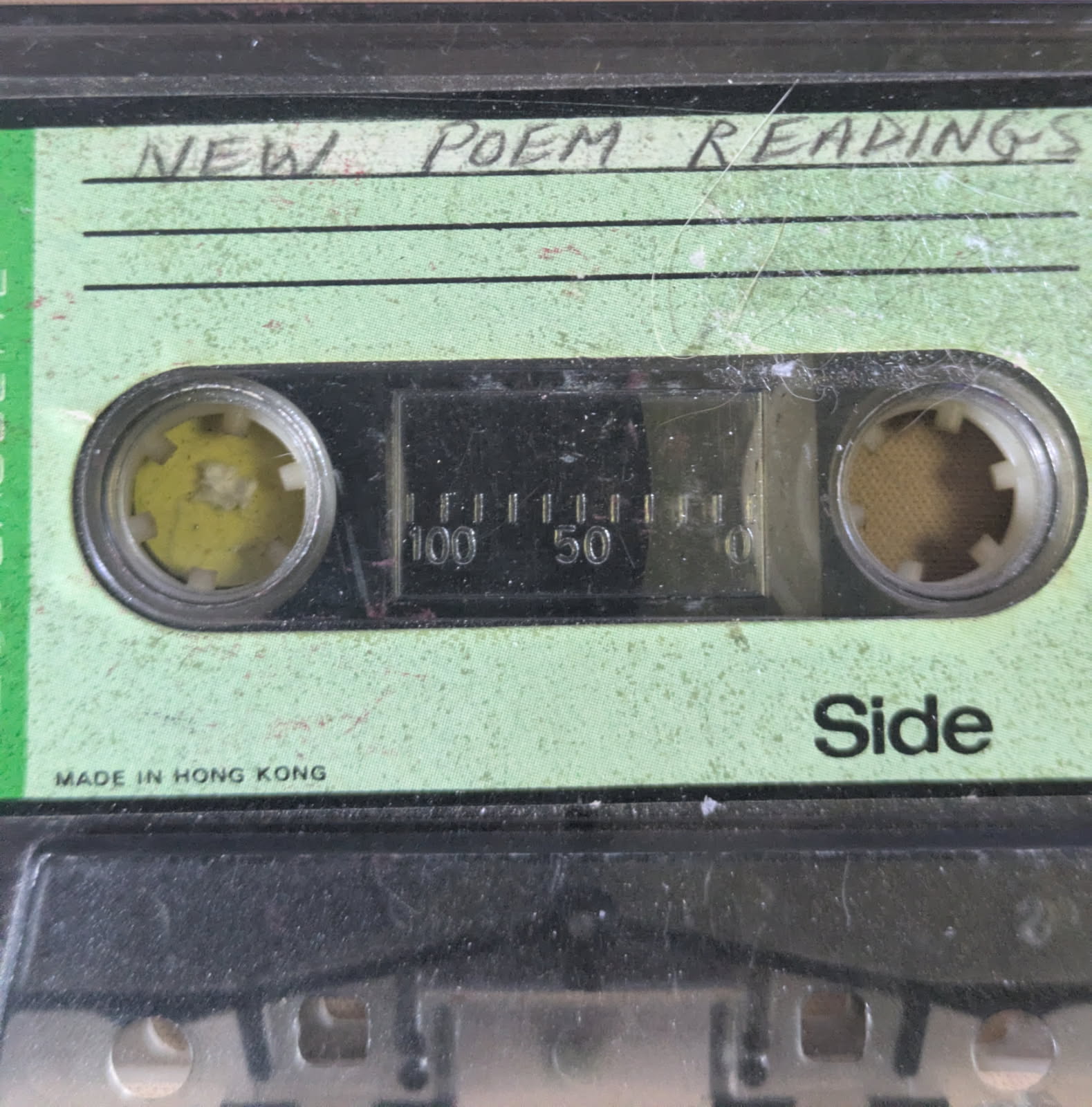
When I had an old cassette converted (blog here), I discovered a recording of my father reading a poem he had written. Hearing his voice again was something no object could replicate. It wasn’t just preservation; it was presence. For a few minutes, he wasn’t just someone I remembered. He was there.

Thinking about National Memory Day in this way, I’m struck by how many forms memory can take. Some are physical, like a fork in a shadowbox. Others are shared, like turning the pages of an album. Still others are almost intangible, like a voice carried forward through time.

Not every memory fits in a shadowbox – but that may be the point. Memory isn’t meant to live in just one form. It lives in the ways we choose to hold on, to revisit, and to share.

A cassette tape hand-labeled "New poem readings"

AI Disclosure

This post was developed with the assistance of AI tools to help organize ideas and refine wording, while preserving my original reflections and voice.

52 AI Ancestors in 52 Weeks: Week 51: Musical

I’ve combined Amy Johnson Crow’s 52 ancestors in 52 weeks challenge, and Steve Little’s The 2025 AI Genealogy Do-Over, to create a unique 52 AI ancestors in 52 weeks party!

52 AI Ancestors in 52 Weeks: Week 51: Musical

Introduction

Some families have musicians. Others have musical moments. This week’s theme, Musical, invited us to recall the songs, sounds, and dance steps that echo through our family history.

Our family didn’t pass down a violin or leave behind a trail of concert programs – but they did pass down a story. Or at least, part of one.

Rose Elizabeth Carey met Edward Joseph Anderson at a dance hall. That much is certain. The rest? Well, that’s where the fun begins.

The Discussion

Here’s what we know for sure, according to family records:

  • Rose Carey was born in Harlem (in upper Manhattan) in 1916, worked at Western Union, and married Edward Anderson in 1939.
  • Edward “Ed” Anderson, a Staten Island-born accountant, was methodical, soft-spoken, and a baseball fanatic. After he grew up in a Staten Island orphanage, he moved to Manhattan, likely for work.
  • They met at a dance hall, likely in Manhattan, sometime in the late 1930s. Dance halls in NYC were especially vibrant spaces for working-class people to socialize, particularly young women like these two.

And that’s it. No song titles. No saved stubs. No love letters with lipstick kisses. Just a setting, and an invitation to imagine.

So let’s imagine:

It’s Saturday night. The dance floor is full. A swing band plays something peppy: maybe Benny Goodman, maybe Glenn Miller. A pretty young woman steps onto the floor. She’s got a confident smile and the kind of red lipstick that holds up through laughter. That’s Rose.

Across the room, a tall man with serious eyes and polished shoes watches. That’s Ed.

Maybe he doesn’t dance much. Maybe she dances with everyone. Maybe the music carries them both.

“Would you like to dance?”
“I thought you’d never ask.”

In our version of the story, they dance until the band plays a slow number: “Stardust”, let’s say, and they don’t even notice the room around them anymore. Just each other.

Did it really happen that way? Probably not. But the truth – they met at a dance – is an invitation to color in the rest.

Figure 1 An AI-generated image seeded with a wedding photo of my grandparents.

How AI Can Help

AI didn’t give me this memory, but it gave me the tools to shape it into a story.

Using AI tools like ChatGPT, you can:

  • Turn a one-sentence family fact into a vivid blog post.
  • Imagine period-appropriate music or fashion from a given date.
  • Research common songs at 1930s dance halls in Manhattan.
  • Even generate images or playlists to accompany the story.

It’s not about rewriting history, it’s about making it easier to picture, and more fun to tell.

Challenge for Readers

This week, try one of these:

  • Find a family couple whose meeting story you’ve never fully explored. What setting were they in? What music might’ve been playing?
  • Pick a decade and imagine the soundtrack your ancestor would’ve heard most often. Were they swing? Gospel? Polka? Protest folk?
  • Call an older relative and ask if they remember dancing—and to what. Sometimes the best stories aren’t about songs, but about who sang them.

For More Information

Next Week’s Topic (last one!): “Memorable”

AI Disclosure

This post was created by me with the help of AI tools. While AI helps organize research, the storytelling and discoveries are my own.