I’m having some Saturday Night Genealogy Fun (#SNGF), with help from Randy Seaver and his prompts! Feel free to join in.
Saturday Night Genealogy Fun: March 14, 2026
Prompt: “How was your genealogy day? Tell us about it – what genealogy-related activities did you do today, yesterday, or another day this past week? Researching, summarizing, transcribing, analyzing, writing, etc.”
Introduction
I’m going to be selective in choosing my “day.” I choose Saturday, March 14, 2026, the day this prompt was posted.
Discussion
It turned out to be a particularly full (and satisfying) day.
I started an IGHR course: Genetics for Genealogists: Fundamentals of DNA. I consider myself a lifelong learner and tend to take courses for the joy of learning, not always with a specific end goal in mind. That said, I do try to pursue at least one genealogy-focused educational experience each year. In the past, that’s included GRIP, NGS courses, the Boston University certificate program, and various study groups.
This year, I somehow ended up with two IGHR courses on my radar; both virtual and spread over several weeks. (Not my first IGHR courses… just my first this year!) The DNA course is clearly going to be challenging, which makes it all the more exciting. I developed a solid foundation in genetics through BU, but I know I still have gaps, especially when it comes to chromosome browsers and related tools.
And finally, I spent time working on the ancestors book I’m creating for my children. Saturday’s focus was disambiguating Matthew Kearney – a task that required careful sorting and attention to detail.
Summary
All in all, it was a very productive genealogy day. And honestly, those are some of the most fun days of all.
Challenge
Take a moment to tally up the different genealogy tasks you’ve worked on recently. You might be surprised (and impressed) by how much you’ve accomplished.
AI Disclosure
This post was created by me with the help of AI tools. While AI helps organize research, the storytelling and discoveries are my own.
I’ve adapted Amy Johnson Crow’s 52 Ancestors in 52 Weeks challenge. Each week I follow my children’s ahnentafel numbering to select the featured ancestor, ensuring no one through the mid–sixth generation is left behind.
52 Ancestors in 52 Weeks: 2026 Week 12: An Address With a Story
Introduction
My assigned Week 12 ancestor is my paternal grandfather, Edward Anderson (1912–1985).
I’ve only ever known Grandpa to live at 60 Hillview Street, in Naugatuck, Connecticut. Of course, that wasn’t always the case – and it wasn’t even the plan.
Discussion
Grandpa was orphaned just days before his twelfth birthday. He and his two sisters were separated, each sent to different places. Grandma told me he lived with Uncle Jim and Aunt Lena for a time, but he seemed to spend much of his youth in “a home” – likely an orphanage, possibly St. Michael’s Home in Staten Island, New York.
By 1930, I found him as a young man rooming with two other young men, perhaps also without family support. He was working for a “rubber house,” where I believe he remained for the rest of his career.
By the next federal census, he had married, and he and his bride were living in Manhattan. They were still there in 1950.
Not long after, they moved to Staten Island, where I believe they purchased their first home.
At some point, Grandpa’s employer wanted to relocate him, but they chose not to go. The next time the company asked, Grandma told me, they felt they couldn’t refuse – they would be risking the household’s only income.
That decision brought them to Naugatuck, Connecticut, home of the United States Rubber Company. They bought what they considered a starter home: two bedrooms, one bath, and no expectation that it would be permanent.
Yet something about the house suited them. They made it their own. Grandpa lived the remaining 20 years of his life there, and Grandma stayed another 24 after that.
What they thought would be temporary became their forever home.
When my younger cousin once asked me for memories of Grandpa (she had been only a preschooler when he died) I told her about the walks he would take me on through that neighborhood. They knew their neighbors. Family settled nearby. It felt like a place where they had finally found peace.
I believe they were happy in that home.
Figure 1 Image from realtor.com
Challenge
What address has a special connection for you?
AI Disclosure
This post was created by me with the help of AI tools. While AI helps organize research, the storytelling and discoveries are my own.
I’ve adapted Amy Johnson Crow’s 52 Ancestors in 52 Weeks challenge. Each week I follow my children’s ahnentafel numbering to select the featured ancestor, ensuring no one through the mid–sixth generation is left behind.
52 Ancestors in 52 Weeks: 2026 Week 11: A Turning Point
Introduction
My assigned Week 11 ancestor is Ida Rabinowitz.
On July 31, 1912, Ida arrived at Ellis Island with her four daughters. They had crossed the Atlantic to reunite with her husband Sam, who had been living in New York for five years[1]. Based on the dates, it seems likely he had never even met their youngest child.
It should have been a joyful reunion.
Instead, everything fell apart.
Ida was deemed too ill to admit because of an eye infection. She would be deported.
The weather that day was beautiful — a low of 63°F and a high of 77°F.[2] But for Ida, it must have felt like the worst day of her life.
She now faced an impossible choice: Should she take her daughters back across the ocean with her… or leave them with a father they barely knew?
Discussion
You may recognize this story from last week’s post, which told it from Sam’s perspective. But how gut-wrenching it must have been for Ida!
If you remember his story from last week, you’ll know that Ida left the girls with their dad. With family assistance, he was able to care for them. Ida eventually “snuck back into” the United States.
She was traumatized enough that she never let Sam naturalize, out of fear that her undocumented status would be discovered.
That beautiful-turned-terrible July day was a turning point for that family, and its reverberations were felt for generations.
I like to think Ida held her head high, knowing she had made the sacrifice for her children.
Challenge
What turning points has your family experienced? Knowing what you know now, would you make the same choices? Knowing what they knew then, would you?
Each week’s post follows my children’s ahnentafel numbering, which determines the featured ancestor.
This ensures no one until mid-sixth generation gets left behind.
52 Ancestors in 52 Weeks: 2026 Week 10: Changed My Thinking
Introduction
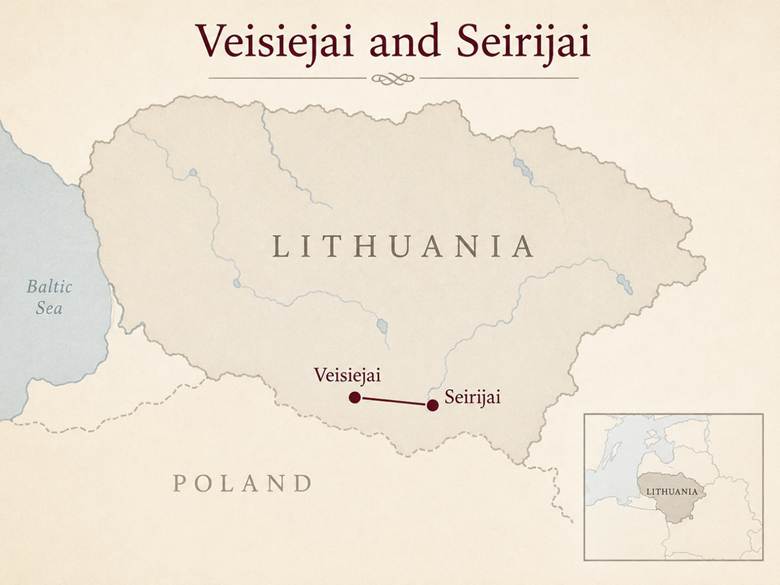
My assigned Week 10 ancestor is Samuel Goode (born Gudelski). He married in what is now Lithuania in 1899, and he and his wife Ida had four daughters. According to family stories, the Russian army drafted Sam, and he emigrated alone to the United States.
The intention was to work, earn money, settle in, and then send for his wife and daughters, which he did five years later, in 1912. Ida and their daughters aged 10, 8, 6, and 4 arrived, but Ida was turned away due to an eye infection, something immigration officials feared could be trachoma.
But the girls were allowed in. What was a Jewish scholar – now working as a peddler – to do with four young daughters? He sent Hannah, to his married sister Yetta, and kept the other three.
We will never know Sam’s thinking, why a middle child was sent away and three were kept.
Ida snuck back into the country by 1914 and the family was reunited. But Hannah carried that heartache throughout her life. While the rest of the family spent their lives in New York (and in one case Pennsylvania), Hannah soon went out to California, where she raised her family, grew old, and died.
Discussion
When I first heard this story, I judged Sam harshly.
How could a father send one child away and keep the others?
But age has changed my thinking. What once seemed like cruelty now feels like an impossible decision made in desperate circumstances.
I didn’t know Hannah, but I knew her sisters, and if she was like them, she didn’t let him off easy.
In the 1910 census, Aunt Yetta and her husband had five children, and by 1915 they had six. I understand they would not have been able to accommodate four young girls.
But my heart breaks for the family whose fracture never fully healed.
Figure 1 Hannah with her husband and daughter
Challenge
Has time given you perspective on the choices others have made?
AI Disclosure
This post was created by me with the help of AI tools. While AI helps organize research, the storytelling and discoveries are my own.
I’m having some Saturday Night Genealogy Fun (#SNGF), with help from Randy Seaver and his prompts! Feel free to join in.
Visualizing the Work of John T. West
Saturday Night Genealogy Fun: February 28, 2026
Prompt: “Do you know what activities one of your ancestors/relatives engaged in? How much detail do you know about those activities? Use the FREE artificial intelligence tool Google Gemini 3 to describe what your ancestor or relative experienced in his/her activities (e.g., military service, a ship they migrated on, an occupation, an office they held, etc.). Share your ancestor/relative’s activity of interest and description of their experiences”
Introduction
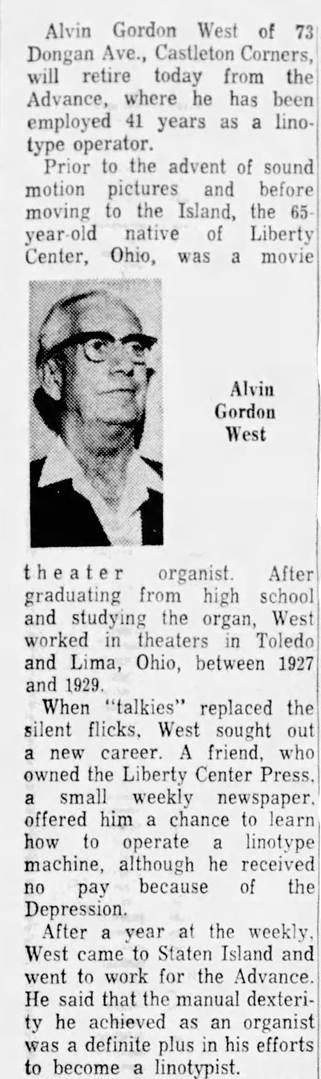
My ancestor John Thomas West (1830–1924) wore many hats during his long life, including service in the Civil War. But today I want to focus on something quieter and just as important: how he provided for his family when he was home, in Liberty Center, Henry County, Ohio.
Discussion
I went to Gemini.google.com and gave it the prompt, using the role-goal-text-task-flask setup that Steve Little taught me back in 2023:
ROLE: You are a genealogist writing a family history book.
GOAL: You are trying to bring my ancestor to life for the reader.
TEXT: My ancestor was usually described as a stair builder, although sometimes as a carpenter. I do see that he must have done some farming, I suppose carpentry in a small town does not feed the large family.
TASK: Tell the reader about his occupation(s) and how he provided for his family.
FLASK: Format as a couple of paragraphs of text at a high school reading level.
What it gave me was a general explanation of my ancestor’s work, so in the spirit of refining prompts, I added:
Please format it like a third-person addition to a biography.
It didn’t do well with the third-person, staying in the second person, so I tried again.
Please put this in the third person: “John” rather than “your ancestor”
And it did but was very sparse – until I realized my mistake!
Oh dear. I forgot to tell you who we are talking about. It’s John T. West (1830-1924), who lived in Maryland, Virginia, and Philadelphia, before settling in rural Ohio with his young family.
It did a very nice writeup, but in true LLM fashion, it offered more:
Since he lived through the Civil War era and moved West, would you like me to research the specific architectural styles popular in Ohio during that time to see what his stairs might have looked like?
I accepted.
The final result was very pleasing.
To truly understand John T. West (1830–1924), one must look at the physical world he built. Living nearly a century, John witnessed the evolution of America from a collection of rural homesteads to an industrial power. When he moved his young family from the established architectural hubs of Maryland, Virginia, and Philadelphia to the developing landscapes of rural Ohio, he brought with him a level of sophistication rarely seen in the countryside. While many men of the era were general carpenters, John’s specialized designation as a stair builder marked him as a master of “finish work.” In a time before power tools, constructing a staircase was the ultimate test of a woodworker’s skill, requiring a deep understanding of practical geometry to calculate the precise “rise and run” of every step.
In the expanding towns of Ohio, a grand staircase was a status symbol, and John was the architect of that elegance. He likely spent his winters in a wood-heated shop, meticulously hand-carving balusters or steaming wood to bend it into the graceful curves of a continuous handrail. However, the life of a craftsman in a small town was often “feast or famine.” To ensure his large family remained secure, John anchored his life to the seasons. When the spring thaw arrived, he traded his fine chisels for a plow. This blend of artistry and agriculture was a necessity; the Ohio soil provided the food for his table, while his specialized commissions in Maryland or Philadelphia-style joinery provided the “hard currency” for taxes and supplies. John West lived his life between two worlds—the precision of the craftsman’s square and the grit of the family farm.
I found this description fascinating. While it’s not a source in itself, it helped me visualize what John’s work may have looked like and how his carpentry and farming likely fit together in daily life.
Challenge
Do the same with an ancestor or relative of yours (review the prompt at the top), and refine the results at least once! That helps to “train” the AI to better serve you.
Want to Learn More?
Gemini, in the same conversation, recommended these:
For a beginner looking to master these techniques, the best resources are the official “Playbooks” and interactive guides created by the companies that build the AI models. They are designed to be clear, practical, and full of “before and after” examples.
Here are some sources I recommend:
1. The Prompt Engineering Guide This is widely considered the “encyclopedia” of prompting. It is open-source and incredibly beginner-friendly. https://www.promptingguide.ai/
Each week’s post follows my children’s ahnentafel numbering, which determines the featured ancestor.
This ensures no one until mid-sixth generation gets left behind.
52 Ancestors in 52 Weeks: 2026 Week 09: Conflicting Clues
Introduction
My assigned Week 9 ancestor is Anna Brenda FRANK BIRNBAUM.
And “Conflicting Clues” turned out to be a particularly instructive one.
Was Anna a U.S. citizen?
Discussion
Anna was born in New York City in 1889. While I haven’t found her birth record, I have found her siblings’, and I have her with her family in the 1900 and 1905 censuses. She married Samuel Birnbaum, an immigrant, in 1906.
The following year, the 1907 Expatriation Act automatically revoked the citizenship of women who married non-citizens. Suddenly many women who had grown up here and never seen a ship were aliens.
Because Anna married in 1906, just before the law took effect, she may have narrowly avoided this automatic expatriation.
Imagine what that was like for them. Did it affect them socially? Did they feel disenfranchised from a place that had been their home for perhaps decades? And what would the consequences be? The act remained in place until the early 1920s – right around the time women gained the right to vote. Imagine fighting for suffrage only to learn your marriage disqualified you?
Imagine if I had seen Anna in 1910 listed as an alien and thought, “Well, that’s not my Anna.”
So, the moral of the story is, as Judy Russell, The Legal Genealogist, keeps reminding us, to know the laws in effect in the time and place of the event.
The law was largely (but not completely) repealed by the Cable Act of 1922. (Asians were still discriminated against.)
Each week’s post follows my children’s ahnentafel numbering, which determines the featured ancestor.
This ensures no one until mid-sixth generation gets left behind.
52 Ancestors in 52 Weeks: 2026 Week 08: A Big Decision
Introduction
My assigned Week 8 ancestor is Samuel Birnbaum.
I never met the man – my husband’s grandfather – and my husband didn’t know him either, just met him once or twice, according to hubby.
So I’m not working off any personal knowledge, just research.
Samuel Birnbaum made two big moves in his lifetime, and I’m definitely curious why he did.
Discussion
Samuel Birnbaum was born 18 April 1885 in Eperjes, Saros County, Hungary (now Prešov, Slovakia). On 24 February 1902, at age sixteen, he arrived in New York aboard the Kronprinz Wilhelm, stating he was joining his brother, Morris Berkovitz.
By 1906 he had married Anna Brenda Frank in Manhattan and established himself as a butcher. He filed his declaration of intent in 1909 and was naturalized in 1912.
After decades in New York City, Samuel, his wife, and their youngest son relocated to Los Angeles between 1940 and 1942, where he died in 1954.
Why did Samuel leave Europe for the US?
I don’t know the answer to this. Millions of Jews left Eastern Europe between 1880 and 1924, driven by economic hardship, antisemitism, conscription, and family networks. Samuel arrived in 1902, following a brother whose trail I have yet to uncover. That timing alone suggests he was part of that larger exodus.
What records might answer that question? Passenger manifests sometimes note whether an immigrant had been in the U.S. before. Naturalization records can contain affidavits naming relatives. Hungarian civil records might clarify family structure and confirm the brother he claimed to follow.
What made Samuel move from New York to California at the beginning of World War II?
Moving across the country in your mid-50s isn’t a small decision. It suggests either urgency, opportunity, or family pull. Did the youngest son get a job and bring his parents? (The youngest son has proven more difficult to trace. I’ve found his WWII draft card and he worked for the Credit Service Bureau, which doesn’t seem to be war-related, but the 1950 census says he served in the armed forces.)
To move beyond speculation, I need to turn to the records. It’s time to pick up the threads here and braid them together.
Down the rabbit hole…
If you give a mouse a muffin, there are a bunch of tasks you need to do. And if you ask me about my grandfather-in-law, I remember some unexamined tidbits. But far better that, than running into a blank slate! Every unanswered question is an invitation. Off to research now!
Research Steps
To better understand Samuel’s two major moves, I plan to:
Re-examine his naturalization file for witnesses or supporting affidavits that might identify the elusive brother Morris Berkovitz.
Search passenger manifests and border crossings for alternate spellings of Morris’s name.
Compare New York City directories (late 1930s–early 1940s) with Los Angeles directories to narrow the exact year of relocation.
Revisit the youngest son’s World War II draft registration and service record for clues about residence or occupation changes.
Locate Samuel’s California death certificate and obituary to identify the informant and any extended family listed.
Big decisions often leave paper trails. My task now is to find them.
Summary
Samuel Birnbaum made at least two life-altering decisions: to leave Hungary for America in 1902 and to leave New York for California four decades later. I don’t yet know what drove those choices, but the historical context offers possibilities. For now, the questions remain. The next step is to test the records and see whether those big decisions left clearer traces than I’ve yet uncovered.
AI Disclosure
This post was created by me with the help of AI tools. While AI helps organize research, the storytelling and discoveries are my own.
Each week’s post follows my children’s ahnentafel numbering, which determines the featured ancestor.
This ensures no one until mid-sixth generation gets left behind.
52 Ancestors in 52 Weeks: 2026 Week 07: What the Census Suggests
Introduction
My Week 7 ancestor is my mother, Elise West. Her mom was pregnant with her during the 1940 census, so I only had the 1950 to work with here.
And then I looked at the 1950 and regretted tying myself to a specific ancestor – as a nine year old, she had absolutely nothing interesting or surprising in her record.
But her neighbor – that was a different story.
Discussion
When I followed that page list, three doors down is where the story actually began. We have:
Ruth Acree, head of household
Lybrand Smith, Lodger
Susan M Smith, Lodger’s wife
Sophie J Turner, mother
But because my grandfather happened to fall on the census’s sample line, I noticed that Sophie had a note attached to her: that she was the mother of the head of household, not the lodger.
That’s a crucially important note for a researcher of either family! The census suggested how easily a family relationship can be misunderstood. Bless that enumerator, Elaine Gordon, for her attention to detail!
Challenge
What bonus clues and hints has the census given you? Has the enumerator given a more detailed birth place than required by the instructions? Was the age or birthdate very specific? We all have our terrible enumerator stories, but let’s think of a good one! Drop a comment below.
AI Disclosure
This post was created by me with the help of AI tools. While AI helps organize research, the storytelling and discoveries are my own.
Each week’s post follows my children’s ahnentafel numbering, which determines the featured ancestor.
This ensures no one until mid-sixth generation gets left behind.
52 Ancestors in 52 Weeks: 2026 Week 06: Favorite Photo
Introduction
My Week 6 ancestor is my father, Robert Anderson. While thinking about this post, the first photo that came to mind was a photo from my wedding. Then I went through my digital album of his childhood. His mom had so lovingly created an album for their first child and (joy) labeled the photos. But then I looked at the recent photo again and I knew I had to go with it.
Discussion
Many people like photos of themselves when they are young. I, myself, use a photo on LinkedIn which is *ahem* over a decade old.
But I just love this photo of my dad when he was in his 50s. This was at my wedding and doesn’t he just look pleased as punch? He is looking straight at the camera, wearing a suit and tie, with a big sincere smile.
He’d had a long and hard ride to that point, and afterwards, as well. But at this moment, you just see joy and pleasure in his face.
Challenge
My dad’s photo tells a different story of my wedding than my memory does. As the bride, I remember the things that went wrong. But looking at this photo brings to mind all the things that were right. Can you locate a photo where someone’s face tells a story?
AI Disclosure
This post was created by me with the help of AI tools. While AI helps organize research, the storytelling and discoveries are my own.
Each week’s post follows my children’s ahnentafel numbering, which determines the featured ancestor.
This ensures no one until mid-sixth generation gets left behind.
A Breakthrough Moment
52 Ancestors in 52 Weeks: 2026 Week 05
Introduction
My Week 5 ancestor is my mother-in-law, Lillian Goode Birnbaum.
Your breakthrough doesn’t have to solve a brick wall or uncover a new record, it only has to change how you understand an ancestor.
Discussion
I’m writing an ancestors book for my children. (I say “for my children” because that was its original intent, and still is the primary purpose, but it does serve to drive me and orient me toward a north star.) The trick is, none of them is into family history, so I knew I had to do much more than a dry recitation of vital records. I needed to find color and quirks and stories.
What to write of my mother-in-law, Goodie? I knew her and I adored her. She was a terrific mother-in-law and an even better grandmother. But the necessary flavor for her quick biography in the ancestors book was eluding me.
Then, I stumbled upon My Breakthrough Moment. While cleaning out my boys’ school papers, I found a homework assignment my older son had written about his grandmother. I’m not sure where the original is, but I’ve reproduced the story here for your enjoyment. Not only does it add depth to Goodie’s life, but it’s through the eyes of a child – one of the intended recipients of this book.
Challenge
You’re not behind, jump in where you are! Look for stories, not records.
Talk to someone. Ask a single question. Follow up on an answer that surprises you. If you’ve already interviewed them, try again with a different angle: childhood, work, a difficult moment, or a small everyday habit.
One of my own reminders came when my younger son once interviewed me about the Challenger tragedy, forty years ago today. Adding the context of where I was in my life at the time turned a historical event into part of my story. Even moments that don’t seem like “family history” at first can help reveal who a person really was.
The story’s author (holding his baby brother), and his subject.
Want to Learn More?
There are many paid prompts out there. Storied, for example, or writing journals.
AI Disclosure
This post was created by me with the help of AI tools. While AI helps organize research, the storytelling and discoveries are my own.