A Breakthrough Moment

I’ve adapted Amy Johnson Crow’s 52 ancestors in 52 weeks challenge.

Each week’s post follows my children’s ahnentafel numbering, which determines the featured ancestor.

This ensures no one until mid-sixth generation gets left behind.

A Breakthrough Moment

52 Ancestors in 52 Weeks: 2026 Week 05

Introduction

My Week 5 ancestor is my mother-in-law, Lillian Goode Birnbaum.

Your breakthrough doesn’t have to solve a brick wall or uncover a new record, it only has to change how you understand an ancestor.

Discussion

I’m writing an ancestors book for my children. (I say “for my children” because that was its original intent, and still is the primary purpose, but it does serve to drive me and orient me toward a north star.) The trick is, none of them is into family history, so I knew I had to do much more than a dry recitation of vital records. I needed to find color and quirks and stories.

What to write of my mother-in-law, Goodie? I knew her and I adored her. She was a terrific mother-in-law and an even better grandmother. But the necessary flavor for her quick biography in the ancestors book was eluding me.

Then, I stumbled upon My Breakthrough Moment. While cleaning out my boys’ school papers, I found a homework assignment my older son had written about his grandmother. I’m not sure where the original is, but I’ve reproduced the story here for your enjoyment. Not only does it add depth to Goodie’s life, but it’s through the eyes of a child – one of the intended recipients of this book.

Challenge

You’re not behind, jump in where you are! Look for stories, not records.

Talk to someone. Ask a single question. Follow up on an answer that surprises you. If you’ve already interviewed them, try again with a different angle: childhood, work, a difficult moment, or a small everyday habit.

One of my own reminders came when my younger son once interviewed me about the Challenger tragedy, forty years ago today. Adding the context of where I was in my life at the time turned a historical event into part of my story. Even moments that don’t seem like “family history” at first can help reveal who a person really was.

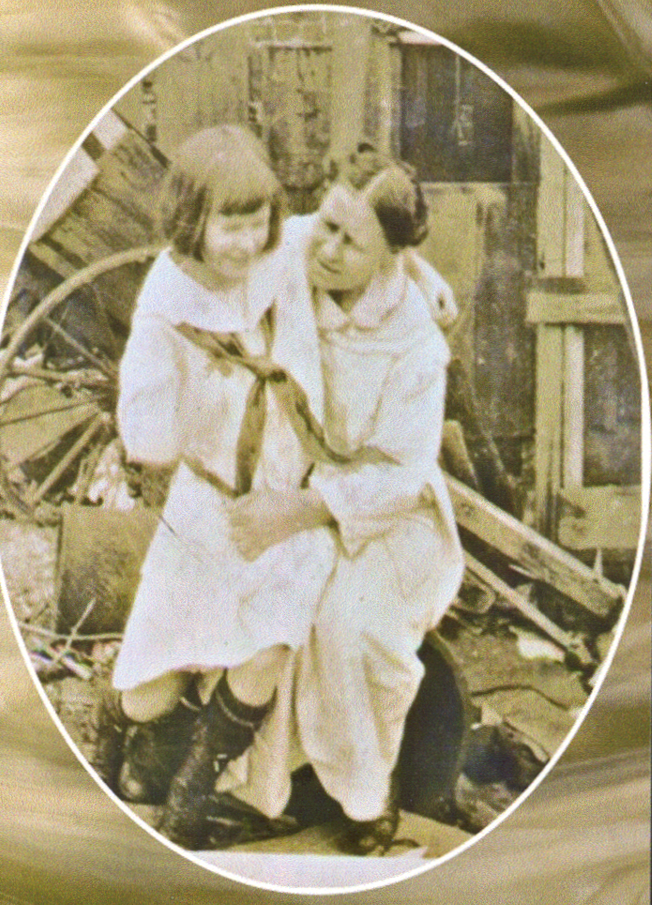
An older woman, a 4yo, and an infant
The story’s author (holding his baby brother), and his subject.

Want to Learn More?

There are many paid prompts out there. Storied, for example, or writing journals.

AI Disclosure

This post was created by me with the help of AI tools. While AI helps organize research, the storytelling and discoveries are my own.

Next Week’s Topic: Favorite Photo

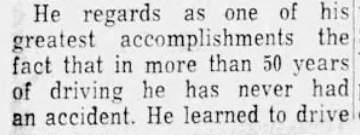
The biography, beginning: "Lillian's Life. My grandmother has had an interesting life."

52 Ancestors in 52 Weeks: 2026 Week 04: A Theory in Progress

I’ve adapted Amy Johnson Crow’s 52 ancestors in 52 weeks challenge.

Each week’s post follows my children’s ahnentafel numbering, which determines the featured ancestor.

This ensures no one until mid-sixth generation gets left behind.

52 Ancestors in 52 Weeks: 2026 Week 04: A Theory in Progress

Introduction

My Week 4 ancestor is my father-in-law, Bernie Birnbaum.

Discussion

Family stories suggested that Bernie had been married once before my mother-in-law, that the marriage ended amicably and without children, and that his family viewed the first marriage more favorably than the second.

In researching Bernie’s earlier life, I found records documenting his marriage to Bertha Reitman, followed by a divorce in which Bernie was the plaintiff. The divorce was finalized shortly before his marriage to my mother-in-law.

Census records from their years of marriage consistently show no children in the household, although later records indicate that both Bernie and Bertha went on to have children in subsequent marriages, but not with each other.

Taken together, the records confirm the outline of the earlier marriage while also reminding me how partial family memory can be: accurate in broad strokes, but shaped by later relationships and loyalties.

The Theory

At this stage, my working theory is less about why Bernie and Bertha married and more about how their marriage functioned. The records suggest a relatively brief union, no children, and a divorce initiated by Bernie, followed by remarriage for both parties within a short period of time.

This pattern raises questions about compatibility, expectations, and family influence – but without evidence, those questions remain open. For now, the documents allow me to describe the outline of the marriage, while the personal dynamics remain a matter for further research rather than conclusion.

What I am really testing, then, is not a theory about emotion, but a theory about how reliably records can illuminate lived experience – and where they fall silent.

The records clarify structure and timing, but not emotional truth – and that gap matters. It is often in that space between what can be proven and what can only be wondered about that genealogy becomes most human.

A dapper man in a suit, with a moustache, posing for a photo in sepia tones.

The very handsome subject, Bernard Birnbaum (1908-1970).

AI Disclosure

This post was created by me with the help of AI tools. While AI helps organize research, the storytelling and discoveries are my own.

Next Week’s Topic: A Breakthrough Moment

52 Ancestors in 52 Weeks: 2026 Week 03: What This Story Means to Me

I’ve adapted Amy Johnson Crow’s 52 ancestors in 52 weeks challenge by fixing the week number to the corresponding person on my children’s ahnentafel. This ensures no one until mid-sixth generation gets left behind.

52 Ancestors in 52 Weeks: 2026 Week 03: What This Story Means to Me

Introduction

My assigned person for Week 3 is – me. So this prompt felt especially fitting this week. (Thank you, Amy.)

What does genealogy mean to us? Why do we do it? To some, genealogy looks like a collection of names and dates. But those names and dates lead to stories, and those stories are what keep me coming back.

Discussion

My maternal grandmother was my first and best research partner. From her rocking chair, she shared what she knew and what she had carefully gathered over the years – which was a lot. She lost her mother at just three years old, and I can’t help but think that her devotion to family history came from a need to rebuild connections that had been severed too early. Genealogy, for her, was a way to reach back toward something lost.

My paternal grandmother approached family history differently. She shared stories, but over time I discovered that many of them were not quite accurate. Deaths were misplaced in time. Relationships were reshaped. One uncle’s story was transformed from something sad and marginal into something heroic. She grew up during the Depression, one of many children in a family shaped by instability and hardship. I’ve come to believe that her version of family history was an attempt to tell a kinder story – one that made sense of pain by smoothing its sharpest edges.

Seeing these two approaches side by side helped me understand something important: genealogy is never just about facts. It’s about meaning.

When I look at my own motivations, I see four strands that keep pulling me back.

  • I am motivated by remembrance. I want to remember the forgotten. I want to restore visibility to people whose names haven’t been spoken in generations. I believe ordinary lives matter, and I feel I must say, you were here, and you counted.
  • I am also motivated by connection across time. When I’m doing genealogy, I feel as though I’m standing with one foot in the past and one in the present, with my eyes turned toward the future. Genealogy becomes a bridge linking generations that will never meet, but are nonetheless connected.
  • I am happy to say I am motivated by empathy and understanding. In my younger years, I was more judgmental than I’d like to admit. Encountering so many lives shaped by circumstances, limitations, and imperfect information has softened that stance. Once I truly internalized that people in the past made the best choices they could with what they had, their stories made more sense, and I found myself caring more deeply, not just about them, but about people in general.
  • Finally, I just love curiosity and the hunt. I love learning. I love chasing down answers. If I stopped doing genealogy, I would miss the thrill of the search: the moment when a document appears, a theory clicks, or a long-standing question finally turns to the light. Genealogy is never finished, and that’s part of its appeal.

All of this leads me back to a simple truth:

I do genealogy to remember the forgotten, to stay connected across generations, to understand people in context, and because I genuinely love the hunt for answers.

Challenge

What is your motivation to do genealogy? What keeps you going when you want to tear your hair out, when the research feels impossible, or when the answers aren’t what you hoped they would be?

Summary

Genealogy allows me to hold empathy and curiosity at the same time. It gives me a way to honor people as they were, not as I wish they had been, and to keep their stories from slipping quietly into silence.

Me holding the letter my 7th great grandfather wrote in 1684.

AI Disclosure

This post was created by me with the help of AI tools. AI assisted with organization and refinement, but the research, reflections, and conclusions are my own.

Next Week’s Topic: A Theory in Progress

52 Ancestors in 52 Weeks: 2026 Week 02: A Record That Adds Color

I’ve adapted Amy Johnson Crow’s 52 ancestors in 52 weeks challenge by fixing the week number to the corresponding person on my children’s ahnentafel. This ensures no one until mid-sixth generation gets left behind.

52 Ancestors in 52 Weeks: 2026 Week 02: A Record That Adds Color

Introduction

Person number 2 on my children’s ahnentafel is my husband, who we’ll call Hubby. 😊

He has a couple of records that add color – maybe sometime I’ll talk about his divorce records – but this post will be about his name change.

Discussion

Hubby had quite an ethnic name; growing up in metro New York, that was not a problem! However, he chose to go to college in Ohio (wanted to spread his wings, I suspect), and in the 1960s, apparently small-town America was not so used to people of different backgrounds.

He decided he wanted to change his name; I suspect his girlfriend or fiancée at the time had something to do with that (she also had a very ethnic name she was eager, I hear, to get rid of). However, Hubby’s dad declared, my sister in law informed me, that he would not help with the wedding of a son of a different surname!

I have the name change papers – it was two months after the wedding that the two of them jointly changed their surname. They applied at the Civil Court of the County of New York, but there are so many courts that this can be done in across the United States.

And that is why I have a very generic surname – or so the story goes. I hope our descendants do not get too thrown by the change!

Want to Learn More?

How and why ancestors changed their names
Legal name changes weren’t always about assimilation. They could reflect marriage, divorce, inheritance requirements, adoption, business reasons, or even family pressure. Understanding why a name changed can add context rather than confusion.

Finding legal name change records
Name changes may appear in:

  • County or city courts (often probate or civil court)
  • State-level court systems
  • Published court notices in local newspapers
  • Marriage records, especially when couples changed names jointly
    Research strategies vary by time period and jurisdiction, so patience, and creativity, help.

Using newspapers to track identity changes
Legal name changes were often required to be published publicly. Newspaper notices can confirm dates, spellings, and even motivations, while also revealing how visible (or invisible) the change was in the community.

Researching “missing” ancestors after a name change
If someone seems to disappear from records, consider:

  • Tracking associates (spouses, siblings, in-laws)
  • Comparing addresses across censuses
  • Searching for phonetic or partial versions of the original surname
    Name changes rarely happen in isolation.

Where to start online

Summary

Records like these remind me that names carry stories – sometimes chosen, sometimes negotiated, and sometimes inherited in unexpected ways.

AI Disclosure

This post was created by me with the help of AI tools. While AI helps organize research, the storytelling and discoveries are my own.

Next Week’s Topic: What This Story Means to Me

52 Ancestors in 52 Weeks: 2026 Week 01: An Ancestor (or Descendant) I Admire

I’ve adapted Amy Johnson Crow’s 52 ancestors in 52 weeks challenge by fixing the week number to the corresponding person on my children’s ahnentafel. This ensures no one until mid-sixth generation gets left behind.

52 Ancestors in 52 Weeks: 2026 Week 01: An Ancestor (or Descendant) I Admire

Introduction

My number ones are my sons. 😊 Of course they are. I publish an updated “Ancestors of…” my children every year, with new research. That book has them both as 1, their father as 2, me as 3, and so on in the ahnentafel style. For week 1, I do person 1, so let’s talk about what I admire about them. We will get to their ancestors starting next week.

Discussion

My older son R used to drive me bananas with his freestyling ways. But now that I am “done” raising him, I’ve truly come to appreciate his attitude. He is very “go with the flow” and therefore a great companion in any adventure. He was invited to a wedding in Barcelona, Spain (from the United States) last year, and decided to tack on a side trip to Tokyo, Japan, while he was at it! He recently went to both London for his birthday and New Orleans for fun. I’m sure he will settle down when he’s ready, but I’m having a blast living vicariously.

My younger son E has always been solid and responsible. He reminds me so much of my dad that when Dad was alive, I tried to get him and E to spend time together. E became a camp counselor at 14 and served for over a decade. He became a schoolteacher. He married at just 25 years old. If there is a problem to be solved, I’m as likely to take his advice as my own.

Parenting has been So. Much. Fun. But I didn’t expect to admire and enjoy my adult children so much.

A collage of travel and teaching

Challenge

Try flipping your lens. Instead of looking up your tree, look down. Who in the next generation do you admire, and why? Write about them or ask them to tell you about someone they admire.

Want to Learn More?

Ask my kids! Or yours! Or someone else’s! The point is, always be open to learning from anyone.


AI Disclosure

This post was created by me with the help of AI tools. While AI helps organize research, the storytelling and discoveries are my own.

Next Week’s Topic: A Record That Adds Color