I’ve adapted Amy Johnson Crow’s 52 ancestors in 52 weeks challenge.
Each week’s post follows my children’s ahnentafel numbering, which determines the featured ancestor.
This ensures no one until mid-sixth generation gets left behind.
52 Ancestors in 52 Weeks: 2026 Week 04: A Theory in Progress
Introduction
My Week 4 ancestor is my father-in-law, Bernie Birnbaum.
Discussion
Family stories suggested that Bernie had been married once before my mother-in-law, that the marriage ended amicably and without children, and that his family viewed the first marriage more favorably than the second.
In researching Bernie’s earlier life, I found records documenting his marriage to Bertha Reitman, followed by a divorce in which Bernie was the plaintiff. The divorce was finalized shortly before his marriage to my mother-in-law.
Census records from their years of marriage consistently show no children in the household, although later records indicate that both Bernie and Bertha went on to have children in subsequent marriages, but not with each other.
Taken together, the records confirm the outline of the earlier marriage while also reminding me how partial family memory can be: accurate in broad strokes, but shaped by later relationships and loyalties.
The Theory
At this stage, my working theory is less about why Bernie and Bertha married and more about how their marriage functioned. The records suggest a relatively brief union, no children, and a divorce initiated by Bernie, followed by remarriage for both parties within a short period of time.
This pattern raises questions about compatibility, expectations, and family influence – but without evidence, those questions remain open. For now, the documents allow me to describe the outline of the marriage, while the personal dynamics remain a matter for further research rather than conclusion.
What I am really testing, then, is not a theory about emotion, but a theory about how reliably records can illuminate lived experience – and where they fall silent.
The records clarify structure and timing, but not emotional truth – and that gap matters. It is often in that space between what can be proven and what can only be wondered about that genealogy becomes most human.
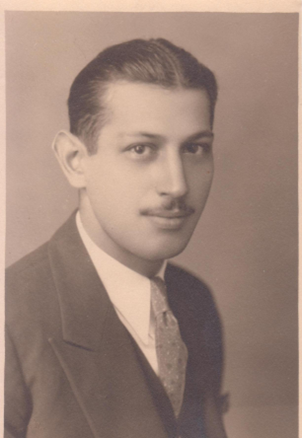
The very handsome subject, Bernard Birnbaum (1908-1970).
AI Disclosure
This post was created by me with the help of AI tools. While AI helps organize research, the storytelling and discoveries are my own.
Next Week’s Topic: A Breakthrough Moment
 The Ancestor Whisperer