I’ve adapted Amy Johnson Crow’s 52 ancestors in 52 weeks challenge by fixing the week number to the corresponding person on my children’s ahnentafel. This ensures no one until mid-sixth generation gets left behind.
52 Ancestors in 52 Weeks: 2026 Week 02: A Record That Adds Color
Introduction
Person number 2 on my children’s ahnentafel is my husband, who we’ll call Hubby. 😊
He has a couple of records that add color – maybe sometime I’ll talk about his divorce records – but this post will be about his name change.
Discussion
Hubby had quite an ethnic name; growing up in metro New York, that was not a problem! However, he chose to go to college in Ohio (wanted to spread his wings, I suspect), and in the 1960s, apparently small-town America was not so used to people of different backgrounds.
He decided he wanted to change his name; I suspect his girlfriend or fiancée at the time had something to do with that (she also had a very ethnic name she was eager, I hear, to get rid of). However, Hubby’s dad declared, my sister in law informed me, that he would not help with the wedding of a son of a different surname!
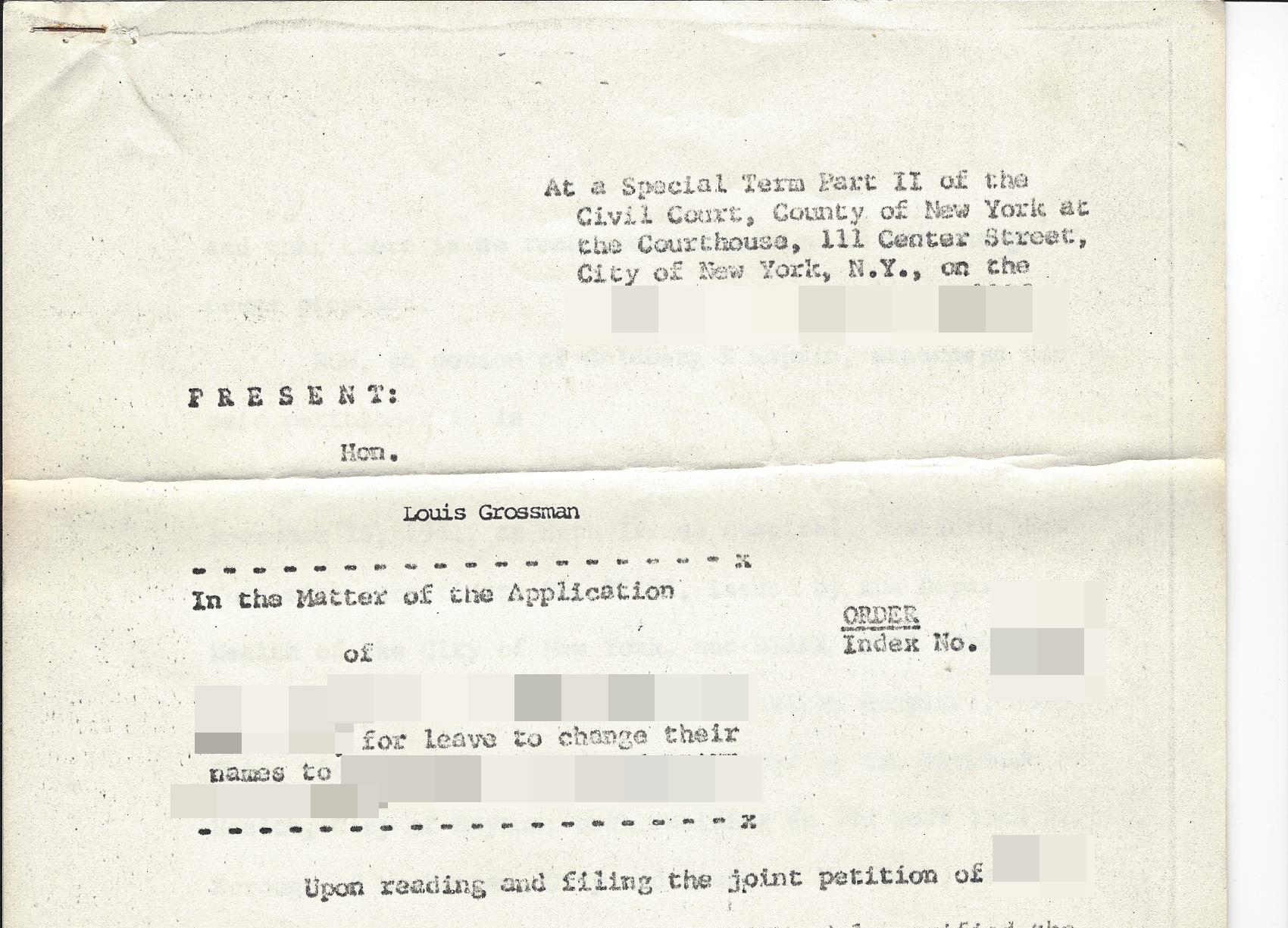
I have the name change papers – it was two months after the wedding that the two of them jointly changed their surname. They applied at the Civil Court of the County of New York, but there are so many courts that this can be done in across the United States.
And that is why I have a very generic surname – or so the story goes. I hope our descendants do not get too thrown by the change!
Want to Learn More?
How and why ancestors changed their names
Legal name changes weren’t always about assimilation. They could reflect marriage, divorce, inheritance requirements, adoption, business reasons, or even family pressure. Understanding why a name changed can add context rather than confusion.
Finding legal name change records
Name changes may appear in:
- County or city courts (often probate or civil court)
- State-level court systems
- Published court notices in local newspapers
- Marriage records, especially when couples changed names jointly
Research strategies vary by time period and jurisdiction, so patience, and creativity, help.
Using newspapers to track identity changes
Legal name changes were often required to be published publicly. Newspaper notices can confirm dates, spellings, and even motivations, while also revealing how visible (or invisible) the change was in the community.
Researching “missing” ancestors after a name change
If someone seems to disappear from records, consider:
- Tracking associates (spouses, siblings, in-laws)
- Comparing addresses across censuses
- Searching for phonetic or partial versions of the original surname
Name changes rarely happen in isolation.
Where to start online
- FamilySearch – Free guides on court records, name changes, and jurisdiction-specific research
- National Archives (U.S.) – Helpful for federal courts, immigration-related name changes, and historical context
- Newspapers.com or Chronicling America – Excellent for required legal notices
Summary
Records like these remind me that names carry stories – sometimes chosen, sometimes negotiated, and sometimes inherited in unexpected ways.
AI Disclosure
This post was created by me with the help of AI tools. While AI helps organize research, the storytelling and discoveries are my own.
Next Week’s Topic: What This Story Means to Me
 The Ancestor Whisperer