52 AI Ancestors in 52 Weeks: Week 4: Overlooked
Introduction
Week 4 of the 52 Ancestors challenge dives into the overlooked. “Who is someone in your family tree who you haven’t researched very much?” It didn’t take any time for me to come up with the name: Andrew Driskol.
52 AI Ancestors in 52 Weeks: Week 4 – Overlooked
Introduction
Who in your family tree have you overlooked? For me, it’s Andrew Driskol. Or, rather, Andrew “Does-He-Even-Exist?” Driskol. He’s a puzzle—a man whose shadow falls across family records but refuses to leave a solid footprint. One of my very first finds as a baby genealogist was the marriage record of his daughter, my great grandmother, which listed his name. But as I dug deeper, the trail went cold. This week, I decided to tackle Andrew’s mystery with the help of a modern-day Watson: artificial intelligence.
Andrew Driskol: A Ghost in the Records
Andrew’s story—or lack thereof—begins in the 19th century, when civil and church records were often kept. The absence of documentation for someone like Andrew is unusual because his life spanned eras and locations where detailed records typically existed. This gap raises questions about whether his name was misspelled, misrecorded, or lost in migration. when civil and church records were often kept. He was likely born in Prussia, possibly Hesse-Darmstadt, around the 1830s or 1840s. He presumably married Malvina Hendell in England before emigrating to the United States in the 1870s. But here’s the kicker: there’s no direct record of Andrew. Not a birth certificate, not an immigration record, not a census entry. Yet, his children’s records consistently name him as their father.
The hunt for Andrew is a genealogist’s equivalent of chasing a will-o’-the-wisp. And yet, his legacy lives on in the scattered records of his children, like breadcrumbs leading nowhere. With AI in the picture, though, I wondered if I could piece together these fragments into something more substantial.
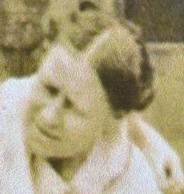
Figure 1 Anna Driskol Anderson ca 1914
My Data
I created a table of information I’ve gathered about him, all from records of his children; names:
Parents’ names as per childrens’ vitals
| Child | Marriage Year | Marriage Parents Listed | Death Year | Death Parents Listed |
| Edward | Not found | Not applicable | Not found | Not applicable |
| Mary | 1891 | Andrew Driskoll M. Hendell | 1938 | Andrew Driskol (Ger) Malvina Helda (Ger) |
| 1926 | Andrew Driscol Malvina Henall | |||
| Josephine | 1899 | Andrew Driscoll Melvina Hendel | 1925 | Andrew Driscoll (Ger) Malvina _endels (Ger) |
| Anna | 1906 | Andrew Driskol Malvina | 1922 | Andrew Driscoll (Ger) Malvina Driscoll (Eng) |
| Joseph | Not found | Not applicable | 1925 | Andrew Driscoll (Ger) Malvina Hendell (Eng) |
I also created a table of places of birth, since there is a little variation:
Census parents’ places of birth (child/father/mother)
| Child | 1900 census | 1910 census | 1920 census | 1930 census |
| Edward | Ger/Ger/Ger | |||
| Mary | NY/Ger/Eng | NY/NY/NY | NY/Ger/Eng | NY/Ger/Eng |
| Josephine | NY/Ger/Ger | NY/Ger/Eng | NY/PRUS-Ger/PRUS-Ger | |
| Anna | NY/Ger/Ger | NY/IRE/Ger | NY/Ger/Ger | |
| Joseph | NY/Ger/Ger | NY/Ger/Eng |
I’ve created a timeline for him:
Timeline for Andrew Driskol
- ca. 1830s – Andrew Driskol is born, perhaps in Prussia and/or Hesse-Darmstadt, Germany.
- by 1864 – He migrates to England and (presumably) marries Malvina Hendell.
- ca. 1864 – His son, Edward, is born in England.
- ca. 1866 – His daughter, Edith, is born in England.
- by 1875 – Andrew immigrates to the United States.
- 1875 – His wife Malvina and their children arrive in the United States, probably joining him.
- 1873 – A child is born in New York [sic].
- 1878 – Another child is born in New York.
- 1880 – Another child is born in New York. Andrew and family are not located in the 1880 census.
- 1883 – Last known child is born in New York.
- 1890 – Had Andrew died by now, as his son purchased land?
- by 1900 – Andrew Driskol dies, as Malvina is listed as a widow in the census.
I’ve not been able to locate him and every so often, I track him for a while, encounter the same nonanswers, and give up again for a time.
My AI-Assisted Research Plan
Using AI tools to analyze my data, I created a structured research plan.
Using the three tables in the attached (parents names as per childrens’ vitals, census parents places of birth, and timeline, create a research plan for Andrew Driskol.
<I attached a document with the three tables above>
It replied with a research plan, containing a research objective, timeline hypothesis, research goals, specific research steps, analysis and documentation, and further considerations:
Research Plan for Andrew Driskol
Research Objective
To confirm the life events of Andrew Driskol, including his birth, marriage, immigration, and death, and to verify family relationships and origins through vital records, census data, and immigration documents.
Timeline Hypothesis
- <not reproduced here; it was really the timeline above>
Research Goals
- Locate Vital Records:
- Birth record (Prussia, ca. 1835–1840).
- Marriage record (possibly England, ca. 1860–1865).
- Death record (United States, ca. 1890).
- Children’s vital records to confirm parentage.
- Investigate Immigration:
- Ship manifests for Andrew, Malvina, and children.
- Naturalization records for Andrew.
- Census Records:
- Locate Andrew and family in the 1870 and 1880 U.S. censuses.
- Review 1900 and later censuses for children to verify reported parent birthplaces and relationships.
- Confirm Parentage and Origins:
- Cross-reference children’s marriage and death certificates for consistency.
- Explore German and Prussian records for potential leads.
- Community and Local Records:
- Staten Island and NYC directories or church records.
- Burial records or cemetery listings.
Specific Research Steps
Step 1: Census Research
- Goal: Locate Andrew in 1870 and 1880 censuses and confirm family details.
- Strategy:
- Search for “Andrew Driskol” with variations (e.g., Driscoll, Driscol) in New York City and Staten Island.
- Explore neighboring areas for missed or misindexed records.
Step 2: Immigration Records
- Goal: Confirm immigration details for Andrew, Malvina, and children (1868–1875).
- Strategy:
- Search passenger lists on major databases (e.g., Ancestry, FamilySearch) for ships arriving in New York.
- Check manifests for individuals born in Prussia, traveling with family.
Step 3: Vital Records
- Goal: Obtain key documents to confirm relationships and dates.
- Strategy:
- Search NYC vital records for Andrew’s death record (ca. 1890).
- Obtain marriage certificates for Mary (1891, 1926), Josephine (1899), and Anna (1906).
- Acquire death certificates for Josephine (1925), Anna (1922), Joseph (1925), and Mary (1938).
Step 4: European Records
- Goal: Identify Andrew’s origins in Prussia and confirm marriage details in England.
- Strategy:
- Search Prussian birth records (1835–1840) using German archives or online resources.
- Investigate English marriage records (1860–1865) for Andrew and Malvina.
Step 5: Community and Church Records
- Goal: Supplement missing information with local data.
- Strategy:
- Explore Staten Island directories, church baptismal records, and cemetery logs.
- Check for obituaries or probate records in local archives.
Analysis and Documentation
- Focus Areas:
- Reconcile discrepancies in children’s vital records (e.g., variation in mother’s maiden name: Hendell, Helda, Henall).
- Note inconsistencies in census parentage (e.g., Germany vs. Ireland vs. England origins).
- Track potential family movement between census years.
- Tools:
- Timeline to track findings against the hypothesis.
- Research log to document sources and results.
Further Considerations
- If records are inconclusive, pursue DNA testing with known descendants to confirm connections.
- Collaborate with online genealogy communities for fresh insights or rare record access.
AI’s Role in Clarity
AI didn’t magically find Andrew hiding in a forgotten archive (though I wished for that). Instead, it helped me organize my research into actionable steps and avoid the dreaded rabbit holes. By using tools like ChatGPT for brainstorming and database-specific AI search assistants, I was able to identify patterns, generate alternative search strategies, and refine my focus on critical records. ChatGPT didn’t help much with creating a timeline, but Dana Leeds encouraged me to try it with Claude. This structured approach keeps me grounded as I continue the search.
Summary and Next Steps
Artificial Intelligence is actually a really good way to ground the genealogist who tends to dive down rabbit holes (not that I do that, wink wink).
For Andrew, the search continues. My next steps are to delve into European records, seek out local church and burial data, and perhaps even explore DNA testing with descendants. Andrew may be a ghost in the records, but with persistence and a little AI assistance, I’m determined to uncover his story—or at least understand why it’s missing.
Challenge for Readers
Who’s the most elusive ancestor in your tree? Apply these research strategies to uncover their story. For example, try creating a timeline of what you already know about your ancestor. Highlight gaps where records are missing and focus your searches on those areas. This simple step can make your research more efficient and targeted. Start by organizing what you know, then create a clear plan using actionable steps like those above. AI tools can help you stay on track and think critically.
 The Ancestor Whisperer
Pingback: 52 AI Ancestors in 52 Weeks: Week 39: Disappeared | janetbgenealogy
Pingback: 52 AI Ancestors in 52 Weeks: A 2025 index | janetbgenealogy