Part I – House of Truax – Etymology
Part II – House of Truax – Historical
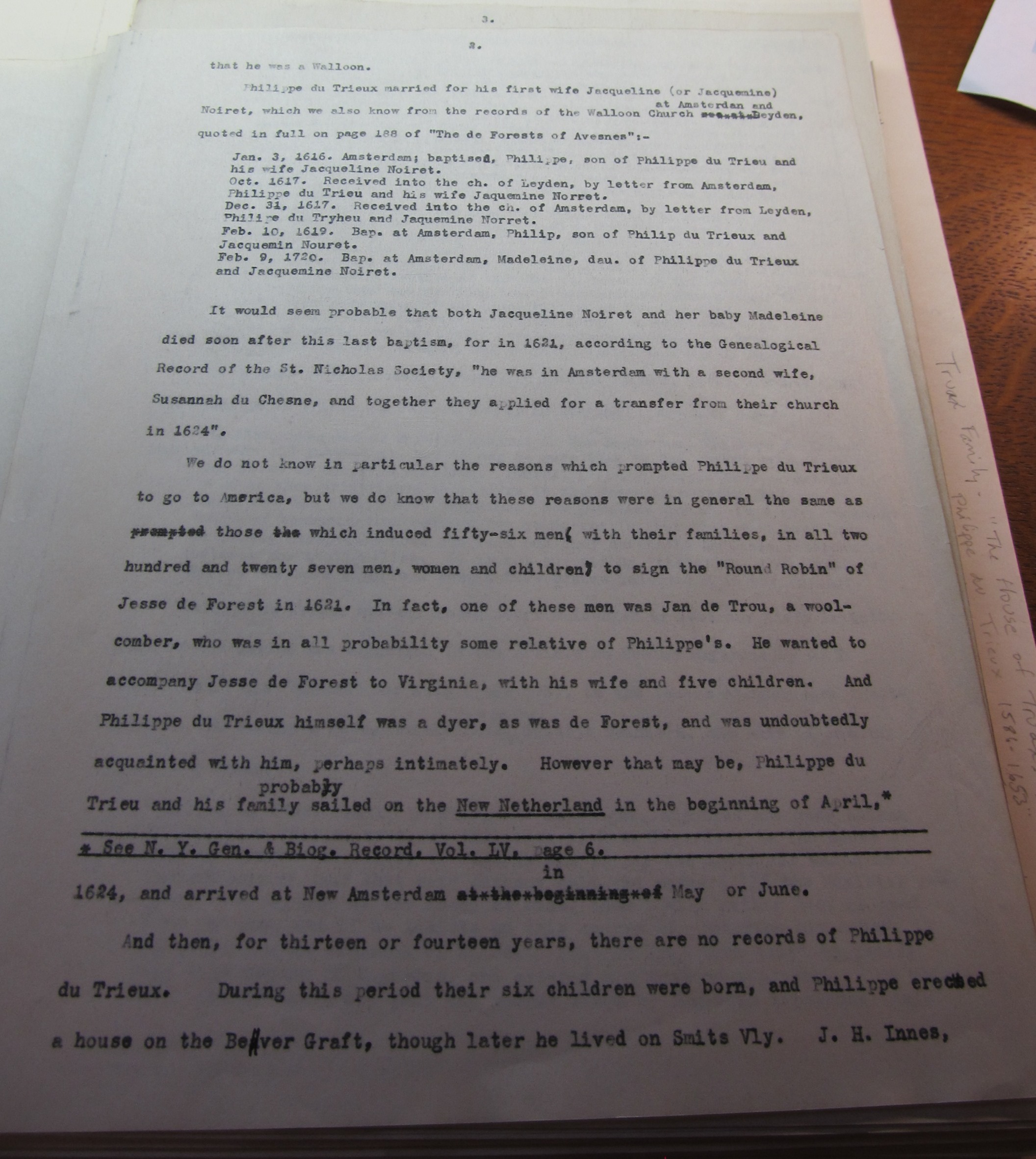
Part III – House of Truax – Church records
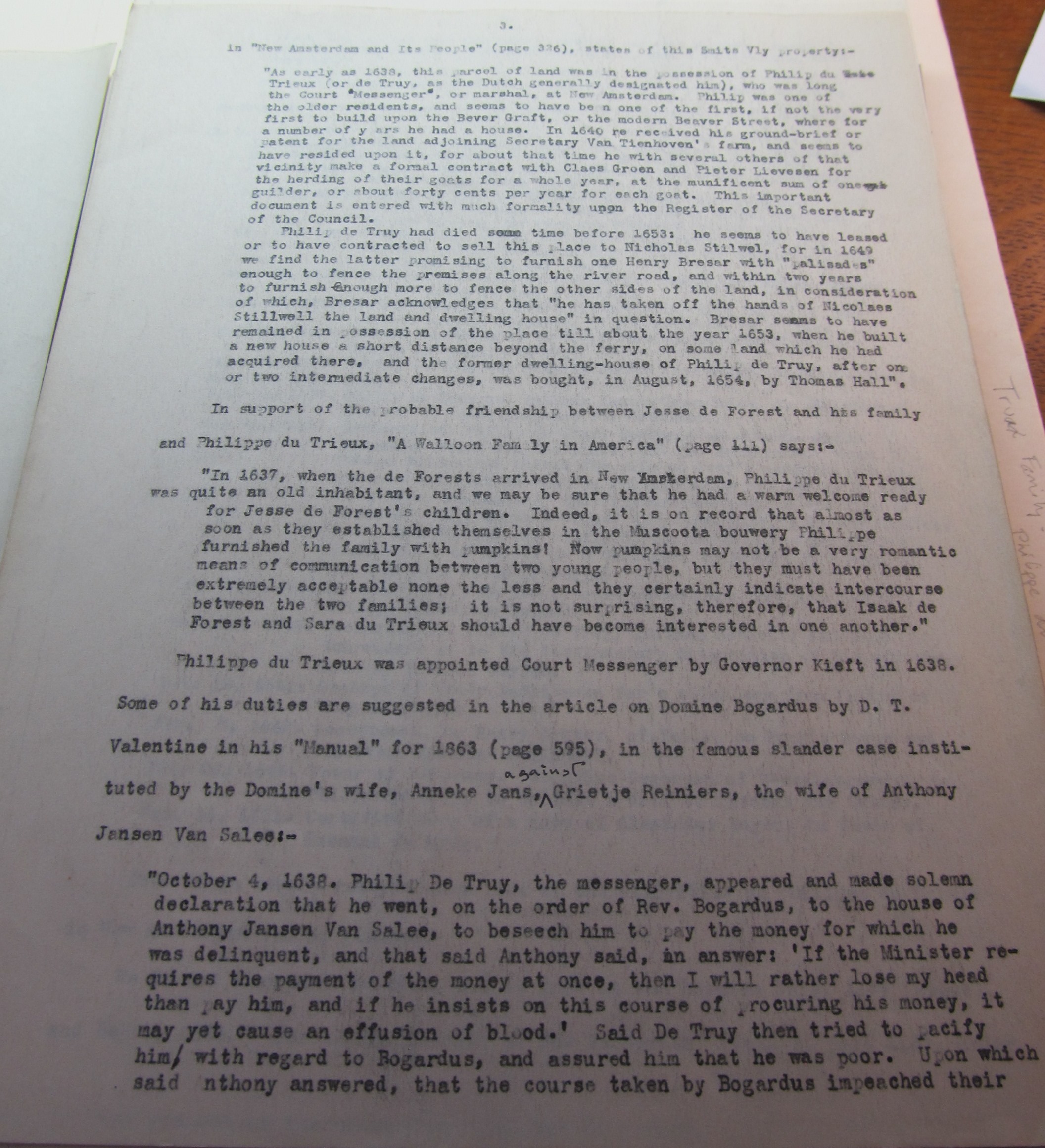
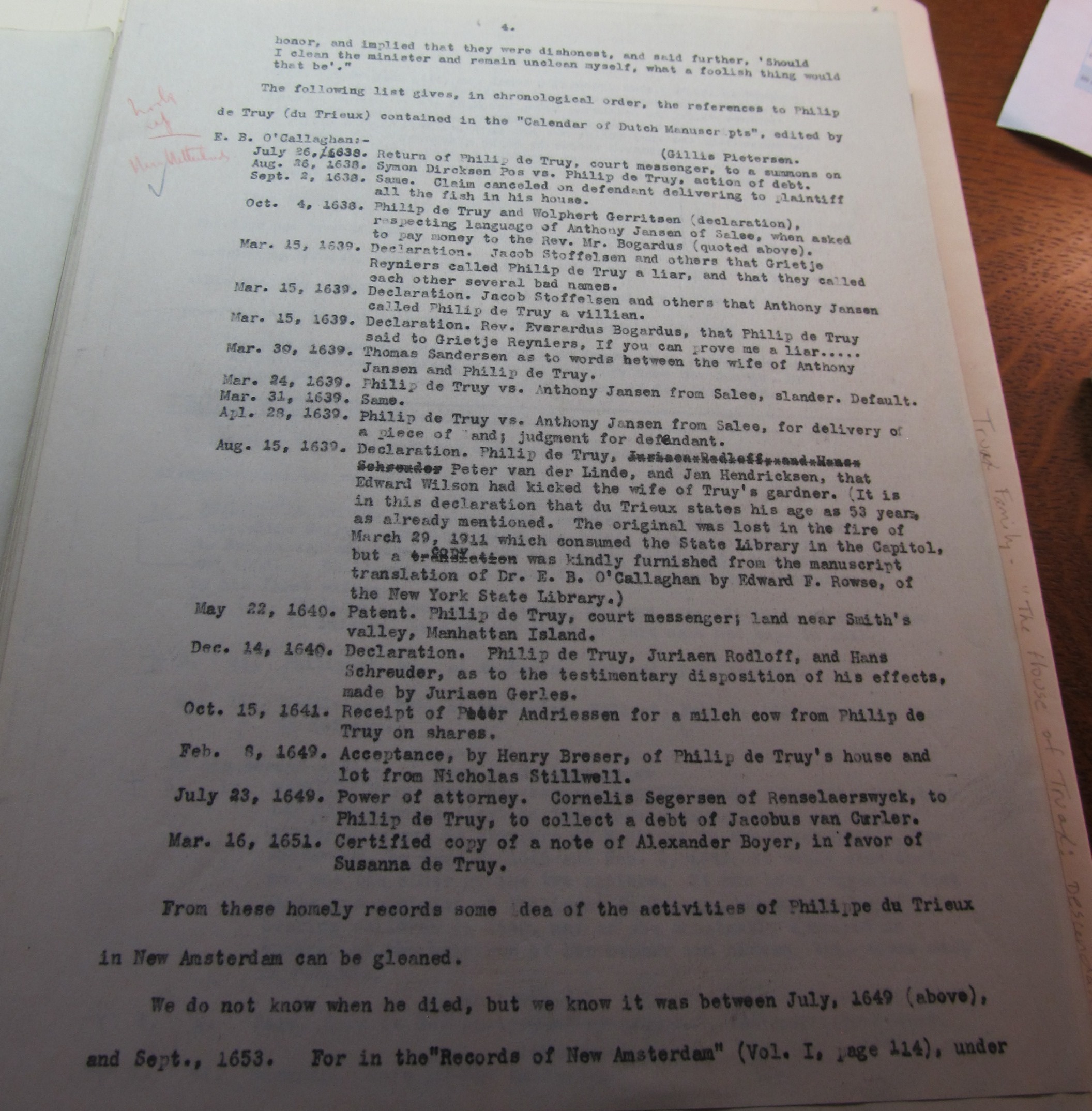
Part IV – House of Truax – New Amsterdam records
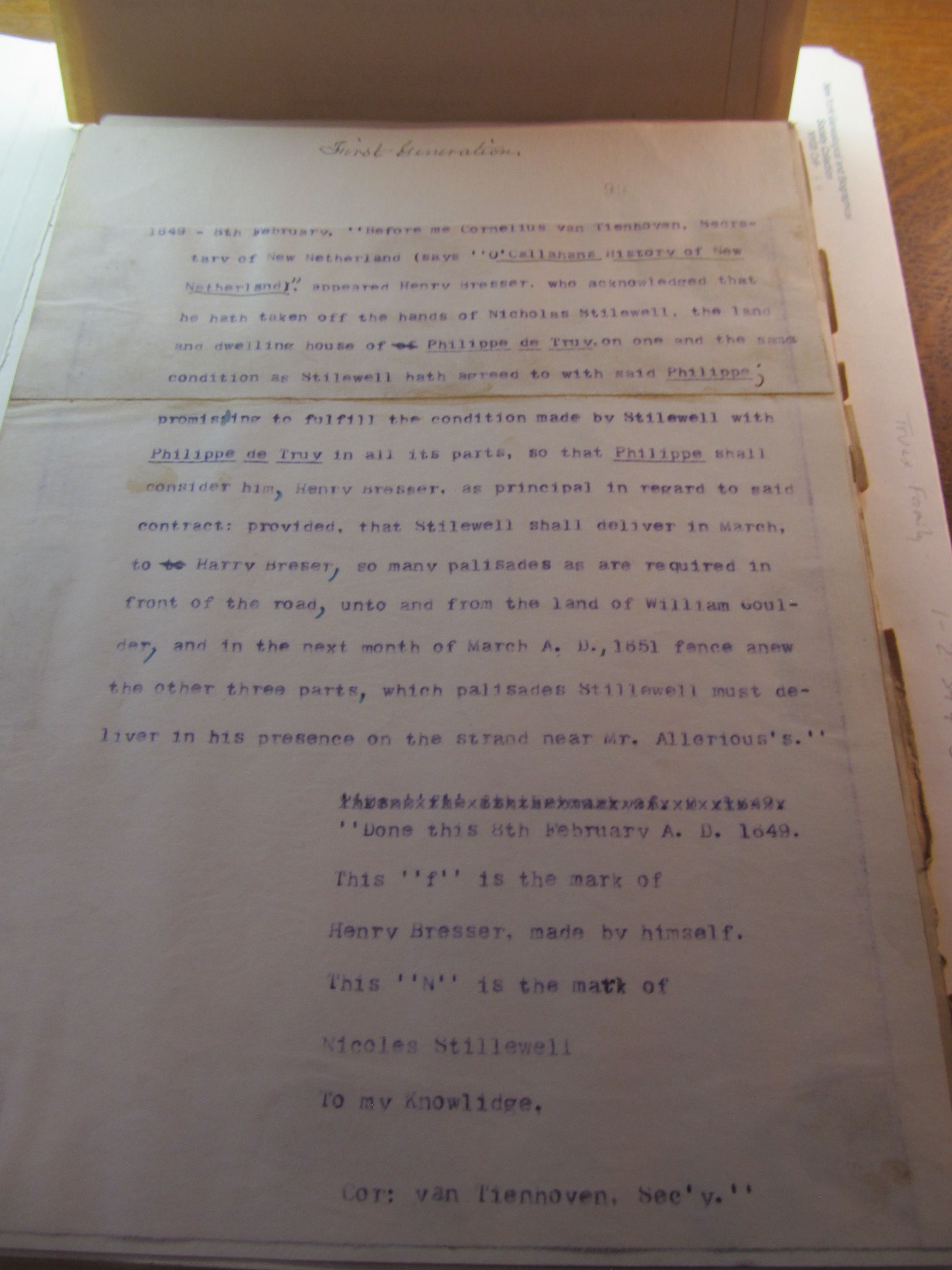
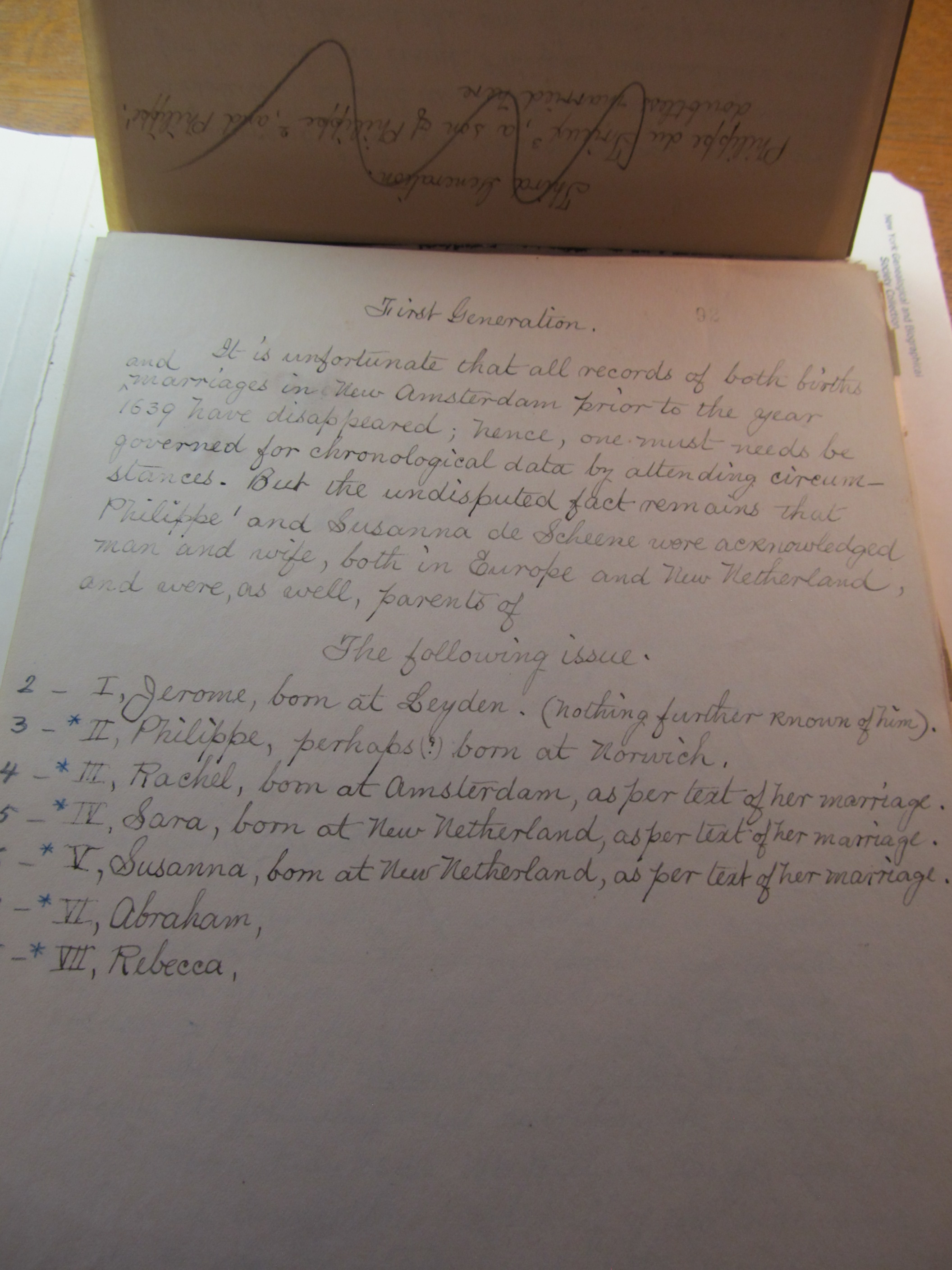
Part V – House of Truax – First Generation
Part VI – House of Truax – Truax Genealogy (Land Records)
Part VI – House of Truax – “First” Generation – Maria
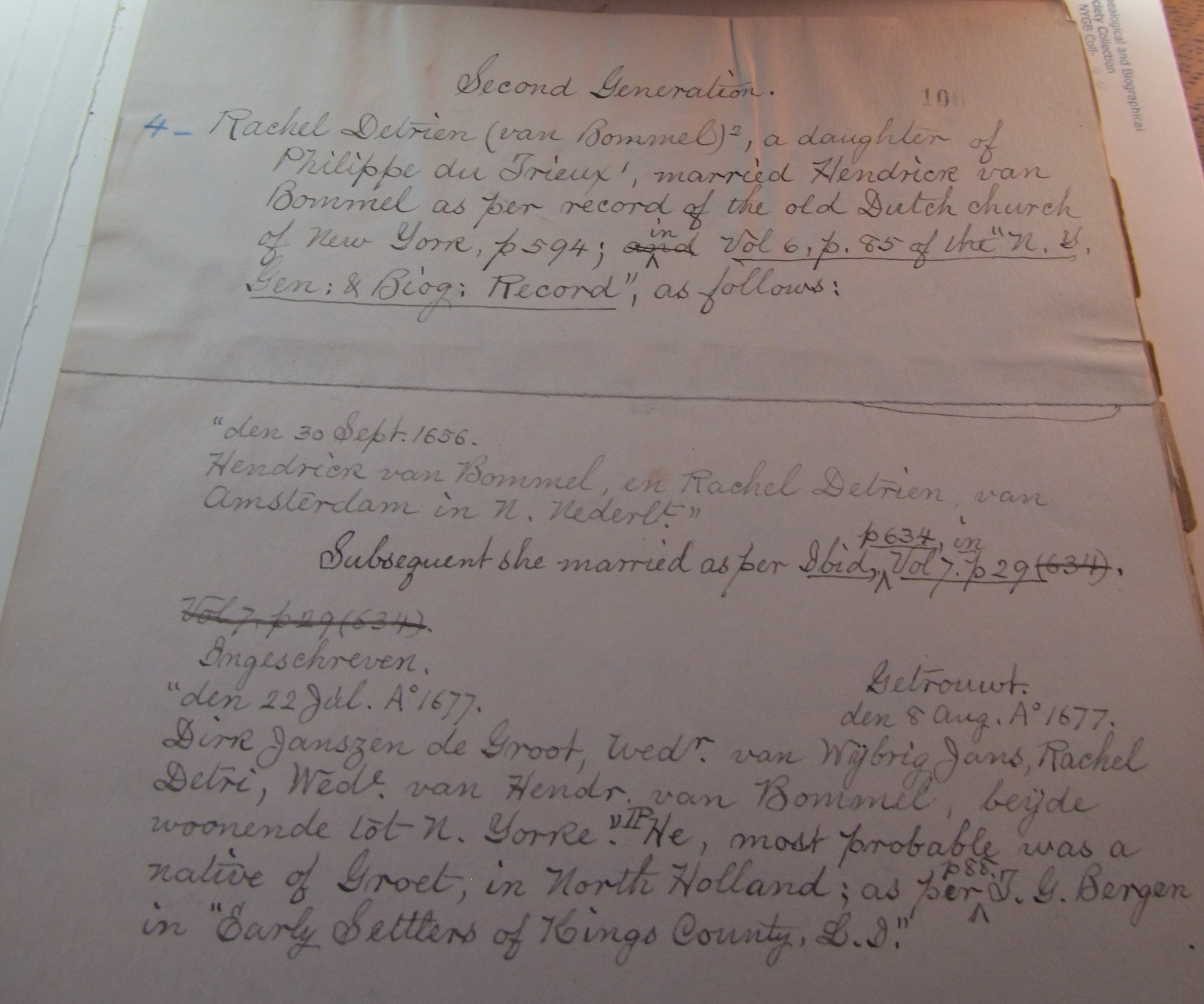
Part VII – House of Truax – Second Generation (Philip, Rachel, Sara)
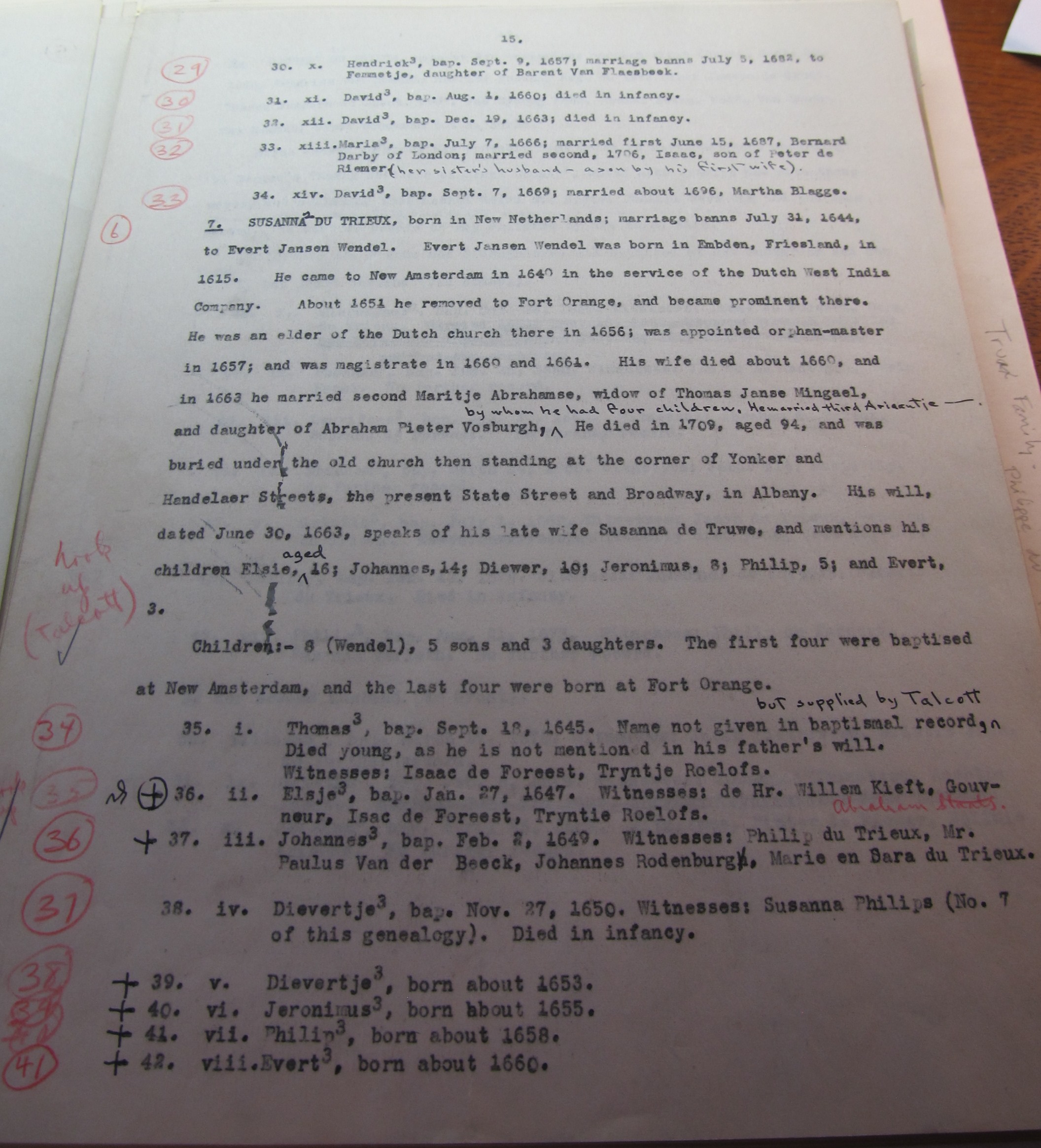
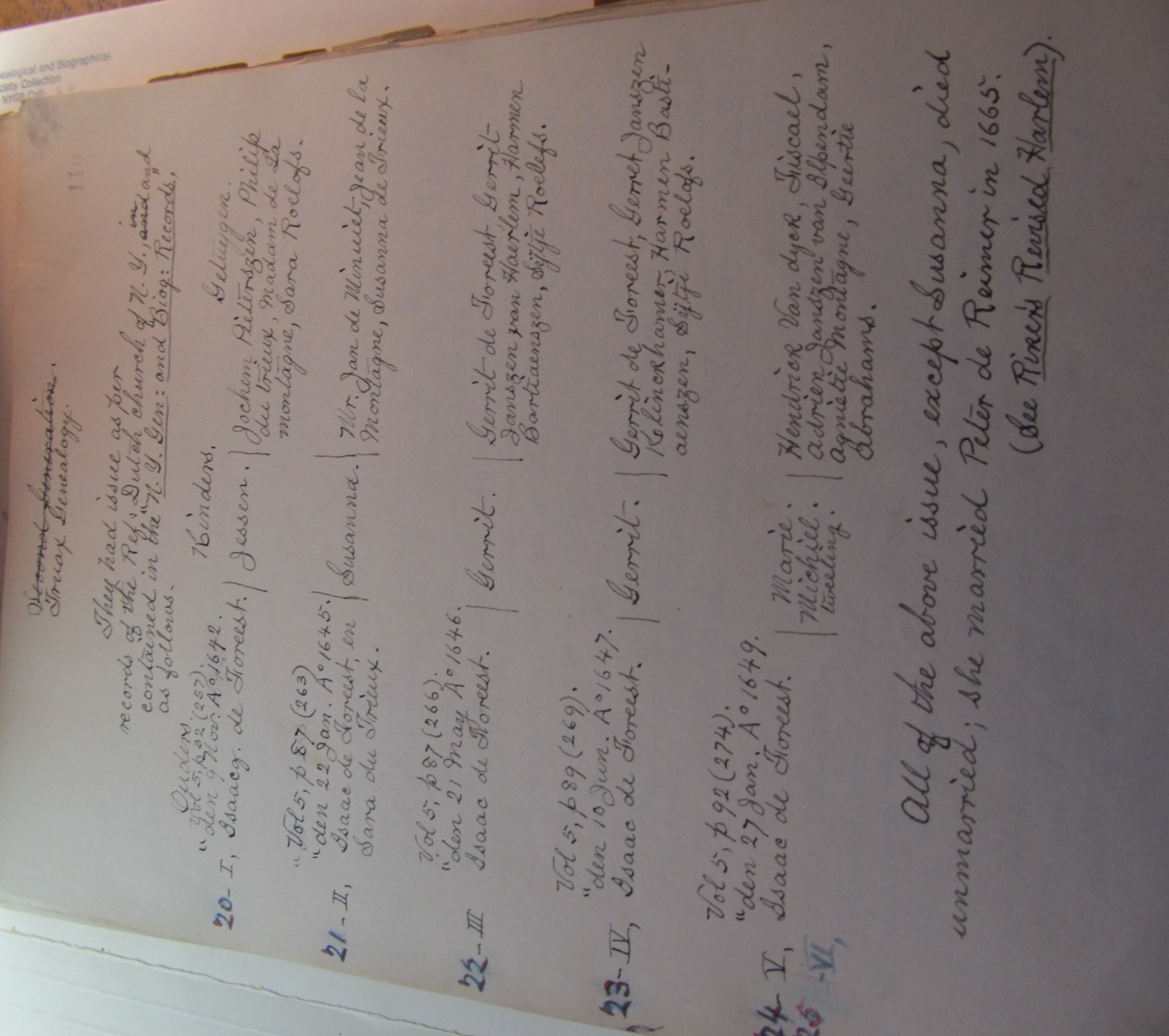
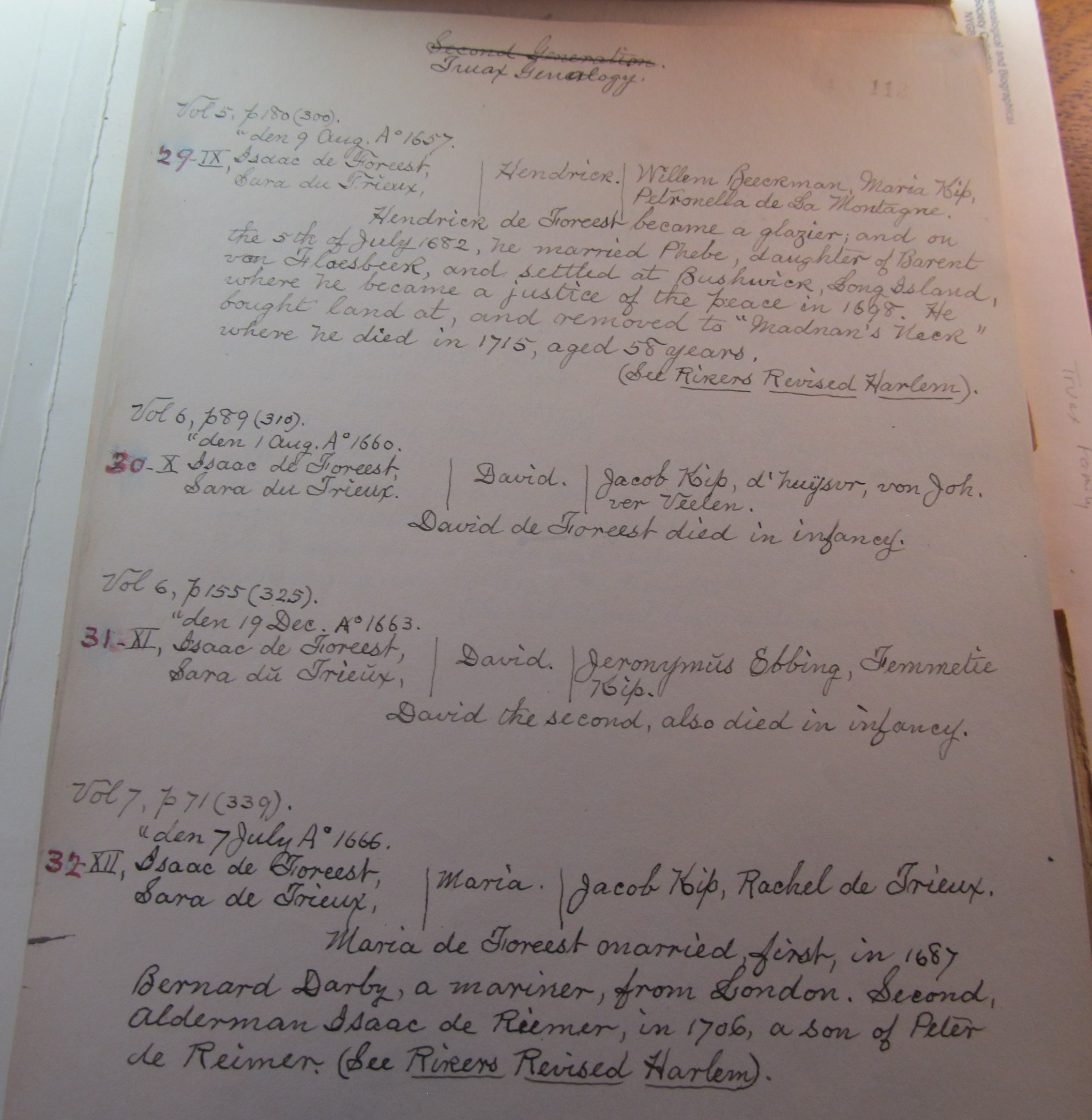
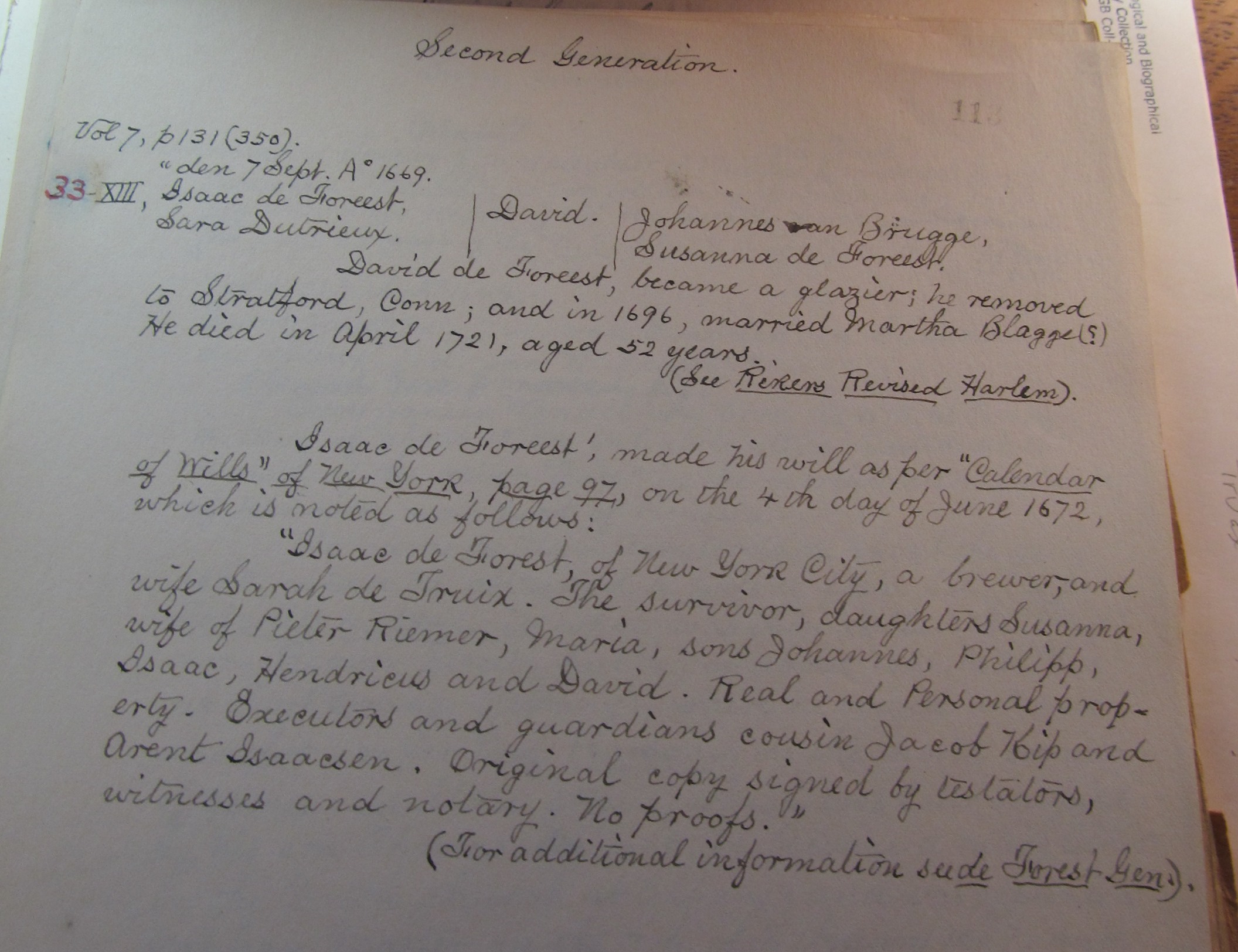
Part VIII – House of Truax – Second Generation (Susanna, Rebecca, Abraham)
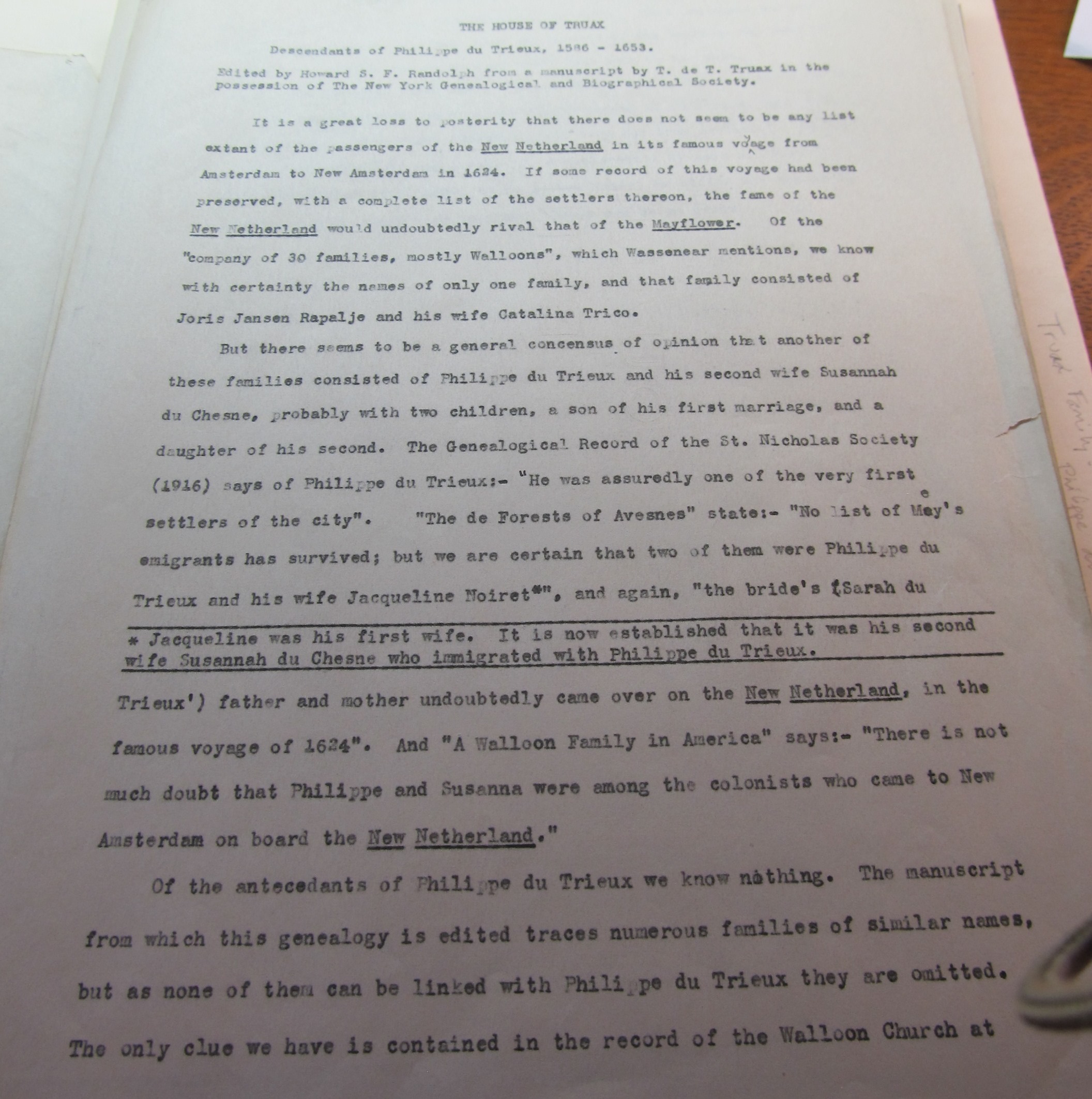
Part IX – Randolph’s House of Truax – Introduction
Part X – Randolph’s House of Truax – First Generation
Part XI – Randolph’s House of Truax – Second Generation (Philippe, Maria) – below
Not to give Philippe short shrift! But Maria is just so darn much fun. She had an illegitimate child (Alida; not mentioned here), possibly a second (Aernoudt, my ancestor, took Cornelis Viele’s patronymic, but there are real doubts), and was in and out of court so much she probably had a chair reserved for her! I’m trying to work through in my head, how a woman whose father was possibly killed by “Indians” was constantly serving alcohol to them. When people tried to sue her for her husband’s debts, she said, they’re his, not mine, I don’t know his business. Other times she was frequently doing business in his name. Toward the end, I was wincing through her many chastisements and punishments, up until she was banished from Manhattan. It is thought she went to Schenectady and I take comfort in the fact that she likely died long before the massacre in 1690.
Our homework is this: Who were the “nine children” in footnote 3? 🙂
So without further adieu, my very own black sheep “party monster” (Thanks, Leighton!) ancestor Maria and her brother Philippe!
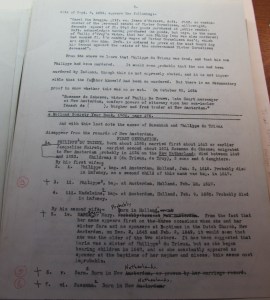
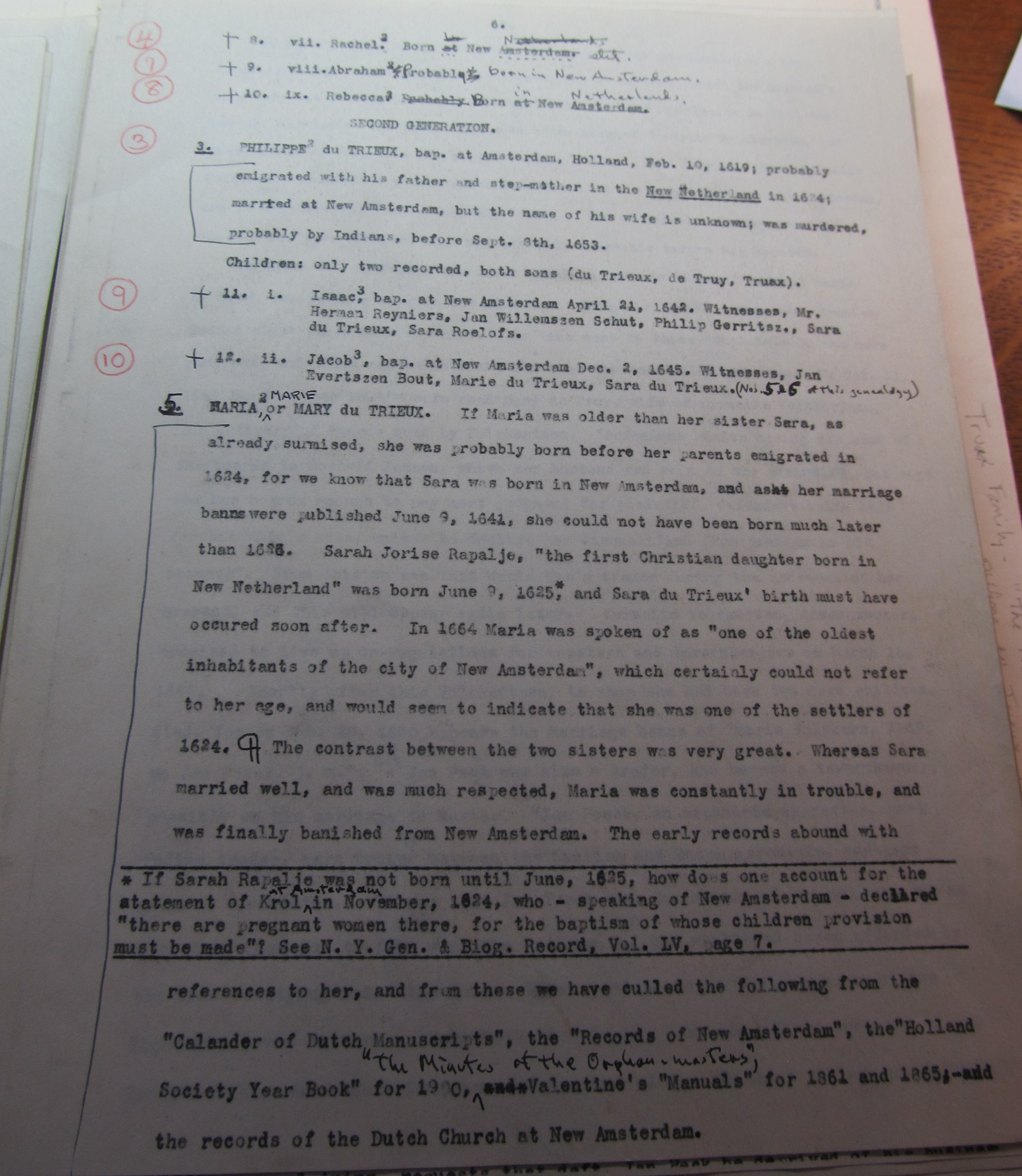
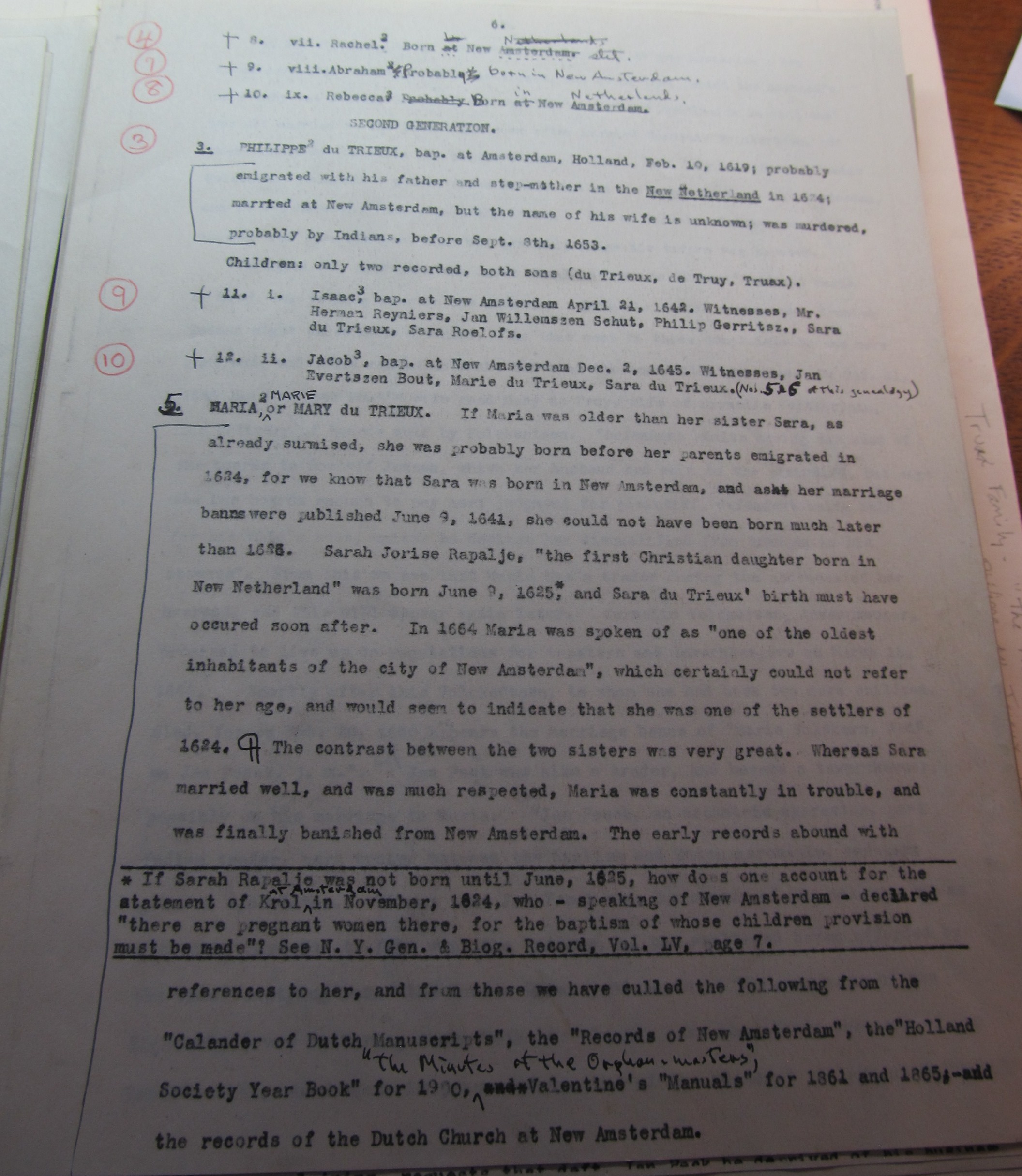
- Philippe2 du Trieux, bap. at Amsterdam, Holland, Feb. 10, 1619; probably emigrated with his father and step-mother in the New Netherland in 1624; married at New Amsterdam, but the wife of his name is unknown; was murdered, probably by Indians, before Sept. 8th, 1653.
Children: only two recorded, both sons (du Trieux, de Truy, Truax).
- i. Isaac3, bap. at New Amsterdam April 21, 1642. Witnesses, Mr. Herman Reyniers, Jan Willemszen Schut, Philip Gerritsz., Sara du Trieux, Sara Roelofs.
- ii. Jacob3, bap. at new Amsterdam Dec. 2, 1645. Witnesses, Jan Evertszen Bout, Marie du Trieux, Sara du Trieux. (No’s 5&6 of this genealogy)
- Maria2, Marie, or Mary du Trieux. If Maria was older than her sister Sara, as already surmised, she was probably born just before her parents emigrated in 1624, for we know that Sara was born in New Amsterdam, and her marriage banns were published June 9, 1641, she could not have been born much later than 1625. Sarah Jorise Rapalje, “the first Christian daughter born in New Netherland” was born June 9, 1625 [1], and Sara du Trieux’ birth must have occurred soon after. In 1664 Maria was spoken of as “one of the oldest inhabitants of the city of new Amsterdam”, which certainly could not refer to her age, and would seem to indicate that she was one of the settlers of 1624.
The contrast between the two sisters was very great. Whereas Sara married well, and was much respected, Maria was constantly in trouble, and was finally banished from New Amsterdam. The early records abound with references to her, and from these we have culled the following from the “Calendar of Dutch Manuscripts”, the “Records of New Amsterdam”, the “Holland Society Year Book” for 1910, “The Minutes of the Orphan-masters”, Valentine’s “Manuals” for 1861 and 1865; – and the records of the Dutch Church at New Amsterdam.
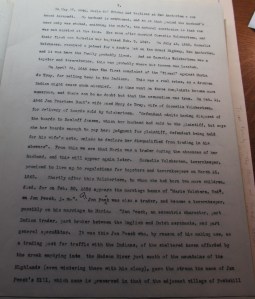
Page 7
On May 27, 1640, Marie du Trieux had baptised at New Amsterdam a son named Aernoudt. No husband is mentioned, and as at that period the husband’s name only was stated, omitting the wife’s, the natural conclusion is that she was not married at the time. She soon after married Cornelis Volckertsen, and their first son Cornelis was baptised Feb. 5, 1643. On July 13, 1643, Cornelis Volckersz. received a patent for a double lot on the Great Highway, New Amsterdam, and it was here that the family probably lived. And as Cornelis Volckertsen was a tapster and tavernkeeper, this was probably where his tavern was located.
On April 26, 1646 came the first complaint of the “Fiscal” against Maria de Truy, for selling beer to the Indians. This was a real crime, as a drunken Indian might cause much mischief. As time went on these complaints became more numerous, and there can be no doubt but that the accusation was true. On Oct. 11, 1646 Jan Evertsen Bout’s wife sued Mary de Truy, wife of Cornelis Volckertsen, for delivery of boards sold by Volckertsen. “Defendant admits having disposed of the boards to Roeloff Jansen, which her husband had sold to the plaintiff, but says she has boards enough to pay her; judgment for plaintiff, defendant being held for his wife’s acts, unless he declare her disqualified from trading in his absence”. From this we see that Maria was a trader during the absences of her husband, and this will appear again later. Cornelis Volckersen, tavernkeeper, promised to live up to regulations for tapsters and tavernkeepers on March 16, 1643. Shortly after this Volckertsen, to whom she had born two more children, died, for on Feb. 29, 1650 appears the marriage banns of “Marie Volckers, Wede. en Jan Peeck, j. m.”.
Jan Peeck was also a trader, and became a tavernkeeper, possibly on his marriage to Maria. “Jan Peeck, an eccentric character, part Indian trader, part broker between the English and Dutch merchants, and part general speculator. It was this Jan Peeck who, by reason of his making use, as a trading post for traffic with the Indians, of the sheltered haven afforded by the creek emptying into the Hudson River just south of the mountains of the Highlands (even wintering there with his sloop), gave the stream the name of Jan Peeck’s Kill, which name is preserved in that of the adjacent village of Peeckskill
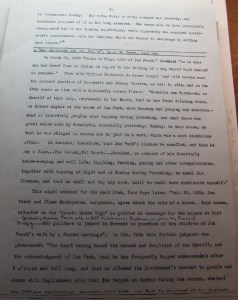
Page 8
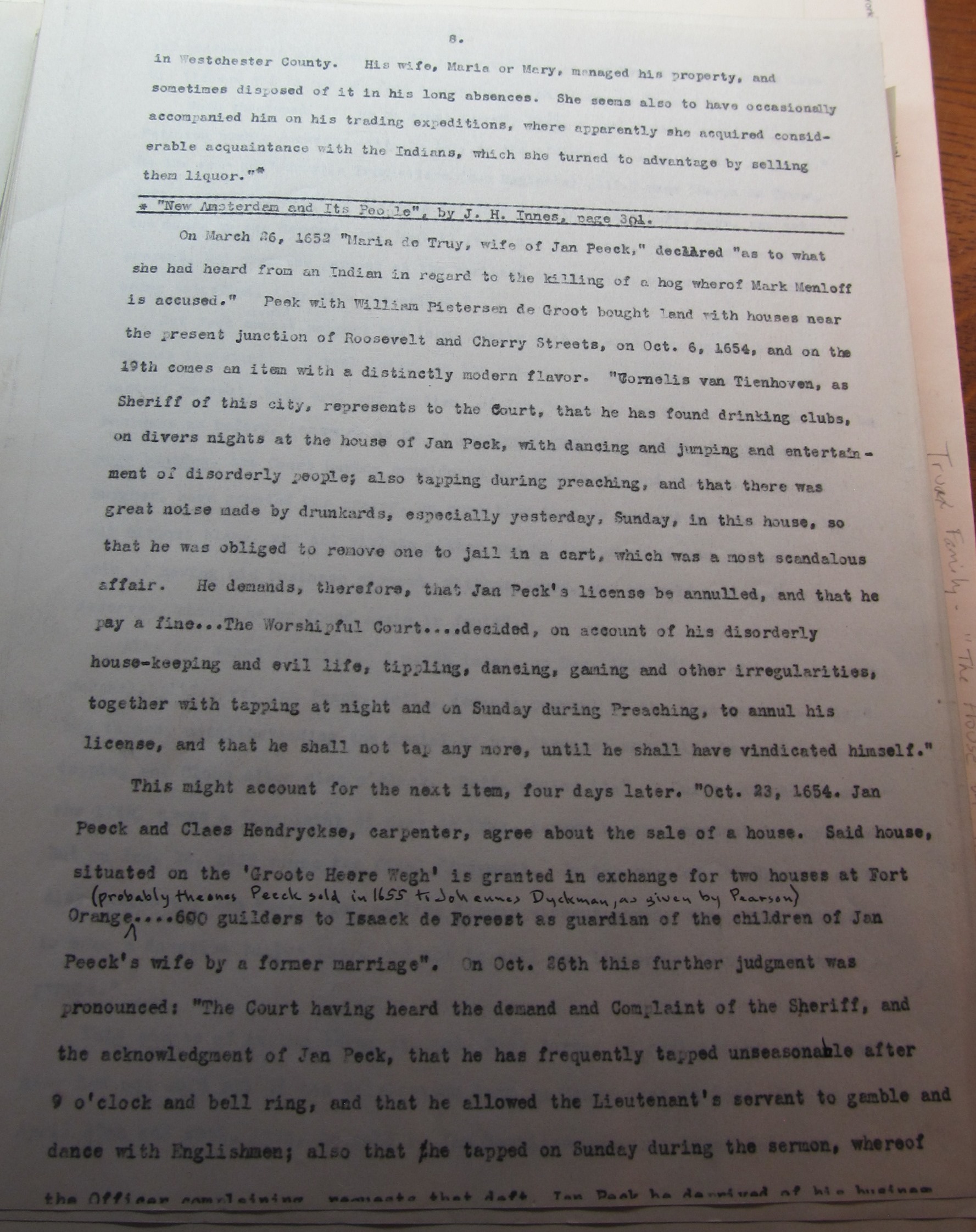
in Westchester County. His wife, Maria or Mary, managed his property, and sometimes disposed of it in his long absences. She seems also to have occasionally accompanied him on his trading expeditions, where apparently she acquired considerable acquaintance with the Indians, which she turned to advantage by selling them liquor. [2]
On March 26, 1652 “Maria de Truy, wife of Jan Peeck,” declared “as to what she had heard from an Indian in regard to the killing of a hog whereof Mark Menloff is accused.” Peek with William Pietersen de Groot bought land with houses near the present junction of Roosevelt and Cherry Streets, on Oct. 6, 1654, and on the 19th comes an item with a distinctly modern flavor. “Cornelis van Tienhoven, as Sheriff of this city, represents to the Court, that he has found drinking clubs, on divers nights at the house of Jan Peck, with dancing and jumping and entertainment of disorderly people; also tapping during preaching, and that there was great noise made by drunkards, especially yesterday, Sunday, in this house, so that he was obliged to remove one to jail in a cart, which was a most scandalous affair. He demands, therefore, that Jan Peck’s license be annulled, and that he pay a fine… The Worshipful court… decided, on account of his disorderly house-keeping and evil life, tippling, dancing, gaming and other irregularities, together with tapping at night and on Sunday during Preaching, to annul his license, and that he shall not tap any more, until he shall have vindicated himself.”
This might account for the next item, four days later. “Oct. 23, 1654. Jan Peeck and Claes Hendryckse, carpenter, agree about the sale of a house. Said house, situated on the ‘Groote Heere Wegh’ is granted in exchange for two houses at fort Orange (probably the ones Peeck sold in 1655 to Johannes Dyckman, as given by Pearson)… 600 guilders to Isaack de Foreest as guardian of the children of Jan Peeck’s wife by a former marriage”. On Oct. 26 this further judgment was pronounced: “The Court having hear the demand and Complaint of the Sheriff, and the acknowledgment of Jan Peck, that he has frequently tapped unseasonable after 9 o’clock and bell ring, and that he allowed the Lieutenant’s servant to gamble and dance with Englishmen; also that he tapped on Sunday during the sermon, whereof the Officer complaining warrants that deft. Jan Peck be deprived of his business
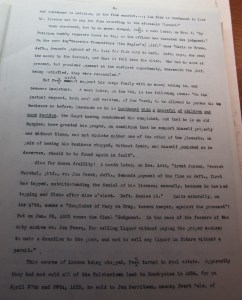
Page 9
and condemned in addition, in the fine enacted…; Jan Peck is condemned to lose his license and to pay the fine according to the aforesaid Placard.”
Much chastened, but by no means downed, Peeck, a week later, on Nov. 2, “by Petition humbly requests leave to tap, as the officer has executed the judgment.” On the same day “Marretie Trompetters (the Bugler’s) pltf.” Sues “Maria de Truwe, deft., demands payment of fl. 3.11 for fish he sold to deft. Deft. says, she sent the money by the Servant, and that it fell into the ditch. She has no more at present, but promises payment at the earliest opportunity, wherewith the pltf. being satisfied, they were reconciled.”
But Peeck could not support his large family with no money coming in, and becomes insistent. A week later, on the 9th, is the following item:- “On the instant request, both oral and written, of Jan Peeck, to be allowed to pursue his business as before, inasmuch as he is burthened with a houseful of children and more besides, the Court having considered his complaint, and that he is an old Burgher, have granted his prayer, on condition that he comport himself properly and without blame, and not violate either one of the other of the placards, on pain of having his business stopped, without favor, and himself punished as he deserves, should he be found again in fault”.
Alas for human frailty! A month later, on Dec. 14th, “Arent Jansen, Provost Marshal, pltf., vs. Jan Peeck, deft., demands payment of the fine as deft., first has tapped, notwithstanding the denial of his license; secondly, because he has had tapping and Clubs after nine o’clock. Deft. denies it.” Quite naturally, on the 17th, comes a “Complaint of Mary de Truy, tavern keeper, against the provost”! But on Jan. 26, 1655 comes the final “Judgment. In the case of the farmers of the city excise vs. Jan Peecq, for selling liquor without paying the proper excise; to make a donation to the poor, and not to sell any liquor in future without a permit.”
This source of income being stopped, Peeck turned to real estate. Apparently they had not sold all of the Volckertsen land to Hendryckse in 1654, for on April 20th and 29th, 1655, he sold to Jan Gerritsen, mason; Evert Pels, of
Page 10
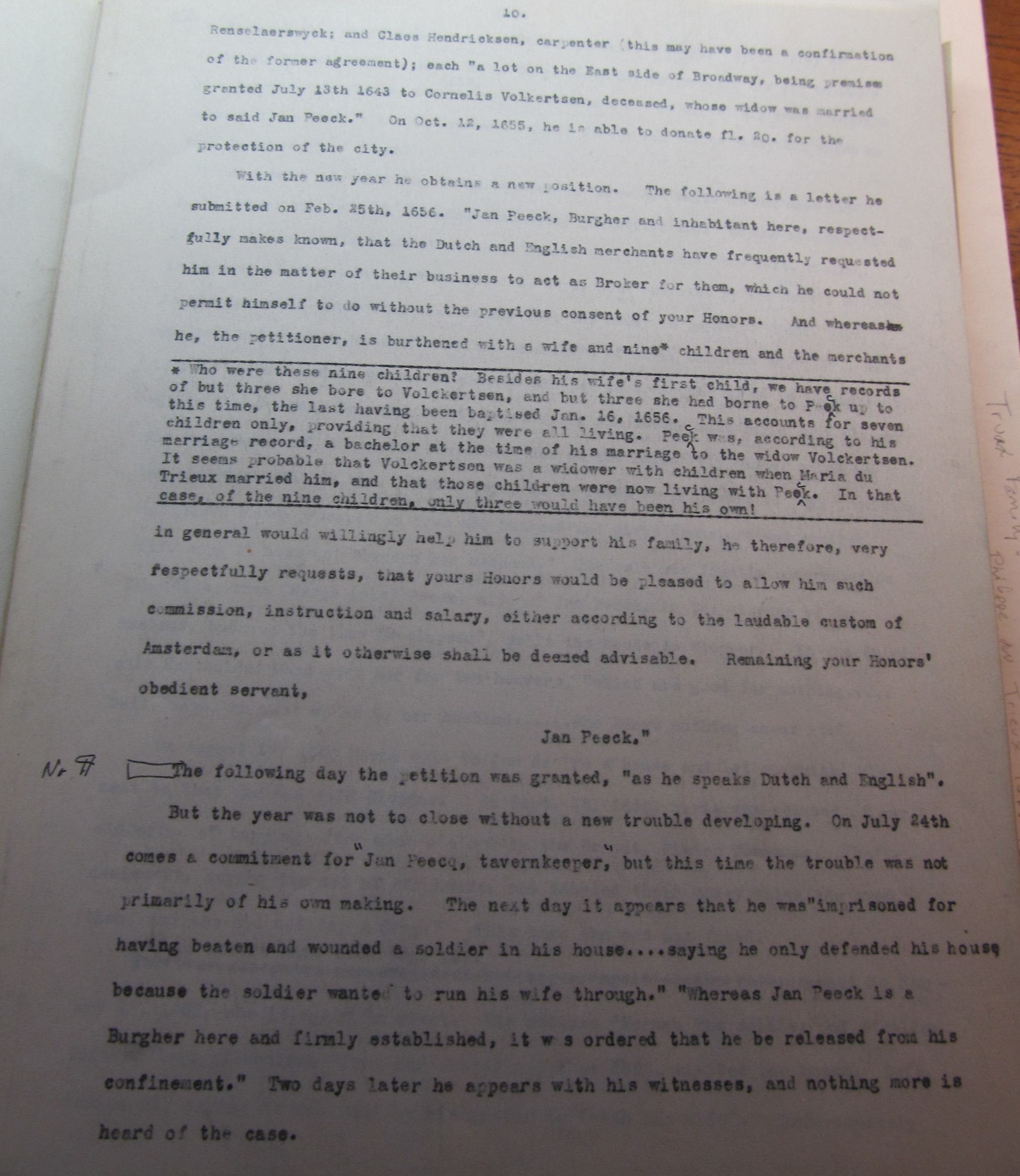
Renselaerswyck; and Claes Hendricksen, carpenter (this may have been a confirmation of the former agreement); each “a lot on the East side of Broadway, being premises granted July 13, 1643 to Cornelis Volckertsen, deceased, whose widow was married to said Jan Peeck.” On Oct. 12, 1655, he is able to donate fl. 20. For the protection of the city.
With the new year he obtains a new position. The following is a letter he submitted on Feb. 25th, 1656. “Jan Peeck, Burgher and inhabitant here, respectfully makes known, that the Dutch and English merchants have frequently requested him in the matter of their business to act as Broker for them, which he could not permit himself to do without the previous consent of your Honors. And whereas he, the petitioner, is burthened with a wife and nine children [3] and the merchants in general would willingly help him to support his family, he therefore, very respectfully requests, that yours Honors would be pleased to allow him such commission, instruction and salary, either according to the laudable custom of Amsterdam, or as it otherwise shall be deemed advisable. Remaining your Honors’ obedient servant,
Jan Peeck.”
The following day the petition was granted, “as he speaks Dutch and English”.
But the year was not to close without a new trouble developing. On July 24th comes a commitment for “Jan Peecq, tavernkeeper,” but this time the trouble was not primarily of his own making. The next day it appears that he was “imprisoned for having beaten and wounded a soldier in his house… saying he only defended his house because the soldier wanted to run his wife through.” “Whereas Jan Peeck is a Burgher here and firmly established, it was ordered that he be released from his confinement.” Two days later he appears with his witnesses, and nothing more is heard of the case.
Page 11
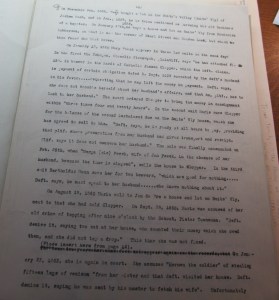
On November 9th, 1656, Peeck bought a lot in the Smith’s Valley (Smit’s Vly) of Jochem Koch [blogger: isn’t that where Philippe had property?], and in Jan., 1657, he is twice mentioned as pursuing his old business of a tapster. On January 19[?]th, 1658, he buys a house and lot on Smit’s Vly from Frederick Lubbersen, on what is now the corner of Pearl Street and Maiden Lane, but which then faced the East River.
On January 13th, 1660 Mary Peeck appears in three law suits on the same day! In the first the Schepen Cornelis Steenwyck, plaintiff, says “he has attached fl. 150. in beaver in the hands of Cornelis Jansen Clopper, which the deft. claims in payment of certain obligation dated 3. Sept. 1658 executed by the deft’s husband in his favor… requesting that he may lift the money in payment. Deft. says, she does not trouble herself about her husband’s affairs, and that he, pltf., has to look to her husband.” The court ordered Clopper to bring the money in consignment within “three times four and twenty hours”. In the second suit Maria sues Clopper for the balance of the second installment due on the Smits’ Vly house, which she has agreed to sell to him. “Deft. says, he is ready at all hours to pay, providing that pltf. shows procuration from her husband and gives transport and receipt. Pltf. says it does not concern her husband.” The sale was finally consummated on Feb. 25th, when “Merga (sic) Peeck, wife of Jan Peeck, in the absence of her husband, because the time is elapsed”, sells the house to Clopper. In the third suit Bartholdus Mann sues her for two beavers, “which are good for nothing… Deft. says, he must speak to her husband… she knows nothing about it.”
On August 19, 1660 Maria sold to Jan de Pre a house and lot on Smits’ Vly, next to that she had sold Clopper. On Sept. 28, 1660, Maria was accused of her old crime of tapping after nine o’clock by the Schout, Pieter Tonneman. “Deft. denies it, saying two sat at her house, who counted their money which she owed them, and she did not tap a drop.” This time she was not fined.
On December 8, 1661, “Before the Board appeared Mary de Truy and with her Isaack de Foreest, Old Schepen of this City, and Govert Loockermans, also Old Schepen, guardian of her minor children. Said Mary de Truy requests permission to draw and receive the interest on 500 fl., settled on her children and secured on the house of Andries Joghimsen.” The request was granted.
On January 23, 1663, she is again in court. She accuses “Hermen the soldier” of stealing fifteen legs of venison “from her sister and that deft. visited her house. Deft. denies it, saying he was sent by his master to fetch his wife”. Unfortunately
Page 12
the sister is not named, but the fact that she had a sister is added proof that she was a daughter and not a sister of the first Philippe du Trieux.
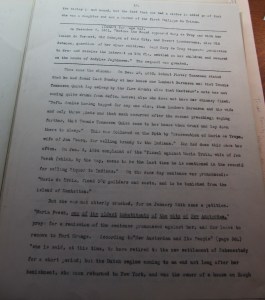
Then came the climax. On Dec. 18, 1663, Schout Pieter Tonneman stated that he had found last Sunday at her house one Lambert Barensen and that Teunis Tomassen Quick lay asleep by the fire drunk; also that Maatseuw’s mate was met coming quite drunk from defts. house; also she does not have her chimney fixed. “Deft. denies having tapped for any one else, than Lambert Barensen and his wife and only three pints and that such occurred after the second preaching; saying further, that Teunis Tomassen Quick came to her house when drunk and lay down there to sleep.” This was followed on the 30th by “Prosecution of Maria de Truy, wife of Jan Peecq, for selling brandy to the Indians.” She had done this once too often. On Jan. 3, 1664 complaint of the “Fiscal against Maria Truix, wife of Jan Peeck (which, by the way, seems to be the last time he is mentioned in the records) for selling liquor to the Indians.” On the same day sentence was pronounced:- “Maria de Truix, fined 500 guilders and costs, and to be banished from the island of Manhattan.”
But she was not utterly crushed, for on January 24th came a petition. “Maria Peeck, one of the oldest inhabitants of the city of New Amsterdam,” prays for a remission of the sentence pronounced against her, and for leave to remove to Fort Orange. According to “New Amsterdam and Its People” (page 301) “She is said, at this time, to have retired to the new settlement of Schenectady for a short period; but the Dutch regime coming to an end not long after her banishment, she soon returned to New York, and was the owner of a house on Hoogh
Page 13
Straet (or Duke’s Street, as the English began to call it), near the Town Hall.”
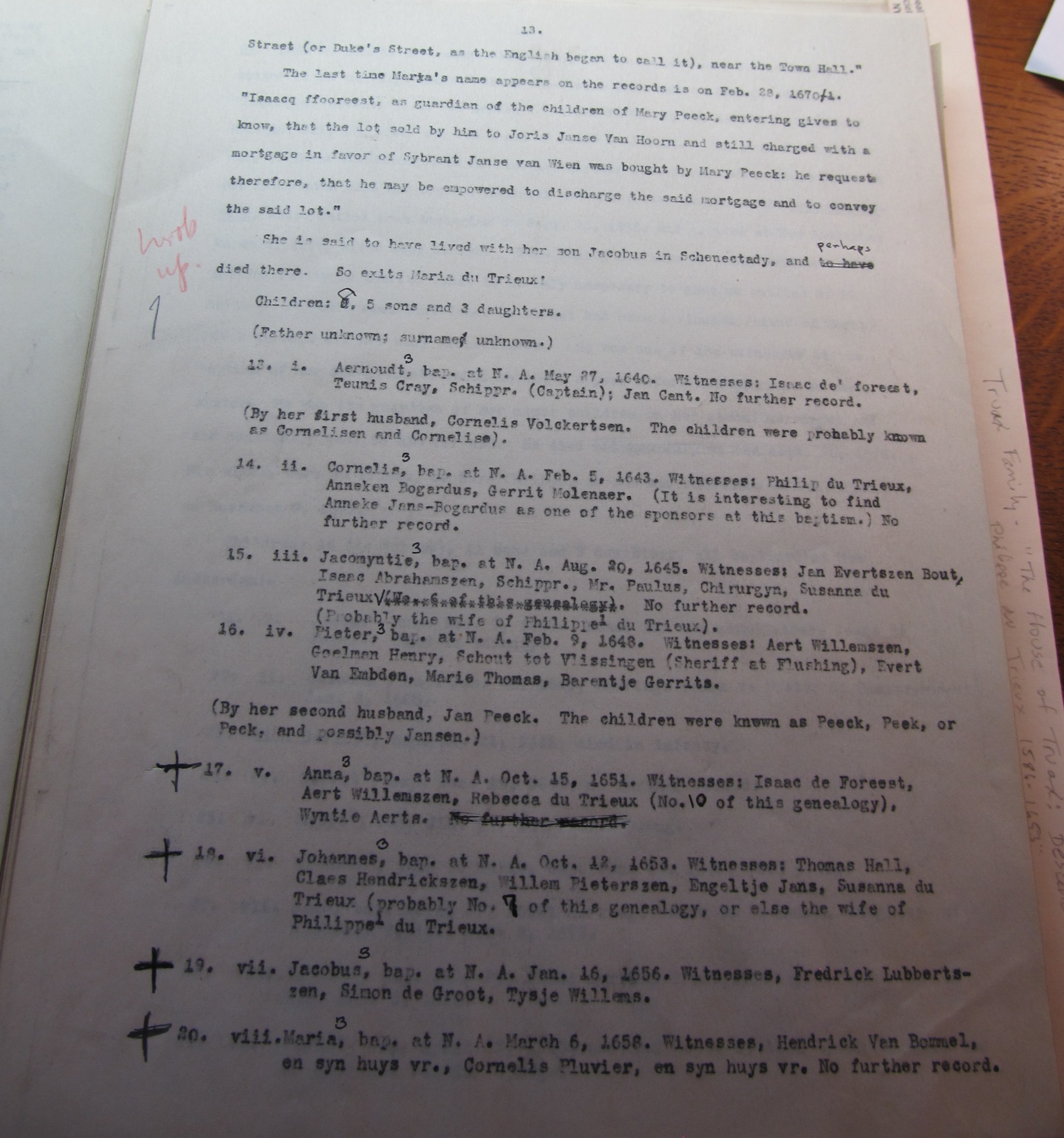
The last time Maria’s name appears on the records is on Feb. 28, 1670/1. “Isaacq ffooreest, as guardian of the children of Mary Peeck, entering gives to know, that the lot sold by him to Joris Janse Van Hoorn and still charged with a mortgage in favor of Sybrant Janse van Wien was bought by Mary Peeck: he requests therefore, that he may be empowered to discharge the said mortgage and to convey the said lot.”
She is said to have lived with her son Jacobus in Schenectady, and perhaps died there. So exits Maria du Trieux!
Children: 8, 5 sons and 3 daughters.
(Father unknown; surname unknown.)
- i. Aernoudt3, bap. at N. A. May 27, 1640. Witnesses: Isaac de foreest, Teunis Cray, Schippr. (Captain); Jan Cant. No further record.
(By her first husband, Cornelis Volckertsen. The children were probably known as Cornelisen and Cornelise.)
- ii. Cornelis3, bap. at N. A. Feb. 5, 1643. Witnesses: Philip du Trieux, Anneken Bogardus, Gerrit Molenaer. (It is interesting to find Anneke Jans-Bogardus as one of the sponsors at this baptism.) No further record.
- iii. Jacomyntie3, bap. at N. A. Aug. 20, 1645. Witnesses: Jan Evertszen Bout, Isaac Abrahamszen, Schippr., Mr. Paulus, Chirurgyn, Susanna du Trieux (Probably the wife of Philippe1 du Trieux). No further record.
- iv. Pieter3, bap. at N. A. Feb. 9, 1648. Witnesses: Aert Willemszen, Goelman Henry, Schout tot Vlissingen (Sheriff at Flushing), eVert Van Embden, Marie Thomas, Barentje Gerrits.
By her second husband, Jan Peeck. The children were known as Peeck, Peek, or Peck, and possibly Jansen.)
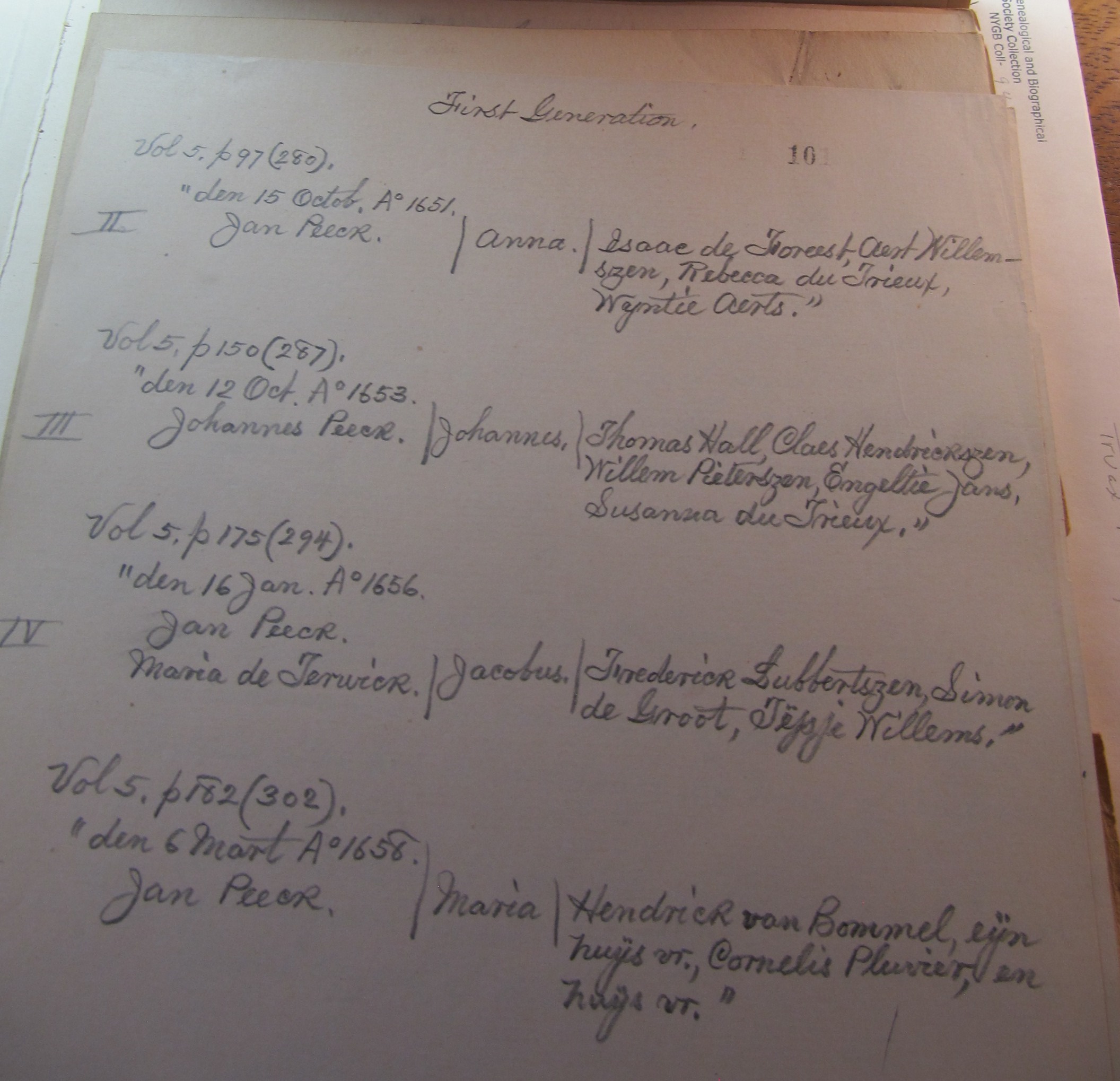
- v. Anna3, bap. at N. A. Oct 15, 1651. Witnesses: Isaac de Foreest, Aert Willemszen, Rebecca du Trieux (No. 10 of this genealogy), Wyntie Aerts.
- vi. Johannes3, bap. at N. An. Oct 12, 1653. Witnesses: Thomas Hall, Claes Hendrickszen, Willem Pieterszen, Engeltje Jans, Susanna du Trieux (probably No. 7 of this genealogy, or else the wife of Philippe1 du Trieux.)
- vii. Jacobus3, bap. at N. A. Jan. 16, 1656. Witnesses, Frederick Lubbertszen, Simon de Groot, Tysje Willems.
- viii. Maria3, bap. at N. A. March 6, 1658. Witnesses, Hendrick Van Bommel, en syn huys vr., Cornelis Pluvier, en syn huys vr. No further record.
[1] If Sarah Rapalje was not born until June, 1625, how does one account for the statement of Krol at Amsterdam in November, 1624, who – speaking of New Amsterdam – declared “there are pregnant women there, for the baptism of whose children provision must be made”? See N. Y. Gen. & Biog. Record, Vol. LV, page 7.
[2] “New Amsterdam and Its People”, by J. H. Innes, page 301.
[3] Who were these nine children? Besides his wife’s first child, we have records of but three she bore to Volckertsen, and but three she had borne to Peeck up to this time, the last having been baptised Jan. 16, 1656. This accounts for seven children only, providing that they were all living. Peeck was, according to his marriage record, a bachelor at the time of his marriage to the widow Volckertsen. It seems probable that Volckertsen was a widower with children when Maria du Trieux married him, and that those children were now living with Peeck. In that case, of the nine children, only three would have been his own!
Source:
Truax, T. de T., House of Truax. “Bien faire et ne rien craindre.” Historical Genealogy of the Truax-Truex Families of the United States and Canada, descendants of Philippe de Trieux, the first Huguenot-Knickerbocker of that name who settled in New Netherland in 16__ and embracing his posterity to the present date a period of nearly three centuries of Twelve Generations. Manuscript. From New York Public Library, Call No. NYGB Coll-94 Box 1 and Box 2.http://catalog.nypl.org/record=b18209329~S1 . (Accessed 18Jul2015)
[An interesting history of this manuscript can be found at http://freepages.genealogy.rootsweb.ancestry.com/~truax/TheHouseofTruax.html]
























 The Ancestor Whisperer