Five genealogy challenges

I’m having some Saturday Night Genealogy Fun (#SNGF), with help from Randy Seaver and his prompts! Feel free to join in.

Saturday Night Genealogy Fun: February 21, 2026

Prompt: “What are your major genealogy challenges – the family mysteries that you haven’t been able to crack to date? Tell us about five of your real genealogy challenges with a short paragraph, and link to blog posts if you have written about them.”

Introduction

Ah, those challenging ancestors – haven’t we all got them? To list five is a lot! But I’ll be brief.

Discussion

  1. Andrew DRISKOL is my A-number-one mystery, because I have never been able to locate him on any records, even while they were keeping records. German birth, (presumably) English marriage, US immigration, 1880 census. Several people, my great-grandmother included, name him as their father, so…  Blog: https://theancestorwhisperer.com/2025/09/27/52-ai-ancestors-in-52-weeks-week-39-disappeared/
  2. Mary Ann HOPKINS WEST (ca 1813-1850s). Women are tough. I have her on two records, her 1829 Maryland marriage and the 1850 New Jersey census. I’d love to find her death. Her husband John appears to be a widower in 1860, and the 1855 state census is a head-of-household one, so I can’t be confident if she was alive or dead for that one. They lived either in New Jersey or Pennsylvania at the time. I’ve taken some shots in the dark, but all have turned up empty.
  3. Michael ANDERSON (ca 1850-1883). Hewas born in Ireland – there are Irish Andersons, but I really haven’t got a grip on their origins.When he died in Staten Island New York, his father’s info was blank and his mother’s info only noted that she was from Carroll, Ireland. I’ve not found his birth, immigration, or marriage. Again, troubling considering how relatively recent this was.

My fourth and fifth challenges are John DuSHANNON and his wife Margaret ARNOLD DuSHANNON. He was from Canada; she from Connecticut, and they married in Bridgeport in 1851. They were in the 1870 census with several children, and in 1876 their daughter Charlotte May, my great grandmother, was being placed out of an orphanage. I’ve searched but still not found what happened to them. But I have made progress: Lottie did not even know her parents’ names or her date of birth; her death certificate had invented parents’ names, and she adopted Christmas Day as her birthday: her death certificate and tombstone say Dec. 25, 1867, when the birth record I found clearly identifies May 14, 1866. Did the orphanage assign a date to her? Did she get to choose the date, and chose a happy day? I will never know. Records can correct dates, but they can’t give her back what she never knew.
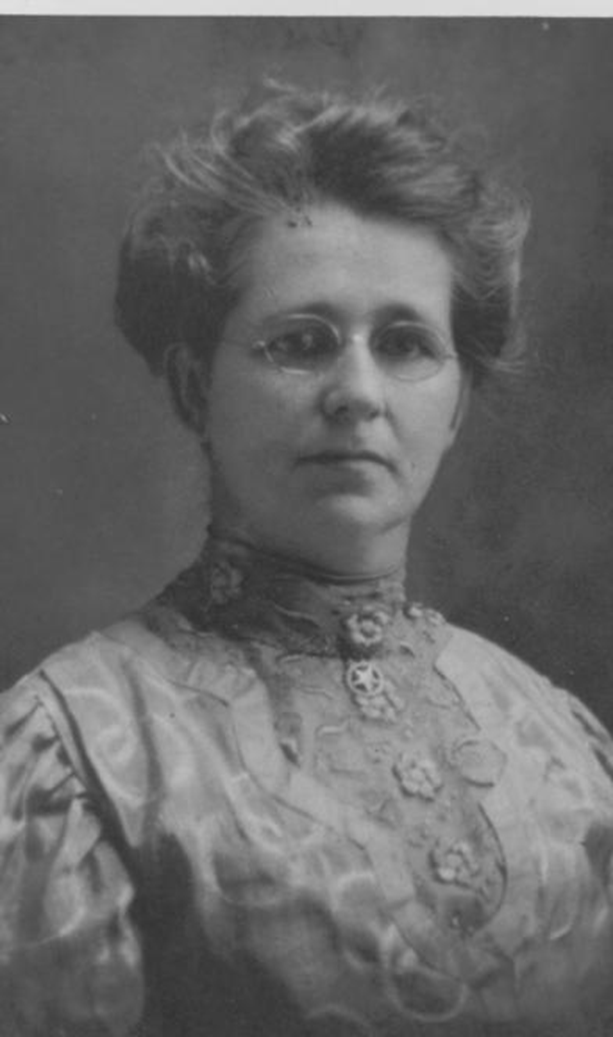
Charlotte Mae (Lottie) DuShannon West

Challenge

Who are your uncracked challenges? What do you think you might do about them? What does AI suggest you do about them? Ask it to find patterns you’re missing or suggest research paths to follow. Go on, check out the rabbit hole – you know you want to!

AI Disclosure

This post was created by me with the help of AI tools. While AI helps organize research, the storytelling and discoveries are my own.
A 66 Year Love Story?

I’m having some Saturday Night Genealogy Fun (#SNGF), with help from Randy Seaver and his prompts! Feel free to join in.

You are the result of the love of thousands”

– Attributed to Linda Hogan

Saturday Night Genealogy Fun: February 14, 2026

Prompt: “It’s Valentine’s Day – a day for lovers! We all have hundreds of love stories in our ancestry. What was the great love story of the ancestors in your family Tree?  What wedding had a great story in it?  Choose one ancestral couple. Share how they met (if known), when and where they married. Note how long they were married. Highlight something that suggests affection or partnership.”

Introduction

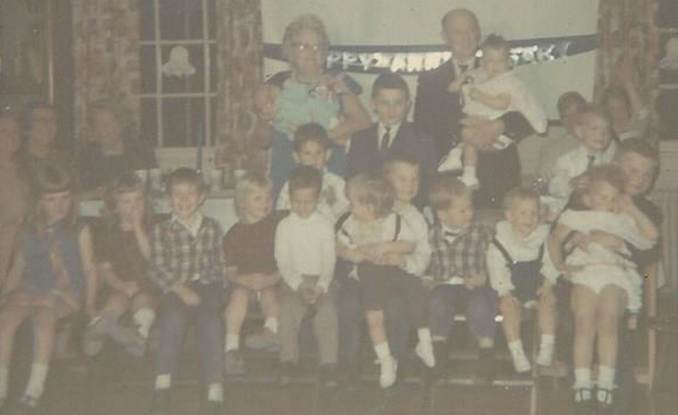
I have and adore a photo of my great-grandparents’ 60th anniversary party. It shows them surrounded by dozens of their great-grandchildren. Great Grandpa is holding me.

Discussion

They were married another six years after that party, so if you ask anyone in the family, they made it to 66 years.

Or did they?

For years, I had a big challenge locating their 1908 marriage record. This was in Manhattan, New York – a place whose records I knew well – and it simply wasn’t there.

Finally, after several years of searching, I located Great Grandpa’s WWI Draft registration card. It said he was married. That sent me looking again for their marriage record, and this time, I found it.

In 1918.

By that point, they’d already had four children.

My cousin holds their 1908 church marriage certificate. But for whatever reason, they never registered that wedding with the civil authorities. When he registered for the draft, they must have realized that, in the government’s eyes, they weren’t actually married — and had better make it official.

So my cousin has their 1908 marriage.

And I have their 1918 marriage.

Which makes me wonder… was that beautiful 1968 photograph really from their 50th anniversary?

If you count from the church wedding, they were married 66 years — the longest-married couple in my ancestry.

And whether they stood before an altar once or twice, one thing is clear: they built a life that endured. Four children before civil paperwork. Sixty years of partnership. Great-grandchildren at their feet.

That feels like a love story to me.

Your Turn

I would love to hear your ancestral love story. Drop it, or a link to it, in the comments.

Want to Learn More?

I also wrote a brief blog about the courtship of my grandparents, their daughter and her husband, here: https://theancestorwhisperer.com/2025/12/19/52-ai-ancestors-in-52-weeks-week-51-musical/

AI Disclosure

This post was created by me with the help of AI tools. While AI helps organize research, the storytelling and discoveries are my own.
SNGF: Your Spouse’s Ancestors

I’m having some Saturday Night Genealogy Fun (#SNGF), with help from Randy Seaver and his prompts! Feel free to join in.

Saturday Night Genealogy Fun: February 7, 2026

Prompt:

“Have you researched the ancestors of your spouse (or significant other)? Please list the names and vital records data for your spouse/SO’s grandparents and great-grandparents like in an Ahnentafel Report.

“Have you written genealogical sketches and/or biographies for each of them?

“Share your list of your spouse/SO’s ancestors in your own blog post or in a Facebook, SubStack, BlueSky or other social media post. Leave a link to your post on this blog post to help us find your post.”

Introduction

I’m having some Saturday Night Genealogy Fun (#SNGF), inspired by one of Randy Seaver’s prompts, and this one made me stop and think a bit longer than usual.

The prompt asks:
Have you researched your spouse’s ancestors? Can you list their grandparents and great-grandparents, maybe even write sketches or biographies for them?

And here’s where I’ll be honest.

Oh, heck no – you do not want a neat list of names from me.

What you probably want to know is something more interesting anyway:
Have I been neglecting my husband’s side of the family in favor of my own?

Short answer: no.
Longer answer: his ahnentafel is shorter than mine, but not because it matters less, only because it unfolds differently.


My Side vs. His Side

I’ve been researching my own family for much longer, and like many of us, I grew up hearing stories that naturally pulled me in that direction. Familiar names, familiar places: they create an emotional gravity that’s hard to resist.

But researching my husband’s family changed once we had children.

Suddenly, this wasn’t just his ancestry. It was theirs.

And unlike my own lines, his family history reaches across the ocean only a few generations back. That means records still exist in European archives – records that are surprisingly rich, precise, and sometimes humbling.


What His Ancestors Taught Me

Researching my husband’s family has taught me things I never would have learned otherwise.

I’ve gained a deep respect for careful Jewish recordkeeping.
I’ve watched surnames and spellings shift – and the language of the records – depending on who was occupying a region at the time.
I’ve seen how laws, traditions, and restrictions quietly shaped people’s life choices in ways that don’t always announce themselves on a pedigree chart.

This is why I don’t think genealogy should ever be a numbers game. We all know that moment – someone boasting about the size of their tree – and how empty that can feel.

What matters is what each line teaches you.


A Gentle Challenge

So here’s my question for this week’s SNGF:

What have you learned by researching someone – or somewhere – that was unfamiliar to you at first?

Not how many names you added.
Not how far back you went.

But what surprised you once you slowed down and paid attention.

Figure 1 My husband’s cousin’s birth, recorded in Russian because the Russians occupied Suwalki in 1909.

EDIT TO ADD: the ahnentafel – most recent two generations dropped.

Generation 3

4. Samuel BIRNBAUM: born 14 Apr 1885 in Eperjes, Saros, Hungary, now Presov, Presov, Slovakia; married 24 Apr 1906 in New York, New York, USA; died 25 Dec 1954 in Los Angeles, Los Angeles, California, USA.

5. Anna Brenda FRANK: born 6 Mar 1889 in Manhattan, Kings, New York, USA; died 28 Aug 1971 in Los Angeles, Los Angeles, California, USA.

6. Samuel GOODE (GUDELSKY): born 21 Apr 1878 in Augustow, Suwalki, Poland; married 4 Aug 1899 in Veisiejai, Seinai, Suwalki, Lithuania; died 18 Mar 1958 in Rochester, Monroe, New York, USA.

7. Ida Khaya Fruma RABINOWITZ: born bet 1872 and 1875 in Veisiejai, Seinai, Suwalki, Lithuania; died 21 Jul 1952 in Rochester, Monroe, New York, USA.

Generation 4

8. Bernard (Joe) BIRNBAUM: born say 1860 in Austria-Hungary; married bef 1885; died bef 1908.

9. Fanny STEINBERG: born say 1860.

10. Joseph (Pinkus) FRANK: born Apr 1852 in Russia; married 17 Jan 1888 in Manhattan, New York, New York, United States; died 14 Jun 1916 in Manhattan, New York, New York, United States.

11. Jennie FELDER (FELDELOSS): born 20 Dec 1859 in Austria; died 8 Mar 1922 in Manhattan, New York, New York, USA.

12. Szmujło Morthaj GUDELSKI: born 20 Jun 1837 in Suwałki, Suwałki, Suwałki; married 1855 in Suwalki, Lithuania; died 11 Sep 1914 in Suwałki, Suwałki, Suwałki.

13. Cywa “Sylvia” BACHRACH: born abt 1835–1836 in Suwalki, Suwalki, Suwalki; died 5 Nov 1900 in Suwalki.

14. Mordecai RABINOWITZ: born abt 1837; married bef 1864; died aft 1901.

15. Chaia RACZKOWSKA: born abt 1828 in Veisiejai, Seinai, Suwalki, Lithuania; died 17 Jan 1901 in Seirijai, Sejny, Suwalki, Lithuania.

Generation 5

20. Samuel FRANK: born in Russia.

21. Fanny SEGAL: born in Russia.

22. Joseph James FELDER: born in Austria.

23. Rosie : born in Austria.

24. Manel Nochim Lejbowicz GUDELSKI: born abt 1800–1810; married bef 1826; died bef 1885.

25. Rejza Hirszowna SEJNENSKI: born abt 1807–1811 in Wierzbołów now Virbilis Lithuania; died 1885 in Suwalki, Lithuania.

26. Mowsza BACHRACH: born abt 1792; died 18 Mar 1846 in Suwalki.

27. Rocha Rochla CHONOWNA: born abt 1805; died 8 Apr 1867 in Suwalki.

28. Rubin RABINOWITZ: born 1803; died 2 May 1877 in Dusnitse, Krasnovo, Sejny, Suwalki.

30. Gotlib RACHKOVSKI: born abt 1789; died 5 Jan 1859 in Seirijai, Sejny, Suwalki, Lithuania.

31. Genia Henia SMOLENSKI.

Generation 6

48. Lejb GUDELSKI: born abt 1775.

50. Hirsz Girsz SEJNENSKI: born 1798; died 8 Nov 1858 in Suwalki.

51. Bejla HIRSZOWNA: died bef 6 Nov 1858.

52. Jankiel BACHRACH.

54. Chonel .

60. Aron RACZKOWSKI.

61. Feiga .

Generation 7

100. Josiel SEJNENSKI.

102. Hirsz .

122. Wolf .

AI Disclosure

This post was created by me with the help of AI tools. While AI helps organize research, the storytelling and discoveries are my own.

January Genealogy Fun

I’m having some Saturday Night Genealogy Fun (#SNGF), with help from Randy Seaver and his prompts! Feel free to join in.

Saturday Night Genealogy Fun: January 31, 2026: January Genealogy Fun

Prompt:

What genealogy fun have you had this past month?  What is your genealogy research highlight of the past month?  It could be attending or watching a webinar or local genealogy society meeting, it could be finding a new ancestor, or it could be reading a new genealogy book, or anything else that you have enjoyed.”

Introduction

As New Year’s resolutions are in full swing, I’ve been pleasantly surprised by how much genealogy fun I’ve packed into January.

Looking back, a lot of this month’s fun centered on continuity—building, revisiting, and sharing. My runners-up include:

  • I received the printed 2025 edition of my Ancestors book – I have written up all the ancestors of my children. The first edition was basically a report from my genealogy software, and each year I clean up and enhance another generation. 2025 was the year I focused on the sixth generation back from my children.
  • I decided to participate for a second year in 52 Ancestors in 52 Weeks but with a twist – the week number corresponds to the ancestor number in the book above, so I have an assigned person every week, and hit everyone until the sixth generation.
  • I started participating in Saturday Night Genealogy Fun #SNGF – as evidenced by this post. The idea was to have a little more fun and cut loose a little more than I do in the 52 ancestors posts.
  • I got going on my new blog website – I moved from janetbgenealogy.wordpress.com to theancestorwhisperer.com – with thanks to Megan Smolenyak for the domain.
  • My uncle sent me an autograph book filled out for an aunt in the 1880s – it contains my ancestor’s autograph under her maiden name. He found it cleaning out his father’s, my grandfather’s, things after the latter’s death.

January Highlight

 But the genealogy task I got the biggest kick out of in January was – I started leading an Artificial Intelligence Special Interest Group (AI SIG) at the Northwest Suburban Genealogy Society! We meet on the first Wednesday of the month and the first meeting went very well! I learned only yesterday that the handout was downloaded scores of times. How gratifying is that! I’m preparing for February’s meeting and am excited to see the direction this goes.

NWSGS AI SIG logo

Challenge

What genealogy thing did you do that you’re most pleased with? What might be a next step in furthering your success? It doesn’t need to be a big project; sometimes the most satisfying progress comes from taking just one small next step.

AI Disclosure

This post was created by me with the help of AI tools. While AI helps organize research, the storytelling and discoveries are my own (and the prompt was Randy Seaver’s).

Saturday Night Genealogy Fun: January 17, 2026

I’m having some Saturday Night Genealogy Fun (#SNGF), with help from Randy Seaver and his prompts! Feel free to join in.

Saturday Night Genealogy Fun: January 17, 2026

Prompt:

“1)  FamilySearch Full-Text Search continues to add databases and searchable images to their collections.  This is a gold mine, especially of land, probate and court records.

2)  Pick one or two of your ancestors or research targets and see what you can find on FamilySearch Full-Text Search about them.

3)  Share your Full-Text Search find(s) in your own blog post or in a Facebook, SubStack, BlueSky or other social media post.  Leave a link to your post on this blog post to help us find your post.”

Introduction

I’ve heard a lot of excitement around FamilySearch’s full-text search, especially when it comes to unexpected finds. I’ve dabbled here and there, but this prompt felt like a great opportunity to really dig in, and maybe finally understand what all the buzz is about.

What I Found

I started with my ancestor Michael Dobbins, searching for him in Kansas. Michael was a traveler: a famine immigrant who journeyed from Ireland to New Jersey, possibly to Pennsylvania, and eventually to Kansas. He purchased property along the way, and as far as I can tell, it wasn’t bounty land, so I still don’t know where the funds came from.

The first hit came from a classic “mug book.” It mentioned Michael and his wife Mary and proudly noted their longevity (defined there as living past 70): Michael Dobbins of Shawnee Township, Wyandotte County, Kansas, at age 84, and Mary Dobbins, same place, at 80.

There was also a separate mug book entry for his son (also named Michael) but that one belongs to the next generation.

The most exciting find, though, was something I didn’t expect at all. Full-text search surfaced a handwritten ledger entry recording the confirmation of a daughter of Michael Jr., the kind of record I would never have thought to search for directly. I was genuinely impressed that a handwritten religious record surfaced so cleanly in the results.

That was the moment I really understood why people are so excited about this tool.

A ledger with Michael Dobbins (in handwriting) highlighted.

And Then… Another Rabbit Hole

Next, I modified my search to look for Patrick Dobbins, Michael’s son (not my direct ancestor), who moved to Brazil, of all places, and that’s when things really took off.

And yes, I hit pay dirt again.

This time there were multiple handwritten records, including a Roman Catholic record written in Latin that identified him as Patricio Dobbins. That discovery alone opens up an entirely new line of inquiry.

At that point, I realized this was one rabbit hole I had not planned for.

Go to bed without me, honey.

Challenge

Pick an interesting (or puzzling) person from your tree and see what Family Search Full-Text Search can uncover. You might be surprised where it leads.

AI Disclosure

This post was created by me with the help of AI tools. While AI helps organize research, the storytelling and discoveries are my own (and the prompt was Randy Seaver’s).

Saturday Night Genealogy Fun: January 10, 2026

I’m having some Saturday Night Genealogy Fun (#SNGF), with help from Randy Seaver and his prompts! Feel free to join in.

Saturday Night Genealogy Fun: January 10, 2026

Prompt:

“1) Do you have Research Notes for some of your ancestors in a number of sources and papers, or perhaps in a Person Note or Research Note in your desktop family tree program, and dread trying to put them into a coherent genealogical sketch or research note?  

2) This week, take all of the Research Notes you have for one person in your tree and put them all in one word processor document. Organize them if you want – you don’t have to.  Make a PDF file of your new word processor document and name it.  

3) Go to your favorite LLM (you know, ChatGPT, Claude, Gemini, Perplexity, or any other LLM), load the document, and ask the LLM to “Please organize the research notes in the attached document for [your ancestor’s name, birth and death year] and create an engaging biography about him and his family. Do not use any information other than what is provided.”

2) Tell us about your experiment in condensing your notes and creating a biography of an ancestor”

Introduction

Not too long ago, a cousin asked me to document her relationship to a second cousin of hers, Grace, so my cousin could visit Grace in a nursing home. I happily did the research and the writeup and provided a report to her. This report was the basis for this week’s prompt.

Discussion

I first took a course in Empowering Genealogists with Artificial Intelligence back in October 2023, and we have come a very long way in the two years since. Using this week’s prompt and my existing research report, ChatGPT 5.2 produced a surprisingly strong and coherent write-up.

Early large language models were notorious for hallucinating – and still will if left without guardrails – but this one was explicitly instructed to rely only on the facts provided. It followed that instruction carefully. In addition to the requested biography, the LLM also produced:

  • Organized research notes
  • Identity and name variations
  • Core facts such as birth, residences, and marriage
  • Family relationships
  • A list of key sources referenced

What impressed me most, though, was that it went a step further and suggested possible next steps for refining the work, without being prompted to do so. Those suggestions included (and the first clearly reflects prior conversations I’ve had with it):

  • Refining the biography to match a sixth-generation narrative style (as used in my Ancestors Book)
  • Adding Evidence Explained–style source citations inline
  • Creating a one-page family sketch or relationship explanation suitable for an appendix or proof summary

Seeing this level of structured analysis and forward-looking support makes me seriously consider whether running our work through an AI, carefully and thoughtfully, could become a regular way to identify gaps or next research opportunities.

Challenge

So rather than just talking about the possibilities, this week’s challenge invites you to try the experiment yourself.

Try it and see what you think!

Want to Learn More?

Old documents being entered into a computer

AI Disclosure

This post was created by me with the help of AI tools. While AI helps organize research, the storytelling and discoveries are my own.
Saturday Night Genealogy Fun: January 3, 2026

I’m having some Saturday Night Genealogy Fun (#SNGF), with help from Randy Seaver and his prompts! Feel free to join in.

Saturday Night Genealogy Fun: January 3, 2026

Prompt: “What are your genealogy goals for 2026?  Consider genealogy research, education, organizing, service, writing, and whatever else you care to share.”

Introduction

How do my passions (genealogy, helping others, learning, and traveling) fit into a meaningful life? To that end, I’ve got very broad and ambitious New Year’s Resolutions. I’ve grouped them into three categories:

  1. Adventure: make a positive difference
  2. Connection: actively participate in life
  3. Rest and reset: care for the whole self

A desk where genealogy goals for 2026 are being drafted, with research cards, photos, and a cup of coffee sit.

Discussion

Genealogy is encompassed in both Adventure and Connection, and it might be enveloped within your “other” resolutions as well.

I plan to have several genealogy adventures this year. I did opt out of a Research Day in Buffalo, New York in March (I have already been snowed into Rochester and don’t plan to do it again), but I’d like to do it in milder weather. I plan to do several in-person research trips to:

  • New York City (which I’m close to)
  • Trenton, New Jersey (ditto)

I am considering places like:

  • Albany NY (NYG&BS research trip)
  • Charleston SC (ancestral stop)
  • Fort Wayne IN (NGS Conference)
  • Ontario TOR CAN (ancestral stop)
  • The Netherlands (NYG&BS Heritage Tour)

Connection includes helping others: I plan to revamp the Richmond County NY GenWeb site I administer, I have started leading an Artificial Intelligence Special Interest Group for the Northwest Suburban Genealogy Society, and I continue to work on the next edition of my published Ancestors book.

With the help of AI, I did break my genealogy goals down into quarterly and monthly ones as well, which I have put into tickler files to make plans and assess progress. These monthly goals include education I’m getting (IGHR) which will help me to achieve the objectives above.

My goals – research, education, helping others – are spaced out in order to achieve my third resolution, rest and reset.

Challenge

What do you want to do? Does genealogy fit into your life goals? For example, one of mine is travel, and I can definitely tie the two together and have some fun.

Summary

Goals like adventure, connection, and intentionality are core ingredients to my meaningful life. But concepts without specifics quickly fall flat, and that’s where resolutions come in. Use your resolutions to create meaning for you.

AI Disclosure

This post was created by me with the help of AI tools. While AI helps organize research, the storytelling and discoveries are my own.