52 AI Ancestors in 52 Weeks: Week 31: Earliest Ancestor

I’ve combined Amy Johnson Crow’s 52 ancestors in 52 weeks challenge, and Steve Little’s The 2025 AI Genealogy Do-Over, to create a unique 52 AI ancestors in 52 weeks party!

52 AI Ancestors in 52 Weeks: Week 31: Earliest Ancestor

Introduction

“How far back have you gone?” It’s a common question from non-genealogists. But I’m excited to discuss it today with genealogists! My earliest known ancestors are Philippe du Trieux, and his wife Jaquemyne Noiret. Philippe was born 1586 in Roubaix, Flanders, then Belgium, and Jacquemine in 1593 in Lille, France.

Discussion

As a Walloon, he moved often, first to Leiden and then Amsterdam in the Netherlands (where Jacquemine died, and Philippe remarried to Susanna du Chesne) and finally to New Amsterdam in 1624. His descendants have invented many “facts” and it’s a challenge sorting it all out. The 1926 article cited below is still an authority, and much more credible than most of what is floating around online.

Philippe, his children and his second wife were among the very first settlers in what is now Manhattan. He erected a house on the Bever Graft, the article says, and later lived on Smits Vly (valley). Philippe was appointed as a court messenger, or marshal, by Governor Kieft in 1638.

Philippe is thought to have been killed with his son in an “Indian attack” between 1649 and 1653.

The really intriguing thing is we have a lead on Philippe’s possible parents! There is a Jaquemyne du Trieux widow of Philippe (not to be confused with our Philippe and his first wife Jacquemine) mentioned in Leiden records, as being from Norwich England.

In the record of the Walloon Church at Leyden:

“April 22, 1601. Jaquemyne, widow of Philippe du Trieu, received into Church of Leyden, by letter from Norwich, England.”

This Jaquemyne and her deceased husband might well have been the parents of Philippe who came to New Amsterdam in 1624, but we have no proof that such is the case.[1]

How AI can help

Researching ancestors from the 1500s might sound like trying to solve a cold case with half the clues missing – and most written in languages we don’t speak. Here’s where AI can lend a hand:

  1. Language Translation Made Easy
    AI tools like Google Translate or DeepL can quickly translate Dutch, French, Latin, or old Walloon records. While not perfect, they’re a great first pass to understand what a document says before consulting a professional.
  2. Reading Between the Lines (Literally)
    Many old documents are hard to read because of handwriting. AI handwriting recognition tools, such as Transkribus, can help transcribe and interpret those difficult letters and notations – especially helpful in 17th-century church or court records.
  3. Sorting the Fact from Family Folklore
    Generative AI can look at multiple versions of a family story or online tree entries, note patterns and outliers, and point you toward the most supported facts. It’s like a polite cousin who says, “Yes, but according to actual sources…”
  4. Timeline Generation
    With basic info and dates, you can use AI tools (like ChatGPT or free timeline generators online) to auto-create a visual or text-based timeline. This helps you spot gaps, contradictions, or opportunities for new searches.
  5. Hypothesis Testing
    For Philippe’s possible parentage, AI can help you outline different possibilities and suggest what records you’d need to explore each one. Think of it as a brainstorming buddy for brick walls.
  6. Research

Yes, really! There are some very good researcher agents out there. They can provide a good start to your own research. Try Microsoft Researcher (I love it, but have to prompt hard to get it to be less wordy) or Perplexity (Mark Thompson and Steve Little talked about its Comet in this podcast).  

Challenge for Readers

Who is your earliest ancestor? How much documentation is there on them? Consider creating a timeline to firm up their known facts – I found the one in the Record article to be very useful.

Already created a timeline for your earliest ancestor? Excellent. Let’s build on that using AI:

  1. AI-Powered Timeline Prompt
    Enter the known events and dates for your ancestor into ChatGPT and ask:
    “Can you create a basic timeline of events for [ancestor’s name], and suggest what kinds of records I might look for at each stage?”
  2. Compare Online Trees Cautiously
    Use AI to review summaries from different online trees (e.g., WikiTree, Ancestry, FamilySearch) by copying and pasting entries. Ask:
    “Can you summarize key differences and potential errors in these family trees?”
  3. Geographic Migration Map
    Upload your ancestor’s locations to a free AI-powered map tool like MyHeritage’s PedigreeMap or even Google’s My Maps. Let AI help visualize migration paths and see patterns that might point to more records.

Want to Learn More?

I did blog about the House of Truax in a series of twelve blog articles ten years ago, starting at https://janetbgenealogy.wordpress.com/2015/07/19/house-of-truax-etymology/ (links to the whole series at the bottom).

A view of New Amsterdam

Figure 1 View of New Amsterdam

By Jacob van Meurs – This is an image from the Atlas of Mutual Heritage and the Koninklijke Bibliotheek, the Dutch National Library.The metadata of this file is public domain under a Creative Commons Public Domain Dedication (CC-ZERO). This permission has been archived as ticket #2014051410008887, Public Domain, https://commons.wikimedia.org/w/index.php?curid=33308107

Next Week’s Topic: “Wide open spaces”

AI Disclosure

This post was created by me with the help of AI tools. While AI helps organize research, the storytelling and discoveries are my own.


[1] Howard S. F. Randolph, editor, The House of Truax (The New York Genealogical and Biographical Record: vol. 57, no. 3 (1926)), p. 208.

52 AI Ancestors in 52 Weeks: Week 16: Oldest story

I’ve combined Amy Johnson Crow’s 52 ancestors in 52 weeks challenge, and Steve Little’s The 2025 AI Genealogy Do-Over, to create a unique 52 AI ancestors in 52 weeks party!

52 AI Ancestors in 52 Weeks: Week 16: Oldest story

Introduction

The oldest story in my family is 342 years old!

One of the oldest pieces of family lore I’ve found isn’t so much a handed-down tale—it’s a letter. A letter written in 1683 by my ancestor, Louis Thibou, that’s now housed at the South Caroliniana Library at the University of South Carolina. I’m not sure why Louis wrote it, but it reads as a promotion piece of the Carolinas to London Huguenots. You can read the transcription and view a scan of the original here. (Fair warning: it’s in French and 17th-century ink, though it’s in remarkable condition.)

There are many interesting parts of this letter! And each time I read it I find more. But the one which fits this week’s topic best is this passage, translated from the French:

God has given us a son who is called Jacob after the one we lost in England; the captain of a warship was his godfather. 

Discussion

Now that’s a line with weight. Who was this captain? Did Jacob grow up hearing that story? Did it stick around in either man’s family? I wonder if it’s possible to postulate who the warship captain was?

How AI can help

I used Gemini (Google’s AI) for its broad internet access. My prompt:

Jacob Thibou was born between 1680 and 1683 in Charleston, now South Carolina. His father says “God has given us a son who is called Jacob after the one we lost in England; the captain of a warship was his godfather. ” How would I try to track who this captain was?

Gemini gave me a five-part plan, with details on each:

1. Establish a More Precise Birth Year and Location

2. Research Jacob Thibou’s Father

3. Focus on Royal Navy Activity in the Late 17th Century

4. Consider Other Naval Connections

5. Genealogical Databases and Forums

It identified key information to look for, challenges, and a summary. Some of the information is either obvious or obviously can’t be done. But there are enough nuggets there to chase a few things.

Summary and challenge

I’m using AI to revisit old mysteries with a fresh lens. It won’t hand me a tidy answer, but it does offer new ways to think about the problem—and sometimes that’s exactly what we need. At some point, between the new angles and new information available, I will crack this! How about you? What old stories would you like to prove or disprove, and how can AI help you?

Figure 1 An English warship in use during the time Jacob was born, the HMS Royal Sovereign (she served from 1637-1697)

By http://website.lineone.net/~d.bolton/Fleet/sover.jpg, Public Domain, https://commons.wikimedia.org/w/index.php?curid=1093850

Next week, we explore “DNA.” Things may get… molecular.

Disclosure

This post was created by me and refined with AI assistance. While AI helps organize research, the storytelling and discoveries are my own.

52 AI Ancestors in 52 Weeks: Week 11: Brick Wall

I’ve combined Amy Johnson Crow’s 52 ancestors in 52 weeks challenge, and Steve Little’s The 2025 AI Genealogy Do-Over, to create a unique 52 AI ancestors in 52 weeks party!

52 AI Ancestors in 52 Weeks: Week 11: Brick Wall

Introduction

The theme for Week 11 is “Brick Wall.” Every genealogist encounters an ancestor who seems impossible to trace. For me, that ancestor was Mary Catherine DENNY SMITH—until a breakthrough came with the help of generous volunteers. My search led to a book mentioning William DENNY’s daughter Mary marrying a Mr. SMITH, only for me to hit another dead end with Mary’s ancestor, Mary TIEBOUT.

Discussion

Years ago, Dorothy Koenig published New Netherland Connections, a newsletter focused on early American colonial genealogy. In 2009, I was lucky enough to publish a query in her newsletter (Vol 14 p 54):

TIEBOUT – Seeking parents of Mary TIEBOUT, who m. William YOUNG 5 Dec 1756 at Trinity Church Parish [NYG&BR 69:280] by NY Marriage License dated 4 Dec 1756 [NY Marriage Licenses Prior to 1784, p 388 (or 477), M.B. 1:372]

Three candidates present themselves:
Maria TIEBOUT bp 08 Aug 1736 NY NY; Albert TIEBOUT & Cornelia BOGERT
Maritje TIEBOUT bp 16 Jan 1732 SI NY; Teunis TIEBOUT & Margrietje DRINKWATER
Marytje TIEBOUT bp 29 Nov 1724 NY RDC; Hendricus TIEBOUT & Elisabeth BURGER

One clue may be that a sponsor of Mary’s dau Mary was Jane THIBOUT (1759).
That daughter Mary had as a sponsor of her children: Sponicus YOUNG and wife, Jane SHEBOU (1781); and also Jane TIEBOUT M.P. (1790); and finally John YOUNG and Jane THIBOU (1793).

Mary d 23 Jan 1811 Hackensack and was buried First Reformed Church there.

Any leads appreciated.

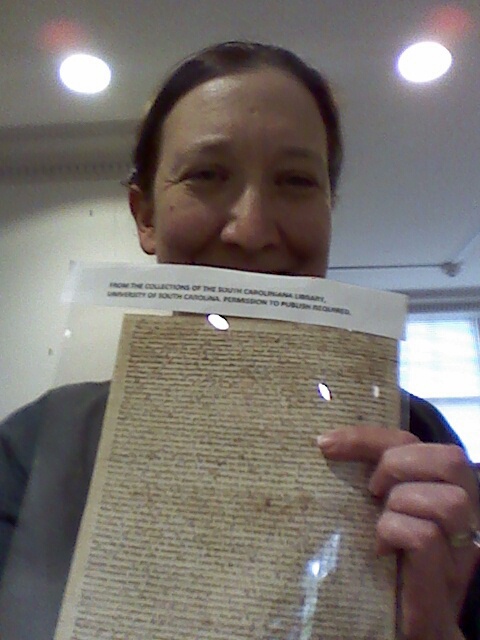
A kind reader, Bill Vinehout, found crucial details in the Viele Genealogy book that changed everything. Surprisingly, none of my original three candidates were correct! Thanks to Bill’s help, I was able to trace Mary’s lineage back multiple generations. One of my most exciting discoveries was her ancestor Louis THIBOU, a man so fascinating that I’ve written about him in this blog before. Holding a letter he wrote in 1683 with my own hands was a surreal experience.  (More info on the letter archived here.)

Figure 1 Me holding the letter my 7th great grandfather wrote!

Both Dorothy and Bill are gone now, but I am forever grateful for their generosity of spirit – and that of countless others.

How AI is Helping Break Brick Walls

Today, AI can play the role that Dorothy and Bill once did for me. I asked Claude, an AI assistant, for ways to help other researchers tackle brick walls. Here are some of its suggestions:

  • Create a step-by-step guide for solving brick wall cases.
  • Develop specialized guides for common genealogy challenges.
  • Compile overlooked records that may hold missing pieces.
  • Share success stories, breaking down the exact steps used.
  • Provide research log templates to help organize findings.

These are powerful ideas! If AI tools had been around in 2009, I could have used them to cross-reference sources, analyze surname variations, and uncover hidden patterns more quickly. While AI can’t replace human insight and experience, it can certainly speed up the process.

Paying It Forward

Both Dorothy and Bill have since passed away, but their generosity lives on through the research they contributed. Inspired by their kindness, I’ve committed to helping others by dedicating time each week to genealogical volunteer work. Whether it’s contributing to the New York GenWeb county site I coordinate or sharing research strategies, I want to give back.

Challenge for Readers

How can you pay it forward? Have you received help in your genealogy journey that you can pass on to others? Even small efforts—sharing records, answering queries, or mentoring new researchers—can make a difference. Many people have mentioned having breakthroughs thanks to FamilySearch AI indexing, for example, which we can learn and share about. Transkribus is posed to break down language barriers, which we can use to share information globally. Let’s continue the tradition of generosity in genealogy!

Summary and Next Steps

Breaking through genealogical brick walls often requires persistence, collaboration, and the right resources. My journey with Mary Catherine DENNY SMITH and Mary TIEBOUT proves that asking for help can lead to unexpected breakthroughs. AI tools now offer additional ways to assist in research, making discoveries more accessible than ever.

I’ve set a weekly reminder to contribute to genealogy projects and encourage you to do the same. How will you use your knowledge to help others? Let’s keep building connections, one discovery at a time.

Disclosure

This post was created by me and refined with AI assistance. While AI helps organize research, the storytelling and discoveries are my own.

Randolph’s House of Truax – Second Generation (Sara, Susanna, Rachel)

Part I – House of Truax – Etymology
Part II – House of Truax – Historical
Part III – House of Truax – Church records
Part IV – House of Truax – New Amsterdam records
Part V – House of Truax – First Generation
Part VI – House of Truax – Truax Genealogy (Land Records)
Part VI – House of Truax – “First” Generation – Maria
Part VII – House of Truax – Second Generation (Philip, Rachel, Sara)
Part VIII – House of Truax – Second Generation (Susanna, Rebecca, Abraham)
Part IX – Randolph’s House of Truax – Introduction
Part X – Randolph’s House of Truax – First Generation
Part XI – Randolph’s House of Truax – Second Generation (Philippe, Maria)
Part XII – Randolph’s House of Truax – Second Generation (Sara, Susanna, Rachel) – below

Tonight is ladies’ night, as we hit three more of Philippe’s daughters. Next up are Abraham and Rebecca. Then we make some corrections before resuming. In the meantime, please witness Sara, Susanna, and Rachel, as contrasts to Maria. Then, I have not much of the manuscript remaining, but for miscellaneous notes – but interesting ones.

Randolph’s House of Truax – Second Generation – Sara, Susanna, Rachel

Page 14

  1. Sara2 du Trieux, born in New Netherlands, as distinctly stated in her marriage banns. These banns were published on June 9, 1641, to “Isaacq de Foreest, j. m. Van Leyden”. Isaac de Forest was baptized at Leyden, Holland, July 10, 1616, and was a son of Jesse de Forest. The probable friendship of these two families in Holland has already been discussed. Isaac de Forest had immigrated with his brother Hendrick and his sister Rachel in the Rensselaerswyck, which sailed from Amsterdam on Sept. 25, 1636, and arrived at New Amsterdam March 5, 1637, after many delays. This family has been so fully written in “A Walloon Family in America” that it is only necessary to give an outline of it here. It would seem that Isaac de Forest had been a staunch friend of Maria Peeck through all her many vicissitudes. He was one of the witnesses at the baptism of her illegitimate child in 1640, a year before his marriage to her sister. He was the guardian of her minor children on her second marriage, and she constantly went to him for aid. He died in 1674. His widow, Sara du Trieux, or Sara Philips, as she was sometimes called, died on November 9, 1692.

Children: 14 (de Forest), 11 sons and 3 daughters, all baptised at New Amsterdam:-

  1. i. Jessen3, bap. Nov. 9, 1642. Named for his grandfather, Jesse de Forest. Died in infancy.
  2. ii. Susanna3, bap. Jan. 22, 1645; marriage banns to Pieter de Riemer, widower, Jan. 3, 1665.
  3. iii. Gerrit3, bap. May 21, 1646; died in infancy.
  4. iv. Gerrit3, bap. June 10, 1647; no further record.
  5. v. Marie3, bap. Jan. 10, 1649; died young.
  6. vi. Michael3, twin to Marie, bap. Jan. 10, 1649; died young.
  7. vii. Jan3, bap. March 27, 1650; marriage banns to Susannah, daughter of Nicholas Verlet, June 8, 1673.
  8. viii. Philip3, bap. July 28, 1652; married Tryntje, daughter of Hendrick Kip, Jan. 5, 1676.
  9. ix. Isaac3, bap. April 25, 1655; married Sept. 4, 1681 Lysbeth, daughter of Lawrence Van der Spiegel.

Page 15

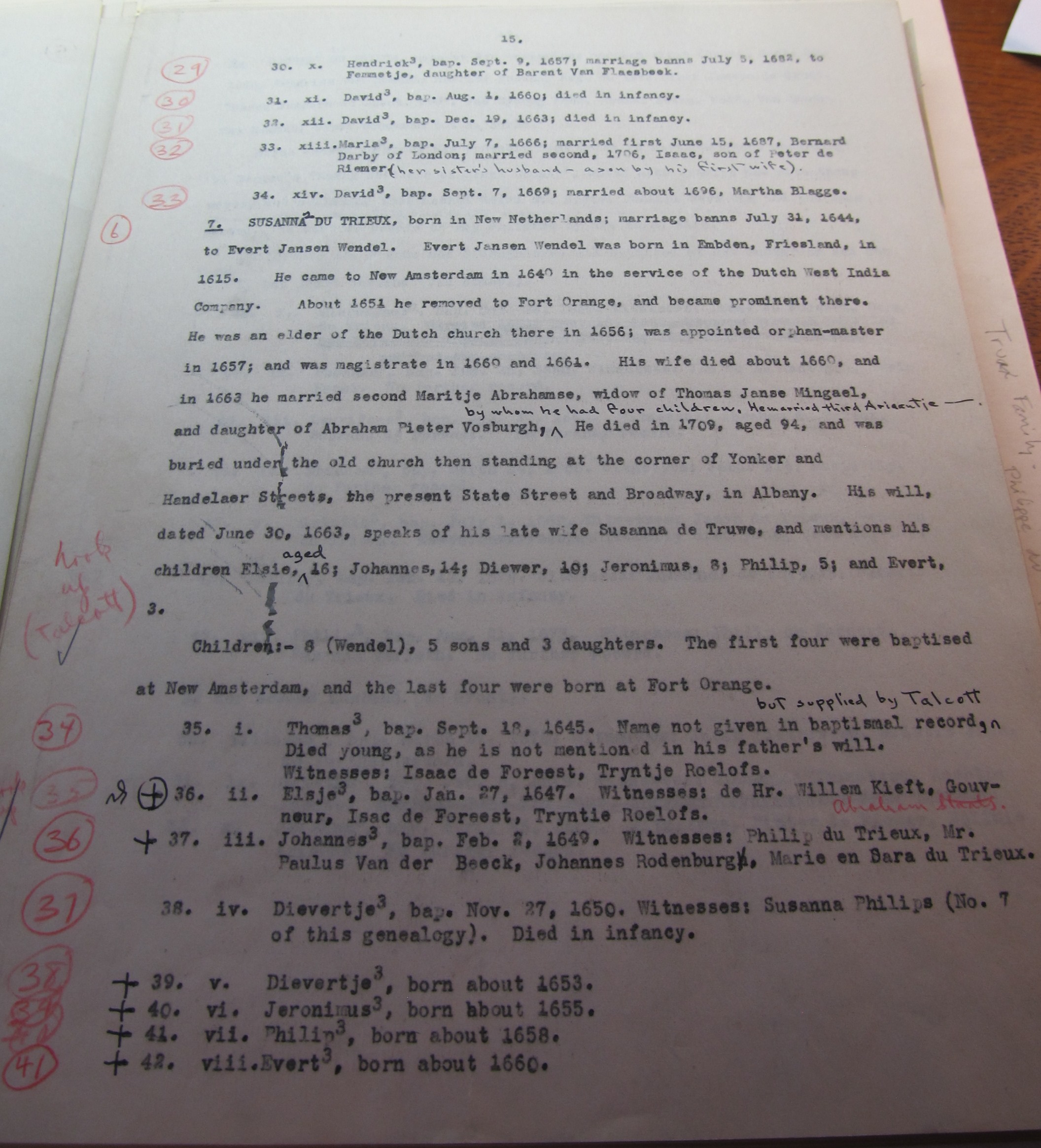
  1. x. Hendrick3, bap. Sept. 9, 1657; marriage banns July 5, 1682, to Femmetje, daughter of Barent Van Flaesbeek.
  2. xi. David3, bap. Aug. 1, 1660; died in infancy.
  3. xii. David3, bap. Dec. 19, 1663; died in infancy.
  4. xiii. Maria3, bap. July 7, 1666; married first June 15, 1687, Bernard Darby of London; married second, 1706, Isaac, son of Peter de Riemer (her sister’s husband – a son by his first wife).
  5. xiv. David3, bap. Sept. 7. 1669; married about 1696, Martha Blagge.
  1. Susanna2 du Trieux, born in New Netherlands; marriage banns July 31, 1644, to Evert Jansen Wendel. Evert Jansen Wendel was born in Embden, Friesland, in 1615. He came to New Amsterdam in 1640 in the service of the Dutch West India Company. About 1651 he removed to Fort Orange, and became prominent there. He was an elder of the Dutch church there in 1656; was appointed orphan-master in 1657; and was magistrate in 1660 and 1661. His wife died about 1660, and in 1663 he married second Maritje Abrahamse, widow of Thomas Janse Mingael, and daughter of Abraham Pieter Vosburgh, by whom he had four children. He married third Ariantje ___. He died in 1709, aged 94, and was buried under the old church then standing at the corner of Yonker and Handelaer Streets ,the present State Street and Broadway, in Albany. His will, dated June 30, 1663, speaks of his late wife Susanna de Truwe, and mentions his children Elsie, aged 16; Johannes, 14; Diewer, 10; Jeronimus, 8; Philip, 5; and Evert, 3.

Children:- 8 (Wendel), 5 sons and 3 daughters. The first four were baptised at New Amsterdam, and the last four were born at Fort Orange.

  1. i. Thomas3, bap. Sept. 18, 1645. Name not given in baptismal record, but supplied by Talcott. Died young, as he is not mentioned in his father’s will. Witnesnse: Isaac de Foreest, Tryntje Roelofs.
  2. ii. Elsje3, bap. Jan. 27, 1647. Witnesses: de Hr. Willem Kieft, Gouverneur, Isac de Foreest, Tryntie Roelofs. [Abraham Staats?]
  3. iii. Johannes3, bap. Feb. 2, 1649. Witnesses: Philip du Trieux, Mr. Paulus Van der Beeck, Johannes Rodenburg, Marie en Sara du Trieux.
  4. iv. Dievertje3, bap. Nov. 27, 1650. Witnesses: Susanna Philips (No. 7 of this genealogy). Died in infancy.
  5. v. Dievertje3, born about 1653.
  6. vi. Jeronimus, born about 1655.
  7. vii. Philip3, born about 1658.
  8. viii. Evert3, born about 1660.

Page 16

  1. Rachel2 du Trieux, born at New Amsterdam; married first (banns) Sept. 30, 1656, Hendrick Van Bommel; married second, Aug. 8, 1677, Dirck Jansen de Groot. “Dirck Janszen de Groot, Wedr. Van Wybrug Jans, Rachel Detru, Wede. Van Hendr. Van Bommel, beyde woonende tot N. Yorke.”

Dirck Jansen de Groot was probably from Groet in North Holland, according to Bergen’s “Early Settlers of Kings County”, which also credits him with three wives, not realizing that Rachel Detru and Rachel Philips were one and the same person. They were living on Marketfield Street in 1686, according to Dimine Selyn’s Record. We have no record of any children by his first wife.

Children:- 10, 7 sons and 3 daughters. All baptised at New Amsterdam and New York.

By her first husband (Van Bommel).

  1. i. Hieronymus3, bap. Oct 28, 1657. Witnesses: Isaac de Foreest, Sara du Trieux.
  2. ii. Susanna3, bap. Jan. 25, 1660. Witnesses: Jan de la Montagne, Marie Peeck. No further record.
  3. iii. Leurifaes3, bap. Aug. 20, 1662. Witnesse: Abraham du Trieux, Susanna de Foreest. No further record.
  4. iv. Abraham3, bap. March 14, 1666. Witnesses: Jacob Kip, Maria Kip. No further record.
  5. v. Grietie3, bap. July 1, 1668. Witnesses: Jacob du Trieux, Rebecca du Trieux. Probably died young (see No. 51).
  6. vi. Philip3, bap. Feb. 18, 1672. Witnesses: Johannes de Foreest, Rebecca du Trieux. Died in infancy.
  7. vii. Philip3, bap. Aug. 21, 1675. Witnesses: Philip de Foreest, Susanna Verleth. No further record.

By her second husband (de Groot).

  1. viii. Jan3, bap. March 27, 1678. Witnesses: Jacob Pieterszen, Grietie J__. No further record.
  2. ix. Grietie3, bap. Feb. 8, 1679. Witnesses: Johannes Thomaszen, Aech__ Jacobs.
  3. x. Abraham3, bap. April 26, 1682. Witnesses, Pieter de Riemer, Be___ Ariaens. No further record.

Source:

Truax, T. de T., House of Truax. “Bien faire et ne rien craindre.” Historical Genealogy of the Truax-Truex Families of the United States and Canada, descendants of Philippe de Trieux, the first Huguenot-Knickerbocker of that name who settled in New Netherland in 16__ and embracing his posterity to the present date a period of nearly three centuries of Twelve Generations. Manuscript. From New York Public Library, Call No. NYGB Coll-94 Box 1 and Box 2.http://catalog.nypl.org/record=b18209329~S1 . (Accessed 18Jul2015)

[An interesting history of this manuscript can be found at http://freepages.genealogy.rootsweb.ancestry.com/~truax/TheHouseofTruax.html]
IMG_1597 IMG_1598 IMG_1599

Randolph’s House of Truax – Second Generation (Philippe, Maria)

Part I – House of Truax – Etymology
Part II – House of Truax – Historical
Part III – House of Truax – Church records
Part IV – House of Truax – New Amsterdam records
Part V – House of Truax – First Generation
Part VI – House of Truax – Truax Genealogy (Land Records)
Part VI – House of Truax – “First” Generation – Maria
Part VII – House of Truax – Second Generation (Philip, Rachel, Sara)
Part VIII – House of Truax – Second Generation (Susanna, Rebecca, Abraham)
Part IX – Randolph’s House of Truax – Introduction
Part X – Randolph’s House of Truax – First Generation
Part XI – Randolph’s House of Truax – Second Generation (Philippe, Maria) – below

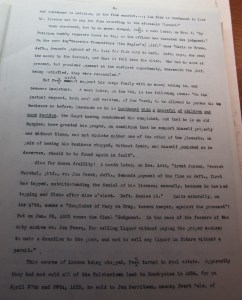
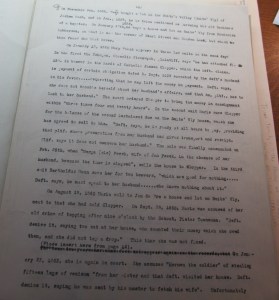
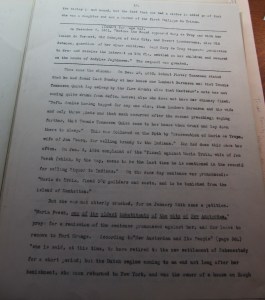
Not to give Philippe short shrift! But Maria is just so darn much fun. She had an illegitimate child (Alida; not mentioned here), possibly a second (Aernoudt, my ancestor, took Cornelis Viele’s patronymic, but there are real doubts), and was in and out of court so much she probably had a chair reserved for her! I’m trying to work through in my head, how a woman whose father was possibly killed by “Indians” was constantly serving alcohol to them. When people tried to sue her for her husband’s debts, she said, they’re his, not mine, I don’t know his business. Other times she was frequently doing business in his name. Toward the end, I was wincing through her many chastisements and punishments, up until she was banished from Manhattan. It is thought she went to Schenectady and I take comfort in the fact that she likely died long before the massacre in 1690.

Our homework is this: Who were the “nine children” in footnote 3? 🙂

So without further adieu, my very own black sheep “party monster” (Thanks, Leighton!) ancestor Maria and her brother Philippe!

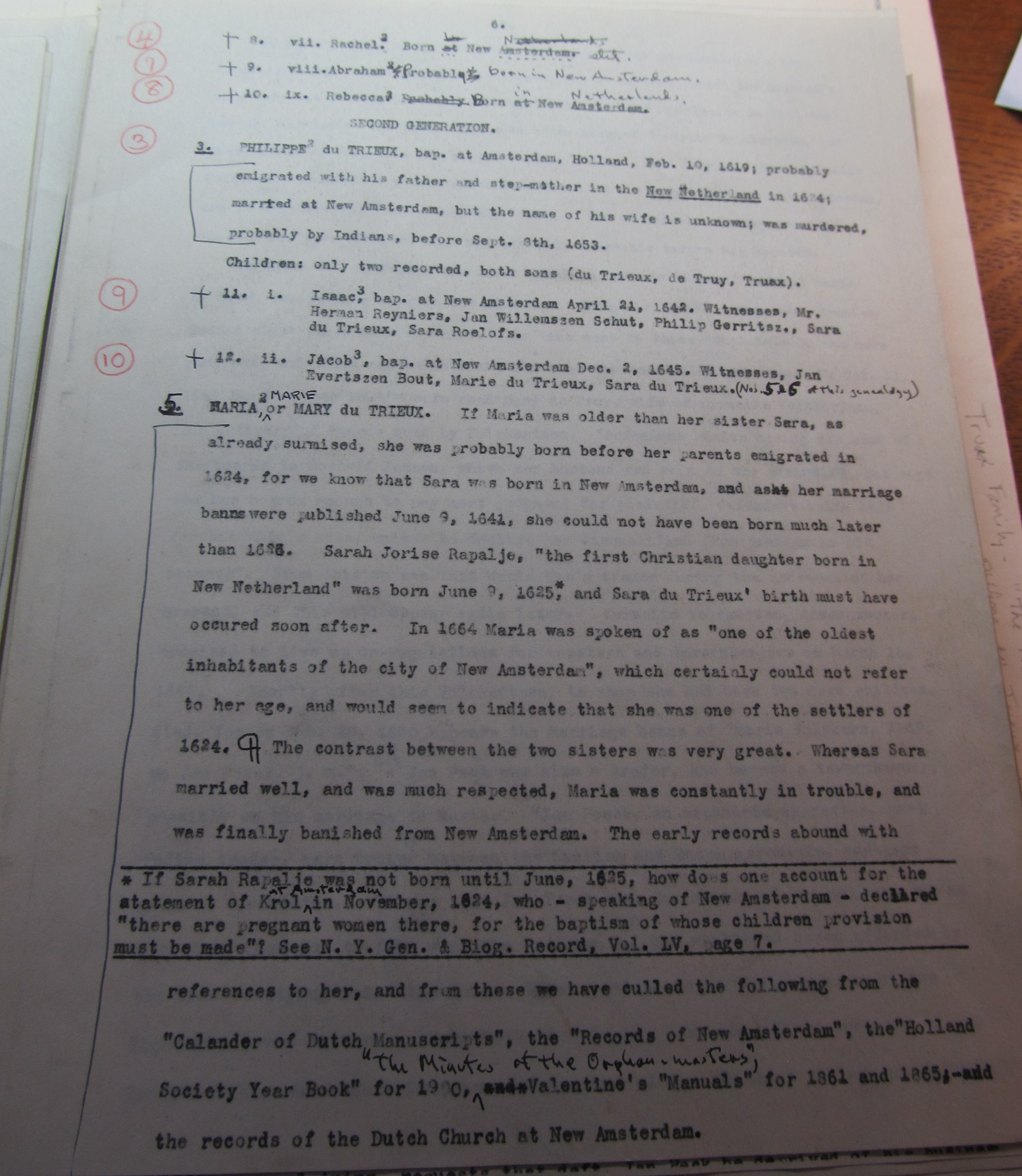
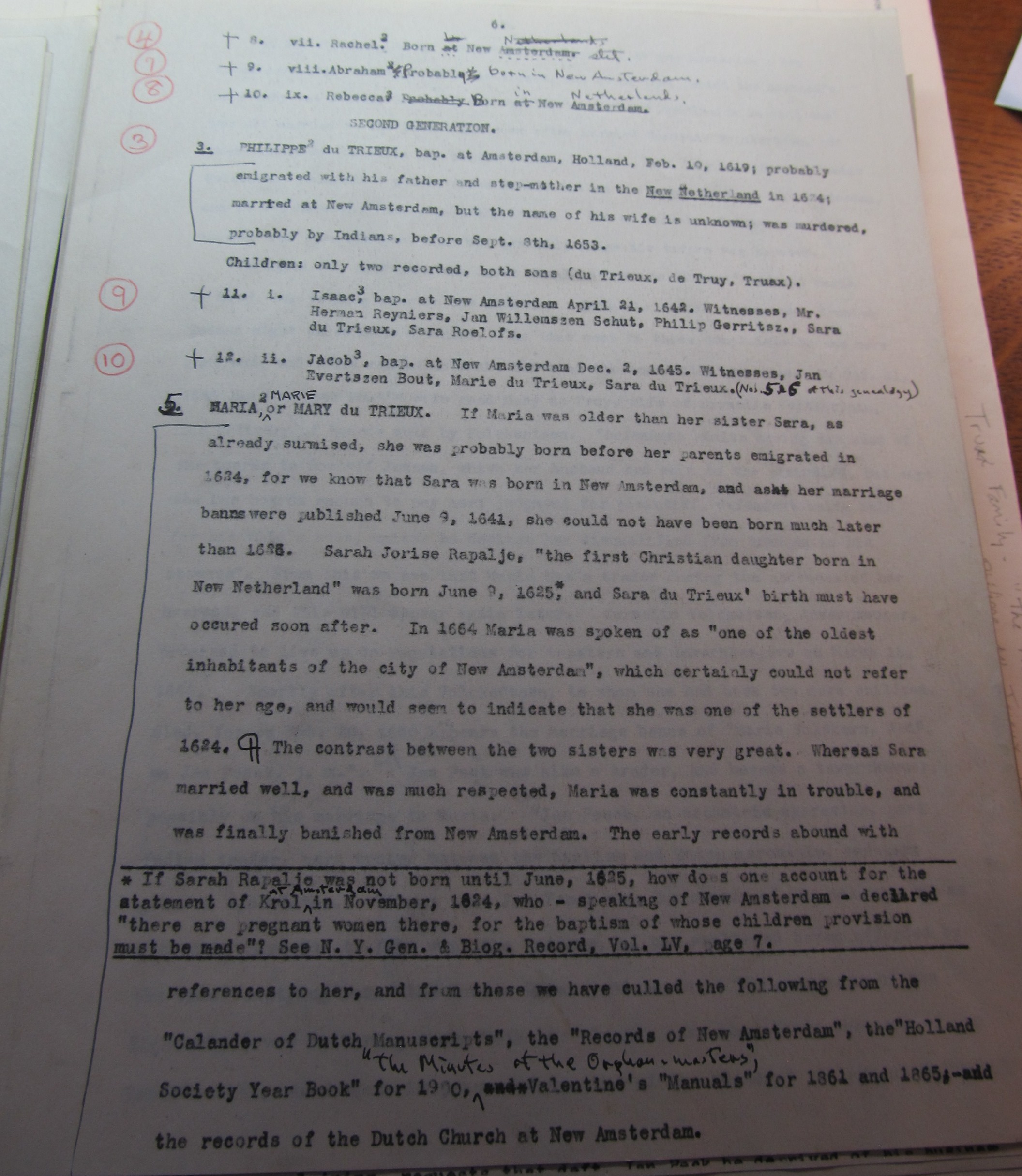
  1. Philippe2 du Trieux, bap. at Amsterdam, Holland, Feb. 10, 1619; probably emigrated with his father and step-mother in the New Netherland in 1624; married at New Amsterdam, but the wife of his name is unknown; was murdered, probably by Indians, before Sept. 8th, 1653.

Children: only two recorded, both sons (du Trieux, de Truy, Truax).

  1. i. Isaac3, bap. at New Amsterdam April 21, 1642. Witnesses, Mr. Herman Reyniers, Jan Willemszen Schut, Philip Gerritsz., Sara du Trieux, Sara Roelofs.
  2. ii. Jacob3, bap. at new Amsterdam Dec. 2, 1645. Witnesses, Jan Evertszen Bout, Marie du Trieux, Sara du Trieux. (No’s 5&6 of this genealogy)
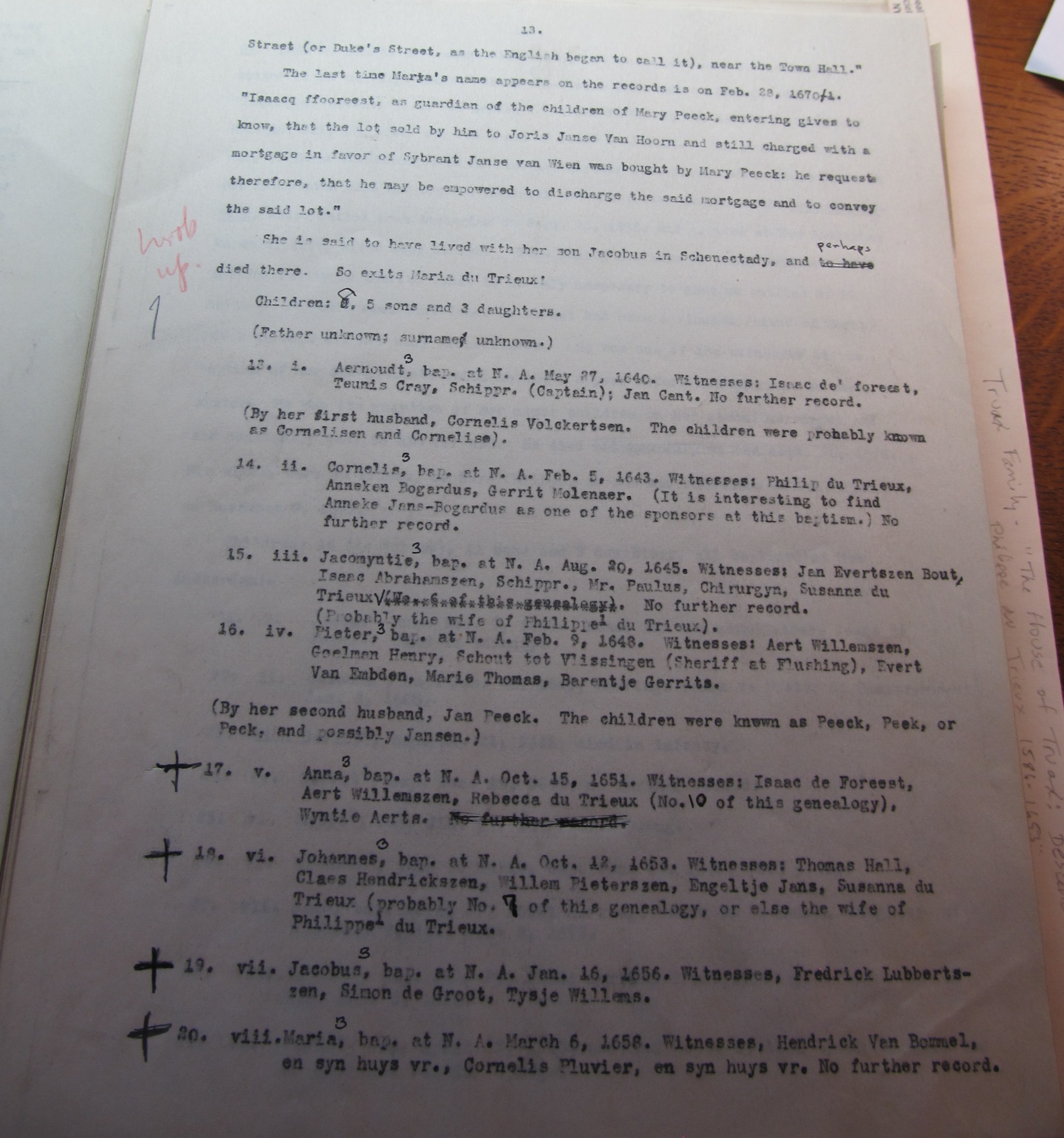
  1. Maria2, Marie, or Mary du Trieux. If Maria was older than her sister Sara, as already surmised, she was probably born just before her parents emigrated in 1624, for we know that Sara was born in New Amsterdam, and her marriage banns were published June 9, 1641, she could not have been born much later than 1625. Sarah Jorise Rapalje, “the first Christian daughter born in New Netherland” was born June 9, 1625 [1], and Sara du Trieux’ birth must have occurred soon after. In 1664 Maria was spoken of as “one of the oldest inhabitants of the city of new Amsterdam”, which certainly could not refer to her age, and would seem to indicate that she was one of the settlers of 1624.

The contrast between the two sisters was very great. Whereas Sara married well, and was much respected, Maria was constantly in trouble, and was finally banished from New Amsterdam. The early records abound with references to her, and from these we have culled the following from the “Calendar of Dutch Manuscripts”, the “Records of New Amsterdam”, the “Holland Society Year Book” for 1910, “The Minutes of the Orphan-masters”, Valentine’s “Manuals” for 1861 and 1865; – and the records of the Dutch Church at New Amsterdam.

Page 7

On May 27, 1640, Marie du Trieux had baptised at New Amsterdam a son named Aernoudt. No husband is mentioned, and as at that period the husband’s name only was stated, omitting the wife’s, the natural conclusion is that she was not married at the time. She soon after married Cornelis Volckertsen, and their first son Cornelis was baptised Feb. 5, 1643. On July 13, 1643, Cornelis Volckersz. received a patent for a double lot on the Great Highway, New Amsterdam, and it was here that the family probably lived. And as Cornelis Volckertsen was a tapster and tavernkeeper, this was probably where his tavern was located.

On April 26, 1646 came the first complaint of the “Fiscal” against Maria de Truy, for selling beer to the Indians. This was a real crime, as a drunken Indian might cause much mischief. As time went on these complaints became more numerous, and there can be no doubt but that the accusation was true. On Oct. 11, 1646 Jan Evertsen Bout’s wife sued Mary de Truy, wife of Cornelis Volckertsen, for delivery of boards sold by Volckertsen. “Defendant admits having disposed of the boards to Roeloff Jansen, which her husband had sold to the plaintiff, but says she has boards enough to pay her; judgment for plaintiff, defendant being held for his wife’s acts, unless he declare her disqualified from trading in his absence”. From this we see that Maria was a trader during the absences of her husband, and this will appear again later. Cornelis Volckersen, tavernkeeper, promised to live up to regulations for tapsters and tavernkeepers on March 16, 1643. Shortly after this Volckertsen, to whom she had born two more children, died, for on Feb. 29, 1650 appears the marriage banns of “Marie Volckers, Wede. en Jan Peeck, j. m.”.

Jan Peeck was also a trader, and became a tavernkeeper, possibly on his marriage to Maria. “Jan Peeck, an eccentric character, part Indian trader, part broker between the English and Dutch merchants, and part general speculator. It was this Jan Peeck who, by reason of his making use, as a trading post for traffic with the Indians, of the sheltered haven afforded by the creek emptying into the Hudson River just south of the mountains of the Highlands (even wintering there with his sloop), gave the stream the name of Jan Peeck’s Kill, which name is preserved in that of the adjacent village of Peeckskill

Page 8

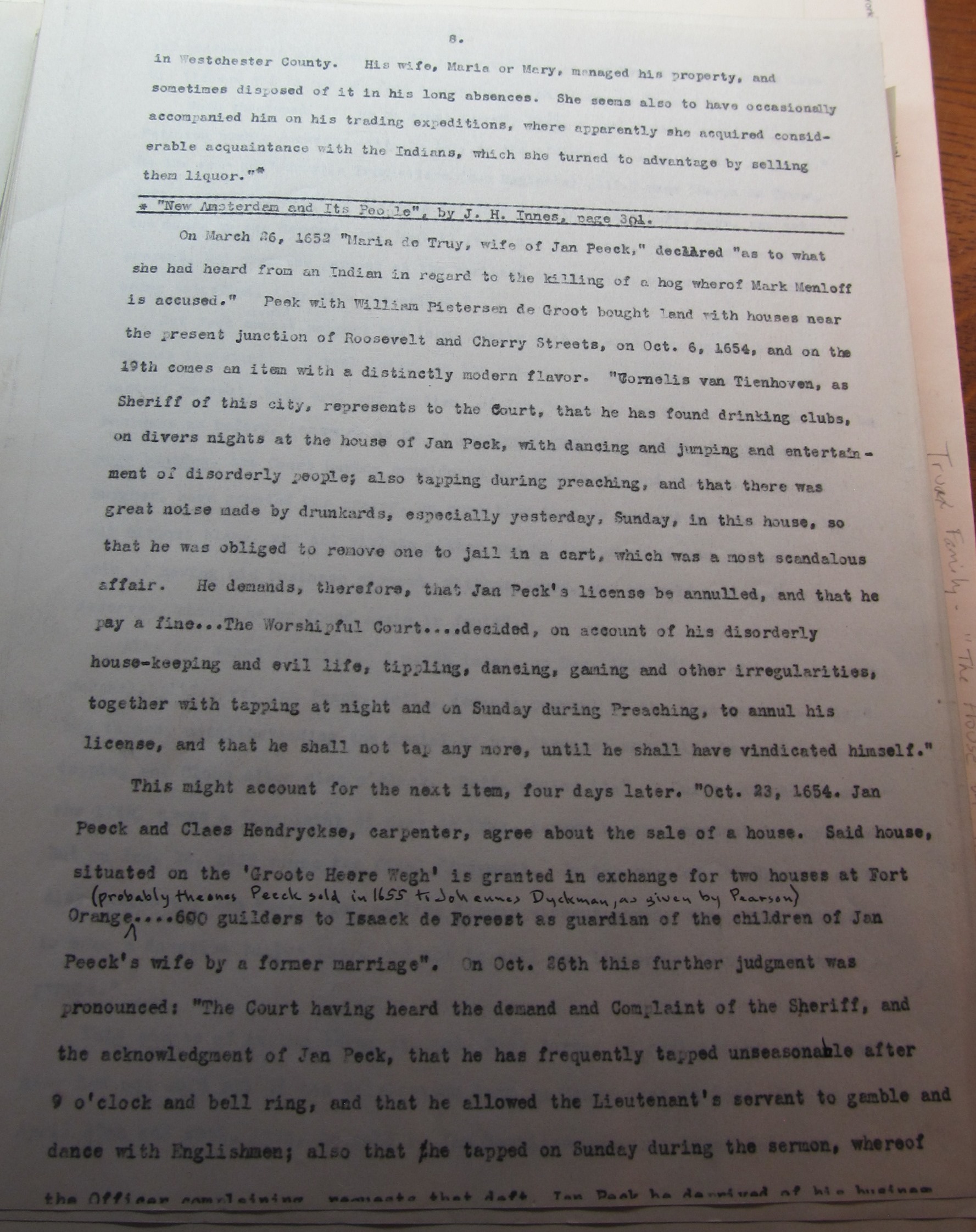
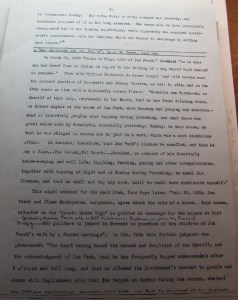
in Westchester County. His wife, Maria or Mary, managed his property, and sometimes disposed of it in his long absences. She seems also to have occasionally accompanied him on his trading expeditions, where apparently she acquired considerable acquaintance with the Indians, which she turned to advantage by selling them liquor. [2]

On March 26, 1652 “Maria de Truy, wife of Jan Peeck,” declared “as to what she had heard from an Indian in regard to the killing of a hog whereof Mark Menloff is accused.” Peek with William Pietersen de Groot bought land with houses near the present junction of Roosevelt and Cherry Streets, on Oct. 6, 1654, and on the 19th comes an item with a distinctly modern flavor. “Cornelis van Tienhoven, as Sheriff of this city, represents to the Court, that he has found drinking clubs, on divers nights at the house of Jan Peck, with dancing and jumping and entertainment of disorderly people; also tapping during preaching, and that there was great noise made by drunkards, especially yesterday, Sunday, in this house, so that he was obliged to remove one to jail in a cart, which was a most scandalous affair. He demands, therefore, that Jan Peck’s license be annulled, and that he pay a fine… The Worshipful court… decided, on account of his disorderly house-keeping and evil life, tippling, dancing, gaming and other irregularities, together with tapping at night and on Sunday during Preaching, to annul his license, and that he shall not tap any more, until he shall have vindicated himself.”

This might account for the next item, four days later. “Oct. 23, 1654. Jan Peeck and Claes Hendryckse, carpenter, agree about the sale of a house. Said house, situated on the ‘Groote Heere Wegh’ is granted in exchange for two houses at fort Orange (probably the ones Peeck sold in 1655 to Johannes Dyckman, as given by Pearson)… 600 guilders to Isaack de Foreest as guardian of the children of Jan Peeck’s wife by a former marriage”. On Oct. 26 this further judgment was pronounced: “The Court having hear the demand and Complaint of the Sheriff, and the acknowledgment of Jan Peck, that he has frequently tapped unseasonable after 9 o’clock and bell ring, and that he allowed the Lieutenant’s servant to gamble and dance with Englishmen; also that he tapped on Sunday during the sermon, whereof the Officer complaining warrants that deft. Jan Peck be deprived of his business

Page 9

and condemned in addition, in the fine enacted…; Jan Peck is condemned to lose his license and to pay the fine according to the aforesaid Placard.”

Much chastened, but by no means downed, Peeck, a week later, on Nov. 2, “by Petition humbly requests leave to tap, as the officer has executed the judgment.” On the same day “Marretie Trompetters (the Bugler’s) pltf.” Sues “Maria de Truwe, deft., demands payment of fl. 3.11 for fish he sold to deft. Deft. says, she sent the money by the Servant, and that it fell into the ditch. She has no more at present, but promises payment at the earliest opportunity, wherewith the pltf. being satisfied, they were reconciled.”

But Peeck could not support his large family with no money coming in, and becomes insistent. A week later, on the 9th, is the following item:- “On the instant request, both oral and written, of Jan Peeck, to be allowed to pursue his business as before, inasmuch as he is burthened with a houseful of children and more besides, the Court having considered his complaint, and that he is an old Burgher, have granted his prayer, on condition that he comport himself properly and without blame, and not violate either one of the other of the placards, on pain of having his business stopped, without favor, and himself punished as he deserves, should he be found again in fault”.

Alas for human frailty! A month later, on Dec. 14th, “Arent Jansen, Provost Marshal, pltf., vs. Jan Peeck, deft., demands payment of the fine as deft., first has tapped, notwithstanding the denial of his license; secondly, because he has had tapping and Clubs after nine o’clock. Deft. denies it.” Quite naturally, on the 17th, comes a “Complaint of Mary de Truy, tavern keeper, against the provost”! But on Jan. 26, 1655 comes the final “Judgment. In the case of the farmers of the city excise vs. Jan Peecq, for selling liquor without paying the proper excise; to make a donation to the poor, and not to sell any liquor in future without a permit.”

This source of income being stopped, Peeck turned to real estate. Apparently they had not sold all of the Volckertsen land to Hendryckse in 1654, for on April 20th and 29th, 1655, he sold to Jan Gerritsen, mason; Evert Pels, of

Page 10

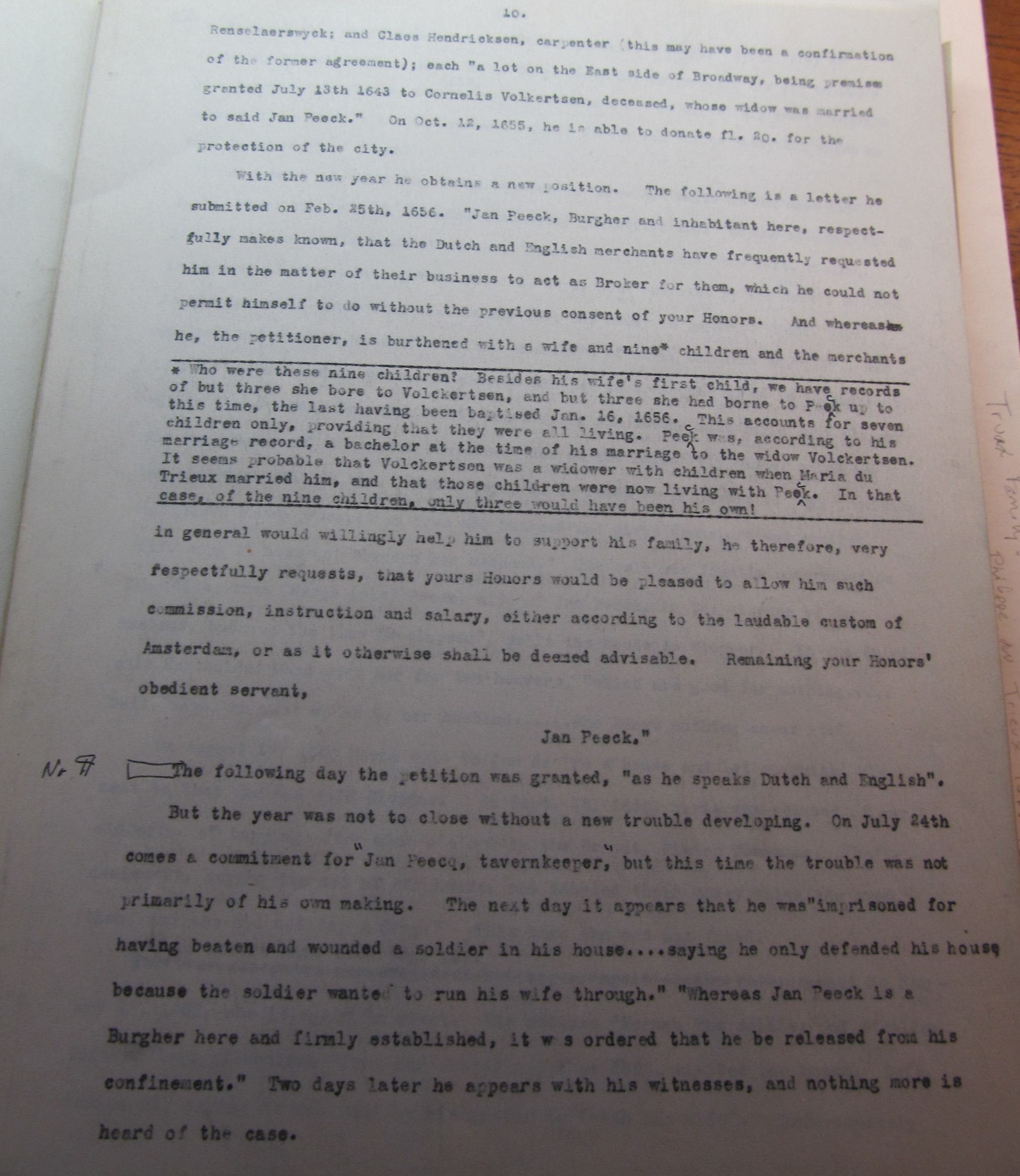
Renselaerswyck; and Claes Hendricksen, carpenter (this may have been a confirmation of the former agreement); each “a lot on the East side of Broadway, being premises granted July 13, 1643 to Cornelis Volckertsen, deceased, whose widow was married to said Jan Peeck.” On Oct. 12, 1655, he is able to donate fl. 20. For the protection of the city.

With the new year he obtains a new position. The following is a letter he submitted on Feb. 25th, 1656. “Jan Peeck, Burgher and inhabitant here, respectfully makes known, that the Dutch and English merchants have frequently requested him in the matter of their business to act as Broker for them, which he could not permit himself to do without the previous consent of your Honors. And whereas he, the petitioner, is burthened with a wife and nine children [3] and the merchants in general would willingly help him to support his family, he therefore, very respectfully requests, that yours Honors would be pleased to allow him such commission, instruction and salary, either according to the laudable custom of Amsterdam, or as it otherwise shall be deemed advisable. Remaining your Honors’ obedient servant,

Jan Peeck.”

The following day the petition was granted, “as he speaks Dutch and English”.

But the year was not to close without a new trouble developing. On July 24th comes a commitment for “Jan Peecq, tavernkeeper,” but this time the trouble was not primarily of his own making. The next day it appears that he was “imprisoned for having beaten and wounded a soldier in his house… saying he only defended his house because the soldier wanted to run his wife through.” “Whereas Jan Peeck is a Burgher here and firmly established, it was ordered that he be released from his confinement.” Two days later he appears with his witnesses, and nothing more is heard of the case.

Page 11

On November 9th, 1656, Peeck bought a lot in the Smith’s Valley (Smit’s Vly) of Jochem Koch [blogger: isn’t that where Philippe had property?], and in Jan., 1657, he is twice mentioned as pursuing his old business of a tapster. On January 19[?]th, 1658, he buys a house and lot on Smit’s Vly from Frederick Lubbersen, on what is now the corner of Pearl Street and Maiden Lane, but which then faced the East River.

On January 13th, 1660 Mary Peeck appears in three law suits on the same day! In the first the Schepen Cornelis Steenwyck, plaintiff, says “he has attached fl. 150. in beaver in the hands of Cornelis Jansen Clopper, which the deft. claims in payment of certain obligation dated 3. Sept. 1658 executed by the deft’s husband in his favor… requesting that he may lift the money in payment. Deft. says, she does not trouble herself about her husband’s affairs, and that he, pltf., has to look to her husband.” The court ordered Clopper to bring the money in consignment within “three times four and twenty hours”.  In the second suit Maria sues Clopper for the balance of the second installment due on the Smits’ Vly house, which she has agreed to sell to him. “Deft. says, he is ready at all hours to pay, providing that pltf. shows procuration from her husband and gives transport and receipt. Pltf. says it does not concern her husband.” The sale was finally consummated on Feb. 25th, when “Merga (sic) Peeck, wife of Jan Peeck, in the absence of her husband, because the time is elapsed”, sells the house to Clopper. In the third suit Bartholdus Mann sues her for two beavers, “which are good for nothing… Deft. says, he must speak to her husband… she knows nothing about it.”

On August 19, 1660 Maria sold to Jan de Pre a house and lot on Smits’ Vly, next to that she had sold Clopper. On Sept. 28, 1660, Maria was accused of her old crime of tapping after nine o’clock by the Schout, Pieter Tonneman. “Deft. denies it, saying two sat at her house, who counted their money which she owed them, and she did not tap a drop.” This time she was not fined.

On December 8, 1661, “Before the Board appeared Mary de Truy and with her Isaack de Foreest, Old Schepen of this City, and Govert Loockermans, also Old Schepen, guardian of her minor children. Said Mary de Truy requests permission to draw and receive the interest on 500 fl., settled on her children and secured on the house of Andries Joghimsen.” The request was granted.

On January 23, 1663, she is again in court. She accuses “Hermen the soldier” of stealing fifteen legs of venison “from her sister and that deft. visited her house. Deft. denies it, saying he was sent by his master to fetch his wife”. Unfortunately

Page 12

the sister is not named, but the fact that she had a sister is added proof that she was a daughter and not a sister of the first Philippe du Trieux.

Then came the climax. On Dec. 18, 1663, Schout Pieter Tonneman stated that he had found last Sunday at her house one Lambert Barensen and that Teunis Tomassen Quick lay asleep by the fire drunk; also that Maatseuw’s mate was met coming quite drunk from defts. house; also she does not have her chimney fixed. “Deft. denies having tapped for any one else, than Lambert Barensen and his wife and only three pints and that such occurred after the second preaching; saying further, that Teunis Tomassen Quick came to her house when drunk and lay down there to sleep.” This was followed on the 30th by “Prosecution of Maria de Truy, wife of Jan Peecq, for selling brandy to the Indians.” She had done this once too often. On Jan. 3, 1664 complaint of the “Fiscal against Maria Truix, wife of Jan Peeck (which, by the way, seems to be the last time he is mentioned in the records) for selling liquor to the Indians.” On the same day sentence was pronounced:- “Maria de Truix, fined 500 guilders and costs, and to be banished from the island of Manhattan.”

But she was not utterly crushed, for on January 24th came a petition. “Maria Peeck, one of the oldest inhabitants of the city of New Amsterdam,” prays for a remission of the sentence pronounced against her, and for leave to remove to Fort Orange. According to “New Amsterdam and Its People” (page 301) “She is said, at this time, to have retired to the new settlement of Schenectady for a short period; but the Dutch regime coming to an end not long after her banishment, she soon returned to New York, and was the owner of a house on Hoogh

Page 13

Straet (or Duke’s Street, as the English began to call it), near the Town Hall.”

The last time Maria’s name appears on the records is on Feb. 28, 1670/1. “Isaacq ffooreest, as guardian of the children of Mary Peeck, entering gives to know, that the lot sold by him to Joris Janse Van Hoorn and still charged with a mortgage in favor of Sybrant Janse van Wien was bought by Mary Peeck: he requests therefore, that he may be empowered to discharge the said mortgage and to convey the said lot.”

She is said to have lived with her son Jacobus in Schenectady, and perhaps died there. So exits Maria du Trieux!

Children: 8, 5 sons and 3 daughters.

(Father unknown; surname unknown.)

  1. i. Aernoudt3, bap. at N. A. May 27, 1640. Witnesses: Isaac de foreest, Teunis Cray, Schippr. (Captain); Jan Cant. No further record.

(By her first husband, Cornelis Volckertsen. The children were probably known as Cornelisen and Cornelise.)

  1. ii. Cornelis3, bap. at N. A. Feb. 5, 1643. Witnesses: Philip du Trieux, Anneken Bogardus, Gerrit Molenaer. (It is interesting to find Anneke Jans-Bogardus as one of the sponsors at this baptism.) No further record.
  2. iii. Jacomyntie3, bap. at N. A. Aug. 20, 1645. Witnesses: Jan Evertszen Bout, Isaac Abrahamszen, Schippr., Mr. Paulus, Chirurgyn, Susanna du Trieux (Probably the wife of Philippe1 du Trieux). No further record.
  3. iv. Pieter3, bap. at N. A. Feb. 9, 1648. Witnesses: Aert Willemszen, Goelman Henry, Schout tot Vlissingen (Sheriff at Flushing), eVert Van Embden, Marie Thomas, Barentje Gerrits.

By her second husband, Jan Peeck. The children were known as Peeck, Peek, or Peck, and possibly Jansen.)

  1. v. Anna3, bap. at N. A. Oct 15, 1651. Witnesses: Isaac de Foreest, Aert Willemszen, Rebecca du Trieux (No. 10 of this genealogy), Wyntie Aerts.
  2. vi. Johannes3, bap. at N. An. Oct 12, 1653. Witnesses: Thomas Hall, Claes Hendrickszen, Willem Pieterszen, Engeltje Jans, Susanna du Trieux (probably No. 7 of this genealogy, or else the wife of Philippe1 du Trieux.)
  3. vii. Jacobus3, bap. at N. A. Jan. 16, 1656. Witnesses, Frederick Lubbertszen, Simon de Groot, Tysje Willems.
  4. viii. Maria3, bap. at N. A. March 6, 1658. Witnesses, Hendrick Van Bommel, en syn huys vr., Cornelis Pluvier, en syn huys vr. No further record.

[1] If Sarah Rapalje was not born until June, 1625, how does one account for the statement of Krol at Amsterdam in November, 1624, who – speaking of New Amsterdam – declared “there are pregnant women there, for the baptism of whose children provision must be made”? See N. Y. Gen. & Biog. Record, Vol. LV, page 7.

[2] “New Amsterdam and Its People”, by J. H. Innes, page 301.

[3] Who were these nine children? Besides his wife’s first child, we have records of but three she bore to Volckertsen, and but three she had borne to Peeck up to this time, the last having been baptised Jan. 16, 1656. This accounts for seven children only, providing that they were all living. Peeck was, according to his marriage record, a bachelor at the time of his marriage to the widow Volckertsen. It seems probable that Volckertsen was a widower with children when Maria du Trieux married him, and that those children were now living with Peeck. In that case, of the nine children, only three would have been his own!

Source:

Truax, T. de T., House of Truax. “Bien faire et ne rien craindre.” Historical Genealogy of the Truax-Truex Families of the United States and Canada, descendants of Philippe de Trieux, the first Huguenot-Knickerbocker of that name who settled in New Netherland in 16__ and embracing his posterity to the present date a period of nearly three centuries of Twelve Generations. Manuscript. From New York Public Library, Call No. NYGB Coll-94 Box 1 and Box 2.http://catalog.nypl.org/record=b18209329~S1 . (Accessed 18Jul2015)

[An interesting history of this manuscript can be found at http://freepages.genealogy.rootsweb.ancestry.com/~truax/TheHouseofTruax.html]

IMG_1588IMG_1589IMG_1590IMG_1591IMG_1592IMG_1593IMG_1594IMG_1595IMG_1596

Randolph’s House of Truax – First Generation

Part I – House of Truax – Etymology
Part II – House of Truax – Historical
Part III – House of Truax – Church records
Part IV – House of Truax – New Amsterdam records
Part V – House of Truax – First Generation
Part VI – House of Truax – Truax Genealogy (Land Records)
Part VI – House of Truax – “First” Generation – Maria
Part VII – House of Truax – Second Generation (Philip, Rachel, Sara)
Part VIII – House of Truax – Second Generation (Susanna, Rebecca, Abraham)
Part IX – Randolph’s House of Truax – Introduction
Part X – Randolph’s House of Truax – First Generation – below

This is entrancing! I was typing away past my bedtime – First Generation is short – but a great summary. Second generation treats Maria (my ancestor) thoroughly! That is to come after this one. Hope you enjoy this summary of Philippe and his two wives.

Page 5

First Generation

  1. Philippe1 du Trieux, born about 1586; married first about 1615 or earlier Jacqueline Noiret; married second about 1621 Susanna du Chesne; emigrated to New Amsterdam probably in 1624 on the New Netherland; died between 1649 and 1653. Children; 9 (du Trieux, de Truy), 3 sons and 6 daughters.

By his first wife:

  1. i. Philippe2, bap. at Amsterdam, Holland, Jan. 3, 1616. Probably died in infancy, as a second child of this name was bap. in 1619.
  2. ii. Philippe2, bap. at Amsterdam, Holland, Feb. 10, 1619.
  3. iii. Madeline2, bap. at Amsterdam, Holland, Feb. 9, 1620. Probably died in infancy.

By his second wife:

  1. iv. Maria2 or Mary. Probably born in Holland. From the fact that her name appears first on both occasions when she and her sister Sara act as sponsors at Baptisms in the Dutch Church, New Amsterdam, on Dec. 2, 1645 and Feb. 2, 1649, it would seem that she was the older of the two sisters. It has been suggested that Maria was a sister of Philippe1 du Trieux, but as she began bearing children in 1640, and as she constantly appeared as sponsor at the baptisms of her nephew and nieces, this seems most improbable. [blogger’s note: She was indeed a daughter of Philippe, but of his first wife, bp. Amsterdam 05 Apr 1617 [1]]
  2. v. Sara2. Born in New Netherlands.
  3. vi. Susanna2. Born in New Netherlands.

Page 6

  1. vii. Rachel2. Born [crossed off]
  2. viii. Abraham2. Probablyh born in New Amsterdam.
  3. ix. Rebecca2. Born in New Netherlands.

[1] Child:  Marijie; Parents, Phelipe du Trier, Jacquemine Nouret; 5 Apr 1617;
Oude Waalse kerk;  DTB 130/45  (Waalse Reformed)
tesmoing Francois du Pire et Jacque Corteman; maryne (maraine)  Jenne Touret (Noiret?)

Source:

Truax, T. de T., House of Truax. “Bien faire et ne rien craindre.” Historical Genealogy of the Truax-Truex Families of the United States and Canada, descendants of Philippe de Trieux, the first Huguenot-Knickerbocker of that name who settled in New Netherland in 16__ and embracing his posterity to the present date a period of nearly three centuries of Twelve Generations. Manuscript. From New York Public Library, Call No. NYGB Coll-94 Box 1 and Box 2.http://catalog.nypl.org/record=b18209329~S1 . (Accessed 18Jul2015)

[An interesting history of this manuscript can be found at http://freepages.genealogy.rootsweb.ancestry.com/~truax/TheHouseofTruax.html]
IMG_1588IMG_1589

Randolph’s House of Truax – Introduction

Part I – House of Truax – Etymology
Part II – House of Truax – Historical
Part III – House of Truax – Church records
Part IV – House of Truax – New Amsterdam records
Part V – House of Truax – First Generation
Part VI – House of Truax – Truax Genealogy (Land Records)
Part VI – House of Truax – “First” Generation – Maria
Part VII – House of Truax – Second Generation (Philip, Rachel, Sara)
Part VIII – House of Truax – Second Generation (Susanna, Rebecca, Abraham)

Part IX – Randolph’s House of Truax – Introduction – below

Randolph’s House of Truax – Introduction

Here starts a typed manuscript. It appears the project was picked up by Howard S. F. Randolph after Theodore de T. Truax’s death, apparently in preparation for printing in the New York Genealogical and Biographical Record. (The reader can reference this article in NYG&BR 57:208, 57:336, 58:76, 58:111, 58:267, 58:326, 59:17, 59:182, 59:284, 59:386.) This was, incidentally, around the same time Mrs. Thura Truax Hires took up her project.

It is very important to note the findings on a) Philippe’s parents, and b) Philippe’s date of death.

Page: Title

The

House of Truax

Descendants of Philippe du Trieux

1586-1653

Edited by

Howard S. F. Randolph

from a manuscript by

T. de T. Truax

In the possession of

The New York Genealogical and Biographical Society

1926

First page

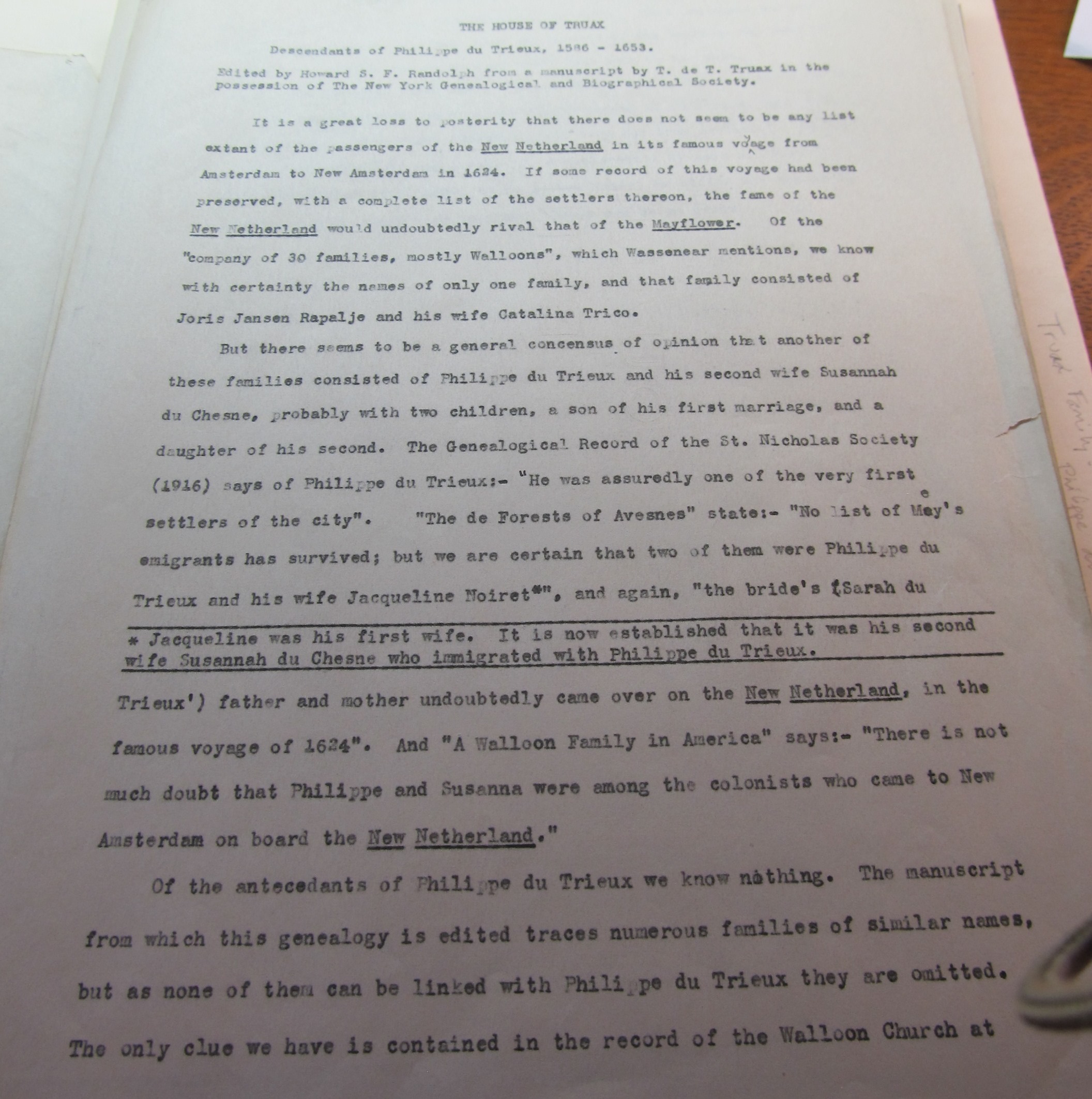
The House of Truax

Descendants of Philippe du Trieux, 1586-1653.

Edited by Howard S. F. Randolph from a manuscript by T. de T. Truax in the possession of the New York Genealogical and Biographical Society.

It is a great loss to posterity that there does not seem to be any list extant of the passengers of the New Netherland in its famous voyage from Amsterdam to New Amsterdam in 1624. If some record of this voyage had been preserved, with a complete list of the settlers thereon, the fame of the New Netherland would undoubtedly rival that of the Mayflower. Of the “company of 30 families, mostly Walloons” which Wassenaer mentions, we know with certainty the names of only one family, and that family consisted of Joris Jansen Rapalje and his wife Catalina Trico.

But there seems to be a general concensus of opinion that another of these families consisted of Philippe du Trieux and his second wife Susannah du Chesne, probably with two children, a son of his first marriage, and a daughter of his second [blogger’s note: apparently inaccurate; for example, Maria of his first marriage clearly came with him]. The Genealogical Record of the St. Nicholas Society (1916) says of Philippe du Trieux:- “He was assuredly one of the very first settlers of the city”. “The de Forests of Avesnes” state:- “No list of Mey’s emigrants has survived; but we are certain that two of them were Philippe du Trieux and his wife Jacqueline Noiret”[1], and again, “the bride’s (Sara du Trieux’) father and mother undoubtedly came over on the New Netherland, in the famous voyage of 1624”. And “A Walloon Family in America” says:- “There is not much doubt that Philippe and Susanna were among the colonists who came to New Amsterdam on board the New Netherland.”

Of the antecedants of Philippe du Trieux we know nothing. The manuscript from which this genealogy is edited traces numerous families of similar names, but as none of them can be linked with Philippe du Trieux they are omitted. The only clue we have is contained in the record of the Walloon Church at

Page 1a

Leyden:- “April 22, 1601. Jaquemyne, widow of Philippe du Trieu, received into Church of Leyden, by letter from Norwich, England.” This Jaquemyne and her deceased husband might well have been the parents of the Philippe who came to New Amsterdam in 1624, but we have no proof that such is the case. [blogger: emphasis mine]

Nor do we know his birthplace. A possible clue is contained in “A Walloon Family in America”, which, quoting the church record at Amsterdam, says Philippe was a worsted-dyer from Robez (Roubaix), not very far from Avesnes.” We do, however, know the date of his birth. In a declaration he made at “Fort Amsterdam” on August 15, 1639, to be quoted later, he states his age as 53 years; so he was probably born in 1586. There can be no doubt

Page 2

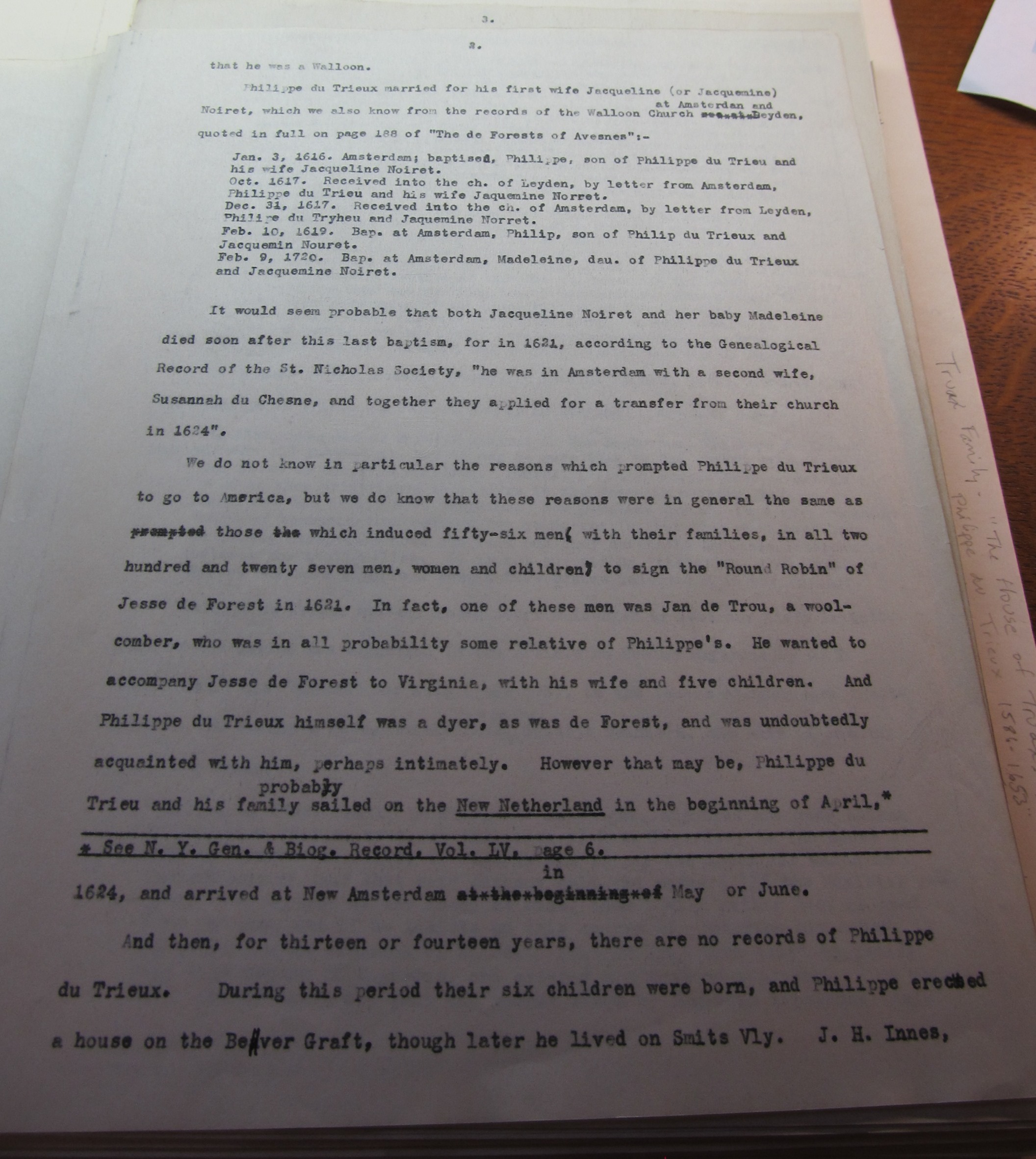
That he was a Walloon.

Philippe du Trieux married for his first wife Jacqueline (or Jacquemine) Noiret, which we also know from the records of the Walloon Church at Amsterdam and Leyden, quoted in full on page 188 of “The de Forests of Avesnes”:-

Jan. 3, 1616. Amsterdam; baptized, Philippe, son of Philippe u Trieu and his wife Jacqueline Noiret.
Oct. 1617. Received into the ch. of Leyden, by letter from Amsterdam, Philippe du Trieu and his wife Jaquemine Norret.
Dec. 31, 1617. Received into the ch. of Amsterdam, by letter from Leyden, Philipe du Tryheu and Jaquemine Norret.
Feb. 10, 1619. Bap. at Amsterdam, Philip, son of Philip du Trieux and Jacquemin Nouret.
 Feb. 9, 1720 [sic]. Bap. at Amsterdam, Madeleine, dau. of Philippe du Trieux and Jacquemine Noiret.

It would seem probable that both Jacqueline Noiret and her baby Madeleine died soon after this last baptism, for in 1621, according to the Genealogical Record of the St. Nicholas Society, “he was in Amsterdam with a second wife, Susannah du Chesne, and together they applied for a transfer from their church [blogger: pour West-Inde] in 1624.”

We do not know in particular the reasons which prompted Philippe du Trieux to go to America, but we do know that these reasons were in general the same as those which induced fifty-six men (with their families, in all two hundred and twenty seven men, women and children) to sign the “Round Robin” of Jesse de Forest in 1621. In fact, one of these men was Jan de Trou, a woolcomber, who was in all probability some relative of Philippe’s. He wanted to accompany Jesse de Forest to Virginia, with his wife and children. And Philippe du Trieux himself was a dyer, as was de Forest, and was undoubtedly acquainted with him, perhaps intimately. However that may be, Philippe du Trieu and his family probably sailed on the New Netherland in the beginning of April, 1624[2], and arrived at New Amsterdam in May or June.

And then, for thirteen or fourteen years, there are no records of Philippe du Trieux. During this period their six children were born, and Philippe erected a house on the Bever Graft, though later he lived on Smits Vly. J. H. Innes,

Page 3

in “New Amsterdam and its people” (page 326), states of this Smits Vly property:-

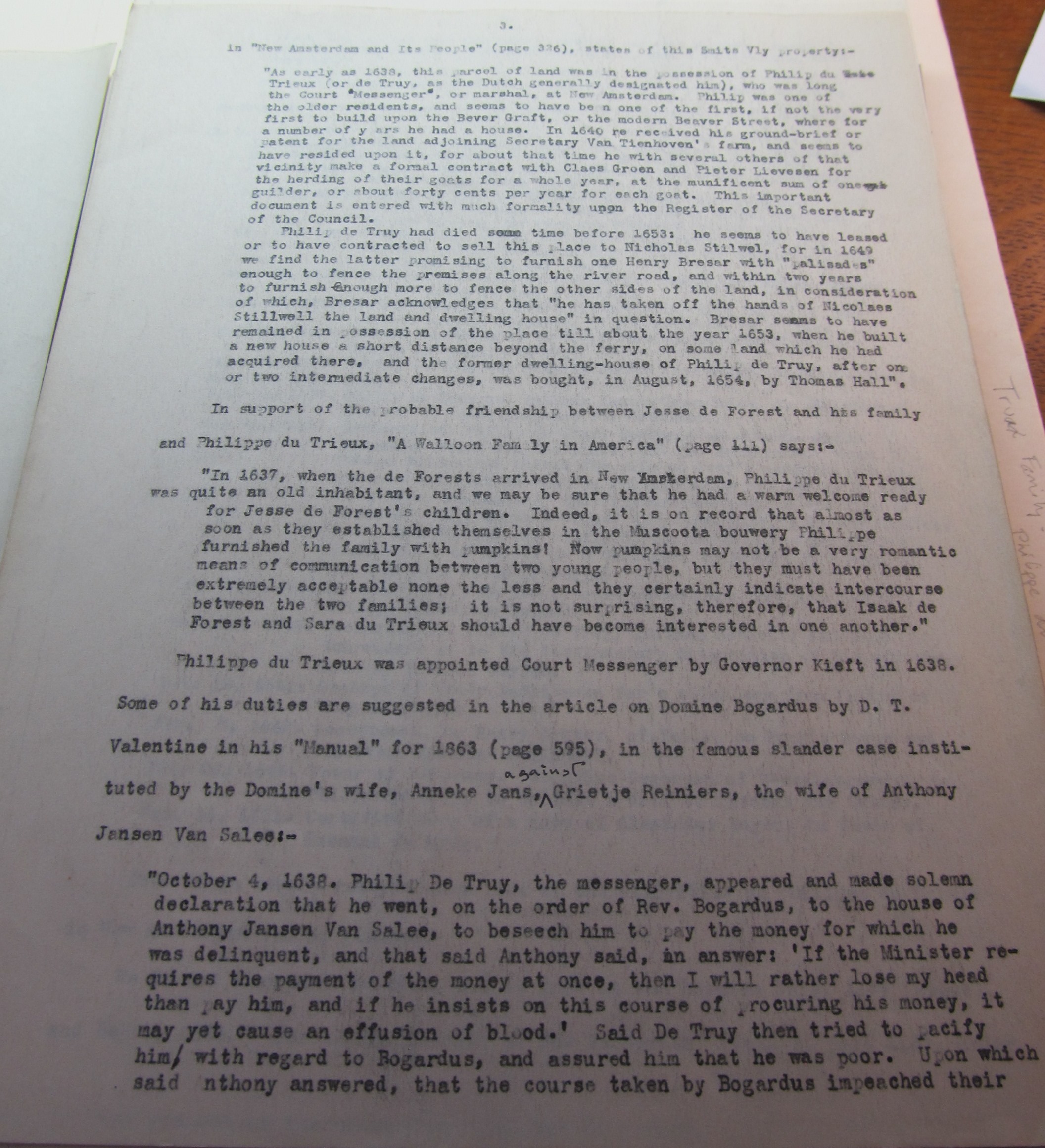
“As early as 1638, this parcel of land was in the possession of Philip du Trieux (or de Truy, as the Dutch generally designated him), who was long the Court “Messenger”, or marshal, at New Amsterdam. Philip was one of the older residents, and seems to have been one of the first, if not the very first to build upon the Bever Graft, or the modern Beaver Street, where for a number of years he had a house. In 1640 he received his ground-brief or patent for the land adjoining Secretary Van Tienhoven’s farm, and seems to have resided upon it, for about that time he with several others of that vicinity make a formal contract with Claes Groen and Pieter Lievesen for the herding of their goats for a whole year, at the munificent sum of one guilder, or about forty cents per year for each goat. This important document is entered with much formality upon the Register of the Secretary of the Council.

Philip de Truy had died some time before 1653: he seems to have leased or to have contracted to sell this place to Nicholas Stilwel, for in 1649 we find the latter promising to furnish one Henry Bresar with “palisades” enough to fence the premises along the river road, and within two years to furnish enough more to fence the other sides of the land, in consideration of which, Bresar acknowledges that “he has taken off the hands of Nicholaes Stillwell the land and dwelling house” in question. Bresar seems to have remained in possession of the place till about the year 1653, when he built a new house a short distance beyond the ferry, on some land which he had acquired there, and the former dwelling-house of Philip de Truy, after one or two intermediate changes, was bought, in August, 1654, by Thomas Hall”.

In support of the probable friendship between Jesse de Forest and his family and Philippe du Trieux, “A Walloon Family in America” (page 111) says:-

“In 1637, when the de Forests arrived in New Amsterdam, Philippe du Trieux was quite an old inhabitant, and we may be sure that he had a warm welcome ready for Jesse de Forest’s children. Indeed, it is on record that almost as soon as they established themselves in the Muscoota bouwery Philippe furnished the family with pumpkins! Now pumpkins may not have been a very romantic means of communication between two young people, but they must have been extremely acceptable none the less and they certainly indicate intercourse between the two families; it is not surprising, therefore, that Isaak de Forest and Sara du Trieux should have become interested in one another.”

Philippe du Trieux was appointed Court Messenger by Governor Kieft in 1638. Some of his duties are suggested in the article on Domine Bogardus by D. T. Valentine in his “Manual” for 1863 (page 595), in the famous slander case instituted by the Domine’s wife, Anneke Jans, against Grietje Reiniers, the wife of Anthony Jansen Van Salee:-

“October 4, 1638. Philip De Truy, the messenger, appeared and made solemn declaration that he went, on the order of Rev. Bogardus, to the house of Anthony Jansen Van Salee, to beseech him to pay the money for which he was delinquent, and that said Anthony said, in answer: ‘If the Minister requires the payment of the money at once, then I will rather lose my head than pay him, and if he insists on this course of procuring his money, it may yet cause an effusion of blood.’ Said De Truy then tried to pacify him with regard to Bogardus, and assured him that he was poor. Upon which said Anthony answered, that the course taken by Bogardus impeached their

Page 4

honor, and implied that they were dishonest, and said further, ‘Should I clean the minister and remain unclean myself, what a foolish thing would that be’.”

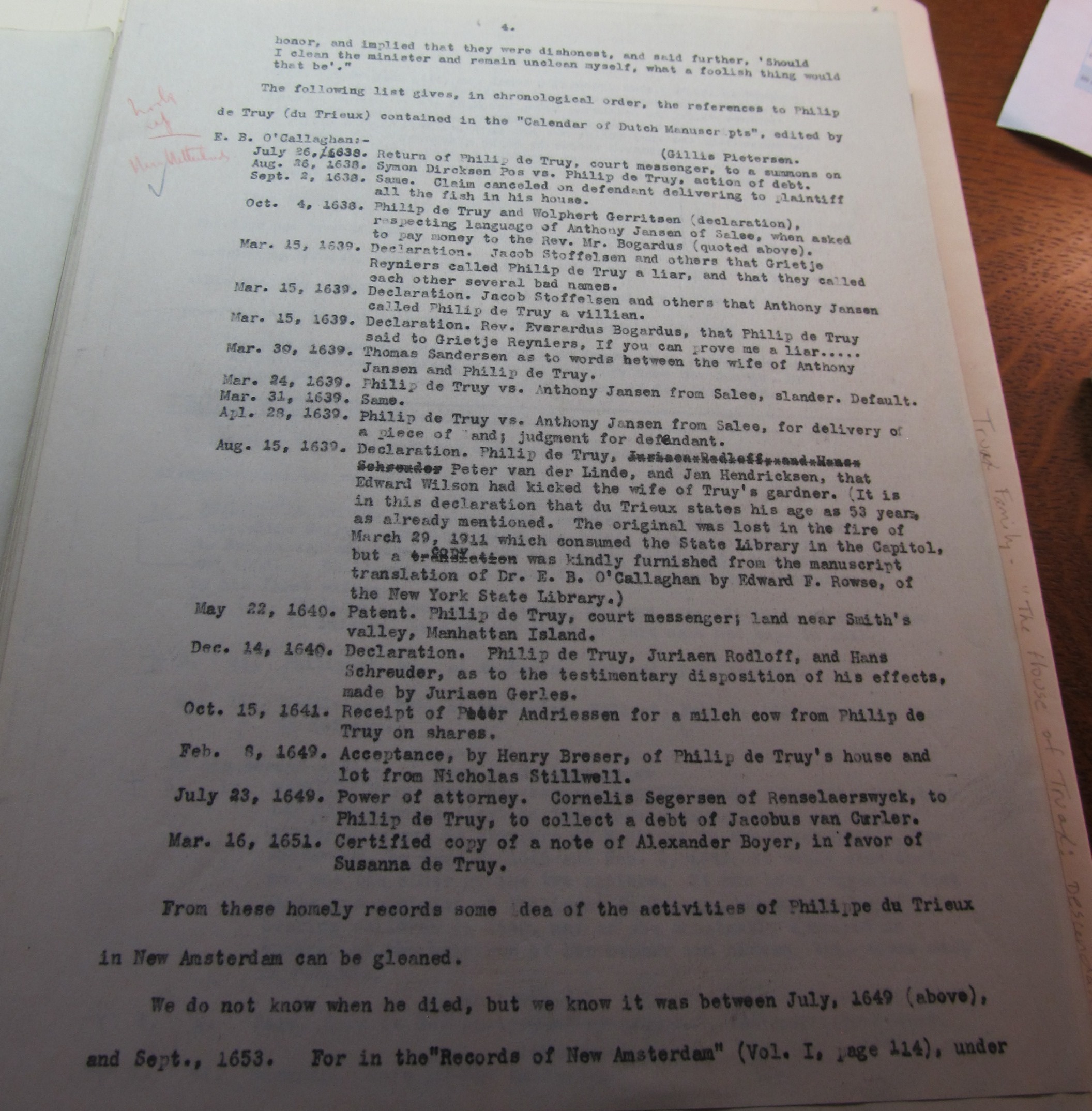
The following list gives, in chronological order, the references to Philip de Truy (du Trieux) contained in the “Calendar of Dutch Manuscripts”, edited by E. B. O’Callaghan:-

July 26, 1638. Return of Phililp de Truy, court messenger, to a summons on Gillis Pietersen.
Aug. 26, 1638. Simon Dirckson Pos vs. Philip de Truy, action of debt.
Sept. 2, 1638. Same. Claim canceled on defendant delivering to plaintiff all the fish in his house.
Oct. 4, 1638. Philip de Truy and Wolphert Gerritsen (declaration), respecting language of Anthony Jansen of Salee, when asked to pay money to the Rev. Mr. Bogardus (quoted above).
Mar. 15, 1639. Declaration. Jacob Stoffelsen and others that Grietje Reyniers called Philip de Truy a liar, and that they called each other several bad names.
Mar. 15, 1639. Declaration. Jacob Stoffelsen and others that Anthony Jansen called Philip de Truy a villian [sic].
Mar. 15, 1639. Declaration. Rev. Everardus Bogardus, that Philip de Truy said to Grietje Reyniers, If you can prove me a liar…
Mar. 30, 1639. Thomas Sandersen as to words between the wife of Anthony Jansen and Phililp de Truy.
Mar. 24, 1639. Philip de Truy vs. Anthony Jansen from Salee, slander. Default.
Mar. 31, 1639. Same.
Apl. 28, 1639. Philip de Truy vs. Anthony Jansen from Salee, for delivery of a piece of land; judgment for defendant.
Aug. 15, 1639. Declaration. Philip de Truy, Peter van der Linde, and Jan Hendricksen, that Edward Wilson had kicked the wife of Truy’s gardner [sic]. (It is in this declaration that du Trieux states his age as 53 years, as already mentioned. The original was lost in the fire of March 29, 1911 which consumed the State Library in the Capitol, but a copy was kindly furnished from the manuscript translation of Dr. E. B. O’Callaghan by Edward F. Rowse, of the New York State Library.)
May 22, 1640. Patent. Philip de Truy, court messenger; land near Smith’s valley, Manhattan Island.
Dec. 14, 1640. Declaration. Philip de Truy, Juriaen Rodloff, and Hans Schreuder, as to the testimentary [sic] disposition of his effects, made by Juriaen Gerles.
Oct. 15, 1641. Receipt of Peter Andriessen for a milch cow from Philip de Truy on shares.
Feb. 8, 1649. Acceptance, by Henry Breser, of Philip de Truy’s house and lot from Nicholas Stillwell.
July 23, 1649. Power of attorney. Cornelius Segersen of Renselaerswyck, to Phililp de Truy, to collect a debt of Jacobus van Curler.
Mar. 16, 1651. Certified copy of a note of Alexander Boyer, in favor of Susanna de Truy.

From these homely records some idea of the activities of Philippe du Trieux in New Amsterdam can be gleaned.

We do not know when he died, but we know it was between July, 1649 (above), and Sept., 1653. For in the “Records of New Amsterdam” (Vol. I, page 114), under

Page 5

date of Sept. 8, 1653, appears the following:-

“Carel Van Brugge, pltf. Vs. Isaac d’Foreest, deft. Pltf. As vendue-master of the personal estate of Pieter Cornelisen, mill-wright, demands payment of fl. 59;8 for goods purchased at public vendue. Deft. acknowledges having purchased the goods, but says, in the name of Philip d’Truy’s widow, that her son Philip (who was also murdered) has earned fl. 100 monthly wages of Pieter Cornelisen dec’d, which are still due him. Deft. is ordered to prove at the next Court day his demand against the estate of the above-named Pieter Cornelisen deceased”.

From the above we learn that Philippe du Trieux was dead, and that his son Philippe had been murdered. It would seem probable that the son had been murdered by Indians, though this is not expressly stated, and it is not impossible that the father himself had been so murdered. But there is no documentary proof to show whether this was so or not. On October 23, 1654

“Susanne de Scheeve, widow of Philip De Truwe, late Court messenger at New Amsterdam, confers powers of attorney upon her son-in-law Isaack de (   ), burgher and free trader at New Amsterdam. [3]

And with this last note the names of Susannah and Philippe du Trieux disappear from the records of New Amsterdam.

[1] Jacqueline was his first wife. It is now established that it was his second wife Susannah du Chesne who immigrated with Philippe du Trieux.

[2] See N. Y. Gen. & Biog. Record, Vol. LV, page 6

[3] Holland Society Year Book, 1900, page 176.

Source:

Truax, T. de T., House of Truax. “Bien faire et ne rien craindre.” Historical Genealogy of the Truax-Truex Families of the United States and Canada, descendants of Philippe de Trieux, the first Huguenot-Knickerbocker of that name who settled in New Netherland in 16__ and embracing his posterity to the present date a period of nearly three centuries of Twelve Generations. Manuscript. From New York Public Library, Call No. NYGB Coll-94 Box 1 and Box 2.http://catalog.nypl.org/record=b18209329~S1 . (Accessed 18Jul2015)

[An interesting history of this manuscript can be found at http://freepages.genealogy.rootsweb.ancestry.com/~truax/TheHouseofTruax.html]
IMG_1582IMG_1583IMG_1584IMG_1585IMG_1586IMG_1587IMG_1588P