52 AI Ancestors in 52 Weeks: Week 20: Wheels

I’ve combined Amy Johnson Crow’s 52 ancestors in 52 weeks challenge, and Steve Little’s The 2025 AI Genealogy Do-Over, to create a unique 52 AI ancestors in 52 weeks party!

52 AI Ancestors in 52 Weeks: Week 20: Wheels

“Wheels of Love: A Father’s Road Trips and an AI-Powered Bucket List”

Introduction

Wheels are at the very center of my relationship with my father, and wheels are how he got to act as a father for two decades.

Discussion

“Since my sisters and I were young, my father has made it clear that he was there for us, and he cared, no matter what. Can you imagine what that means to 2, 4 and 7-year-olds in the middle of a bitter divorce? …

“He still makes the every-other weekend trip to see my sisters, now 14 and 16, about a thousand miles each time. He threw his back out… but wouldn’t cancel the trip even then.” – me, in a letter written in 1986, nominating my father Bob Anderson for Single Parent of the Year[1]

Back in 1975, divorced fathers were Saturday fathers. My dad, though, fought the system. My mother had moved us more than 200 miles away and that was not a trip he could do every Saturday. It took him a year and a half, but he won the right to take us every other weekend. And he used it.

We typically went back to his place one weekend a month, and to his parents’ house the other.

From New York, we had road trip adventures during his two-week summer visitation. One year we drove up to Canada and camped throughout the eastern third of the country. Another year we had a camping trip down as far as North Carolina – coastal and the Blue Ridge mountains. We explored campgrounds closer to home like Massachusetts and New York. It’s funny; I don’t like camping, but those are the trips I remember best.

The literally hundreds of thousands of miles that Dad logged enabled us to know half our family. Not to mention the precious memories, sense of adventure, and the steady support we needed.

Much later on, Dad’s mom fell ill and Dad and I wanted to visit regularly. Dad said he was “burned out” from driving, so it was my privilege to bring him to her so they could spend her last months together.

How AI can help

Dad fueled my sense of adventure. “Inspired by those miles of memories, I recently asked myself: what kind of journeys do I want to take next — and who could help me plan them?

I wanted to create a bucket list — and turned to AI for help. I have in the past been impressed with Claude’s ability to plan a trip (see AI as a travel assistant) and I probably should have again, but I tried ChatGPT and am happy with it. I told it I anticipate having 20 years left, and would like to fulfill some dreams, in a three-part manner: I wanted adventures, I wanted to give back to the world, and I wanted to make genealogical contributions. The adventure part, where we’re focusing here, gave me an awesome first pass:
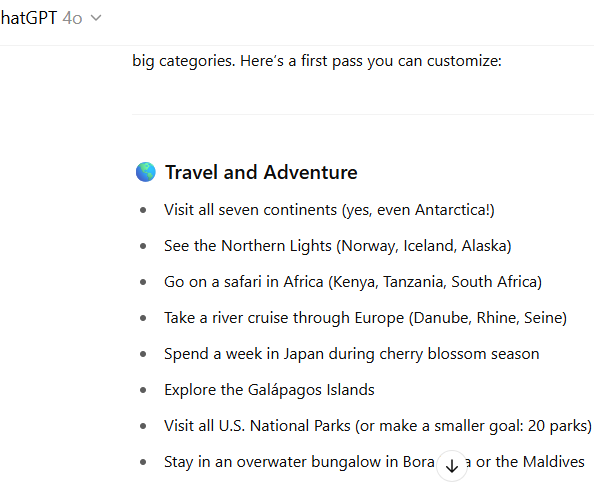
A first pass listing continents and adventures

I then specified that I wanted many continents, and a suggestion for each!
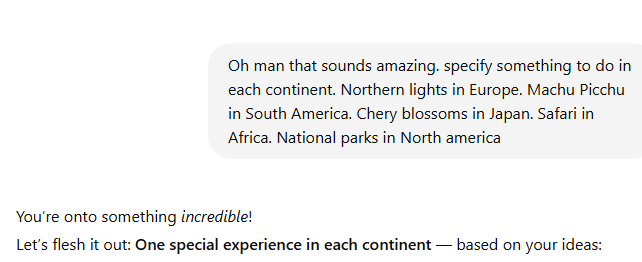
An iteration clarifying the continents breakdown

We added bonus goals (additional must-sees) and gardens (The 25 Gardens You Must See from The New York Times). We did a “starter plan” for years 1-3. We created a checklist and a pretty pdf book.

A starter plan for year 1 with a theme

This has inspired me to plan something for this year, as a start! There is no time to waste in living life!

Summary and challenge

“Adventures don’t begin when you pack your bags — they begin the moment you dare to dream them.”


In traveling, I feel I am honoring my father’s dedication to his family, as well as my ancestors’ drive to better their circumstances.

Your Turn:

Start iterating on your adventures! Make a bucket list or simply plan your next adventure. See the blog I linked about the travel assistant for some hand-holding on the latter.

Next week’s topic: “Military.

Disclosure

This post was created by me with the help of AI tools. While AI helps organize research, the storytelling and discoveries are my own.


[1] Staten Island (New York) Advance, 21 Jun 1987, page D1, D3, cols. 1-6, “Weekend fathers”; imaged in “Newspapers,” database with images, Newspapers (https://www.newspapers.com/article/staten-island-advance-weekend-fathers-pa/172583331/ and https://www.newspapers.com/article/staten-island-advance-weekend-fathers-p/172583422/ : accessed 17 May 2025).

52 AI Ancestors in 52 Weeks: Week 19: At the Library

I’ve combined Amy Johnson Crow’s 52 ancestors in 52 weeks challenge, and Steve Little’s The 2025 AI Genealogy Do-Over, to create a unique 52 AI ancestors in 52 weeks party!

52 AI Ancestors in 52 Weeks: Week 19: At the Library

Check This Out: Libraries, Family, and a Little Help from AI

Introduction

I’ve felt at home in the library for as long as I can remember. It’s a comfortable, non-judgmental environment where I can get transported to a world not my own, or learn how to do something new.

Discussion

Several good memories of mine happened in libraries.

When my divorced dad finally got weekend visitation, one of the activities he took us on was trips to the library. A newspaper photographer caught me searching in the card catalog (oh, boy, I wish I could find that photo!).

My first volunteer job was at my middle school library, putting books away. To this day, if I see a book misfiled in the library, I’ll furtively put it back in the proper spot according to the Dewey Decimal code on its spine.

We had a snail who left the tank’s water to lay eggs, which had us worried. I checked a book about pet care out of the library, and wrote the author with a question about my weird snail. How thrilling it was to hear back! (She didn’t know, but the thrill was hearing back! – and it turned out Mama Snail knew what she was doing.)

When I had children, I hyped them up to get their own library cards. As soon as they could print their names, they were eligible—and you better believe we got them cards when they were each four years old!

I care for my young granddaughter some days, and enjoy bringing her to the library so she can choose a board book which I’ll read to her.

Without really thinking about it, I helped to carry on the tradition of family bonding at the library to at least the fourth generation.

How AI can help

I track my reading on Goodreads, and have done so since I inadvertently started a book I’d already completed. This turned out to be very helpful for recommendations. Here’s what I did:

  • I exported my 5-star reads from Goodreads.
  • I shared them with ChatGPT using this prompt…

Consider the attached list of books that I have read and highly rated. What books would you recommend I read?

  • ChatGPT replied with personalized recommendations…

Summary and challenge

Books are deeply personal. What matters most is that they speak to you. This week, I invite you to pass on a love of the library—or rediscover it yourself—and let AI help you uncover your next great read.

Your Turn:

Determine who you’d like to get to the library – yourself? A family member? Get a library card and use AI’s help for book recommendations.

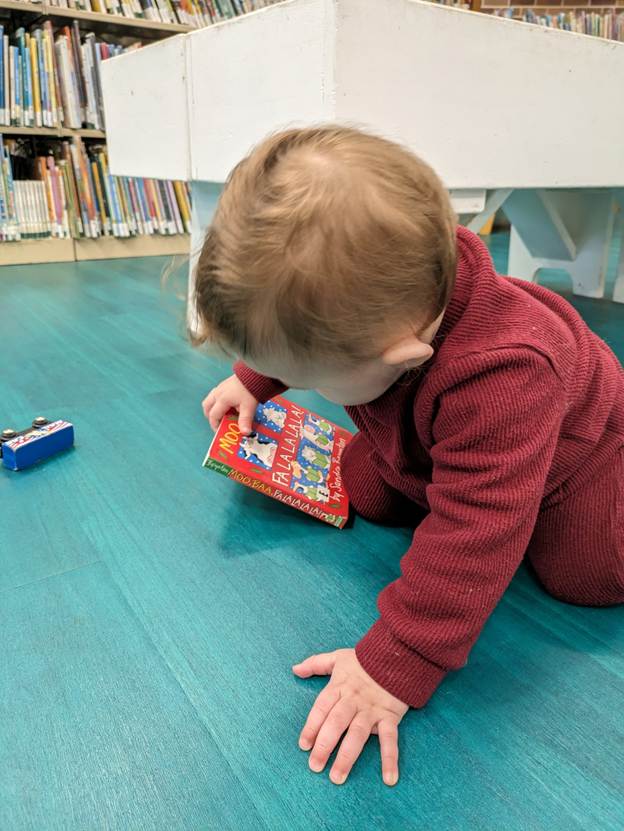
Little one’s first visit to a library

Next week’s topic: “Wheels.

Disclosure

This post was created by me and refined with AI assistance. While AI helps organize research, the storytelling and discoveries are my own.

52 AI Ancestors in 52 Weeks: Week 18: Institutions

I’ve combined Amy Johnson Crow’s 52 ancestors in 52 weeks challenge, and Steve Little’s The 2025 AI Genealogy Do-Over, to create a unique 52 AI ancestors in 52 weeks party!

52 AI Ancestors in 52 Weeks: Week 18: Institutions

Introduction

As Amy Johnson Crow pointed out, “institutions” can mean many things. For me, the word instantly calls to mind the high value my family places on education.

Discussion

My mother’s brother prides himself on being the first in the family to graduate from college (note to self: email Uncle and ask where he attended).

My father was also the first in his line; he went to St. John’s University. His family wasn’t well off — I later learned he attended on a full scholarship. When I spoke to the university, they told me it was probably through the Catholic Scholars program: one full ride per Catholic high school in New York City. I wish Dad had bragged a little about that!

He raised us with a strong emphasis on education; “keep your options open” was a saying I heard often, and he firmly believed education was the way to do that. Two of his three children earned both Bachelor’s and Master’s degrees.

Today, I work in the Worldwide Learning organization at my employer, and my son is a high school teacher, about to marry a primary school teacher.

The force runs strong in this line.

What was your family’s take on education?

How AI can help

One addition to my bucket list is to create a scholarship, possibly in my dad’s name at his alma mater. While I hesitated, the cost of an endowment doubled. Time to get serious!

Here’s how AI can help with the process:

  • Research scholarship programs: AI can compare endowed scholarship requirements across universities.
  • Gather qualification criteria: AI can collect eligibility standards to help shape the scholarship.
  • Draft proposals: AI can suggest wording for scholarship descriptions and application processes.
  • Organize comparisons: AI can create tables showing costs, donation requirements, and benefits.

Summary and challenge

What’s holding me back? I want to take advantage of my employer’s matching funds, but I’m not sure how to set it up. My plan:

  1. Use AI to research scholarship structures and matching fund options.
  2. Contact the university to confirm current endowment requirements.
  3. Reach out to my employer’s HR or charitable giving department for advice.

“A scholarship endowment is more than a donation; it’s a promise to future dreamers that someone believes in their journey.”

Thanks to ChatGPT for that quote!

Figure 1 My son attended my Master’s graduation!

Your Turn:

What “institutions” have shaped your family story? Education, religion, military service? I’d love to hear about it.

Next week’s topic: “At the Library.

Disclosure

This post was created by me and refined with AI assistance. While AI helps organize research, the storytelling and discoveries are my own.

52 AI Ancestors in 52 Weeks: Week 17: DNA

I’ve combined Amy Johnson Crow’s 52 ancestors in 52 weeks challenge, and Steve Little’s The 2025 AI Genealogy Do-Over, to create a unique 52 AI ancestors in 52 weeks party!

52 AI Ancestors in 52 Weeks: Week 17: DNA

Introduction

Whose NPE is this, anyway?, or, Check your biases at the door

A couple of years ago, I had an intriguing DNA match on 23andMe. Our Relatives in common indicated a match on my Ohio branch – maternal grandfather’s line. The match has a somewhat unique name and is from a town 8 miles from where Grandpa was born. Unfortunately, that is the town the match died in, three months after the message I sent him on 23andMe. Since he’s not living, I’ll call him RZ here.

RZ has a reasonably easy lineage to trace, and we clearly branched apart once we went back 2 generations from Grandpa. It should have been easy to identify our common ancestor. But it wasn’t. I became convinced that RZ had an NPE. RZ’s mom was born 12 years after her closest sibling, and when her “sister” was 17… perhaps one of Grandpa’s brothers fathered a child with RZ’s mom’s “sister”… my digging didn’t produce convincing evidence (e.g., opportunity in the form of the same location).

Discussion

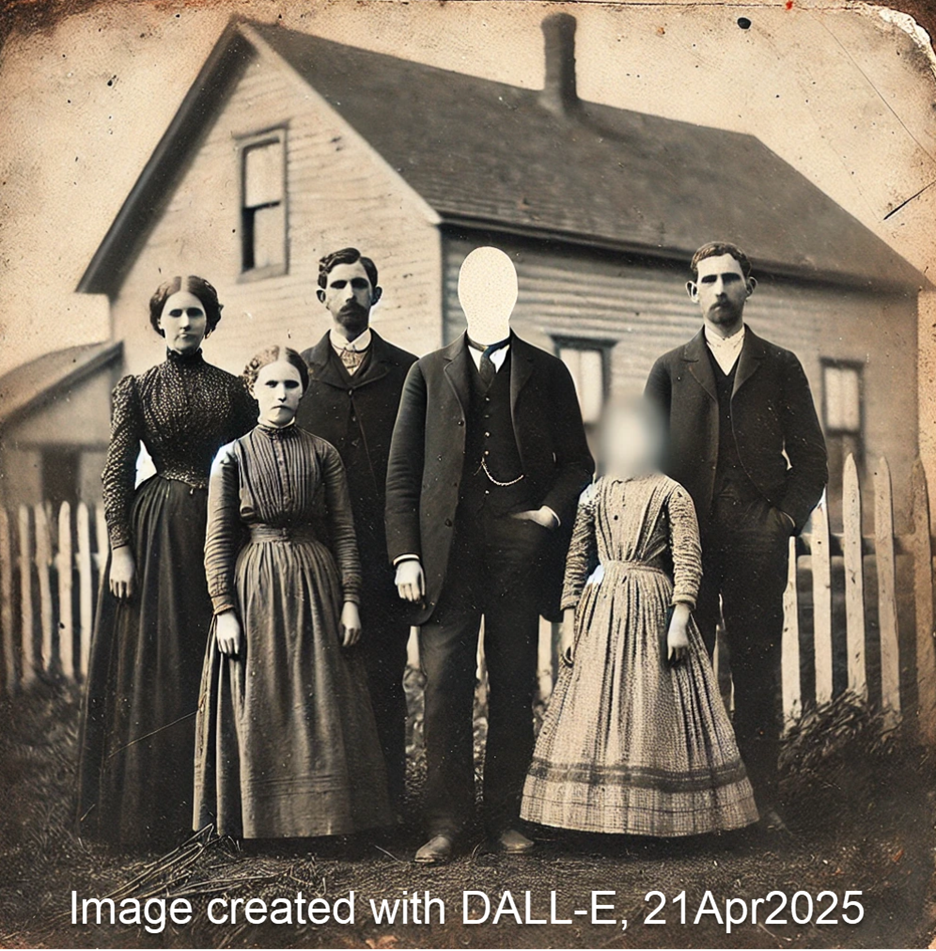
I took two of Steve Little’s Artificial Intelligence classes given at the National Genealogical Society and his course AI Genealogy Seminars: From Basics to Breakthroughs at the Genealogical Research Institute of Pittsburgh (GRIP) (wow! Highly recommend all of them). During the latter, Steve was showing us his custom chat Photo Analyst, and we used a photo I had of Grandpa with his siblings, parents, and grandfather. Steve asked me if the photo showed three generations or four and I suddenly had a light bulb moment.

Grandpa was born ten years after his next older sibling, when his sisters were 17 and 19… suddenly it wasn’t so obvious that it was RZ’s mom that was the NPE after all.

How AI can help

It’s tempting to stare at a brick wall and hope it blinks first. But when it comes to DNA mysteries, AI can be your sidekick with better night vision.

Here’s how AI assisted me:

  • Clustering DNA Matches: While DNA sites offer tools like “shared matches,” I used ChatGPT to summarize common surnames and locations across clusters. Asking it, “Do you see any recurring names or places in this list of matches?” can nudge you in a direction you hadn’t considered.
  • Reframing the Question: AI helped me phrase the real question: “Could the NPE be on my side instead?” That reframing gave me the ah-ha moment during Steve Little’s seminar. Sometimes it’s not the facts that need changing—it’s the lens.

Despite the current uncertainty around 23andMe, I’m reluctant to give up my account there, in the hopes that a Relative in common there will break through this mystery.

If you’re feeling stuck, AI might not have the answer, but it sure can ask a better question.

Summary and challenge

Sometimes DNA doesn’t reveal a clean answer—it kicks up dust and asks if you’re sure that branch belongs where you thought it did. What started as a search for someone else’s NPE brought me face-to-face with my own family’s possibilities.

Your turn:

Challenge #1: Use ChatGPT to compare 3–5 of your DNA matches. Ask it to spot shared surnames or birthplaces. Copy-paste the match notes or segment info (no personal identifiers!) and ask, “What patterns do you notice?”

Challenge #2: Have an old photo? Upload it to an AI photo enhancer like MyHeritage’s Deep Nostalgia or use ChatGPT’s image tools to generate a caption or age estimate. What stories surface?

Genealogy isn’t about finding the answer—it’s about learning to ask better ones, again and again.

We’ll wade into the world of Institutions next week—those places that held, housed, or helped (sometimes harmed) our ancestors. Think prisons, hospitals, orphanages, and more. Bring tissues… and curiosity.

Old-style image of a family standing in front of a farmhouse, with a man's and a girl's faces blurred out

Disclosure

This post was created by me and refined with AI assistance. While AI helps organize research, the storytelling and discoveries are my own.

52 AI Ancestors in 52 Weeks: Week 16: Oldest story

I’ve combined Amy Johnson Crow’s 52 ancestors in 52 weeks challenge, and Steve Little’s The 2025 AI Genealogy Do-Over, to create a unique 52 AI ancestors in 52 weeks party!

52 AI Ancestors in 52 Weeks: Week 16: Oldest story

Introduction

The oldest story in my family is 342 years old!

One of the oldest pieces of family lore I’ve found isn’t so much a handed-down tale—it’s a letter. A letter written in 1683 by my ancestor, Louis Thibou, that’s now housed at the South Caroliniana Library at the University of South Carolina. I’m not sure why Louis wrote it, but it reads as a promotion piece of the Carolinas to London Huguenots. You can read the transcription and view a scan of the original here. (Fair warning: it’s in French and 17th-century ink, though it’s in remarkable condition.)

There are many interesting parts of this letter! And each time I read it I find more. But the one which fits this week’s topic best is this passage, translated from the French:

God has given us a son who is called Jacob after the one we lost in England; the captain of a warship was his godfather. 

Discussion

Now that’s a line with weight. Who was this captain? Did Jacob grow up hearing that story? Did it stick around in either man’s family? I wonder if it’s possible to postulate who the warship captain was?

How AI can help

I used Gemini (Google’s AI) for its broad internet access. My prompt:

Jacob Thibou was born between 1680 and 1683 in Charleston, now South Carolina. His father says “God has given us a son who is called Jacob after the one we lost in England; the captain of a warship was his godfather. ” How would I try to track who this captain was?

Gemini gave me a five-part plan, with details on each:

1. Establish a More Precise Birth Year and Location

2. Research Jacob Thibou’s Father

3. Focus on Royal Navy Activity in the Late 17th Century

4. Consider Other Naval Connections

5. Genealogical Databases and Forums

It identified key information to look for, challenges, and a summary. Some of the information is either obvious or obviously can’t be done. But there are enough nuggets there to chase a few things.

Summary and challenge

I’m using AI to revisit old mysteries with a fresh lens. It won’t hand me a tidy answer, but it does offer new ways to think about the problem—and sometimes that’s exactly what we need. At some point, between the new angles and new information available, I will crack this! How about you? What old stories would you like to prove or disprove, and how can AI help you?

Figure 1 An English warship in use during the time Jacob was born, the HMS Royal Sovereign (she served from 1637-1697)

By http://website.lineone.net/~d.bolton/Fleet/sover.jpg, Public Domain, https://commons.wikimedia.org/w/index.php?curid=1093850

Next week, we explore “DNA.” Things may get… molecular.

Disclosure

This post was created by me and refined with AI assistance. While AI helps organize research, the storytelling and discoveries are my own.

52 AI Ancestors in 52 Weeks: Week 15: Big mistake

I’ve combined Amy Johnson Crow’s 52 ancestors in 52 weeks challenge, and Steve Little’s The 2025 AI Genealogy Do-Over, to create a unique 52 AI ancestors in 52 weeks party!

52 AI Ancestors in 52 Weeks: Week 15: Big mistake

When a Baby Genealogist Assumes…

My big mistake as a baby genealogist? I assumed my great-grandparents were married before their children arrived. Logical, right? Turns out, not so much. I wasted years searching for a marriage that didn’t exist—at least not when I thought it did.

What Took Me So Long?

Everyone in the family swore that Nanny and Great-Grandpa married on November 11, 1908, likely in Manhattan. I knew how to work the New York and New Jersey records. I hunted. I cross-referenced. I came up empty.

Then one day, while poking around on FindMyPast thanks to a genealogical society membership, I stumbled across my grandmother’s baptism record. That gave me a church. I followed the breadcrumb trail through her siblings’ records, and that led me to a surprise: the marriage record. Dated 1918. After nearly all their children were born.

The Draft Card That Changed Everything

Here’s where a timeline helps. In September 1918, Great-Grandpa filled out a draft registration card listing himself as married. Just two weeks later, on September 28, 1918, he and Nanny had a marriage, recorded in both the church and the city. I’m convinced that one event (the draft) led directly to the other (marriage).

My cousin found a 1908 church record for their religious ceremony, so they likely felt that was “good enough” until Uncle Sam came knocking. It was the looming possibility of military service that likely pushed them to make it official in the eyes of the law.

Could AI Have Helped? Absolutely.

If I’d had AI tools back then, I could have created a quick timeline like this:

  • 1908: Church marriage (religious, no civil record)
  • 1909–1917: Children born
  • Sept 12, 1918: Draft card lists him as married
  • Sept 28, 1918: Civil marriage license filed

Even a free AI tool could organize those clues quickly, especially when you input events from census records, baptism registers, or draft cards. The pattern becomes pretty clear when laid out visually.

What I Learned (and What You Can Try Too)

This mix-up taught me never to treat family lore or assumptions as fact. Every old mystery deserves a second look with fresh eyes and new tools. Try these next steps:

  • Recheck online databases
  • Search for new DNA matches
  • Build a timeline
  • Revisit webinar notes or conference takeaways
  • Explore genealogical society perks

Sometimes the answer was there all along. We just need to look differently.

An older man holding an infant

Figure 1 Me with Great-Grandpa, just a short time ago!

Next week, we explore “Oldest story.”

Disclosure

This post was created by me and refined with AI assistance. While AI helps organize research, the storytelling and discoveries (and assumptions!) are my own.

52 AI Ancestors in 52 Weeks: Week 14: Language

52 AI Ancestors in 52 Weeks: Week 14: Language

Was that an Irish brogue, or just childhood imagination? This week’s post unpacks family memories, a transcribed poem from the past, and how AI helps preserve our ancestors’ voices—literally. Learn how to turn audio into stories with a little tech and a lot of heart.

Introduction

I truly admire my bilingual ancestors for their talents. I took many years of French in school and only barely made myself understandable on a Paris vacation!

I was in awe in Luxembourg, where locals often speak five or six languages. The country officially uses Luxembourgish, German, and French in administration, while many also speak English—and even Portuguese, Latin, Spanish, or Italian. It’s a fascinating example of how multilingualism thrives in daily life—see more on the languages of Luxembourg.

Did you or your ancestors have to learn a new language and new culture?

Discussion

I remember as perhaps a young teenager, interviewing my grandmother about her mother, who was 100% Irish. I knew Nanny when I was a girl, and I mentioned to Grandma that I remembered Nanny’s brogue. Grandma scoffed, saying, “If she had an accent, it was a Jersey accent.”

Cue quick recheck of my research: Nanny was born in Morris County, New Jersey to a line of Irish miners. Her parents were both born there as well. Nanny had no more brogue than I do. My mind was playing tricks on me.

How AI is Helping

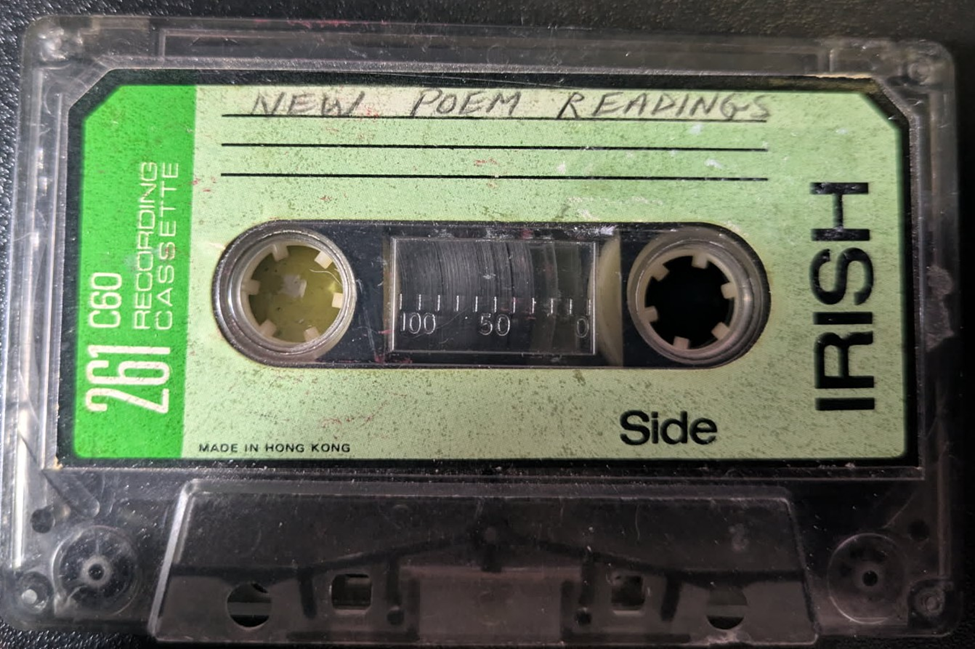
I had found a cassette tape of my father reading poetry and had it converted to a .wav file. Doing research for this post, I hit play and got very nostalgic hearing that voice that I hadn’t heard in many, many years. But even better, I can use it to get his work to a wider audience by easily transcribing and sharing it.

Here’s what I did with the audio file:

  • Converted the cassette to a .wav
  • Used Microsoft Clipchamp to cut it into shorter clips
  • Converted to .mp3 with VLC
  • Transcribed with Descript (free version)
  • Prompted ChatGPT to format it like a poem

A Poem, and a Voice Returned

One of the most moving moments came when I pressed play on that old cassette. I hadn’t heard my dad’s voice in so long—it was like he stepped back into the room for a moment.

After transcribing and formatting it with a little AI help, I didn’t just hear his words—I felt them. This poem in particular gave me a glimpse of a man I didn’t fully know, beyond just “Dad.” He lived in New York City all his life, came of age in the 1960s, and would’ve known people like the young woman in his verse.

Here’s the poem. See what you find in it.


Important Things

by Robert E. “Bob” Anderson (1942–2009)

The lake in Central Park,
some twenty-odd stories below,
reflects the rising moon.
Warm summer breezes
blow in from the terrace
as the gathering crowd
clinks crystal stemware,
laughs,
and talks aloud.

I chat with a girl—
long, straight hair,
round tinted glasses—
about interests we share.
She wore a silken blouse,
unbuttoned halfway.
I listened politely
to what she had to say:

“I enjoy good poetry—
but only if it deals
with important issues—
like the slaughter of the seals,
the banning of the bomb,
the saving of the trees,
the horrors of war—
important things like these.”

I nod
and sip my drink.

“These are important,” I agree,
“but I’m afraid
they’re beyond
a simple soul like me.

My favorite topics
tend usually to deal
with more simple things—
like the way folks feel.

The magic touch of love,
the warmth of a loving heart,
and the cold emptiness
when two lovers part.

The despair of loneliness,
trying not to let it show—
and when we find someone new,
the wary joy we know.

What makes a person rise each day
to live
and face
whatever this fickle life
will give to you.

These may seem nothing,
but they matter to my friends.
We’ll have to trust to you
to see how this world ends.”


A cassette tape labeled "NEW POEM READINGS"

Figure 1 The tape which let me hear my dad’s voice again

Summary and Next Steps

Sure, I could’ve transcribed it myself. But a few trial runs, some free tools, and now I can bring my father’s poetry to readers who never met him. AI didn’t replace the story—it helped me tell it better.

What voices from your past might be waiting?
Try a voicemail, interview clip, or old video! Ask AI what it can do with it. Try it out.


🎧 Bonus! Listen to the poem yourself:

The tape which let me hear my dad’s voice again – if the player doesn’t work, use this link


Disclosure

This post was created by me and refined with AI assistance. While AI helps organize research, the storytelling and discoveries are my own.

52 AI Ancestors in 52 Weeks: Week 13: Home sweet home

I’ve combined Amy Johnson Crow’s 52 ancestors in 52 weeks challenge, and Steve Little’s The 2025 AI Genealogy Do-Over, to create a unique 52 AI ancestors in 52 weeks party!

52 AI Ancestors in 52 Weeks: Week 13: Home sweet home

Introduction

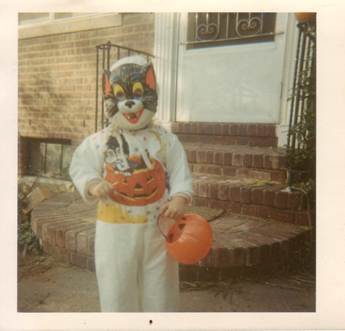
Some of my sweetest memories are from the first time we shared a house with my grandparents. It gives me a very fond “Home sweet home” feeling. Grandma put curling rollers in my hair there, and Grandpa read the comics to me. I sat in the window with my father during a thunderstorm while he explained to me why lightning was pretty, not scary. Dad built an HO train set to go around most of the living room. In the kitchen, I fell and broke my front baby teeth. Dad would bring me into the basement to watch television, which is surely where I saw the moon landing and the original airing of Star Trek.

How about you? Did you have a Grandma to come home to?

Figure 1 Me trick or treating in front of that house

Discussion

I got very curious about the house history and it had a bit of a family tradition behind it. We had a family friend, who had gone to high school with my mother. They were so close we called her “Aunt Bobbie.” Seems that her family had owned the house for a couple of generations and then sold it to my parents when they were starting out. My grandparents, as they eyed Grandpa’s retirement, sold their house and moved in with us. I am sure my grandmother was a great help to my mother. I have good memories with my parents and grandparents there, until I was 4 or 5 when they bought their retirement house and moved away, and soon we left as well.

How AI is Helping

Researching a house’s history used to mean digging through dusty deed books at the county courthouse or cross-eyed scrolling through microfilm. AI makes it a lot less overwhelming —even for those of us who still remember rotary phones.

Here’s how I used (or could’ve used!) AI to uncover the backstory of our family home:

  • Property Records & Ownership Chains: AI tools like ChatGPT can help identify where to search for historical property records. Ask it for the best ways to access deeds, plats, or tax records in your county or state. You can also upload old deeds and use AI to summarize or transcribe them.
  • Photo Recognition: If you’ve got old pictures of the house, you can run them through tools like Google Lens or AI-enhanced photo analysis to spot time periods, materials, or architectural styles—useful clues if the paperwork trail is cold.
  • Name Connections: AI can search historical newspaper archives or directories for names linked to the house. I asked ChatGPT what it could find on “Aunt Bobbie’s” family, and boom—suggestions for census records, school yearbooks, and even maps where her surname showed up.
  • Historical Maps: AI can help you compare old maps (like Sanborn Fire Insurance Maps) to modern ones, tracing how a neighborhood grew and changed. Ask AI to guide you to digitized map collections relevant to your region.
  • Write the Story: Finally, once you’ve got the pieces, AI helps stitch them together into a readable narrative. Whether you’re listing former owners or recounting the time a goat got stuck on the porch roof, AI can turn it into a readable story so others can picture it, too.

Summary and Next Steps

Our homes hold more than memories—they hold history. Next time you pass by your childhood home or an ancestor’s address from a census record, consider letting AI lend a hand in uncovering its past.

Next week, we explore “Language.”

Figure 2 The house in discussion, from a 1980s tax photo

Hint: New York City has tax photos from the 1980s at https://nycrecords.access.preservica.com/uncategorized/SO_d1a15702-bc15-474b-9663-c1820d5ae2e3/ and they also have from the 1940s.

Disclosure

This post was created by me and refined with AI assistance. While AI helps organize research, the storytelling and discoveries are my own.

52 AI Ancestors in 52 Weeks: Week 12: Historic event

I’ve combined Amy Johnson Crow’s 52 ancestors in 52 weeks challenge, and Steve Little’s The 2025 AI Genealogy Do-Over, to create a unique 52 AI ancestors in 52 weeks party!

52 AI Ancestors in 52 Weeks: Week 12: Historic event

Introduction

I am lucky enough to remember two of my great-grandparents, my father’s maternal grandparents. My dad used to tell me how his grandfather, Francis William CAREY (1881-1975), lived through times of significant change. Dad wrote:

“When he passed away, I thought he had seen most of the technological progress mankind had ever made: he traveled on a train pulled by a steam engine to his new home, and saw men land on the moon.”

Discussion

When great-grandpa was young, he worked at a carriage house for the wealthy – before motor vehicles were common. He used to say that the rich had two-horse carriages, and the very rich had four-horse carriages. That perspective helped me realize that history isn’t just grand world-changing events—it’s also personal experiences, the moments that shape families.

Each generation witnesses history in its own way. My father shared stories about computers, my son interviewed me about the Challenger explosion, and my children watched the 9/11 attacks unfold on live television.

What will be your story? Don’t let these stories fade away. Share them—write them in a blog, a family newsletter, a book, or even a social media post. Your story matters.

How AI is Helping

AI can be tremendously useful in identifying historical events that may have affected our ancestors. Using historical records and timelines, AI can help pinpoint major local and global events that influenced their lives.

Frances William Carey was born 1881 in Madison, Morris, New Jersey, USA, lived in Manhattan, New York, and died in New City, Rockland, New York, USA in 1975. List historical events that he may have witnessed, heard of, been part of, or that may have otherwise affected his life.

These are just a few examples, but AI can take things further. By analyzing census data, newspapers, and historical maps, AI tools can provide even deeper insights into the lives our ancestors lived.

Summary and Next Steps

History isn’t just found in textbooks—it’s found in family stories, passed down through generations. We can use AI to uncover and document these moments, ensuring they aren’t lost. This week, take time to reflect: What major events have you lived through? How did they shape you? Try using AI to draft a short biography of yourself or an ancestor based on historical records.

Next week, we explore “Home sweet home.”

Disclosure

This post was created by me and refined with AI assistance. While AI helps organize research, the storytelling and discoveries are my own.

52 AI Ancestors in 52 Weeks: Week 11: Brick Wall

I’ve combined Amy Johnson Crow’s 52 ancestors in 52 weeks challenge, and Steve Little’s The 2025 AI Genealogy Do-Over, to create a unique 52 AI ancestors in 52 weeks party!

52 AI Ancestors in 52 Weeks: Week 11: Brick Wall

Introduction

The theme for Week 11 is “Brick Wall.” Every genealogist encounters an ancestor who seems impossible to trace. For me, that ancestor was Mary Catherine DENNY SMITH—until a breakthrough came with the help of generous volunteers. My search led to a book mentioning William DENNY’s daughter Mary marrying a Mr. SMITH, only for me to hit another dead end with Mary’s ancestor, Mary TIEBOUT.

Discussion

Years ago, Dorothy Koenig published New Netherland Connections, a newsletter focused on early American colonial genealogy. In 2009, I was lucky enough to publish a query in her newsletter (Vol 14 p 54):

TIEBOUT – Seeking parents of Mary TIEBOUT, who m. William YOUNG 5 Dec 1756 at Trinity Church Parish [NYG&BR 69:280] by NY Marriage License dated 4 Dec 1756 [NY Marriage Licenses Prior to 1784, p 388 (or 477), M.B. 1:372]

Three candidates present themselves:
Maria TIEBOUT bp 08 Aug 1736 NY NY; Albert TIEBOUT & Cornelia BOGERT
Maritje TIEBOUT bp 16 Jan 1732 SI NY; Teunis TIEBOUT & Margrietje DRINKWATER
Marytje TIEBOUT bp 29 Nov 1724 NY RDC; Hendricus TIEBOUT & Elisabeth BURGER

One clue may be that a sponsor of Mary’s dau Mary was Jane THIBOUT (1759).
That daughter Mary had as a sponsor of her children: Sponicus YOUNG and wife, Jane SHEBOU (1781); and also Jane TIEBOUT M.P. (1790); and finally John YOUNG and Jane THIBOU (1793).

Mary d 23 Jan 1811 Hackensack and was buried First Reformed Church there.

Any leads appreciated.

A kind reader, Bill Vinehout, found crucial details in the Viele Genealogy book that changed everything. Surprisingly, none of my original three candidates were correct! Thanks to Bill’s help, I was able to trace Mary’s lineage back multiple generations. One of my most exciting discoveries was her ancestor Louis THIBOU, a man so fascinating that I’ve written about him in this blog before. Holding a letter he wrote in 1683 with my own hands was a surreal experience.  (More info on the letter archived here.)

Figure 1 Me holding the letter my 7th great grandfather wrote!

Both Dorothy and Bill are gone now, but I am forever grateful for their generosity of spirit – and that of countless others.

How AI is Helping Break Brick Walls

Today, AI can play the role that Dorothy and Bill once did for me. I asked Claude, an AI assistant, for ways to help other researchers tackle brick walls. Here are some of its suggestions:

  • Create a step-by-step guide for solving brick wall cases.
  • Develop specialized guides for common genealogy challenges.
  • Compile overlooked records that may hold missing pieces.
  • Share success stories, breaking down the exact steps used.
  • Provide research log templates to help organize findings.

These are powerful ideas! If AI tools had been around in 2009, I could have used them to cross-reference sources, analyze surname variations, and uncover hidden patterns more quickly. While AI can’t replace human insight and experience, it can certainly speed up the process.

Paying It Forward

Both Dorothy and Bill have since passed away, but their generosity lives on through the research they contributed. Inspired by their kindness, I’ve committed to helping others by dedicating time each week to genealogical volunteer work. Whether it’s contributing to the New York GenWeb county site I coordinate or sharing research strategies, I want to give back.

Challenge for Readers

How can you pay it forward? Have you received help in your genealogy journey that you can pass on to others? Even small efforts—sharing records, answering queries, or mentoring new researchers—can make a difference. Many people have mentioned having breakthroughs thanks to FamilySearch AI indexing, for example, which we can learn and share about. Transkribus is posed to break down language barriers, which we can use to share information globally. Let’s continue the tradition of generosity in genealogy!

Summary and Next Steps

Breaking through genealogical brick walls often requires persistence, collaboration, and the right resources. My journey with Mary Catherine DENNY SMITH and Mary TIEBOUT proves that asking for help can lead to unexpected breakthroughs. AI tools now offer additional ways to assist in research, making discoveries more accessible than ever.

I’ve set a weekly reminder to contribute to genealogy projects and encourage you to do the same. How will you use your knowledge to help others? Let’s keep building connections, one discovery at a time.

Disclosure

This post was created by me and refined with AI assistance. While AI helps organize research, the storytelling and discoveries are my own.