52 AI Ancestors in 52 Weeks: Week 49: Written

I’ve combined Amy Johnson Crow’s 52 ancestors in 52 weeks challenge, and Steve Little’s The 2025 AI Genealogy Do-Over, to create a unique 52 AI ancestors in 52 weeks party!

52 AI Ancestors in 52 Weeks: Week 49: Written

Introduction

So many interesting tales about writing!

My oldest written family letter is the one written by my great-great grandmother Patience SPIEGEL WEST and documented here.

My grandfather A. Gordon WEST, Patience’s grandson, worked 40 years at a newspaper, and after retirement, wrote the occasional letter to the editor, according to an online newspaper site.

Discussion

But my dad Robert E. ANDERSON was the prolific writer in my family. As a child, I remember him, newly divorced, pouring his angst into writing poetry. I wrote about an audio recording of him reading a poem which moved me.

He became active in the local chapter of the group Parents Without Partners and edited their newsletter for many years.

He wrote new lyrics to existing tunes and had my sister and me sing them.

When I searched my dad’s name and location at an online newspapers site, I found dozens of letters to the editor indexed there, ranging from 2003 to 2008 (the year before he died). So after retirement, I see that he got politically vocal, and maybe if he hadn’t died unexpectedly, he would have become politically – and oratorically – active as well.

Our writing doesn’t stand still; it grows alongside us, shaped by heartbreak, hope, purpose, and even politics. My dad’s words shifted from raw, poetic reflections during a difficult chapter to witty song lyrics and, later, passionate letters to the editor. What we choose to write, and how we write it, often mirrors the seasons of our lives. Whether it’s personal, creative, or civic-minded, each stage leaves its own kind of ink on the page.

How AI Can Help

If you’ve got a family writer (or are the family writer), AI can be a thoughtful writing partner. Tools like ChatGPT can help:

  • Transcribe recordings: Remember that audio clip of my dad reading poetry? AI can turn it into text in seconds, making it easier to save, search, or share.
  • Clean up OCR text: Found a letter or newspaper clipping with poor formatting? AI can help you fix those errors without pulling your hair out. (Check the cleanup. Always double-check the results.)
  • Organize writing samples: Whether it’s letters, poems, or newsletters, AI can help categorize and summarize them so you can spot patterns or track how someone’s writing evolved over time.
  • Generate prompts: Stuck staring at a blank screen? AI can toss out memory-jogging questions or writing starters, perfect for family historians or reluctant memoirists. I, one of the least creative people I know, often use LLM models to give me ideas.

Even if your relatives weren’t published authors, AI makes it easier to find and preserve the words they left behind—and maybe rediscover the writer in yourself.

Challenge for Readers

Find a writing, any sort of writing, that a family member has created. Grab a takeaway from it and share with the family.

If desired, use AI to assist. AI can summarize, share, suggest… there are many points in the process at which AI can be a helpful partner.

Want to Learn More?

If you’re interested in exploring how AI can support your family history writing, check out these resources:

Next Week’s Topic: “Family Heirloom”

AI Disclosure

This post was created by me with the help of AI tools. While AI helps organize research, the storytelling and discoveries are my own.

52 AI Ancestors in 52 Weeks: Week 30: Religious traditions

I’ve combined Amy Johnson Crow’s 52 ancestors in 52 weeks challenge, and Steve Little’s The 2025 AI Genealogy Do-Over, to create a unique 52 AI ancestors in 52 weeks party!

52 AI Ancestors in 52 Weeks: Week 30: Religious traditions

Boomerangs and Belief: Tracing the Faith Footprints of My Ancestors

Introduction

What makes a person fall away from their religious institution? What kind of a schism must there be for a person to no longer publicly worship?

Discussion

My family has many instances of parting ways with their churches. The oldest one I know of is my great-grandfather, who was upset that the Roman Catholic church wouldn’t bury his mom because she hadn’t been active in their (new?) hometown. My grandmother disagreed with the Church over birth control, and my father over divorce.

Some of them rejoined; others joined different denominations, and others stayed away for their lifetime.

Robert Frost, in his poem “The Death of the Hired Man,” said, “Home is the place where, when you have to go there, they have to take you in.” I think your religious home operates in a similar manner – our Creator welcomes us back into the fold, whenever we are ready.

So while it may be said that my family’s religious tradition is boomeranging, it may also be knowledge and confidence in God’s love and acceptance.

How AI can help

Religion is such a personal thing, I struggled to come up with telling the reader how to use it in terms of religion! So ChatGPT and I came up with several options.

AI may not know the state of your soul, but it’s pretty handy when you’re tracing where your ancestors stood on Sunday mornings. Here’s how it can help:

  1. Translation of Old Religious Records
    Found a Latin baptism record or a German church book? AI translation tools like DeepL or Google Translate (with a little human double-checking) can help you read the meaning behind the ink smudges.
  2. Summarizing Church Histories
    Want to know what the Methodist split was about in 1844 or why some churches stopped performing baptisms? Paste those long historical documents into AI tools like ChatGPT to get a plain-English summary.
  3. Writing Sensitive Stories
    Struggling with how to write about a family member who left a faith community? AI can suggest gentle, neutral phrasing that keeps the focus on your ancestor’s journey.
  4. Identifying Denominational Shifts in Census and Directories
    Ask AI to help you spot changes in religious identity over time from records. Did “Catholic” become “None” in a later census? That’s a story spark.
  5. Generating Maps of Religious Migration
    Use AI-assisted tools like Mapbox or even ChatGPT plugins (for premium users) to visualize how your ancestors moved—and how their religious affiliations may have shifted regionally.
  6. Creating Devotional or Reflective Writing Prompts
    If you’re writing a memory book or family devotional, AI can suggest prompts like “Describe a time your ancestor might have questioned their faith” or “What church rituals did your grandmother pass down?” You might be surprised what you – or family members – know.

Challenge for Readers

Try one of these:

  • Option 1: Paste a church newsletter or old religious diary into ChatGPT and ask it to summarize key events or beliefs.
  • Option 2: Ask ChatGPT to help rephrase a story about a family religious split in a more compassionate or neutral tone.

Want to Learn More?

A few resources, all free:

FamilySearch Wiki – Church Records by Country
https://www.familysearch.org/en/wiki/Main_Page
Great for learning how to find religious records across different traditions and regions.

Internet Archive – Denominational Histories
https://archive.org
Search for books like A History of the Baptist Churches or Roman Catholicism in America for church context.

ChatGPT Prompt Directory for Genealogists
Want more prompt ideas? Check out Steve Little’s AI prompt guide for genealogists (available via his site or podcast).

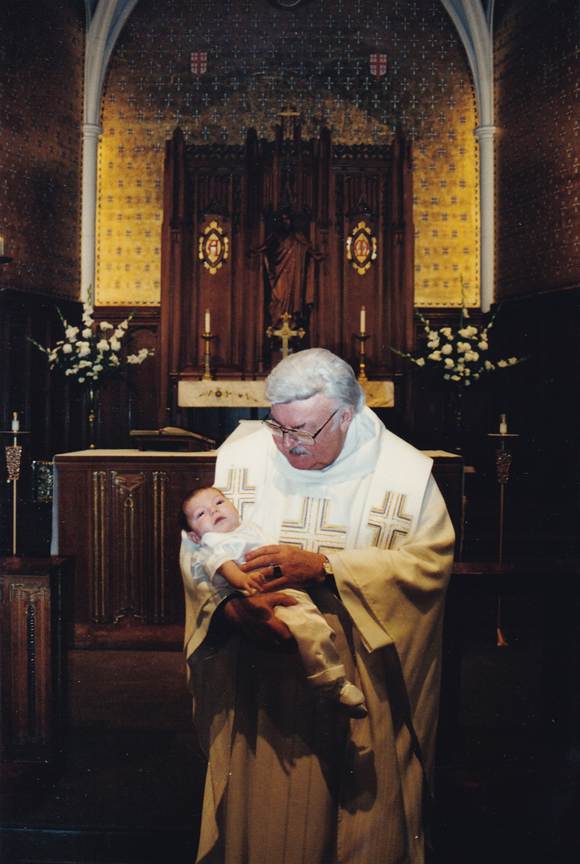
Pictured: Rev. Dr. Dale D. Hansen after baptizing my son — one of our family’s returns to church.

Figure 1 Rev. Dr. Dale D. Hansen and my older son

Next Week’s Topic: “Earliest ancestor”

AI Disclosure

This post was created by me with the help of AI tools. While AI helps organize research, the storytelling and discoveries are my own.

52 AI Ancestors in 52 Weeks: Week 26: Favorite name

I’ve combined Amy Johnson Crow’s 52 ancestors in 52 weeks challenge, and Steve Little’s The 2025 AI Genealogy Do-Over, to create a unique 52 AI ancestors in 52 weeks party!

52 AI Ancestors in 52 Weeks: Week 26: Favorite name

Introduction

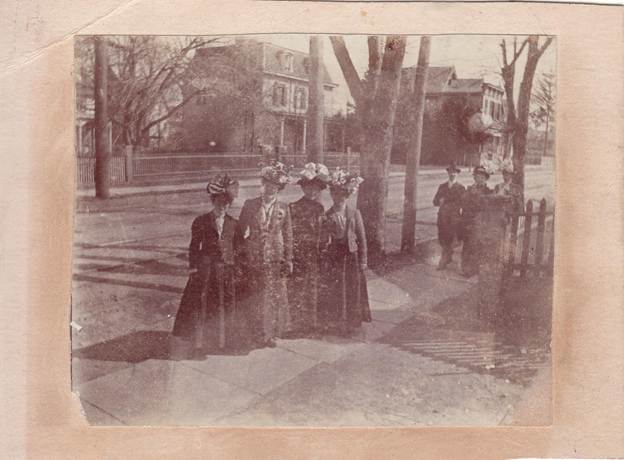
My grandmother, Edith Lillian MAKEY WEST (born 1913), was named after her maternal aunt Edith BRITTON GILSHENAN. She always said she hated it and insisted that none of us name any children after her.

But secretly, it seems, she wanted it. So very late in her life, my mother named her new dog Lily. Grandma chortled.

Two years after Grandma died, I had a son, who I named Evan, in order to use her first initial. I hope she’s smiling down on him!

Discussion

I’ll wager we all had name stories! But where did these names originate?

Did you know that the Social Security Administration publicizes the most popular baby names? Last year they were Liam and Olivia. https://www.ssa.gov/oact/babynames/ You can view popularity of names by Change in popularity, top 5 names, decade, state, or U.S. territory.

I selected the 1940s and it showed the top 200 given names for each gender. The dropdown goes back as far as the 1880s, the decade Aunt Edith was born, when she got the 31st most popular girl’s name.

How AI can help

AI can bring a lot of insight to that, though. I went to ChatGPT and asked it

When did the name Edith become popular and why?

Its response went much farther back than the Social Security office did. ChatGPT told me that the name became popular in late 19th-and early 20th-century England and America, but that its origins well predated that, to the Old English, and gave me a history, including saints and royalty with that name.

Were people who were named Edith in 1884 named after anyone in particular?

It gave a lot of possibilities but none of them rang true for me. It added: People named Edith in 1884 were typically not named after a single popular figure which was quite useful.

Challenge

Select someone that you think may have been given a then-popular name, and ask your favorite LLM about it. I chose ChatGPT because I’m comfortable with it, but there are others that specialize in research; for example, Microsoft Researcher or Claude Opus or Gemini. Feel free to run the questions through all three, or others!

Make sure to iterate. Few of us get it 100% spot on the first try. Dig in to find what you’re looking for!

Figure 1 Family photo, Easter Sunday 1900. Edith Britton Gilshenan believed to be present.

Summary

Names hold stories—and sometimes contradictions. Grandma Edith disliked hers, yet giggled when it was revived for a beloved dog. Using the name’s first initial for a grandson showed how names can subtly honor family ties. This week’s theme invites readers to reflect on favorite names in their tree, investigate their origins, and consider their cultural meaning. Tools like the Social Security baby name database offer insight into popularity over time, while AI tools like ChatGPT can add rich historical context that isn’t in the standard indexes. The takeaway? Every name has a backstory—your job is to go looking for it, and ask better questions when you do.

What’s your favorite name in your family tree—and what do you know about where it came from?

Further Resources

🛠️ Further Resources

  1. Social Security Administration Baby Names Database
    https://www.ssa.gov/oact/babynames/
    Explore U.S. baby name trends by year, state, and more.
  2. ChatGPT
    https://chat.openai.com
    Ask about name origins, cultural context, or compare historical trends.
  3. Microsoft Researcher (via Copilot)
    Available through Microsoft 365 subscriptions. Great for digging deeper into historical naming conventions. Access it via Copilot https://m365.cloud.microsoft/chat/
  4. Claude (Anthropic)
    https://claude.ai
    A conversational AI with a gentle touch for genealogical inquiries.
  5. Gemini by Google
    https://gemini.google.com
    Cross-reference multiple sources on historical figures and name origins.
  6. Behind the Name
    https://www.behindthename.com
    A longstanding and well-researched name etymology resource.

Next Week’s Topic: “Family business”

Disclosure

This post was created by me with the help of AI tools. While AI helps organize research, the storytelling and discoveries are my own.

A Brutal Editor (with Zero Feelings): Using AI to Tighten Your Genealogy Writing

Using AI to improve my genealogical writing

I am writing a book for my children about their ancestors. They are not interested in their history now, but perhaps they or their children will be. This book is to hedge against my inability to assist them whenever that happy day comes.

Every year I focus on a new generation to research and improve it. Every month I set myself subtasks within that generation.

For June, I am focusing more on writing a quality biographical sketch.

I tried several AI tools, including ChatGPT and Claude (another writing assistant), but Claude gave me the most actionable feedback.

  1. Create a style sheet. You may choose the format of your choice, of course; perhaps it will be The New York Genealogical and Biographical Record, The Register, or The American Genealogist. Whichever you choose, there will probably be guidelines for prospective authors. You can point AI to those guidelines. I asked it:

Create a style sheet for a biographical sketch in genealogy. Lean toward the format discussed in https://www.newyorkfamilyhistory.org/writing-nygb-record

2. Run your sketch through that style sheet. I asked it:

Using this style sheet, suggest improvements for: <insert your sketch>

I will warn you, Claude was brutal. It gave suggestions in these areas, for example:

  • Major Issues to Address
  • Suggested Revision
  • Technical Corrections Needed
  • Missing Elements to Add
  • Critical Changes Needed
  • Research suggestions

Here’s a screenshot:

Each item included detailed explanations and suggestions, not just vague critiques.

And finally, take a look at my improved Malvina Hendell sketch.

Before:

After:

The rewrite read tighter, more professional, and far more historically grounded. Even I was impressed. I have been doing AI for a while now, and this really WOWed me. I made a note to go back and redo earlier generations in my book as well, it was that good.

Try it! It’s like having a no-nonsense editor on call—who never sleeps. Try it and let me know how it works for your writing.

52 AI Ancestors in 52 Weeks: Week 24 – Artistic

Prompt: “The theme for Week 24 is “Artistic.” Is there a painter, crafter, quilter, knitter, crocheter, or musician in the family? This is their week.”

I’ve combined Amy Johnson Crow’s 52 ancestors in 52 weeks challenge, and Steve Little’s The 2025 AI Genealogy Do-Over, to create a unique 52 AI ancestors in 52 weeks party!

52 AI Ancestors in 52 Weeks: Week 24: Artistic

Introduction

I was a computer science major in college. This is, in part, because I have no artistic talent whatsoever. My drawings look like modern art—unintentionally. But I grew up knowing that my grandfather’s sister, Lydia Coral West (1888–1944), was an artist – my grandparents had a still life oil painting of hers hanging in their house.

Discussion

I was recently reminiscing with my uncle about our memories of the family, and it turns out he had a charcoal drawing that Aunt Lydia did of my grandfather (his father) when he was small. He offered the drawing to me and of course, I jumped at the opportunity! It’s dated 12/31/1914. I quickly got a custom frame, and I proudly display it in my home—with a detailed note on the back explaining the artist, subject, and provenance, of course.

Figure 1 My grandfather, age 7, as drawn by his sister

Well, I may have no artistic talent, but I can appreciate this century-old portrait of a man I loved well.

How AI can help

Even if you can’t paint like Aunt Lydia, AI tools can help you see your artistic ancestors more clearly:

  • Restoring Images: Try AI tools like MyHeritage Photo Enhancer or Hotpot.ai to sharpen old photos of artworks or portraits.
  • Detecting Watermarks or Signatures: AI-based image analysis tools can help uncover faint or hidden artist marks on old paintings.
  • Identifying Art Styles: Upload artwork to platforms like Google Arts & Culture to see if it resembles specific art movements or periods.
  • Family Storytelling: Use ChatGPT or Sudowrite to help you write a story or caption from the artist’s point of view for creative flair.

Challenge:

  1. Find an artwork, piece of sheet music, or handmade item created by an ancestor. Use AI to enhance a photo of it.
  2. Write a fictional letter or diary entry from your artistic ancestor using AI assistance. What might Aunt Lydia have said about drawing her little brother?

Summary

Even if we aren’t artists ourselves, we can still honor the creatives in our family tree. Lydia Coral West may not have had a gallery opening, but her work hangs proudly in my home—and her legacy lives on through stories, images, and a little digital help.

Further Resources

  • MyHeritage Photo Enhancer: Sharpen and colorize old family photos and artwork for clearer details.
    myheritage.com/photo-enhancer
  • Hotpot AI Tools: Offers image restoration and background removal—useful for isolating and enhancing old sketches or crafts.
    hotpot.ai
  • Google Arts & Culture: Explore art styles and historical context by comparing your ancestor’s work with museum collections.
    artsandculture.google.com
  • Sudowrite: An AI-powered writing tool that helps generate creative writing, fictional letters, and ancestor storytelling ideas.
    sudowrite.com

Next Week’s Topic: “FAN Club” – it’s time to look beyond your ancestor and into their Friends, Associates, and Neighbors.

Disclosure

This post was created by me with the help of AI tools. While AI helps organize research, the storytelling and discoveries are my own.

52 AI Ancestors in 52 Weeks: Week 18: Institutions

I’ve combined Amy Johnson Crow’s 52 ancestors in 52 weeks challenge, and Steve Little’s The 2025 AI Genealogy Do-Over, to create a unique 52 AI ancestors in 52 weeks party!

52 AI Ancestors in 52 Weeks: Week 18: Institutions

Introduction

As Amy Johnson Crow pointed out, “institutions” can mean many things. For me, the word instantly calls to mind the high value my family places on education.

Discussion

My mother’s brother prides himself on being the first in the family to graduate from college (note to self: email Uncle and ask where he attended).

My father was also the first in his line; he went to St. John’s University. His family wasn’t well off — I later learned he attended on a full scholarship. When I spoke to the university, they told me it was probably through the Catholic Scholars program: one full ride per Catholic high school in New York City. I wish Dad had bragged a little about that!

He raised us with a strong emphasis on education; “keep your options open” was a saying I heard often, and he firmly believed education was the way to do that. Two of his three children earned both Bachelor’s and Master’s degrees.

Today, I work in the Worldwide Learning organization at my employer, and my son is a high school teacher, about to marry a primary school teacher.

The force runs strong in this line.

What was your family’s take on education?

How AI can help

One addition to my bucket list is to create a scholarship, possibly in my dad’s name at his alma mater. While I hesitated, the cost of an endowment doubled. Time to get serious!

Here’s how AI can help with the process:

  • Research scholarship programs: AI can compare endowed scholarship requirements across universities.
  • Gather qualification criteria: AI can collect eligibility standards to help shape the scholarship.
  • Draft proposals: AI can suggest wording for scholarship descriptions and application processes.
  • Organize comparisons: AI can create tables showing costs, donation requirements, and benefits.

Summary and challenge

What’s holding me back? I want to take advantage of my employer’s matching funds, but I’m not sure how to set it up. My plan:

  1. Use AI to research scholarship structures and matching fund options.
  2. Contact the university to confirm current endowment requirements.
  3. Reach out to my employer’s HR or charitable giving department for advice.

“A scholarship endowment is more than a donation; it’s a promise to future dreamers that someone believes in their journey.”

Thanks to ChatGPT for that quote!

Figure 1 My son attended my Master’s graduation!

Your Turn:

What “institutions” have shaped your family story? Education, religion, military service? I’d love to hear about it.

Next week’s topic: “At the Library.

Disclosure

This post was created by me and refined with AI assistance. While AI helps organize research, the storytelling and discoveries are my own.