I’ve combined Amy Johnson Crow’s 52 ancestors in 52 weeks challenge, and Steve Little’s The 2025 AI Genealogy Do-Over, to create a unique 52 AI ancestors in 52 weeks party!
52 AI Ancestors in 52 Weeks: Week 46: Wartime
Introduction
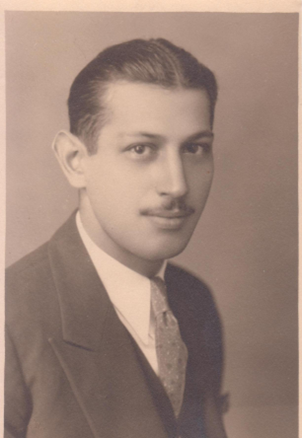
My grandfather, Edward Joseph Anderson (1912-1985), was a small child when World War I broke out. My father told me that Grandpa always felt he had an education gap about the war, due to the timing. He was too young when the events were current to really know what was happening, but the war had not yet been added to the curriculum at school.
Grandpa, according to Dad, sought out books about the war to help him to understand more about it. I’m sure he knew many, many people affected by it.
Maybe that curiosity never left him. He lived through the sound of distant news and ration talk he couldn’t quite grasp, and spent the rest of his life filling in what those childhood memories left unsaid.
That curiosity must run in the family. As a genealogist, I find myself chasing the same questions Grandpa did: trying to understand how war shaped the lives of people who lived in its shadow. His books led him to the battlefields of Europe; my search led me to the stories of our own family during wartime.
Discussion
Grandpa wasn’t the only one shaped by war, even from a distance. Once I started exploring our family’s wartime stories, I realized that every generation had its own version of it.
There were those who registered but never served, those who built ships and newspapers and families while the world was breaking apart, and those who were too young to know why the adults whispered at night. Each carried a piece of the story, whether they realized it or not.
It turns out, wartime isn’t just about those who fight – it’s also about those who remember, imagine, and try to make sense of what they lived through. Discovering those stories isn’t always straightforward. Records can be scarce or scattered, but even fragments can lead somewhere.
How AI can help
These stories aren’t always easy to find. Military records can be confusing, incomplete, or hidden behind unfamiliar names – but that’s where a bit of modern help can make all the difference.
Some ideas:
- Many draft registration lists are now online.
- Newspapers frequently printed the list of draftees (and newspapers are going online)
- Censuses often show us those who served (extra shoutout to the 1865 New York State census!)
- Censuses also show us occupations, which may be war-related ones
- Family ephemera may include this type of memento, such as when my grandmother showed me my baby father’s ration books
Ask AI for more ideas – or where to find them. Better yet, tell it what you know. (“My ancestor John Q. Doe, born 1842, lived in Argentine, Kansas during the Civil War. Where might I find records around any military service he may have done?”)
But don’t limit yourself to military service – remember not all those who served carried a gun. Maybe they carried water or provided food.
Or maybe they got shot in the draft riots?
Challenge for Readers
Option 1: Trace a Wartime Shadow
Pick one ancestor who lived during a major war – even if they never served.
- What might they have seen, heard, or felt?
- Search a newspaper from their hometown during that era and read the local headlines.
- Bonus: Ask ChatGPT or another AI tool to describe what life was like on their street in that year.
You may not find a uniform, but you’ll find the echoes.
Option 2: Find Service Between the Lines
Review your family tree and see whose records fall between 1861–65, 1914–18, or 1941–45.
- Who was the right age to serve but didn’t?
- Can you find a draft registration, ration book, or even a letter?
- Use AI to suggest possible record sets or archives for your search; try phrasing it as:
“Where might I find Civil War service records for a 23-year-old farmer in Ohio?”
Sometimes the “almost served” stories are just as revealing.
Option 3: The Home Front Project
Choose one ancestor who supported the war effort in a civilian way; through work, care, or quiet resilience.
- What was their occupation during wartime?
- Search for how that industry contributed to the war effort.
- Then ask AI to summarize what that role might have looked like day to day.
Think of it as writing a tribute to the people who kept the lights on while the world went dark.
Optional Add-On: Reflective Prompt
If your ancestors could tell you how war changed them, what might they say?
Try writing a short paragraph, diary entry, or AI-assisted dialogue in their voice.
Want to Learn More?
National Archives – Military Service Records
https://www.archives.gov/veterans/military-service-records
Request copies of World War I and II draft cards, enlistment papers, or service records. You can also explore state-level archives for older conflicts.
FamilySearch – Military Collections
https://www.familysearch.org/search/collection/location/1927084
Free access to global military collections, including U.S. draft registrations, Civil War pensions, and state militia rolls.
Fold3 (Ancestry)
https://www.fold3.com
Digitized military records, photos, and unit histories. Look for regimental pages to understand where and when your ancestor might have served.
Newspapers.com or Chronicling America
https://chroniclingamerica.loc.gov
Historic newspapers often printed lists of draftees, letters from soldiers, or wartime updates from hometowns.
WWI Draft Registration Database – National Archives Catalog
https://catalog.archives.gov/id/641776
Search for men born between 1873 and 1900 who registered for the Great War, even if they were never called up.
AI Prompts for Wartime Research
Ask ChatGPT or a similar tool:
- “What military units were based near [ancestor’s hometown] in [year]?”
- “List possible civilian roles in [industry or location] during WWII.”
- “Summarize how [occupation] supported the war effort.”
For Context and Reflection
- JSTOR Daily: Life on the Home Front – https://daily.jstor.org
- Smithsonian Magazine – Stories from the Great War – https://www.smithsonianmag.com
Summary
My grandfather filled his understanding of war with books. I’ve tried to fill mine with stories—his, and those of the family who came before him. In both cases, the search is what keeps memory alive.
Next Week’s Topic: “The Name’s the Same”
AI Disclosure
This post was created by me with the help of AI tools. While AI helps organize research, the storytelling and discoveries are my own.
![An obituary for Stephen Barker, mentioning that he was shot "in the riots of 1862[sic]"](https://theancestorwhisperer.com/wp-content/uploads/2025/11/image-1.jpeg?w=624)