52 AI Ancestors in 52 Weeks: Week 3: Nickname

I’ve combined Amy Johnson Crow’s 52 ancestors in 52 weeks challenge, and Steve Little’s The 2025 AI Genealogy Do-Over, to create a unique 52 AI ancestors in 52 weeks party!

52 AI Ancestors in 52 Weeks: Week 3: Nickname

Introduction

Week 3 of the 52 Ancestors challenge dives into nicknames. “Which of your ancestors had a nickname? Do you know how they got it?”

This week, I’ll step away from my maternal grandmother’s line to focus on my paternal grandmother’s mother, my great-grandmother Mary Agnes HART CAREY (1892-1978) —known to us as “Nanny.”

Background

Great Grandma, “Nanny” we called her, was named Mary Agnes HART CAREY. She was born, you might have guessed, into an Irish Catholic family.

The nickname

Her formal name, Mary Agnes, seemed typical for her heritage and era, but it also carried a hidden twist: she was universally called “Aggie.”

My grandmother shared how, after Nanny passed, she was shocked to learn her mother’s first name wasn’t actually “Agnes.” Nanny named one of her children “Agnes,” but not “Mary,” indicating how she wanted to leave the name behind.

Nicknames like “Aggie” often reflect personal preferences, family traditions, or even community influences. But what’s fascinating is how these seemingly small details offer insights into how ancestors presented themselves to the world or were seen by others.
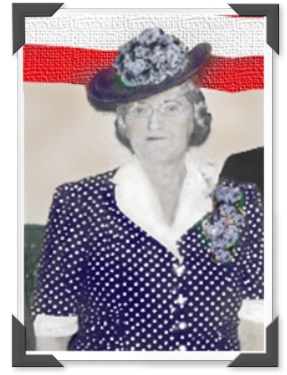
Figure 1 Mary Agnes HART CAREY, date perhaps 1940s to early 1950s

The AI Connection: How AI Can Help Decode Nicknames

Nicknames can be tricky in genealogy, especially when records use formal names instead of the name your ancestor was commonly called. AI tools can be a game-changer here by offering innovative ways to trace and decode these hidden connections:

  1. Name Matching in Records
    AI-powered genealogy platforms can identify patterns in historical records, connecting nicknames to formal names. For example, searching for “Aggie” might yield records for Mary Agnes, even if “Aggie” isn’t explicitly listed. AI algorithms that analyze phonetic similarities (like the Soundex system) make this possible.
  2. Document Analysis
    Some AI tools can scan personal letters, diaries, or even old newspapers to detect nicknames alongside formal names. This can help clarify how nicknames were used and even uncover clues about their origins.
  3. Family Tree Suggestions
    Platforms like Ancestry.com and MyHeritage use AI to suggest connections. If an ancestor was known by different names in various documents, AI can consolidate the data, revealing hidden patterns or relationships you might otherwise miss.
  4. Cultural Context Insights
    AI can also analyze naming trends by era and region. For instance, “Aggie” as a nickname for Agnes was more popular in Irish communities during certain periods. Understanding these trends can make your ancestor’s story richer and more relatable.

Going Forward

What about you? Who in your family had a nickname that stood out? Did it reveal a personality quirk, a fond memory, or a cultural connection?

Take this week’s challenge to the next level by pairing your research with AI tools. You might discover a nickname hiding in plain sight or uncover how a loved one’s identity evolved over time.

52 AI Ancestors in 52 Weeks: Week 2: Favorite Photo

I’ve combined Amy Johnson Crow’s 52 ancestors in 52 weeks challenge, and Steve Little’s The 2025 AI Genealogy Do-Over, to create a unique 52 AI ancestors in 52 weeks party!

52 AI Ancestors in 52 Weeks: Week 2: Favorite Photo

Introduction

Week 2 of the 52 Ancestors challenge dives into your favorite photo. “Photos capture our family history like few other things can,” right? Picking a favorite is tough—I have a handful that hold deep meaning for me. Let me share one particularly special image with you: a portrait I labeled “Unknown Sailor.”

Background

My maternal grandmother, whom I wrote about last week, lost her mother at the age of three. As the only daughter, she inherited a collection of keepsakes, including a stack of photographs—most of them frustratingly unlabeled. One photo, though, stood out:

A sepia-toned image of a confident sailor, standing tall with an unmistakable pride.

This sailor seemed to radiate pride and confidence, but who was he?

The search

At first, I had no clues to identify him. Then, while researching Grandma’s maternal grandmother, Alice, I learned Alice had three brothers who served in the Civil War, including one in the Navy. That gave me a potential name: Oscar Smith.

For years, Oscar remained an enigma. No evidence could prove his identity. Then one day, while exploring collateral research, I connected with another genealogist studying the surname of Alice’s first husband (I descend from the second), my second cousin once removed. We compared notes and decided to meet, each bringing our family photo collections.

Imagine my surprise when she produced the exact same [unlabeled] sailor photo! Together, we became convinced the sailor was indeed Oscar Smith. Over a century after his naval service, Oscar had unwittingly brought two branches of our family back together.

Kathie and I corresponded and collaborated for quite a while. I assume she is now asking Alice for family information.

The AI connection

Here’s where modern tools entered the picture. Steve’s Photograph Analysis, a custom GPT from Steve Little, became my new research ally. I uploaded the sailor photo, and the AI provided a detailed analysis:

  • Composition: Lighting, subject placement, and atmosphere.
  • Context: Potential date, location, and even identity clues.
  • Insights: Surprising details about the photo’s timeline.

To my amazement, ChatGPT placed the photo in a time frame after Oscar had died. Was my theory wrong? Or was there a misstep in the analysis? This unexpected twist turned the photo into a deeper mystery, one I’m still unraveling.

Summary report including conclusion that the photo is from the early 1900s.

Going forward

I have my theories, but as any genealogist knows, personal beliefs don’t meet the Genealogical Proof Standard. For now, Oscar’s (?) photo remains a tantalizing puzzle. Who knows—maybe future 52 Ancestors prompts will give me the chance to share updates as this story unfolds.

Try it yourself

Curious about your own family photos? Give Steve’s photo analyzer a spin, or prompt an AI tool yourself to uncover hidden details in your family’s history. Happy hunting!

52 AI ancestors in 52 weeks: Week 1: In the Beginning

52 AI ancestors in 52 weeks: Week 1: In the Beginning

I’ve combined Amy Johnson Crow’s 52 ancestors in 52 weeks challenge, and Steve Little’s The 2025 AI Genealogy Do-Over, to create a unique 52 AI ancestors in 52 weeks party!

History says I won’t do it every week. But we’re talking about progress, not perfection. So, let’s just jump in and have fun.

52 AI Ancestors in 52 Weeks: Week 1: In the Beginning

Genealogy is like solving a family mystery—part detective work, part heartfelt storytelling. Throw AI into the mix, and it’s a whole new level of discovery. This year, I’m taking up a challenge that blends Amy Johnson Crow’s “52 Ancestors in 52 Weeks” with a techy twist inspired by Steve Little’s “The 2025 AI Genealogy Do-Over.” The goal? To explore both my family’s roots and the potential of AI in genealogy. Let’s kick it off with Week 1.


Why I Got Started

My genealogy obsession began in 6th grade when I got an assignment to create a family tree. Lucky for me, my grandmother—my biggest cheerleader—was just a few steps away. She dug out old records, shared stories, and filled in the gaps with amazing details. Thanks to her, I didn’t just complete the assignment; I caught the genealogy bug for life.

Grandma’s love for family history had its own story. She lost her mother at the tender age of three, and I believe her passion for genealogy was her way of reconnecting with that lost connection. She came from a prominent local family but struggled to tie certain pieces together. Those mysteries drove her—and now, they drive me.


The AI Connection

Fast forward to today. I’ve got tools my grandmother couldn’t have dreamed of—AI among them. This week, I gave an AI model a task: review and rewrite a tribute I wrote for my grandmother. Here’s how it went:

  • Step 1: I asked the AI to evaluate my tribute’s emotional resonance and clarity.
    • Please create guidelines for writing a tribute on the Internet, rate my page according to them, make suggestions, rewrite using the suggestions, and regrade. The page:
  • Step 2: I pasted the text (AI and links don’t always get along) and let it suggest edits.
  • Step 3: After trying a few models, Gemini delivered the most heartfelt rewrite. I put it below this post. What do you think? Let me know in the comments!

AI didn’t just polish the words—it helped me reflect on the way I’d captured my grandmother’s story. But, as powerful as AI is, it didn’t replace my voice; it enhanced it.

Grandma holding me at what was probably my first birthday


Your Challenge

Genealogy is personal, but technology can make it interactive. Here’s how you can join the journey:

  1. Pick an Ancestor: Choose someone in your family tree who inspires you. Write a short tribute to them (just 300 words or so).
  2. Add AI to the Mix: Use a free AI tool to refine your writing. ChatGPT, Claude, or Gemini are great options.
  3. Compare and Reflect: Does the AI version improve your story, or does it miss the mark? Adjust it to reflect your voice.

Share your experience in the comments—I’d love to hear how AI shapes your family’s stories.


In the End, It’s All About Connection

Genealogy and AI might seem like an odd pairing, but at their core, both are about uncovering connections. Whether it’s piecing together family lore or fine-tuning a tribute, every little discovery brings us closer to understanding who we are.

Here’s to Week 1—and to Grandma, who started it all. Without her, this journey wouldn’t be possible. And thanks to AI, it’s more exciting than ever.


Final Thoughts: Technology can amplify the past, but it’s the stories we share that keep it alive. So here’s my challenge: embrace both the wisdom of your ancestors and the tools of today to create something truly timeless.

The AI-revised tribute:

A Tribute to Edith Lillian Makey West (1913-1997)

Edith Lillian Makey West, my beloved Grandma, was born on September 12, 1913, in Staten Island, New York. Her life, though marked by early loss – her mother passed away when she was just three years old – was a testament to resilience and love.

Raised by her strong and loving [Janet adds: aunt, her namesake Edith, and] stepmother, Elfrida, Edith grew into a vibrant young woman. She graduated from Bryant High School and embarked on her career, working first as a candy packer and then for The Corporation Trust Company, where she dedicated many years.

Edith and my Grandpa, Gordon, shared a deep and enduring love. Their marriage, celebrated in 1935, was a cornerstone of her life. They traveled extensively, exploring 37 states together, and cherished raising their children, Alan and Elise.

Grandma’s passion for family history ignited my own. Countless hours were spent discussing ancestors, sharing stories, and piecing together our family’s past. Her excitement was contagious, fueling my own genealogical pursuits.

More than anything, Grandma embodied strength and resilience. She faced life’s challenges with grace and determination, inspiring me with her quiet strength.

Though she is gone, her memory lives on. I will always cherish the warmth of her smile, the comforting sound of her laughter, and the enduring lessons she imparted.