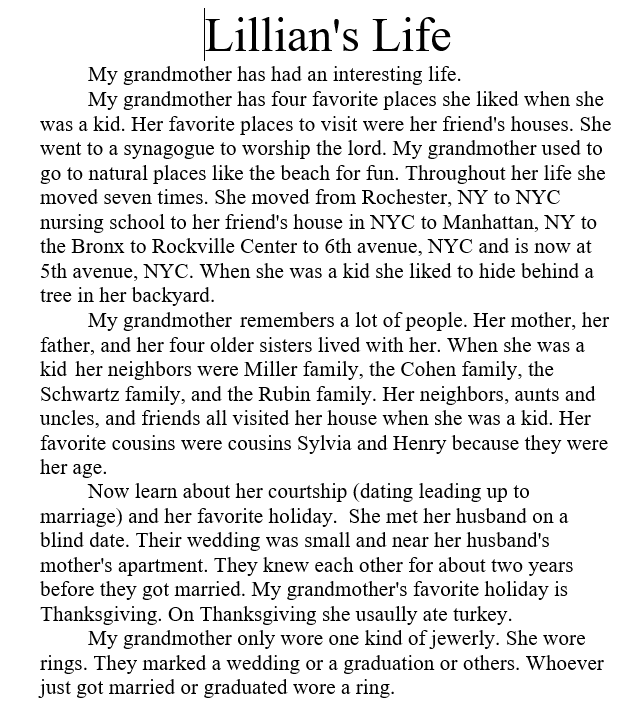
Conflicting Clues

Conflicting Clues

I’ve adapted Amy Johnson Crow’s 52 ancestors in 52 weeks challenge.

Each week’s post follows my children’s ahnentafel numbering, which determines the featured ancestor.

This ensures no one until mid-sixth generation gets left behind.

52 Ancestors in 52 Weeks: 2026 Week 09: Conflicting Clues

Introduction

My assigned Week 9 ancestor is Anna Brenda FRANK BIRNBAUM.

And “Conflicting Clues” turned out to be a particularly instructive one.

Was Anna a U.S. citizen?

Discussion

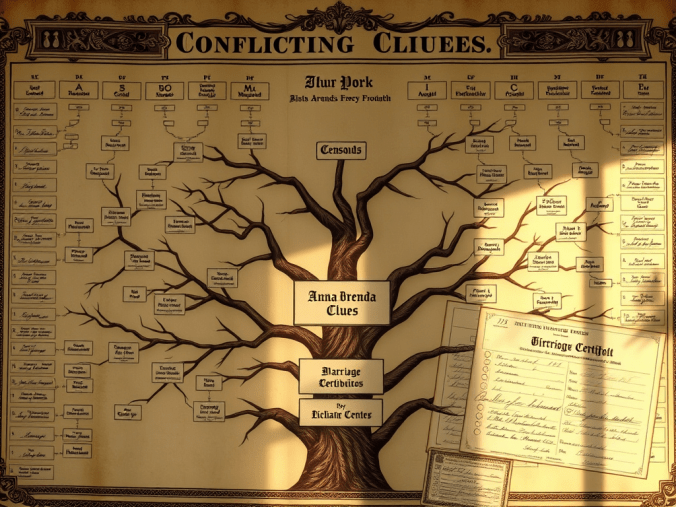
Anna was born in New York City in 1889. While I haven’t found her birth record, I have found her siblings’, and I have her with her family in the 1900 and 1905 censuses. She married Samuel Birnbaum, an immigrant, in 1906.

The following year, the 1907 Expatriation Act automatically revoked the citizenship of women who married non-citizens. Suddenly many women who had grown up here and never seen a ship were aliens.

Because Anna married in 1906, just before the law took effect, she may have narrowly avoided this automatic expatriation.

Imagine what that was like for them. Did it affect them socially? Did they feel disenfranchised from a place that had been their home for perhaps decades? And what would the consequences be? The act remained in place until the early 1920s – right around the time women gained the right to vote. Imagine fighting for suffrage only to learn your marriage disqualified you?

Imagine if I had seen Anna in 1910 listed as an alien and thought, “Well, that’s not my Anna.”

So, the moral of the story is, as Judy Russell, The Legal Genealogist, keeps reminding us, to know the laws in effect in the time and place of the event.

The law was largely (but not completely) repealed by the Cable Act of 1922. (Asians were still discriminated against.)

The National Archives has a helpful PDF at When Saying “I Do” Meant Giving Up Your U.S. Citizenship.

Challenge

Reexamine your no-brainers and look for incongruities which may have escaped notice previously. Investigate why!

You can look for:

  • Citizenship shifts
  • Border changes
  • Age discrepancies
  • Marital status laws

What conflicting clues are you dealing with?

AI Disclosure

This post was created by me with the help of AI tools. While AI helps organize research, the storytelling and discoveries are my own.
Next Week’s Topic: Changed My Thinking

Five genealogy challenges

I’m having some Saturday Night Genealogy Fun (#SNGF), with help from Randy Seaver and his prompts! Feel free to join in.

Saturday Night Genealogy Fun: February 21, 2026

Prompt: “What are your major genealogy challenges – the family mysteries that you haven’t been able to crack to date? Tell us about five of your real genealogy challenges with a short paragraph, and link to blog posts if you have written about them.”

Introduction

Ah, those challenging ancestors – haven’t we all got them? To list five is a lot! But I’ll be brief.

Discussion

  1. Andrew DRISKOL is my A-number-one mystery, because I have never been able to locate him on any records, even while they were keeping records. German birth, (presumably) English marriage, US immigration, 1880 census. Several people, my great-grandmother included, name him as their father, so…  Blog: https://theancestorwhisperer.com/2025/09/27/52-ai-ancestors-in-52-weeks-week-39-disappeared/
  2. Mary Ann HOPKINS WEST (ca 1813-1850s). Women are tough. I have her on two records, her 1829 Maryland marriage and the 1850 New Jersey census. I’d love to find her death. Her husband John appears to be a widower in 1860, and the 1855 state census is a head-of-household one, so I can’t be confident if she was alive or dead for that one. They lived either in New Jersey or Pennsylvania at the time. I’ve taken some shots in the dark, but all have turned up empty.
  3. Michael ANDERSON (ca 1850-1883). Hewas born in Ireland – there are Irish Andersons, but I really haven’t got a grip on their origins.When he died in Staten Island New York, his father’s info was blank and his mother’s info only noted that she was from Carroll, Ireland. I’ve not found his birth, immigration, or marriage. Again, troubling considering how relatively recent this was.

My fourth and fifth challenges are John DuSHANNON and his wife Margaret ARNOLD DuSHANNON. He was from Canada; she from Connecticut, and they married in Bridgeport in 1851. They were in the 1870 census with several children, and in 1876 their daughter Charlotte May, my great grandmother, was being placed out of an orphanage. I’ve searched but still not found what happened to them. But I have made progress: Lottie did not even know her parents’ names or her date of birth; her death certificate had invented parents’ names, and she adopted Christmas Day as her birthday: her death certificate and tombstone say Dec. 25, 1867, when the birth record I found clearly identifies May 14, 1866. Did the orphanage assign a date to her? Did she get to choose the date, and chose a happy day? I will never know. Records can correct dates, but they can’t give her back what she never knew.

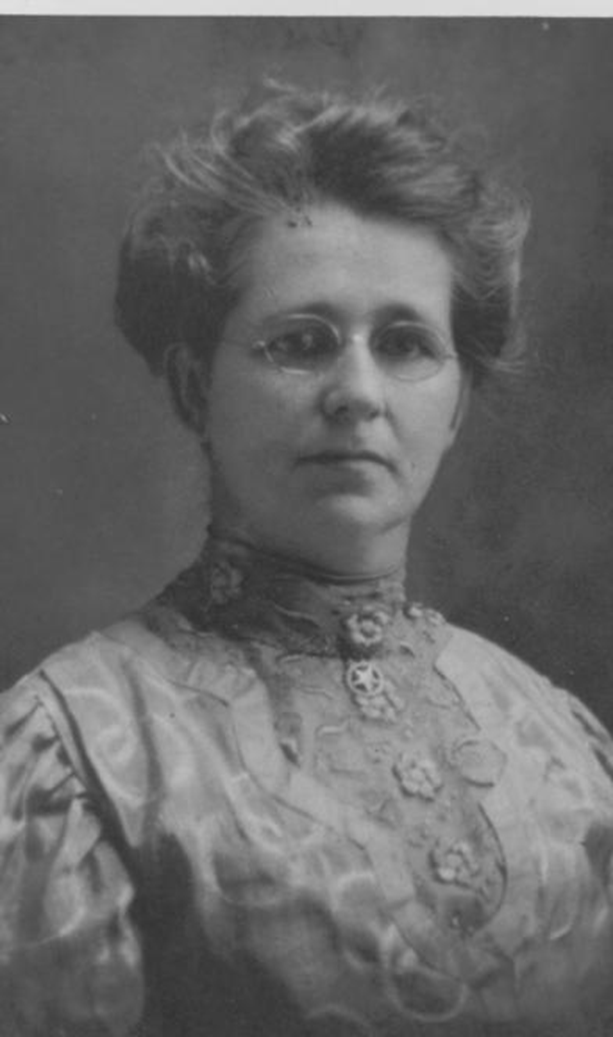
Charlotte Mae (Lottie) DuShannon West

Challenge

Who are your uncracked challenges? What do you think you might do about them? What does AI suggest you do about them? Ask it to find patterns you’re missing or suggest research paths to follow. Go on, check out the rabbit hole – you know you want to!

AI Disclosure

This post was created by me with the help of AI tools. While AI helps organize research, the storytelling and discoveries are my own.
A Big Decision

I’ve adapted Amy Johnson Crow’s 52 ancestors in 52 weeks challenge.

Each week’s post follows my children’s ahnentafel numbering, which determines the featured ancestor.

This ensures no one until mid-sixth generation gets left behind.

52 Ancestors in 52 Weeks: 2026 Week 08: A Big Decision

Introduction

My assigned Week 8 ancestor is Samuel Birnbaum.

I never met the man – my husband’s grandfather – and my husband didn’t know him either, just met him once or twice, according to hubby.

So I’m not working off any personal knowledge, just research.

Samuel Birnbaum made two big moves in his lifetime, and I’m definitely curious why he did.

Discussion

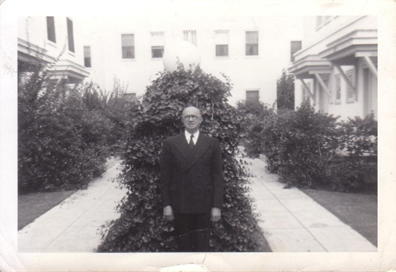
An older man in a suit posing for a photograph

Samuel Birnbaum was born 18 April 1885 in Eperjes, Saros County, Hungary (now Prešov, Slovakia). On 24 February 1902, at age sixteen, he arrived in New York aboard the Kronprinz Wilhelm, stating he was joining his brother, Morris Berkovitz.

By 1906 he had married Anna Brenda Frank in Manhattan and established himself as a butcher. He filed his declaration of intent in 1909 and was naturalized in 1912.

After decades in New York City, Samuel, his wife, and their youngest son relocated to Los Angeles between 1940 and 1942, where he died in 1954.

Why did Samuel leave Europe for the US?

I don’t know the answer to this. Millions of Jews left Eastern Europe between 1880 and 1924, driven by economic hardship, antisemitism, conscription, and family networks. Samuel arrived in 1902, following a brother whose trail I have yet to uncover. That timing alone suggests he was part of that larger exodus.

What records might answer that question?
Passenger manifests sometimes note whether an immigrant had been in the U.S. before. Naturalization records can contain affidavits naming relatives. Hungarian civil records might clarify family structure and confirm the brother he claimed to follow.

What made Samuel move from New York to California at the beginning of World War II?

Moving across the country in your mid-50s isn’t a small decision. It suggests either urgency, opportunity, or family pull. Did the youngest son get a job and bring his parents? (The youngest son has proven more difficult to trace. I’ve found his WWII draft card and he worked for the Credit Service Bureau, which doesn’t seem to be war-related, but the 1950 census says he served in the armed forces.)

To move beyond speculation, I need to turn to the records. It’s time to pick up the threads here and braid them together.

Down the rabbit hole…

If you give a mouse a muffin, there are a bunch of tasks you need to do. And if you ask me about my grandfather-in-law, I remember some unexamined tidbits. But far better that, than running into a blank slate! Every unanswered question is an invitation. Off to research now!

Research Steps

To better understand Samuel’s two major moves, I plan to:

  • Re-examine his naturalization file for witnesses or supporting affidavits that might identify the elusive brother Morris Berkovitz.
  • Search passenger manifests and border crossings for alternate spellings of Morris’s name.
  • Compare New York City directories (late 1930s–early 1940s) with Los Angeles directories to narrow the exact year of relocation.
  • Revisit the youngest son’s World War II draft registration and service record for clues about residence or occupation changes.
  • Locate Samuel’s California death certificate and obituary to identify the informant and any extended family listed.

Big decisions often leave paper trails. My task now is to find them.

Summary

Samuel Birnbaum made at least two life-altering decisions: to leave Hungary for America in 1902 and to leave New York for California four decades later. I don’t yet know what drove those choices, but the historical context offers possibilities. For now, the questions remain. The next step is to test the records and see whether those big decisions left clearer traces than I’ve yet uncovered.

AI Disclosure

This post was created by me with the help of AI tools. While AI helps organize research, the storytelling and discoveries are my own.
Next Week’s Topic: Conflicting Clues

A 66 Year Love Story?

I’m having some Saturday Night Genealogy Fun (#SNGF), with help from Randy Seaver and his prompts! Feel free to join in.

You are the result of the love of thousands”

– Attributed to Linda Hogan

Saturday Night Genealogy Fun: February 14, 2026

Prompt: “It’s Valentine’s Day – a day for lovers! We all have hundreds of love stories in our ancestry. What was the great love story of the ancestors in your family Tree?  What wedding had a great story in it?  Choose one ancestral couple. Share how they met (if known), when and where they married. Note how long they were married. Highlight something that suggests affection or partnership.”

Introduction

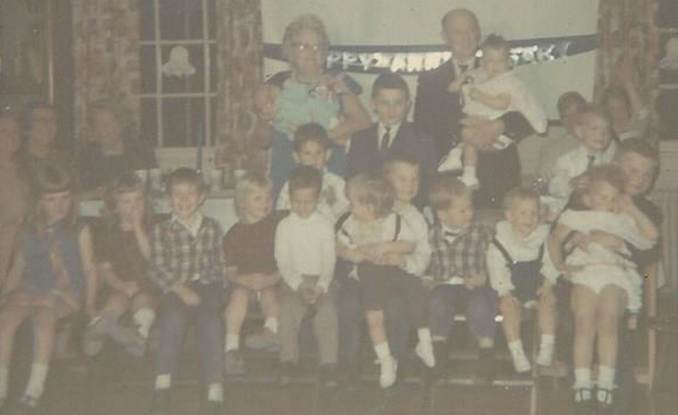
I have and adore a photo of my great-grandparents’ 60th anniversary party. It shows them surrounded by dozens of their great-grandchildren. Great Grandpa is holding me.

Discussion

They were married another six years after that party, so if you ask anyone in the family, they made it to 66 years.

Or did they?

For years, I had a big challenge locating their 1908 marriage record. This was in Manhattan, New York – a place whose records I knew well – and it simply wasn’t there.

Finally, after several years of searching, I located Great Grandpa’s WWI Draft registration card. It said he was married. That sent me looking again for their marriage record, and this time, I found it.

In 1918.

By that point, they’d already had four children.

My cousin holds their 1908 church marriage certificate. But for whatever reason, they never registered that wedding with the civil authorities. When he registered for the draft, they must have realized that, in the government’s eyes, they weren’t actually married — and had better make it official.

So my cousin has their 1908 marriage.

And I have their 1918 marriage.

Which makes me wonder… was that beautiful 1968 photograph really from their 50th anniversary?

If you count from the church wedding, they were married 66 years — the longest-married couple in my ancestry.

And whether they stood before an altar once or twice, one thing is clear: they built a life that endured. Four children before civil paperwork. Sixty years of partnership. Great-grandchildren at their feet.

That feels like a love story to me.

Your Turn

I would love to hear your ancestral love story. Drop it, or a link to it, in the comments.

Want to Learn More?

I also wrote a brief blog about the courtship of my grandparents, their daughter and her husband, here: https://theancestorwhisperer.com/2025/12/19/52-ai-ancestors-in-52-weeks-week-51-musical/

AI Disclosure

This post was created by me with the help of AI tools. While AI helps organize research, the storytelling and discoveries are my own.
What the Census Suggests

I’ve adapted Amy Johnson Crow’s 52 ancestors in 52 weeks challenge.

Each week’s post follows my children’s ahnentafel numbering, which determines the featured ancestor.

This ensures no one until mid-sixth generation gets left behind.

52 Ancestors in 52 Weeks: 2026 Week 07: What the Census Suggests

Introduction

My Week 7 ancestor is my mother, Elise West. Her mom was pregnant with her during the 1940 census, so I only had the 1950 to work with here.

And then I looked at the 1950 and regretted tying myself to a specific ancestor – as a nine year old, she had absolutely nothing interesting or surprising in her record.

But her neighbor – that was a different story.

Discussion

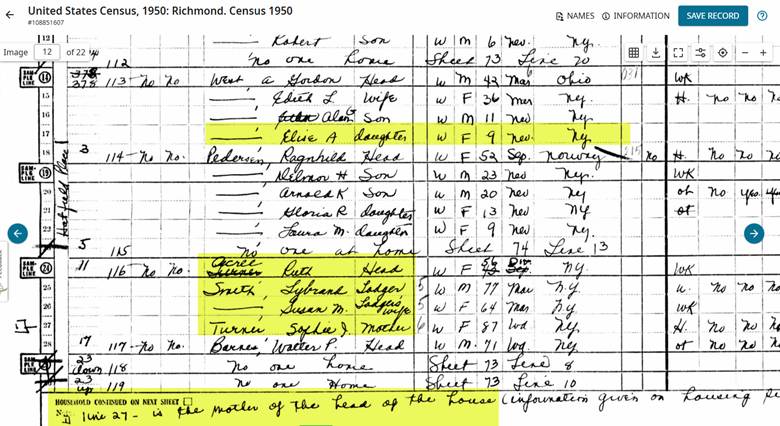
When I followed that page list, three doors down is where the story actually began. We have:

  • Ruth Acree, head of household
  • Lybrand Smith, Lodger
  • Susan M Smith, Lodger’s wife
  • Sophie J Turner, mother

But because my grandfather happened to fall on the census’s sample line, I noticed that Sophie had a note attached to her: that she was the mother of the head of household, not the lodger.

That’s a crucially important note for a researcher of either family! The census suggested how easily a family relationship can be misunderstood. Bless that enumerator, Elaine Gordon, for her attention to detail!

Challenge

What bonus clues and hints has the census given you? Has the enumerator given a more detailed birth place than required by the instructions? Was the age or birthdate very specific? We all have our terrible enumerator stories, but let’s think of a good one! Drop a comment below.

AI Disclosure

This post was created by me with the help of AI tools. While AI helps organize research, the storytelling and discoveries are my own.
Next Week’s Topic: A Big Decision

SNGF: Your Spouse’s Ancestors

I’m having some Saturday Night Genealogy Fun (#SNGF), with help from Randy Seaver and his prompts! Feel free to join in.

Saturday Night Genealogy Fun: February 7, 2026

Prompt:

“Have you researched the ancestors of your spouse (or significant other)? Please list the names and vital records data for your spouse/SO’s grandparents and great-grandparents like in an Ahnentafel Report.

“Have you written genealogical sketches and/or biographies for each of them?

“Share your list of your spouse/SO’s ancestors in your own blog post or in a Facebook, SubStack, BlueSky or other social media post. Leave a link to your post on this blog post to help us find your post.”

Introduction

I’m having some Saturday Night Genealogy Fun (#SNGF), inspired by one of Randy Seaver’s prompts, and this one made me stop and think a bit longer than usual.

The prompt asks:
Have you researched your spouse’s ancestors? Can you list their grandparents and great-grandparents, maybe even write sketches or biographies for them?

And here’s where I’ll be honest.

Oh, heck no – you do not want a neat list of names from me.

What you probably want to know is something more interesting anyway:
Have I been neglecting my husband’s side of the family in favor of my own?

Short answer: no.
Longer answer: his ahnentafel is shorter than mine, but not because it matters less, only because it unfolds differently.


My Side vs. His Side

I’ve been researching my own family for much longer, and like many of us, I grew up hearing stories that naturally pulled me in that direction. Familiar names, familiar places: they create an emotional gravity that’s hard to resist.

But researching my husband’s family changed once we had children.

Suddenly, this wasn’t just his ancestry. It was theirs.

And unlike my own lines, his family history reaches across the ocean only a few generations back. That means records still exist in European archives – records that are surprisingly rich, precise, and sometimes humbling.


What His Ancestors Taught Me

Researching my husband’s family has taught me things I never would have learned otherwise.

I’ve gained a deep respect for careful Jewish recordkeeping.
I’ve watched surnames and spellings shift – and the language of the records – depending on who was occupying a region at the time.
I’ve seen how laws, traditions, and restrictions quietly shaped people’s life choices in ways that don’t always announce themselves on a pedigree chart.

This is why I don’t think genealogy should ever be a numbers game. We all know that moment – someone boasting about the size of their tree – and how empty that can feel.

What matters is what each line teaches you.


A Gentle Challenge

So here’s my question for this week’s SNGF:

What have you learned by researching someone – or somewhere – that was unfamiliar to you at first?

Not how many names you added.
Not how far back you went.

But what surprised you once you slowed down and paid attention.

Figure 1 My husband’s cousin’s birth, recorded in Russian because the Russians occupied Suwalki in 1909.

EDIT TO ADD: the ahnentafel – most recent two generations dropped.

Generation 3

4. Samuel BIRNBAUM: born 14 Apr 1885 in Eperjes, Saros, Hungary, now Presov, Presov, Slovakia; married 24 Apr 1906 in New York, New York, USA; died 25 Dec 1954 in Los Angeles, Los Angeles, California, USA.

5. Anna Brenda FRANK: born 6 Mar 1889 in Manhattan, Kings, New York, USA; died 28 Aug 1971 in Los Angeles, Los Angeles, California, USA.

6. Samuel GOODE (GUDELSKY): born 21 Apr 1878 in Augustow, Suwalki, Poland; married 4 Aug 1899 in Veisiejai, Seinai, Suwalki, Lithuania; died 18 Mar 1958 in Rochester, Monroe, New York, USA.

7. Ida Khaya Fruma RABINOWITZ: born bet 1872 and 1875 in Veisiejai, Seinai, Suwalki, Lithuania; died 21 Jul 1952 in Rochester, Monroe, New York, USA.

Generation 4

8. Bernard (Joe) BIRNBAUM: born say 1860 in Austria-Hungary; married bef 1885; died bef 1908.

9. Fanny STEINBERG: born say 1860.

10. Joseph (Pinkus) FRANK: born Apr 1852 in Russia; married 17 Jan 1888 in Manhattan, New York, New York, United States; died 14 Jun 1916 in Manhattan, New York, New York, United States.

11. Jennie FELDER (FELDELOSS): born 20 Dec 1859 in Austria; died 8 Mar 1922 in Manhattan, New York, New York, USA.

12. Szmujło Morthaj GUDELSKI: born 20 Jun 1837 in Suwałki, Suwałki, Suwałki; married 1855 in Suwalki, Lithuania; died 11 Sep 1914 in Suwałki, Suwałki, Suwałki.

13. Cywa “Sylvia” BACHRACH: born abt 1835–1836 in Suwalki, Suwalki, Suwalki; died 5 Nov 1900 in Suwalki.

14. Mordecai RABINOWITZ: born abt 1837; married bef 1864; died aft 1901.

15. Chaia RACZKOWSKA: born abt 1828 in Veisiejai, Seinai, Suwalki, Lithuania; died 17 Jan 1901 in Seirijai, Sejny, Suwalki, Lithuania.

Generation 5

20. Samuel FRANK: born in Russia.

21. Fanny SEGAL: born in Russia.

22. Joseph James FELDER: born in Austria.

23. Rosie : born in Austria.

24. Manel Nochim Lejbowicz GUDELSKI: born abt 1800–1810; married bef 1826; died bef 1885.

25. Rejza Hirszowna SEJNENSKI: born abt 1807–1811 in Wierzbołów now Virbilis Lithuania; died 1885 in Suwalki, Lithuania.

26. Mowsza BACHRACH: born abt 1792; died 18 Mar 1846 in Suwalki.

27. Rocha Rochla CHONOWNA: born abt 1805; died 8 Apr 1867 in Suwalki.

28. Rubin RABINOWITZ: born 1803; died 2 May 1877 in Dusnitse, Krasnovo, Sejny, Suwalki.

30. Gotlib RACHKOVSKI: born abt 1789; died 5 Jan 1859 in Seirijai, Sejny, Suwalki, Lithuania.

31. Genia Henia SMOLENSKI.

Generation 6

48. Lejb GUDELSKI: born abt 1775.

50. Hirsz Girsz SEJNENSKI: born 1798; died 8 Nov 1858 in Suwalki.

51. Bejla HIRSZOWNA: died bef 6 Nov 1858.

52. Jankiel BACHRACH.

54. Chonel .

60. Aron RACZKOWSKI.

61. Feiga .

Generation 7

100. Josiel SEJNENSKI.

102. Hirsz .

122. Wolf .

AI Disclosure

This post was created by me with the help of AI tools. While AI helps organize research, the storytelling and discoveries are my own.
Favorite Photo

I’ve adapted Amy Johnson Crow’s 52 ancestors in 52 weeks challenge.

Each week’s post follows my children’s ahnentafel numbering, which determines the featured ancestor.

This ensures no one until mid-sixth generation gets left behind.

52 Ancestors in 52 Weeks: 2026 Week 06: Favorite Photo

Introduction

My Week 6 ancestor is my father, Robert Anderson. While thinking about this post, the first photo that came to mind was a photo from my wedding. Then I went through my digital album of his childhood. His mom had so lovingly created an album for their first child and (joy) labeled the photos. But then I looked at the recent photo again and I knew I had to go with it.

Discussion

Many people like photos of themselves when they are young. I, myself, use a photo on LinkedIn which is *ahem* over a decade old.

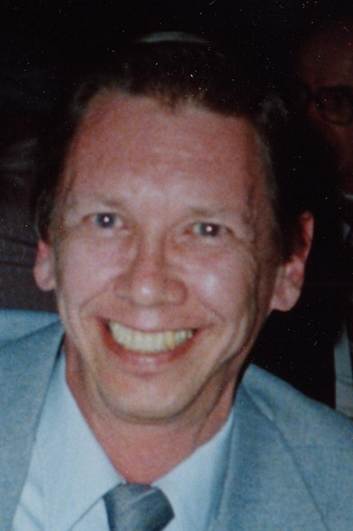
But I just love this photo of my dad when he was in his 50s. This was at my wedding and doesn’t he just look pleased as punch? He is looking straight at the camera, wearing a suit and tie, with a big sincere smile.

He’d had a long and hard ride to that point, and afterwards, as well. But at this moment, you just see joy and pleasure in his face.

Challenge

My dad’s photo tells a different story of my wedding than my memory does. As the bride, I remember the things that went wrong. But looking at this photo brings to mind all the things that were right. Can you locate a photo where someone’s face tells a story?

AI Disclosure

This post was created by me with the help of AI tools. While AI helps organize research, the storytelling and discoveries are my own.
Next Week’s Topic: What the Census Suggests

January Genealogy Fun

I’m having some Saturday Night Genealogy Fun (#SNGF), with help from Randy Seaver and his prompts! Feel free to join in.

Saturday Night Genealogy Fun: January 31, 2026: January Genealogy Fun

Prompt:

What genealogy fun have you had this past month?  What is your genealogy research highlight of the past month?  It could be attending or watching a webinar or local genealogy society meeting, it could be finding a new ancestor, or it could be reading a new genealogy book, or anything else that you have enjoyed.”

Introduction

As New Year’s resolutions are in full swing, I’ve been pleasantly surprised by how much genealogy fun I’ve packed into January.

Looking back, a lot of this month’s fun centered on continuity—building, revisiting, and sharing. My runners-up include:

  • I received the printed 2025 edition of my Ancestors book – I have written up all the ancestors of my children. The first edition was basically a report from my genealogy software, and each year I clean up and enhance another generation. 2025 was the year I focused on the sixth generation back from my children.
  • I decided to participate for a second year in 52 Ancestors in 52 Weeks but with a twist – the week number corresponds to the ancestor number in the book above, so I have an assigned person every week, and hit everyone until the sixth generation.
  • I started participating in Saturday Night Genealogy Fun #SNGF – as evidenced by this post. The idea was to have a little more fun and cut loose a little more than I do in the 52 ancestors posts.
  • I got going on my new blog website – I moved from janetbgenealogy.wordpress.com to theancestorwhisperer.com – with thanks to Megan Smolenyak for the domain.
  • My uncle sent me an autograph book filled out for an aunt in the 1880s – it contains my ancestor’s autograph under her maiden name. He found it cleaning out his father’s, my grandfather’s, things after the latter’s death.

January Highlight

 But the genealogy task I got the biggest kick out of in January was – I started leading an Artificial Intelligence Special Interest Group (AI SIG) at the Northwest Suburban Genealogy Society! We meet on the first Wednesday of the month and the first meeting went very well! I learned only yesterday that the handout was downloaded scores of times. How gratifying is that! I’m preparing for February’s meeting and am excited to see the direction this goes.

NWSGS AI SIG logo

Challenge

What genealogy thing did you do that you’re most pleased with? What might be a next step in furthering your success? It doesn’t need to be a big project; sometimes the most satisfying progress comes from taking just one small next step.

AI Disclosure

This post was created by me with the help of AI tools. While AI helps organize research, the storytelling and discoveries are my own (and the prompt was Randy Seaver’s).

A Breakthrough Moment

I’ve adapted Amy Johnson Crow’s 52 ancestors in 52 weeks challenge.

Each week’s post follows my children’s ahnentafel numbering, which determines the featured ancestor.

This ensures no one until mid-sixth generation gets left behind.

A Breakthrough Moment

52 Ancestors in 52 Weeks: 2026 Week 05

Introduction

My Week 5 ancestor is my mother-in-law, Lillian Goode Birnbaum.

Your breakthrough doesn’t have to solve a brick wall or uncover a new record, it only has to change how you understand an ancestor.

Discussion

I’m writing an ancestors book for my children. (I say “for my children” because that was its original intent, and still is the primary purpose, but it does serve to drive me and orient me toward a north star.) The trick is, none of them is into family history, so I knew I had to do much more than a dry recitation of vital records. I needed to find color and quirks and stories.

What to write of my mother-in-law, Goodie? I knew her and I adored her. She was a terrific mother-in-law and an even better grandmother. But the necessary flavor for her quick biography in the ancestors book was eluding me.

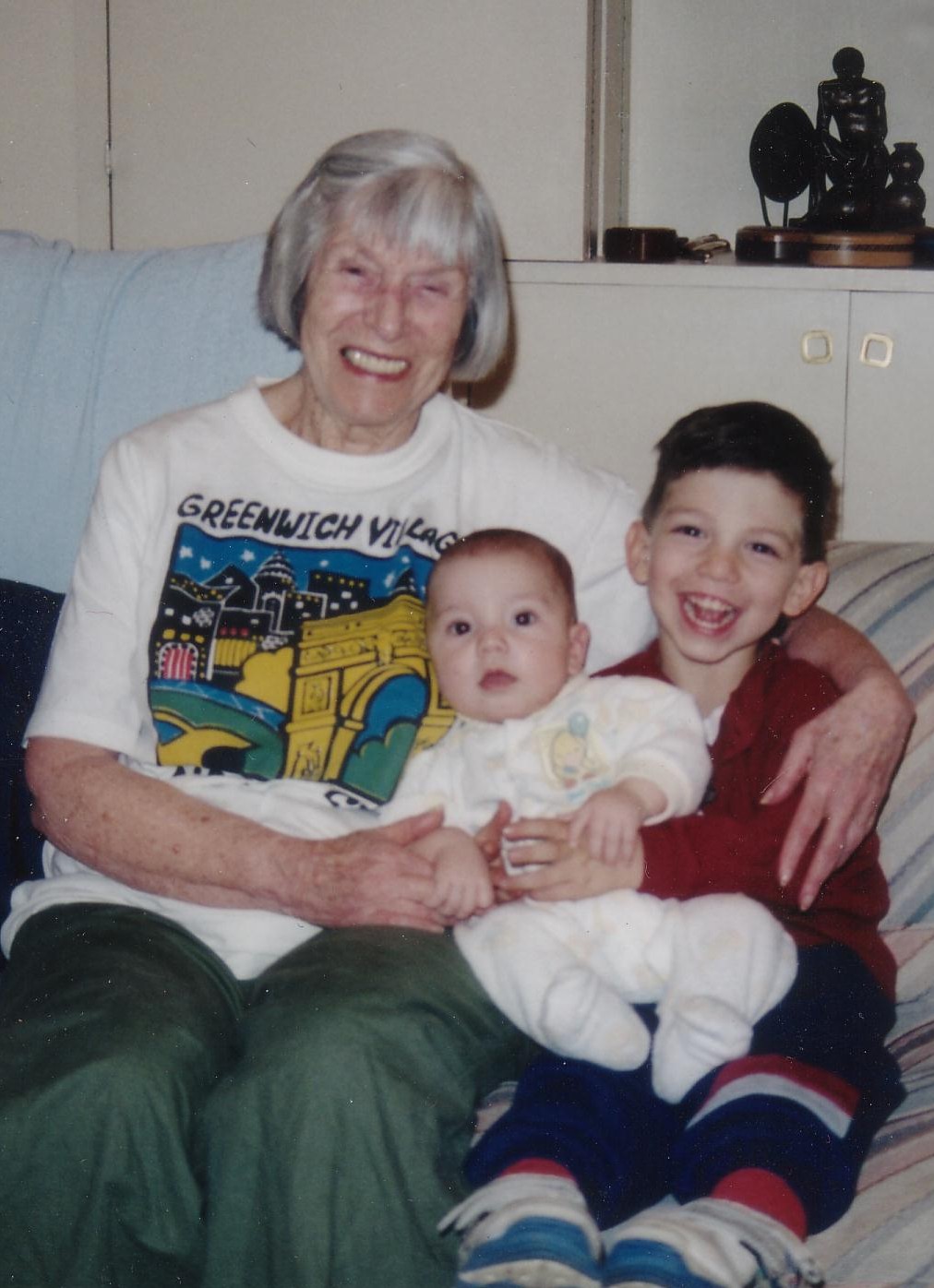
Then, I stumbled upon My Breakthrough Moment. While cleaning out my boys’ school papers, I found a homework assignment my older son had written about his grandmother. I’m not sure where the original is, but I’ve reproduced the story here for your enjoyment. Not only does it add depth to Goodie’s life, but it’s through the eyes of a child – one of the intended recipients of this book.

Challenge

You’re not behind, jump in where you are! Look for stories, not records.

Talk to someone. Ask a single question. Follow up on an answer that surprises you. If you’ve already interviewed them, try again with a different angle: childhood, work, a difficult moment, or a small everyday habit.

One of my own reminders came when my younger son once interviewed me about the Challenger tragedy, forty years ago today. Adding the context of where I was in my life at the time turned a historical event into part of my story. Even moments that don’t seem like “family history” at first can help reveal who a person really was.

An older woman, a 4yo, and an infant
The story’s author (holding his baby brother), and his subject.

Want to Learn More?

There are many paid prompts out there. Storied, for example, or writing journals.

AI Disclosure

This post was created by me with the help of AI tools. While AI helps organize research, the storytelling and discoveries are my own.
Next Week’s Topic: Favorite Photo

The biography, beginning: "Lillian's Life. My grandmother has had an interesting life."

Saturday Night Genealogy Fun: January 24, 2026: RootsTech 2026!

I’m having some Saturday Night Genealogy Fun (#SNGF), with help from Randy Seaver and his prompts! Feel free to join in.

Saturday Night Genealogy Fun: January 24, 2026: RootsTech 2026!

Prompt:

1) Are you registered for RootsTech 2026 yet?  It’s less than six weeks away – March 5-7, 2026. 

2) What are you looking forward to either attending in-person or online?  What keynote talks, classes, or other events are you planning to attend?  For each day, list at least one class that is a “can’t miss” for you. At present, there are 206 online classes listed, but some are foreign language Keynote talks and replays.

3) Share your RootsTech 2026 plans in your own blog post or in a Facebook, SubStack, BlueSky or other social media post.  Leave a link to your post on this blog post to help us find your post.

Introduction

I am such a nerd that I set a calendar reminder for the day registration opens for RootsTech 2026! So, asking me if I’m registered is kind of a silly question. 😊 I’m attending online. If you’ve ever been curious but unsure whether it’s “worth it,” the online option (FREE!) makes it easy to explore at your own pace. Someday I’ll go in person – but not this year – many other commitments this time around.

RootsTech logo

What I’m taking

One of the things I appreciate most about RootsTech is that you don’t have to do everything – just find a few voices or topics that really speak to you. I’ve been doing online webinars since long before the pandemic, and find that lately, I choose by speaker as much as by topic:

[I am so, so sorry for the list formatting. I still struggle with WordPress.]

Challenge

If you haven’t registered yet, consider doing so: it’s free, and even building a small schedule can help you see what’s possible. You can always treat it like a playlist and watch sessions later, whenever it suits you.

I always enjoy seeing how different people approach RootsTech; if you’re participating, I’d love to hear what you’re planning to attend.

AI Disclosure

This post was created by me with the help of AI tools. While AI helps organize research, the storytelling and discoveries are my own (and the prompt was Randy Seaver’s).